

 Freedom Index
Listen to the article
This article first appeared in the Winter 2025 issue of Index on Censorship, Gen Z is revolting: Why the world’s youth will not be silenced, published on 18 December 2025.
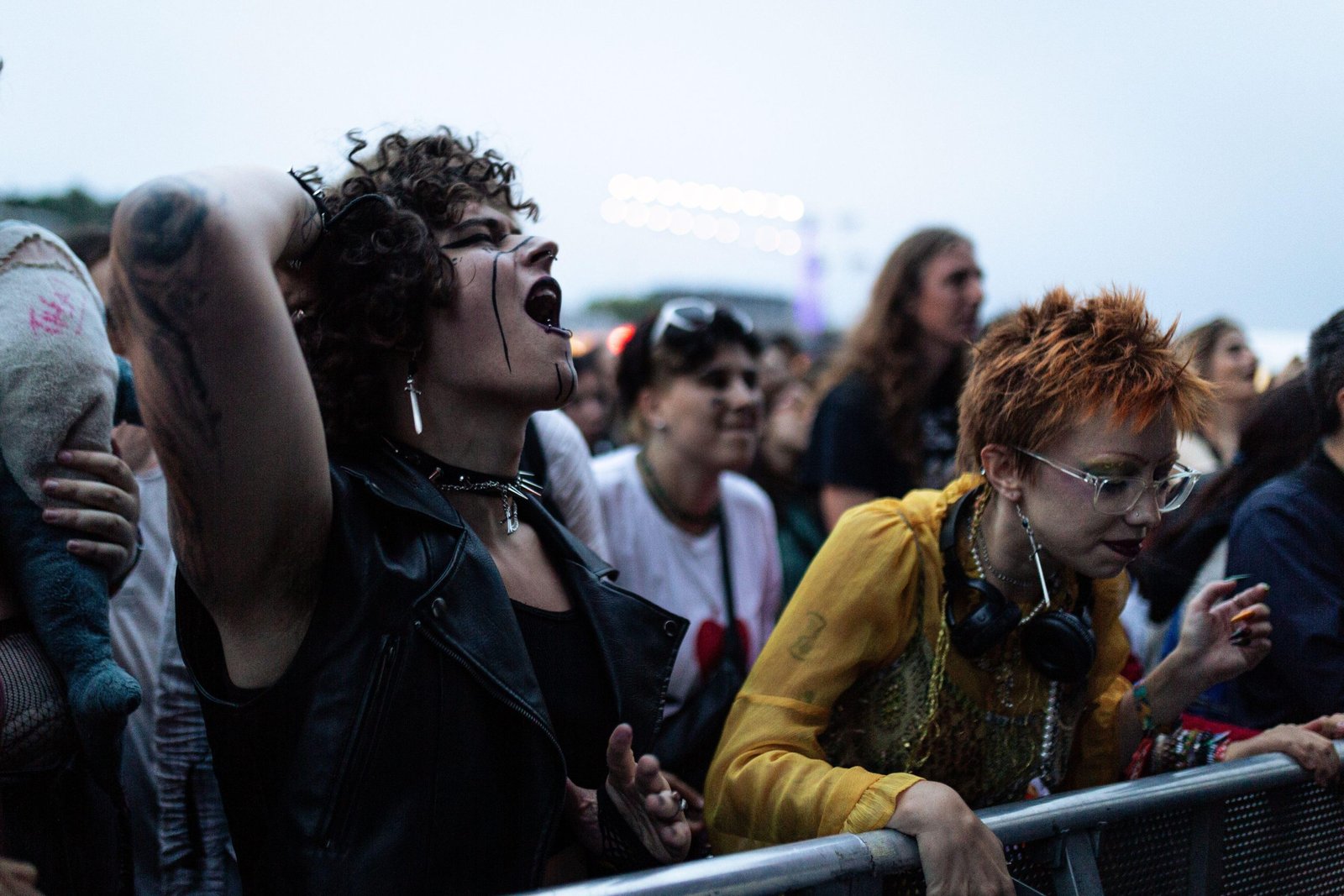
Gen Z are in revolt. In Kenya, in Madagascar, in Nepal, young people are exercising their freedom of expression, taking to the streets and demanding change. They are at times being silenced with force, at other times with subtlety.
As a team of predominantly non-Gen Z people, we spoke with young people from across the world to better understand how they see themselves. How free are their voices? Do they have hope for the future? Are we all doomed?
We talked to a young man from France, who described the hate and division he sees online, particularly targeted at men, with far-right politicians using memes and AI-generated videos to spread or soften hateful rhetoric. Marine Le Pen petting cats, for instance.
He believes social collapse is coming. In a country like France, with its strong record of demonstrations, it is shocking to hear him say that protests make no difference. They are dangerous places to be, where police use weapons against those raising their voices. People are fed up, and politicians are out of touch. In his words, “the Boomer generation is fucking us up”. What is most striking is that he doesn’t feel he can say any of this in public. Politics has become too divisive.
He described a landscape where young people are struggling to even pay grocery bills, and politicians aren’t listening. At the same time, he and his peers are trying to find meaning, a reason for being on the planet. Their issues are existential. In the UK too, people struggle to get jobs, to meet rising costs, and to afford a home.
The same is true in Finland, where a woman in her mid-twenties told us about her experiences. She said she is scared for the future.
While her social media algorithm is full of lifestyle influencers and calming content, she has witnessed a growing conservatism among the lower age bracket of Gen Z on TikTok. Her peers are cautious about saying anything that might get them cancelled, while she sees a slew of right-wing views from those in their mid-teens.
Here in the UK, our editorial assistant (and resident Gen Zer) Connor O’Brien has seen “young men being pumped with manosphere content”. He approached a number of Reform UK voters, keen to hear their perspectives, but none of them were willing to talk to Index.
Students from Ukraine, Palestine, Afghanistan and Malaysia joined us for a round table discussion about why Gen Z is in revolt. They talked about the bravery of Gen Z, growing up in the wake of the Arab Spring, and the feeling of having nothing left to lose. That, they said, is how revolutions start. They too agreed – the older generations have failed them, and the world is going to burn. Why wouldn’t they revolt?
They described what makes Gen Z distinct. The huge step change in their access to information, the way they consume media and how they share their opinions. Through the power of the internet, their generation has been shaped by global connection.
They also discussed how it’s impossible to generalise for a whole generation. They’re right, and even the views we heard were only a small sample. The Frenchman does not represent all of France, nor the Finnish woman all of Finland.
A recent report for Demos by Shuab Gamote and Peter Hyman, who interviewed hundreds of British 16-18 year olds, demonstrated just that. For starters, the 15-28 age bracket (as of 2025) is simply too wide. They focused their research on 15-18 year olds as the future change-makers. They also designed five archetypes, which the young people they spoke with felt represented them well. They are the activist (left-wing, cares about climate change, deeply principled), the entrepreneur (believes in meritocracy), the critical realist (apathetic or anti-establishment, questioning of everything), the traditionalist (right-leaning, patriotic) and the connector (disengaged from political discussions and interested in pop culture).
The media and, if we’re honest, those of us outside the Gen Z age bracket, have made some quick assumptions about who is influencing young people today. It must be Andrew Tate. The news tells us this, television dramas tell us this, and we probably tell it to each other. But, according to Gamote and Hyman’s research, “Tate is dead.” Figuratively.
When they mentioned Tate in their sessions, students rolled their eyes. Instead, young people in the UK are being influenced by five key types of social media star: entertainers, adult content creators, news explainers, right-wing thinkers and left-wing voices. Gender is a huge dividing line, shaping young people’s views.
“Young people today are immersed in a constant stream of content,” they said. “Young people are not following one person’s ‘ideology’. They follow and are ‘influenced’ by tens if not hundreds of creators. Their feeds are shaped by algorithms, not loyalty.”
The students at our round table echoed this, describing an ever-spinning carousel of influencers, who hold their attention for a week or so. One spoke about the gentle path of breadcrumbs – first a funny video, and then a bait and switch to far-right ideology, or videos of angry people shouting at hotels in Epping which they are being pushed because they live in Essex. For the women, “trad wives” content had made its way onto their feeds.
All this is about a fight for the future; for the youth protesters, for the young men demanding patriotic values and for the powerful seeking to gain influence on the young. From the Millennial, Gen X and Boomer sidelines, it might look like that future is hopeless. But Gen Z have a binary choice. It’s all or nothing.
Read the full article here
Fact Checker
Verify the accuracy of this article using AI-powered analysis and real-time sources.