Close Menu
FSNN | Free Speech News NetworkFSNN | Free Speech News Network
  • Home
  • News
    • Politics
    • Legal & Courts
    • Tech & Big Tech
    • Campus & Education
    • Media & Culture
    • Global Free Speech
  • Opinions
    • Debates
  • Video/Live
  • Community
  • Freedom Index
  • About
    • Mission
    • Contact
    • Support
Trending

Tariffs Work Great, Says Alabama Senator Who Quietly Asked Trump To Exempt Alabama’s Fireworks, Aluminum, And Airplanes

28 minutes ago

Seven Federal Judges From Minnesota Talk To The N.Y. Times About Trump Administration

29 minutes ago

DRC journalist detained, prosecuted for sharing X post on WhatsApp

33 minutes ago
Facebook X (Twitter) Instagram
Facebook X (Twitter) Discord Telegram
FSNN | Free Speech News NetworkFSNN | Free Speech News Network
Market Data Newsletter
Thursday, September 17
  • Home
  • News
    • Politics
    • Legal & Courts
    • Tech & Big Tech
    • Campus & Education
    • Media & Culture
    • Global Free Speech
  • Opinions
    • Debates
  • Video/Live
  • Community
  • Freedom Index
  • About
    • Mission
    • Contact
    • Support
FSNN | Free Speech News NetworkFSNN | Free Speech News Network
Home»News»Media & Culture»Washington Built Big Health Care. Now It Wants To Break It Up.
Media & Culture

Washington Built Big Health Care. Now It Wants To Break It Up.

News RoomBy News Room7 months agoNo Comments5 Mins Read2 Views
Share Facebook Twitter Pinterest Copy Link LinkedIn Tumblr Email VKontakte Telegram
Washington Built Big Health Care. Now It Wants To Break It Up.
Share
Facebook Twitter Pinterest Email Copy Link

Listen to the article

0:00
0:00

Key Takeaways

Playback Speed

Select a Voice

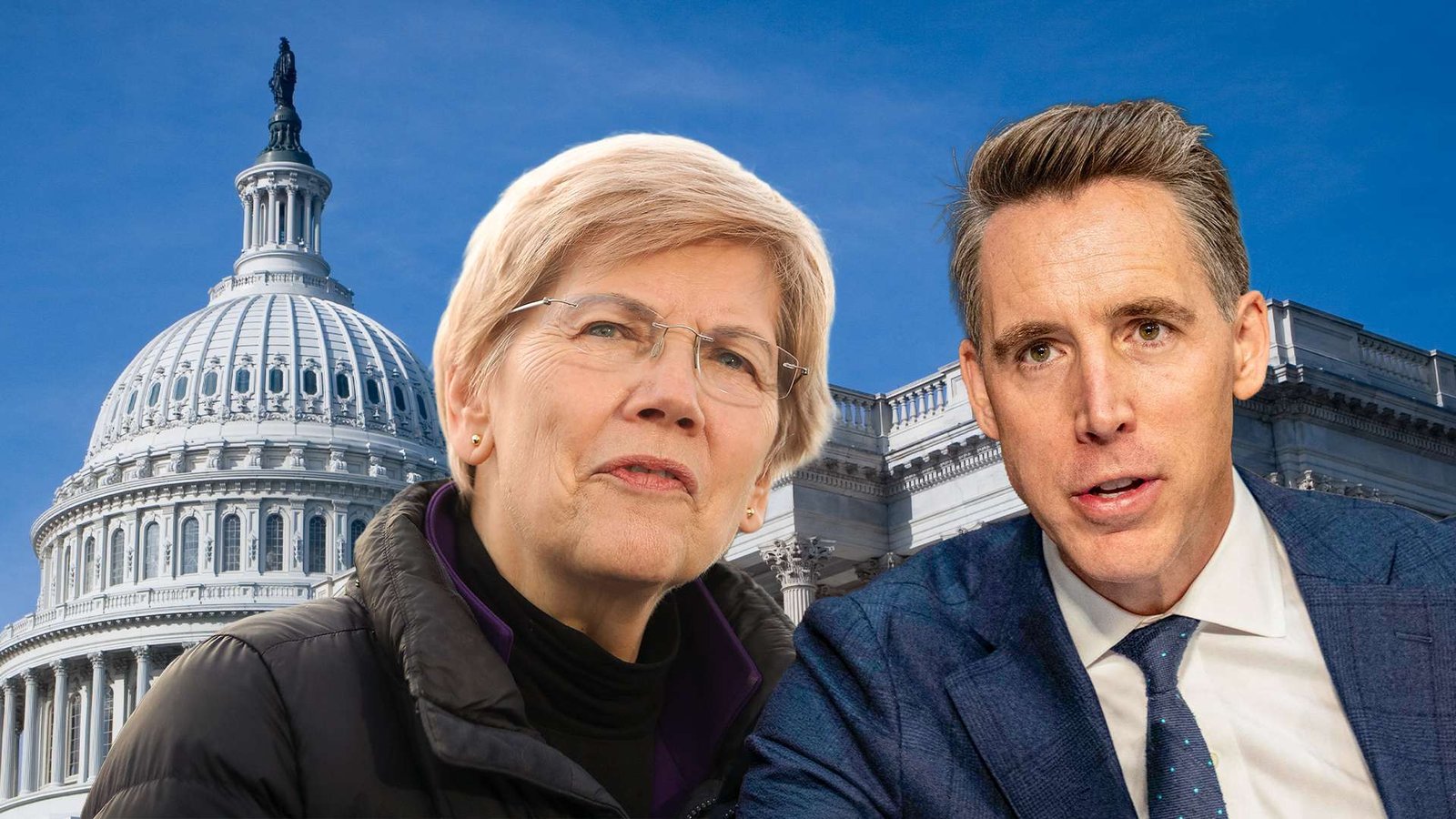
If you were to poll a group of American adults, most would agree that health care costs are too high. Sens. Elizabeth Warren (D–Mass.) and Josh Hawley (R–Mo.) think they have a fix to this issue: more government intervention in the health care industry.

On Tuesday, the pair introduced the Break Up Big Medicine Act, which bans a company from simultaneously owning hospitals as well as insurers and pharmacy benefit managers (PBMs), who serve as the middlemen in the pharmaceutical industry and help negotiate drug prices. The bill also prohibits drug companies from owning hospitals, and vice versa. 

“There’s no question that massive health care companies have created layers of complexity to jack up the price of everything from prescription drugs to a visit to the doctor,” Warren said in a statement. “The only way to make health care more affordable is to break up these health care conglomerates.” The bill, she says, “would be a monumental step towards ending the stranglehold that corporate giants have on our broken health care system.” 

While it’s certainly true that conglomerates dominate the health care industry, the senators ignore the fact that this is a result of government intervention.   

In 1974, Congress passed the National Health Planning and Resources Development Act, which “enabled the federal government to withhold federal funds from states that failed to adopt [certificate of need] CON regulations in healthcare,” explains the Mercatus Center at George Mason University. CON laws require health care providers to receive approval from health planning agencies before building and expanding health care facilities. While CON laws were intended to reduce costs, they unintentionally encouraged “smaller hospitals to merge with larger ones rather than undertake the…costly burden of securing their own CON approvals,” according to the Bipartisan Policy Center. 

Congress realized it had perversely incentivized consolidation via the law, which it repealed in 1986. However, this has done little to eliminate CON laws. As of April 2025, 35 states and the District of Columbia still had these laws on the books, according to the National Conference of State Legislatures. 

Given the history and continued prevalence of CON laws, the senators should not be surprised that “more than three-quarters of all American doctors are employed by corporate entities, with independent physicians comprising a small and shrinking share of America’s doctors,” according to the bill. (The most recent report on physician employment trends, published in April 2024, found that 77.6 percent of physicians were employed by hospitals or other corporate entities in 2023.) 

The American Medical Association (AMA) found that, from 2012 to 2024, the proportion of physicians in private practice fell from 60 percent to 42 percent. Over half of these “private” physicians worked for hospital-owned practices, for hospitals themselves, or for practices owned by private equity firms, according to the same AMA report. 

Again, the senators’ blame is inappropriately directed at Big Pharma and insurance companies’ “quest to put profits over people,” to borrow Hawley’s bromide. 

The pharmaceutical, insurance, and health care industries exist to make money. This has always been the case. Self-interest isn’t responsible for increased health care spending; government intervention is. 

While Warren insists “there’s no question that massive health care companies have created layers of complexity to jack up the price of everything from prescription drugs to a visit to the doctor,” one tricky little question does, in fact, remain: To what extent is the government responsible for the expensive layers of complexity? If you ask physicians, a great deal! 

The AMA found that one of the most frequently cited reasons for the sale of independent practices was to “better manage payers’ regulatory and administrative requirements.” The number one reason was to “better negotiate higher payment rates with payers,” the largest of which are Medicare and Medicaid, which are jointly responsible for 42 percent of health care expenditures. Private insurance makes up only 32 percent. 

The “high fixed costs [and] low marginal costs…of complying with government regulations…creates an artificial incentive for firms to consolidate,” explains Michael Cannon, director of health policy studies at the Cato Institute. Instead of focusing on the cause of consolidation, the trust-busting senators focus on some of its consequences. 

The senators point to three pharmacy benefit managers (PBMs) managing “80% of prescription drug claims” and three drug wholesalers controlling “98% of drug distribution.” While these three-firm concentration figures are alarming at first glance, they do not necessarily mean higher downstream prices for patients as these concentrated buyers and sellers exert their market power in opposite directions. 

The question is whether any surplus the PBM extracts translates to lower prices for consumers.

“That’s not automatic,” says Brian Albrecht, chief economist at the International Center for Law and Economics. Vertical integration often benefits consumers with lower prices by reducing costs through various mechanisms, but a paper published this January by the American Economic Journal found “premium increases for rival insurers post-merger [and]…no evidence of benefits to consumers of the merged firm from lower premiums.” 

Recent empirical findings suggest that vertical integration in the health care industry does raise prices for consumers. Unfortunately, Warren and Hawley fail to recognize that the forces driving integration are the same ones driving consolidation: costly regulations that foreclose the market to newcomers and drive small, independent firms to seek acquisition. 

Read the full article here

Fact Checker

Verify the accuracy of this article using AI-powered analysis and real-time sources.

Get Your Fact Check Report

Enter your email to receive detailed fact-checking analysis

5 free reports remaining

Continue with Full Access

You've used your 5 free reports. Sign up for unlimited access!

Already have an account? Sign in here

#CivicEngagement #FreePress #NewsAnalysis #PoliticalCoverage #PoliticalNews
Share. Facebook Twitter Pinterest LinkedIn Tumblr Email Telegram Copy Link
News Room
  • Website
  • Facebook
  • X (Twitter)
  • Instagram
  • LinkedIn

The FSNN News Room is the voice of our in-house journalists, editors, and researchers. We deliver timely, unbiased reporting at the crossroads of finance, cryptocurrency, and global politics, providing clear, fact-driven analysis free from agendas.

Related Articles

Media & Culture

Tariffs Work Great, Says Alabama Senator Who Quietly Asked Trump To Exempt Alabama’s Fireworks, Aluminum, And Airplanes

28 minutes ago
Media & Culture

Seven Federal Judges From Minnesota Talk To The N.Y. Times About Trump Administration

29 minutes ago
Cryptocurrency & Free Speech Finance

FCA Targets Three More London Sites Over Unregistered P2P Crypto Trading

53 minutes ago
Media & Culture

Disability Accommodations “That Fundamentally Change Court Proceedings, Could Alter the Court’s Substantive Decisions,” …

2 hours ago
Cryptocurrency & Free Speech Finance

SEC Clears a Path for Tokenized Stocks After Clarity Act Stumbles

2 hours ago
Media & Culture

Best Credit in the World

3 hours ago
Add A Comment

Comments are closed.

Editors Picks

Seven Federal Judges From Minnesota Talk To The N.Y. Times About Trump Administration

29 minutes ago

DRC journalist detained, prosecuted for sharing X post on WhatsApp

33 minutes ago

Many in Hong Kong continue to fight against censorship (Diliff/WikiCommons) The website of The Committee for Freedom in Hong Kong Foundation (CFHK) has apparently been blocked in Hong Kong, the latest of a series of blockages in the city following the enactment of the draconian National Security Law (NSL) in 2020. Some using Hong Kong internet service providers including SmarTone, China Mobile Hong Kong, PCCW and CSL have found themselves unable to access the CFHK website. However, it appeared not to be a full blockage. The technical reason behind this remains to be investigated. Chloe Cheung, a former public affairs and advocacy manager at CFHK, was put on a Hong Kong police wanted list in December 2024 for “incitement to secession” and “collusion with a foreign country or with external elements to endanger national security”, with a HK$1,000,000 (£94,400) bounty. In response to enquiries from Index on Censorship, a spokesman for Hong Kong’s Security Bureau replied: “Please approach the relevant internet service provider regarding the matter in question,” without confirming or denying the blockage. SmarTone, China Mobile Hong Kong, PCCW – CSL’s parent company – did not respond to emailed enquiries. The Security Bureau’s response was the same as the one given to Voice of America, when the news outlet reported in October 2024 that online magazine Flow HK, founded by exiled pro-democracy activists, was blocked. A month before the incident, the Hong Kong police had written to the American company Automattic Inc. – which is behind WordPress – demanding it take down Flow HK. Their request was declined and the website was subsequently blocked. Since last week, some using Hong Kong internet service providers including SmarTone, China Mobile Hong Kong, PCCW and CSL have found themselves unable to access the CFHK website The CFHK website home page (CFHK) The implementation rules for the Article 43 of NSL grants power to the Hong Kong police to require internet service providers to take down websites that are “likely to constitute an offence endangering national security or is likely to cause the occurrence of an offence endangering national security”. At least 10 websites have been blocked in Hong Kong since the enactment of the NSL, from the personal substack of American lawyer Samuel Bickett who writes about Hong Kong’s decline in human rights and sanction evasions, to UK-based advocacy group Hong Kong Watch and Washington-based Hong Kong Democracy Council. At least 10 websites have been blocked in Hong Kong since the enactment of the NSL Hong Kong has also blocked the online 8964 Museum, which commemorates the 4 June 1989 Tiananmen Square massacre in China. Several Taiwanese websites have also been blocked, including the websites of the Transitional Justice Commission, the Presbyterian Church in Taiwan and the ruling Democratic Progressive Party. Responding to its website being blocked in Hong Kong, David Green, the head of UK communications for CFHK told Index on Censorship: “Requiring ISPs to participate in monitoring and censoring websites, deemed undesirable by the Chinese Communist Party, is reminiscent of how the mainland’s Great Firewall took shape. “If left uncontested, it’s only a matter of time before such blockages – of which there are already more than a few – multiply. Can we seriously expect the CCP to allow Hong Kongers continued access to the truth, now that they’ve criminalised remembrance of 4 June?” READ MORE

38 minutes ago

U.S. SEC begins prepping for around-the-clock trading that crypto treats as the norm

46 minutes ago
Latest Posts

Zcash miner Fortitude appoints Jaime Leverton as CEO

51 minutes ago

FCA Targets Three More London Sites Over Unregistered P2P Crypto Trading

53 minutes ago

Disability Accommodations “That Fundamentally Change Court Proceedings, Could Alter the Court’s Substantive Decisions,” …

2 hours ago

Subscribe to News

Get the latest news and updates directly to your inbox.

At FSNN – Free Speech News Network, we deliver unfiltered reporting and in-depth analysis on the stories that matter most. From breaking headlines to global perspectives, our mission is to keep you informed, empowered, and connected.

FSNN.net is owned and operated by GlobalBoost Media
, an independent media organization dedicated to advancing transparency, free expression, and factual journalism across the digital landscape.

Facebook X (Twitter) Discord Telegram
Latest News

Tariffs Work Great, Says Alabama Senator Who Quietly Asked Trump To Exempt Alabama’s Fireworks, Aluminum, And Airplanes

28 minutes ago

Seven Federal Judges From Minnesota Talk To The N.Y. Times About Trump Administration

29 minutes ago

DRC journalist detained, prosecuted for sharing X post on WhatsApp

33 minutes ago

Subscribe to Updates

Get the latest news and updates directly to your inbox.

© 2026 GlobalBoost Media. All Rights Reserved.
  • Privacy Policy
  • Terms of Service
  • Our Authors
  • Contact

Type above and press Enter to search. Press Esc to cancel.

🍪

Cookies

We and our selected partners wish to use cookies to collect information about you for functional purposes and statistical marketing. You may not give us your consent for certain purposes by selecting an option and you can withdraw your consent at any time via the cookie icon.

Cookie Preferences

Manage Cookies

Cookies are small text that can be used by websites to make the user experience more efficient. The law states that we may store cookies on your device if they are strictly necessary for the operation of this site. For all other types of cookies, we need your permission. This site uses various types of cookies. Some cookies are placed by third party services that appear on our pages.

Your permission applies to the following domains:

  • https://fsnn.net
Necessary
Necessary cookies help make a website usable by enabling basic functions like page navigation and access to secure areas of the website. The website cannot function properly without these cookies.
Statistic
Statistic cookies help website owners to understand how visitors interact with websites by collecting and reporting information anonymously.
Preferences
Preference cookies enable a website to remember information that changes the way the website behaves or looks, like your preferred language or the region that you are in.
Marketing
Marketing cookies are used to track visitors across websites. The intention is to display ads that are relevant and engaging for the individual user and thereby more valuable for publishers and third party advertisers.