

 Freedom Index
Listen to the article
With free legal support from an attorney at the Reporters Committee for Freedom of the Press, WKBN recently obtained police recordings that shed new light on what led to a fatal police shooting in western Pennsylvania last year.
WKBN published a report last week based on body-worn and dashboard camera footage that the Pennsylvania State Police turned over after the TV station successfully sued for access to the records.
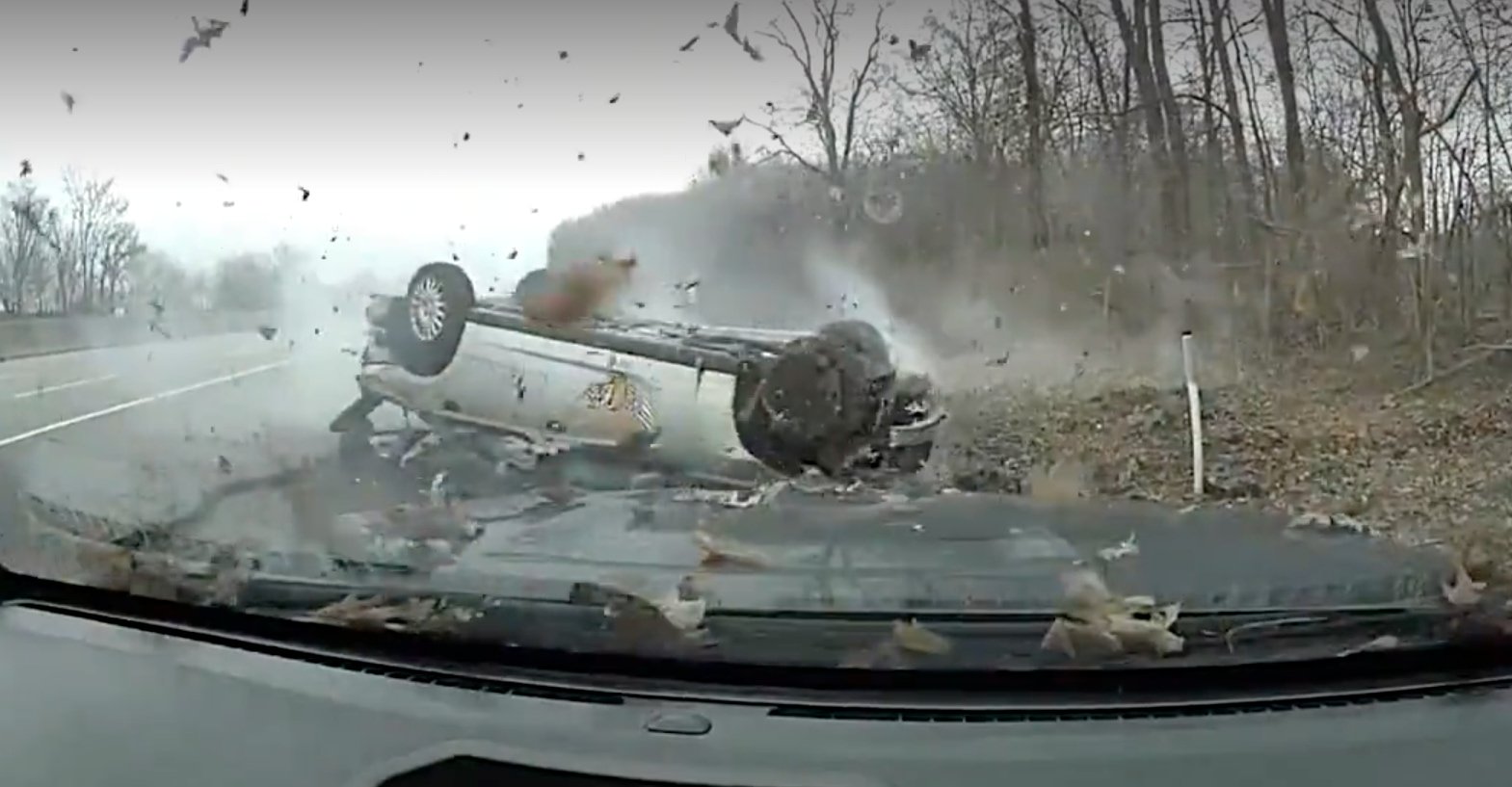
The recordings provide context to the deadly confrontation last April between state troopers and Deshawn Leeth, who was shot by a state trooper after Leeth stole a police cruiser in Ohio and drove into Pennsylvania. In the videos, a trooper can be seen using his vehicle to bump the stolen police cruiser, causing it to flip over and catch on fire on the side of the road. Bodycam footage later shows a trooper shooting Leeth after he appears to reach toward the barrel of the trooper’s rifle.
WKBN’s fight to access the videos began shortly after the Beaver County District Attorney concluded that the shooting was justified. After the TV station obtained police video showing Ohio troopers’ interactions with Leeth leading up to the shooting, Chelsea Simeon, a digital producer for WKBN and WYTV, sent the Pennsylvania State Police a request for their related footage under Act 22, a state law that governs public access to recordings created by law enforcement agencies.
The state police denied Simeon’s request, claiming the recordings contained potential evidence related to a criminal investigation. The denial prompted Simeon to contact Paula Knudsen Burke, the Reporters Committee’s Local Legal Initiative attorney for Pennsylvania, who has spent years helping newsrooms fight for access to bodycam videos under Act 22.
On behalf of Nexstar Media, Inc., the owner and operator of WKBN and other television stations, Burke appealed the denial to the Dauphin County Court of Common Pleas. Burke argued in the appeal that the requested footage can’t be withheld based on the claim that it’s relevant to an investigation because the district attorney declined to bring charges against the officers involved.
Dauphin County Judge Andrew Dowling agreed with Burke’s arguments, rejecting the Pennsylvania State Police’s claim that Act 22 exempts footage related to any investigation, even a completed one. If accepted, he wrote, that interpretation would “essentially nullify Act 22 since it would exempt from public access most, if not all, recordings made by law enforcement.”
The ruling appears to be the second court order granting a request to access police recordings under Act 22, which was passed in 2017. The first came in November in another case litigated by Burke and Reporters Committee Staff Attorney Gunita Singh.
Simeon, who reported the online story for WKBN, said she hopes that her TV station’s case will help set a precedent for public access to police recordings in Pennsylvania. She added that she is grateful that Burke and the Reporters Committee agreed to litigate the case on WKBN’s behalf.
“I can’t say enough good things about the Reporters Committee,” Simeon said. “A lot of local newspapers and TV stations don’t have the money to go out and fight cases. To have somebody that’s doing that for you is huge. It evens the playing field for local journalism.”
Check out WKBN’s reporting to learn more about the newly released police recordings.
Read the full article here
Fact Checker
Verify the accuracy of this article using AI-powered analysis and real-time sources.