Close Menu
FSNN | Free Speech News NetworkFSNN | Free Speech News Network
  • Home
  • News
    • Politics
    • Legal & Courts
    • Tech & Big Tech
    • Campus & Education
    • Media & Culture
    • Global Free Speech
  • Opinions
    • Debates
  • Video/Live
  • Community
  • Freedom Index
  • About
    • Mission
    • Contact
    • Support
Trending

Gen Z ‘nihilism’ is fueling a $100 trillion crypto derivatives boom, in response to a broken system

9 minutes ago

Bitcoin $60K Retest Possible Due To Growing Liquidity Gap

13 minutes ago

Bitcoin Transfer, New Ransom Demand Surface in Nancy Guthrie Abduction Case: Reports

16 minutes ago
Facebook X (Twitter) Instagram
Facebook X (Twitter) Discord Telegram
FSNN | Free Speech News NetworkFSNN | Free Speech News Network
Market Data Newsletter
Wednesday, February 11
  • Home
  • News
    • Politics
    • Legal & Courts
    • Tech & Big Tech
    • Campus & Education
    • Media & Culture
    • Global Free Speech
  • Opinions
    • Debates
  • Video/Live
  • Community
  • Freedom Index
  • About
    • Mission
    • Contact
    • Support
FSNN | Free Speech News NetworkFSNN | Free Speech News Network
Home»News»Global Free Speech»CPJ: Russia’s Telegram throttling another step toward total information control
Global Free Speech

CPJ: Russia’s Telegram throttling another step toward total information control

News RoomBy News Room2 hours agoNo Comments3 Mins Read548 Views
Share Facebook Twitter Pinterest Copy Link LinkedIn Tumblr Email VKontakte Telegram
CPJ: Russia’s Telegram throttling another step toward total information control
Share
Facebook Twitter Pinterest Email Copy Link

Listen to the article

0:00
0:00

Key Takeaways

Playback Speed

Select a Voice

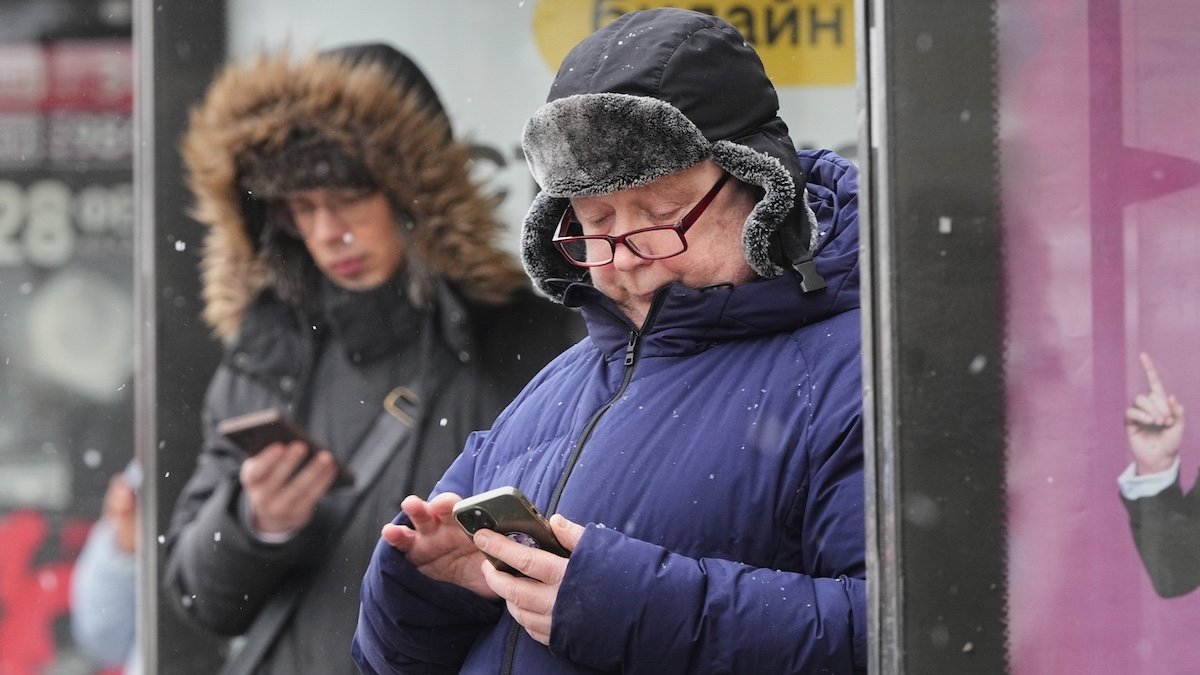
Berlin, February 11, 2026—The Committee to Protect Journalists calls on Russian authorities to immediately stop throttling the messaging service Telegram, warning that the restrictions represent a deliberate escalation in the Kremlin’s campaign to curtail access to independent information.

Users across Russia have reported widespread disruptions on February 9 and 10, according to data from internet service outage tracking service Downdetector.

Russia’s state media regulator Roskomnadzor said Tuesday it plans to impose further “appropriate restrictions” on Telegram, claiming the platform continues to violate Russian law by failing to combat fraud and to protect its users’ personal data. Earlier Wednesday, a Moscow court fined Telegram a total of 10.8 million rubles (US$140,000) for not removing content banned in Russia. Six more cases against the messaging app are pending in court.

“The deliberate slowdown of Telegram is yet another attempt by Russian authorities to tighten control over the information space and silence independent journalism,” said Gulnoza Said, CPJ’s Europe and Central Asia program coordinator, in New York. “When authorities interfere with platforms used by journalists and the public to share news, they not only hinder reporting but also leave citizens isolated from reliable information, undermining the public’s ability to make informed decisions.”

Telegram has been a critical platform for independent and exiled media to reach audiences in and outside Russia since the start of Russia’s full-scale invasion of Ukraine in February 2022 and Russia’s blocking of Facebook, Twitter, Instagram, and many news websites. 

Roskomnadzor started restricting YouTube in 2024. In 2025, it moved to restrict voice and video calls on Telegram, WhatsApp, FaceTime, and Snapchat as authorities stepped up pressure on Russians to download and use the government-backedmessaging app Max.

“Russia is restricting access to Telegram in an attempt to force its citizens to switch to a state-controlled app built for surveillance and political censorship,” Telegram’s founder Pavel Durov commented on the platform on February 10.

 “There is a law, and it must be followed,” Kremlin spokesman Dmitry Peskov said on Wednesday.

On January 27, Russia’s State Duma passed the first read of a bill allowing the Federal Security Service (FSB) to shut down the internet across the country. In 2025, Russia recorded the highest number of internet shutdowns and the most severe levels of online censorship worldwide, according to independent news outlet The Moscow Times. The internet domains of WhatsApp, YouTube, Facebook, Instagram, and a number of other media outlets, including BBC News, Deutsche Welle, and Radio Free Europe/Radio Liberty’s Russian service Radio Svoboda, have become inaccessible since Tuesday to Russian users, according to media reports.

In 2018, Telegram resisted Russia’s attempts to censor it, which CPJ and other observers condemned at the time.

CPJ emailed Roskomnadzor for comment but did not immediately receive a response.

Read the full article here

Fact Checker

Verify the accuracy of this article using AI-powered analysis and real-time sources.

Get Your Fact Check Report

Enter your email to receive detailed fact-checking analysis

5 free reports remaining

Continue with Full Access

You've used your 5 free reports. Sign up for unlimited access!

Already have an account? Sign in here

Share. Facebook Twitter Pinterest LinkedIn Tumblr Email Telegram Copy Link
News Room
  • Website
  • Facebook
  • X (Twitter)
  • Instagram
  • LinkedIn

The FSNN News Room is the voice of our in-house journalists, editors, and researchers. We deliver timely, unbiased reporting at the crossroads of finance, cryptocurrency, and global politics, providing clear, fact-driven analysis free from agendas.

Related Articles

Global Free Speech

Indian journalist Ravi Nair sentenced to 1 year in Adani defamation case

5 hours ago
Global Free Speech

CPJ: Cuba’s detention of content producers stifles access to information 

21 hours ago
Global Free Speech

Russian bomb injures journalist in eastern Ukraine 

1 day ago
Global Free Speech

Algeria arrests freelance journalist Abdelali Mezghiche

1 day ago
Global Free Speech

Human rights defenders Rahima Mahmut, Zahra Joya and Olga Borisova spoke to UK parliamentarians on why end-to-end encryption is essential for safe, private communication To mark World Privacy Day this year (28 January 2026), Index on Censorship invited extraordinary human rights activists to share their experiences of the importance of encrypted apps at an event sponsored by former cabinet minister Louise Haigh MP. A number of members of parliament took part in the discussion. Among the speakers were Uyghur activist Rahima Mahmut and ex-Pussy Riot member Olga Borisova. They both told us why encryption is not a nice-to-have. It is essential to their lives and work. End-to-end encryption has been designated a risk factor by Ofcom as part of their role in implementing the Online Safety Act. This means pressure could seriously mount to create a “backdoor” to the apps that have encryption as their central feature. This would be a disaster for our privacy and one we won’t stand for. We’ve written about the many reasons this is a terrible path to walk here. And so long as the future of encryption remains precarious in the UK, we will continue to make noise. As these women told us powerfully at the event, there is so much at stake if end-to-end encryption is broken. Below we share the speeches delivered by Mahmut and Borisova. Both act as powerful reminders of the extreme costs incurred when privacy is laid to waste. Rahima Mahmut, Uyghur human rights activist and director of Stop Uyghur Genocide As a Uyghur, when I hear the words “online safety” I do not hear reassurance. I hear a warning. I come from a community where the language of “safety” was used to justify one of the most extensive systems of digital surveillance the world has ever seen. In China, the government claimed it was keeping people safe, while it monitored every message, every contact, every digital footprint of Uyghur lives. People disappeared not because they committed crimes, but because of what they searched, shared or said online. That is why I am deeply concerned by the Online Safety Act. I understand its intention. Protecting children and preventing harm matters. But intention is not enough. We must look at how power operates once it is written into law. When governments pressure platforms to remove vaguely defined “harmful” content, the result is not safety – it is pre-emptive censorship. Platforms will always choose caution over justice. They will silence first and ask questions later. For Uyghurs in exile, digital platforms are not a luxury. They are our lifeline. They are how we document atrocities, speak to journalists, warn the world and preserve our culture. When content is removed, when accounts are suspended, when voices are quietly buried by algorithms, the cost is not abstract. It is human. I have seen where this road leads. In China, online control did not stop at content moderation. It led to mass surveillance, collective punishment and genocide. The UK must not – even unintentionally – normalise the logic that safety requires less freedom, less privacy and more state control. True online safety does not come from expanding surveillance powers. It comes from protecting rights, enforcing transparency and defending the most vulnerable voices – not silencing them. As someone who has lived the consequences of digital authoritarianism, I urge you: do not build a system that future governments could abuse. Do not trade freedom for a false sense of security. Because once lost, our voices are very hard to recover. Olga Borisova, former member of Pussy Riot and Russian human rights activist For people like me, online safety is not an abstract concept. It is directly connected to physical safety and survival. I now live in the UK, but my work and many of the people I communicate with are still connected to Russia and Belarus – countries where surveillance is routine and political repression is part of everyday life. I have been sentenced in absentia to eight years in prison in Russia for my anti-war stance and support for Ukraine. I am on a federal wanted list and cannot travel to half of the countries in the world. Because of this, I have no choice but to think carefully about the security of my communications every single day. For activists, journalists and human rights defenders, encrypted communication is not about hiding, it is about preventing state surveillance. It is about making sure that conversations cannot be intercepted, taken out of context or used as evidence. One of the tools I rely on in my work is Signal. I use it precisely because neither the company nor any government can read the messages. That is the whole point of the technology. Signal helps Russian human rights workers and other people to flee persecution in Russia and avoid being sent to the war. Russia already banned calls in WhatsApp and Telegram. And sending information from Russia abroad can be considered a high treason. Signal is just an example, but it is considered the most secure way to communicate. In fact, encryption helps save lives. Encryption helps provide the truth. If the Online Safety Act forces companies to scan private messages or weaken encryption, services like Signal may simply stop operating in the UK. If that happens, the impact will be very real. Human rights defenders based here will lose one of the few secure ways they have to communicate with people living under authoritarian surveillance. The UK is home to many exiled activists and journalists like me. If secure tools disappear here, the UK becomes a less safe place to do human rights work, not by intention, but by technical design. There is also a security issue. Russia actively uses cyber operations and state-linked hackers as part of hybrid warfare, and the UK itself has been a target. Weakening encryption does not make societies safer, it creates vulnerabilities that hostile actors know how to exploit. I recognise that serious crimes, including child sexual exploitation, do take place in private and encrypted messaging spaces. But the evidence also shows that these crimes are addressed through targeted investigations, intelligence-led operations and lawful hacking, not through blanket access to everyone’s private communications. That is why I believe the Online Safety Act should be amended to draw a clear and explicit line: end-to-end encrypted private messaging must not be subject to scanning requirements or technical backdoors. Instead, the focus should remain on proportionate, targeted enforcement against suspects, while preserving strong encryption as a core part of public safety, digital resilience and democratic infrastructure. This approach protects children and the public without exposing journalists, activists, victims of abuse and people targeted by hostile states to new and irreversible risks. READ MORE

1 day ago
Global Free Speech

Iran tightens media crackdown with raids, financial pressure

1 day ago
Add A Comment
Leave A Reply Cancel Reply

Editors Picks

Bitcoin $60K Retest Possible Due To Growing Liquidity Gap

13 minutes ago

Bitcoin Transfer, New Ransom Demand Surface in Nancy Guthrie Abduction Case: Reports

16 minutes ago

Massie Accuses Bondi of ‘Criminal Negligence’ in Epstein Release

59 minutes ago

U.S. DOJ hits Paxful for $4 million in case tied to illegal sex work, money laundering

1 hour ago
Latest Posts

Bitcoin, Altcoins Consolidate In Search Of New Price Floor

1 hour ago

Bitcoin Exchange Paxful Must Pay $4 Million Over Prostitution, Money Laundering Charges

1 hour ago

No One, Including Our Furry Friends, Will Be Safer in Ring’s Surveillance Nightmare

2 hours ago

Subscribe to News

Get the latest news and updates directly to your inbox.

At FSNN – Free Speech News Network, we deliver unfiltered reporting and in-depth analysis on the stories that matter most. From breaking headlines to global perspectives, our mission is to keep you informed, empowered, and connected.

FSNN.net is owned and operated by GlobalBoost Media
, an independent media organization dedicated to advancing transparency, free expression, and factual journalism across the digital landscape.

Facebook X (Twitter) Discord Telegram
Latest News

Gen Z ‘nihilism’ is fueling a $100 trillion crypto derivatives boom, in response to a broken system

9 minutes ago

Bitcoin $60K Retest Possible Due To Growing Liquidity Gap

13 minutes ago

Bitcoin Transfer, New Ransom Demand Surface in Nancy Guthrie Abduction Case: Reports

16 minutes ago

Subscribe to Updates

Get the latest news and updates directly to your inbox.

© 2026 GlobalBoost Media. All Rights Reserved.
  • Privacy Policy
  • Terms of Service
  • Our Authors
  • Contact

Type above and press Enter to search. Press Esc to cancel.

🍪

Cookies

We and our selected partners wish to use cookies to collect information about you for functional purposes and statistical marketing. You may not give us your consent for certain purposes by selecting an option and you can withdraw your consent at any time via the cookie icon.

Cookie Preferences

Manage Cookies

Cookies are small text that can be used by websites to make the user experience more efficient. The law states that we may store cookies on your device if they are strictly necessary for the operation of this site. For all other types of cookies, we need your permission. This site uses various types of cookies. Some cookies are placed by third party services that appear on our pages.

Your permission applies to the following domains:

  • https://fsnn.net
Necessary
Necessary cookies help make a website usable by enabling basic functions like page navigation and access to secure areas of the website. The website cannot function properly without these cookies.
Statistic
Statistic cookies help website owners to understand how visitors interact with websites by collecting and reporting information anonymously.
Preferences
Preference cookies enable a website to remember information that changes the way the website behaves or looks, like your preferred language or the region that you are in.
Marketing
Marketing cookies are used to track visitors across websites. The intention is to display ads that are relevant and engaging for the individual user and thereby more valuable for publishers and third party advertisers.