

 Freedom Index
Listen to the article
Three months ago, six Democratic members of Congress posted a video reminding U.S. military personnel of their well-established duty to “refuse illegal orders.” The video, which urged compliance with the law and the Constitution rather than the whims of the man who is currently running the executive branch, irked President Donald Trump, who said the six legislators “should be ARRESTED AND PUT ON TRIAL.” On Tuesday, a grand jury in Washington, D.C., disagreed, rejecting a proposed indictment charging the two senators and four representatives with a federal felony.
Such roadblocks are highly unusual. Grand juries, which hear only the government’s side of a case, almost always approve charges recommended by federal prosecutors. But the attempt to prosecute sitting members of Congress for constitutionally protected speech that offended the president was also highly unusual, as the grand jurors apparently recognized.
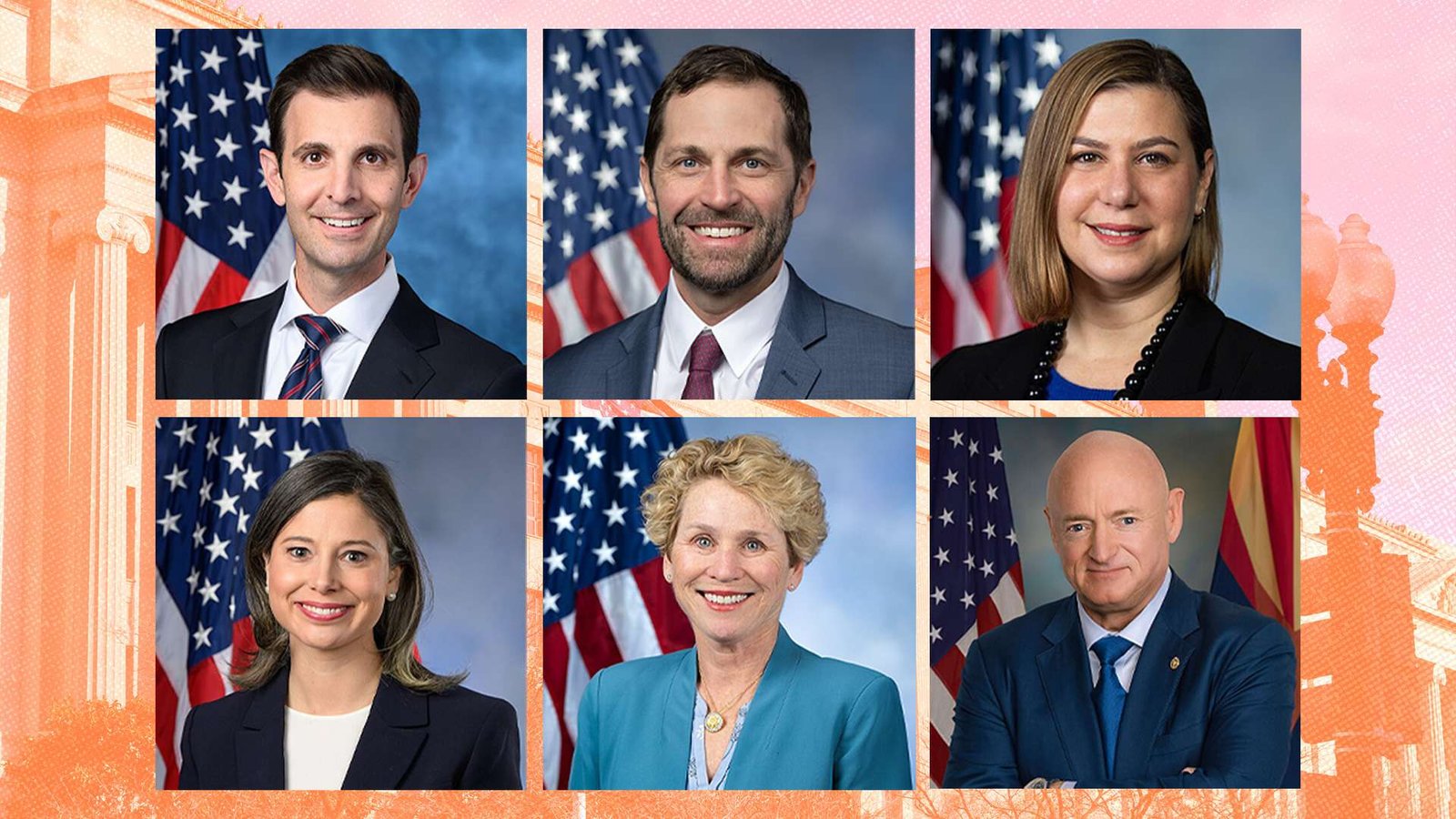
The video at the center of the attempted indictment features Sen. Elissa Slotkin (D–Mich.), a former CIA officer; Sen. Mark Kelly (D–Ariz.), a former astronaut and U.S. Navy aviator; Rep. Chris Deluzio (D–Pa.), also a former naval officer; Rep. Maggie Goodlander (D–N.H.), a former intelligence officer in the U.S. Navy Reserve; Rep. Chrissy Houlahan (D–Pa.), a former Air Force officer; and Rep. Jason Crow (D–Colo.), a former Army Ranger. They mention those backgrounds while delivering a simple message to “members of the military” and “the intelligence community” who “take risks each day to keep Americans safe”: “Our laws are clear. You can refuse illegal orders.”
That message is indisputably accurate as a matter of law. In fact, according to the Judge Advocate General’s Operational Law Handbook, “soldiers have a duty to disobey” orders that are “manifestly illegal.” Examples include intentional targeting of civilians, torture of prisoners, looting of property, and suppression of constitutionally protected protests.
Trump nevertheless insisted that Slotkin et al. had committed a crime by reiterating that principle. But what crime?
Trump called the legislators “TRAITORS,” a legally untenable description. An American is guilty of treason when he “levies war” against the United States or “adheres to their enemies, giving them aid and comfort within the United States or elsewhere.”
Trump also said Slotkin et al. had engaged in “SEDITIOUS BEHAVIOR.” Secretary of Defense Pete Hegseth echoed that claim, calling the legislators the “Seditious Six.” But that label likewise was clearly inapplicable. Under federal law, a seditious conspiracy is a plot involving the use of force against the authority of the U.S. government.
Since nothing these members of Congress did came close to meeting the elements of those crimes, the Justice Department had to find another option if it was determined to do Trump’s bidding, which it clearly was. Jeanine Pirro, the Trump-appointed U.S. attorney for the District of Columbia, reportedly settled on 18 USC 2387, which applies to someone who “advises, counsels, urges, or in any manner causes or attempts to cause insubordination, disloyalty, mutiny, or refusal of duty by any member of the military or naval forces of the United States.”
That crime is a felony punishable by up to 10 years in prison. But it requires an “intent to interfere with, impair, or influence the loyalty, morale, or discipline of the military or naval forces of the United States.” And the Uniform Code of Military Justice (UCMJ) defines insubordination as willfully disobeying “a lawful order,” while the video explicitly addressed “illegal orders.”
Any attempt to criminalize the speech at issue here would be clearly contrary to the Supreme Court’s First Amendment precedents. The Court’s 1969 decision in Brandenburg v. Ohio held that even explicit advocacy of illegal conduct is constitutionally protected unless it is both “directed” at inciting “imminent lawless action” and “likely” to do so. Far from trying to incite “imminent lawless action,” the legislators Trump wants to prosecute urged service members to “stand up for our laws” and “our Constitution,” which they accurately said could require disobeying unlawful orders.
In addition to the First Amendment, Slotkin et al. may be protected by the Constitution’s Speech or Debate Clause, which says senators and representatives “shall not be questioned in any other place” in connection with “any speech or debate in either house” of Congress. The Supreme Court has construed that clause as broadly protecting the independence of the legislative branch by shielding members of Congress from civil or criminal proceedings based on conduct that falls within the “legitimate legislative sphere.”
The “fundamental purpose” of the Speech or Debate Clause, the Court said in the 1972 case Gravel v. United States, is “freeing the legislator from executive and judicial oversight that realistically threatens to control his conduct as a legislator.” The clause extends beyond “literal speech or debate,” the Court said three years later in Eastland v. U.S. Servicemen’s Fund, to include any “legitimate legislative activity.”
In separate litigation over Kelly’s threatened punishment under the UCMJ for the video and other public comments, his lawyers argue that statements about the duty to disobey unlawful orders fall within the congressional power to regulate the armed forces. The government’s response rejects that interpretation, saying “a legislator’s public statements in interviews and on social media are not legislative acts protected by the Speech or Debate Clause.”
One need not resolve that issue to recognize that prosecuting Kelly and the other five legislators would flunk the Brandenburg test or that their conduct does not constitute an offense under Section 2387. And even without considering those legal points, it is obvious what is happening here: Trump wants to jail people for saying something he did not like. Even for grand jurors who heard nothing but Pirro’s one-sided presentation of the case, that reality must have been crystal clear.
“President Trump continues to weaponize our justice system against his perceived enemies,” Slotkin said on Tuesday. “It’s the kind of thing you see in a foreign country, not in the United States we know and love. No matter what President Trump and Pirro continue to do with this case, tonight we can score one for the Constitution, our freedom of speech, and the rule of law.’
Kelly called the attempted prosecution “an outrageous abuse of power by Donald Trump and his lackeys.” The Justice Department “tried to have me charged with a crime,” he noted, “because of something I said that they didn’t like. That’s not the way things work in America. Donald Trump wants every American to be too scared to speak out against him. The most patriotic thing any of us can do is not back down.”
It is obvious from Trump’s disregard for freedom of speech and his authoritarian habit of lobbing “treason” accusations at his political opponents that he does not care about civil liberties or the rule of law. He nevertheless might want to think twice about picking legal fights that he cannot win, especially when they allow his targets to credibly portray themselves as victims of a petty, thin-skinned, power-mad tyrant.
Read the full article here
Fact Checker
Verify the accuracy of this article using AI-powered analysis and real-time sources.