Close Menu
FSNN | Free Speech News NetworkFSNN | Free Speech News Network
  • Home
  • News
    • Politics
    • Legal & Courts
    • Tech & Big Tech
    • Campus & Education
    • Media & Culture
    • Global Free Speech
  • Opinions
    • Debates
  • Video/Live
  • Community
  • Freedom Index
  • About
    • Mission
    • Contact
    • Support
Trending

Prohibition Didn’t Stop Marijuana Use. It Stopped Marijuana Research.

13 minutes ago

Europe Leads World in Heat Deaths Despite Fewer Hot Days

28 minutes ago

Micron Technology (MU) surged 16% after blowout earnings and strong guidance

32 minutes ago
Facebook X (Twitter) Instagram
Facebook X (Twitter) Discord Telegram
FSNN | Free Speech News NetworkFSNN | Free Speech News Network
Market Data Newsletter
Thursday, June 25
  • Home
  • News
    • Politics
    • Legal & Courts
    • Tech & Big Tech
    • Campus & Education
    • Media & Culture
    • Global Free Speech
  • Opinions
    • Debates
  • Video/Live
  • Community
  • Freedom Index
  • About
    • Mission
    • Contact
    • Support
FSNN | Free Speech News NetworkFSNN | Free Speech News Network
Home»News»Media & Culture»‘This Job Sucks’
Media & Culture

‘This Job Sucks’

News RoomBy News Room5 months agoNo Comments6 Mins Read1,881 Views
Share Facebook Twitter Pinterest Copy Link LinkedIn Tumblr Email VKontakte Telegram
‘This Job Sucks’
Share
Facebook Twitter Pinterest Email Copy Link

Listen to the article

0:00
0:00

Key Takeaways

Playback Speed

Select a Voice

“This job sucks”: Those were the words of federal attorney Julie Le, who told U.S. District Judge Jerry Blackwell in a Tuesday hearing that Immigration and Customs Enforcement’s (ICE) was overwhelmed with the number of legal challenges filed by people detained as part of the Trump administration’s immigration crackdown in the Minneapolis area.

Le said she wouldn’t mind being held in contempt of court so that she could get some sleep, reports local news outlet Fox 9.

The Reason Roundup Newsletter by Liz Wolfe Liz and Reason help you make sense of the day’s news every morning.

Le has since been fired from her temporary job at the U.S. Attorney’s Office. It’s unclear if she’s still employed in her former, permanent role as an ICE attorney.

While federal attorneys are clearly the real victims of the Trump administration’s immigration enforcement surge in Minneapolis, Blackwell had called the Tuesday hearing to focus on the secondary victims of the operation: migrants detained by ICE in violation of court orders requiring their release.

“When court orders are not followed, it’s not just the court’s authority that’s at issue. It is the rights of individuals in custody and the integrity of the constitutional system itself,” Blackwell said during that hearing, per The New York Times.

This is not the first time that a federal judge has excoriated ICE for failing to follow court orders.

Last month, Patrick J. Schiltz, chief judge of the U.S. District Court for Minnesota, published a list of nearly 100 court orders regarding immigrant detention that ICE had violated since the start of the New Year.

This count, wrote Schlitz, “almost certainly substantially understated” ICE’s record of noncompliance. Reason reporter C.J. Ciaramella compiled a list of all the orders, which you can read here.

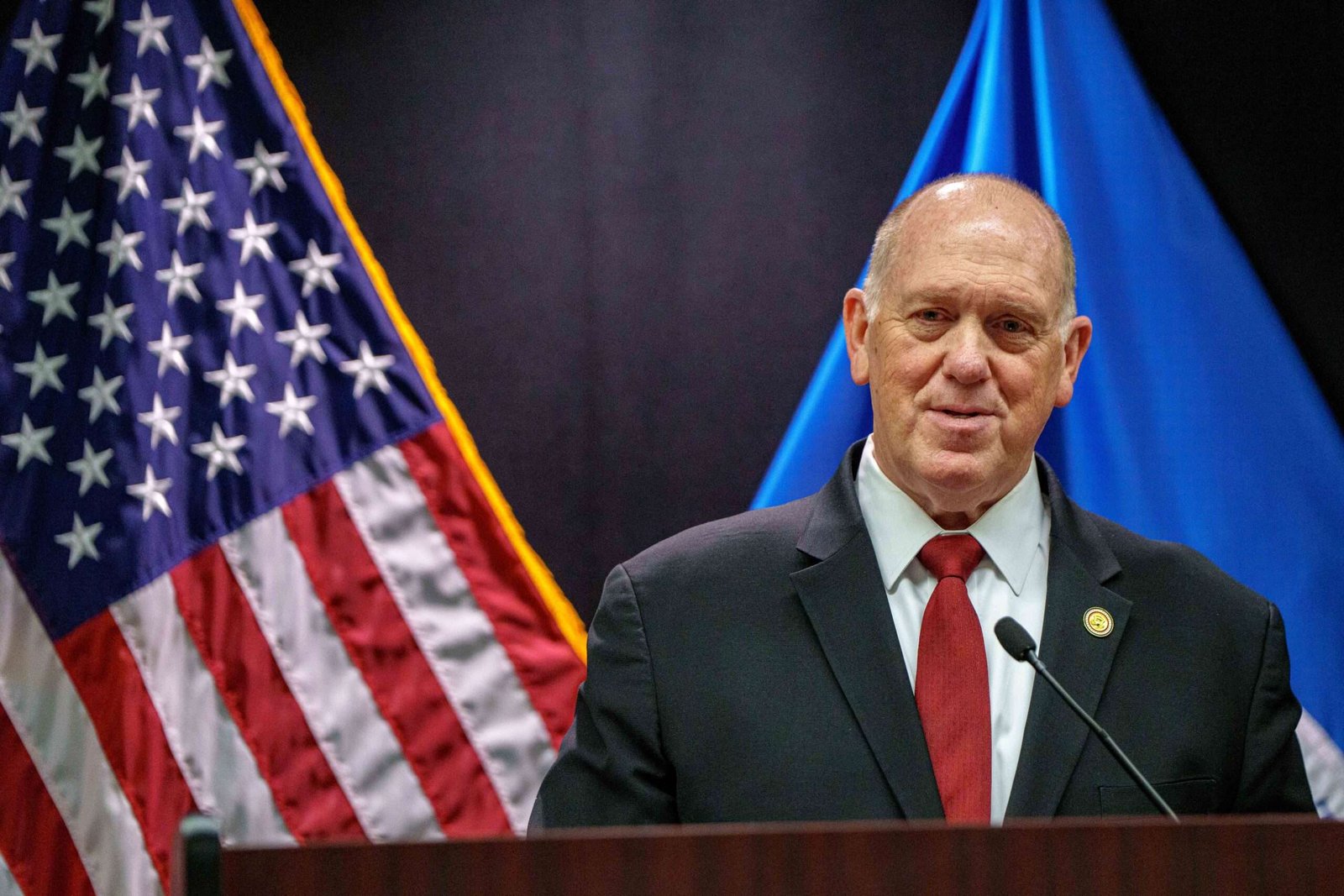
The White House bragged yesterday that over 4,000 “criminal illegal aliens” had been detained during the administration’s Operation Metro Surge in Minnesota. Border Czar Tom Homan said on Wednesday that another 158 people have been arrested for interfering with ICE operations.

In addition to the people immigration authorities have illegally detained, immigration agents fatally shot two people, Renne Good and Alex Pretti, during the Metro Surge operation. Their deaths are a reminder that it’s not only Department of Justice attorneys who are suffering at the moment.

Partial drawdown: Yesterday, Homan said that 700 federal agents would be pulled out of Minnesota, following “unprecedented cooperation” from county officials in Minnesota.

.@RealTomHoman in Minnesota: “We currently have an unprecedented number of counties communicating with us now and allowing ICE to take custody of illegal aliens BEFORE they hit the streets.”pic.twitter.com/Ec7pQaiMWk

— Rapid Response 47 (@RapidResponse47) February 4, 2026

“I learned maybe we can use a little bit of a softer touch, but you still have to be tough,” said President Donald Trump during an interview with NBC.

Homan said the partial drawdown follows some Minnesota counties agreeing to give ICE more access to inmates in county jails and to hold inmates for an additional 48 hours at ICE’s request. Allowing ICE to arrest immigrants at jail instead of in the community requires fewer officers, said Homan.

The White House has not said which counties have inked agreements with ICE. A representative for the Minnesota County Attorneys Association told CBS Minnesota that the model agreements offered by ICE to the counties violate state law. The attorney for Hennepin County, which includes Minneapolis, has said that its relationship with ICE has not changed.

The removal of 700 federal agents from Minnesota represents only a partial wind down of the federal government’s immigration operation. Another 2,000 agents will remain in the state. Homan said that a complete drawdown of the surge of immigration agents would only happen “upon the end of the illegal and threatening activities against ICE and its federal partners that we’re seeing in the community.”

Turning Tide? Immigration and border security have long been Trump’s best polling issues. He won the 2024 election, in part, on his promise to significantly step up deportations.

Following the shooting death of Pretti last month, however, support for the president’s immigration policies has started to ebb.

A Reuters/Ipsos poll conducted before and after Pretti’s death found that 39 percent of Americans approve of the job Trump is doing on immigration, down from 41 percent earlier this month. In February 2025, Trump’s approval on immigration was at 50 percent.

A more recent Quinnipiac University poll similarly finds that 38 percent of voters approve of Trump’s handling of immigration, while 59 percent disapprove.

ICE’s tactics and the administration’s handling of the Pretti shooting were even more underwater. Some 62 percent of respondents in the Quinnipiac poll said the shooting was unjustified, and a similar 64 percent say that they disapprove of the way ICE is enforcing immigration laws.

Large majorities of voters also support requiring ICE agents to wear body cameras and forbidding them from wearing masks.

The anti-ICE shift in public opinion gives Congressional Democrats additional leverage as they prepare for a fight over Department of Homeland Security (DHS) funding.

The spending bill signed by Trump on Tuesday funds the DHS for another two weeks. This sets up a funding battle over immigration enforcement funding specifically, in which Democrats can hold out for reforms to ICE without needing to shut down the entire federal government.

Yesterday, House Minority Leader Hakeem Jeffries (D–N.Y.) and Senate Minority Leader Chuck Schumer (D–N.Y.) sent a letter to Republican Congressional leaders laying out 10 demands they want included in any DHS funding bill.

The list includes demands that ICE agents stop wearing masks, that DHS officers get a judicial warrant before entering private property, and that DHS adopt a “reasonable” use of force policy. They also want federal officials to cooperate with state and local investigations into federal agents’ use of force.

Per the Quinnipiac poll, those are all incredibly popular positions.


Scenes from D.C.: While barely above-freezing temperatures have caused some merciful melting, the nation’s capital is still buried in “snowcrete” that is blocking roadways, alleys, and, especially, sidewalks. Occasional Reason contributor Joe-Bishop Henchman offers some thoughts on what went wrong.


QUICK LINKS

  • An Oregon theater loses the right to screen Melania after lampooning the movie on its marquee.
  • The Trump administration prepares to make it easier to fire some 50,000 federal workers.
  • SpaceX prepares to go public.
  • It’s come to this. The White House is making Sopranos:

Jesus fucking Christ https://t.co/PV3YmmFV1p

— Sopranos World (@SopranosWorld) February 4, 2026

  • The Venezuelan opposition is optimistic that the country will hold elections within the year.


Read the full article here

Fact Checker

Verify the accuracy of this article using AI-powered analysis and real-time sources.

Get Your Fact Check Report

Enter your email to receive detailed fact-checking analysis

5 free reports remaining

Continue with Full Access

You've used your 5 free reports. Sign up for unlimited access!

Already have an account? Sign in here

#FreePress #InformationWar #MediaBias #MediaEthics #OpenDebate
Share. Facebook Twitter Pinterest LinkedIn Tumblr Email Telegram Copy Link
News Room
  • Website
  • Facebook
  • X (Twitter)
  • Instagram
  • LinkedIn

The FSNN News Room is the voice of our in-house journalists, editors, and researchers. We deliver timely, unbiased reporting at the crossroads of finance, cryptocurrency, and global politics, providing clear, fact-driven analysis free from agendas.

Related Articles

Media & Culture

Prohibition Didn’t Stop Marijuana Use. It Stopped Marijuana Research.

13 minutes ago
Debates

Europe Leads World in Heat Deaths Despite Fewer Hot Days

28 minutes ago
Media & Culture

Brickbat: Friendly Fire

2 hours ago
Media & Culture

Trump’s Sabotage?

4 hours ago
Media & Culture

Socialists Hijacked My City

5 hours ago
Cryptocurrency & Free Speech Finance

Trump Cancels Signing of Bipartisan Housing Bill Containing CBDC Ban: ‘Of Minor Importance’

6 hours ago
Add A Comment

Comments are closed.

Editors Picks

Europe Leads World in Heat Deaths Despite Fewer Hot Days

28 minutes ago

Micron Technology (MU) surged 16% after blowout earnings and strong guidance

32 minutes ago

Iran-linked Entities Moved $3.8B Through CoinEx Exchange: TRM

38 minutes ago

Dr Mahrang Baloch before being sentenced to life imprisonment. Photo: Isak Khan In June 2026, Dr Mahrang Baloch was sentenced to life in prison by an anti-terrorism court in Quetta, Balochistan’s capital. She and fellow Baloch activist Sibghatullah Shahji had been accused of inciting a crowd into killing a federal constabulary official during a 2024 Baloch Unity Committee rally. Dr Mahrang Baloch, leader of the Baloch Yakjehti Committee (BYC), is an advocate for Baloch rights, campaigning against state practices of enforced disappearances, extra-judicial killings and other human rights abuses in Pakistan’s Balochistan province. The defendants, who have already been held in solitary confinement for two years, deny the charges. Before her sentencing, Dr Mahrang Baloch participated in a written interview with Akbar Notezai. Some of her responses have been edited for clarity and brevity. Can you describe the conditions inside Hudda Jail? I am presently being held, with my two political collegues Beebow Baloch and Gulzadi Baloch, in solitary confinement in Barrack No 9 of Hudda Jail. Even though the jail has a separate ward for female prisoners, we have deliberately been kept isolated in a separate barrack. Over the last 14 months, my meetings have been limited to only to a few family members and lawyers. This severe restriction is a clear and continuous violation of my fundamental rights. Families of forcibly disappeared persons and ordinary people from across Balochistan have come to meet with us, but they are stopped at the prison gate. The objective, it seems, is to weaken our resistance and to disconnect us, ideologically and politically, from our people and the Baloch national movement. We have also faced restrictions on our access to books. At first, I was denied permission to bring books from my personal library into the jail. The restriction was temporarily lifted after we protested. But today, if we ask for new books we have to negotiate the same obstacles again. In October 2025 our trial was shifted to inside the jail, denying journalists and members of Balochistan’s civil society access to our hearings. This violates the fundamental principle of a fair and transparent trial. The charges filed against us themselves are politically motivated and made in bad faith; the Anti-Terrorism Court (ATC) has conducted our cases in a highly biased manner. In February, we formally requested the replacement of the presiding judge; even though no decision has been formally taken with respect to our application, the trial has not been halted. What impact has solitary confinement had on you? The barrack where we have been imprisoned was originally built to hold dangerous and high-profile prisoners. Even though our contact with outside life has been severely restricted, solitary confinement will not weaken my resolve. For me, prison and torture have become symbols of resistance, carrying a very significant meaning in my life. My childhood was shaped in the shadow of the state’s torture cells, thanks to my father’s struggle for freedom. My father, Ghaffar Baloch, was once imprisoned in this same jail. I visited him here with Eid cards. The torture cells, where thousands of forcibly disappeared Baloch were detained, remained alive in my imagination. Every night, I would mentally reconstruct those dark spaces in my mind. When my father was released after his third enforced disappearance, the stories of torture he shared became permanently engraved in my memory. I often imagined the darkness of those torture cells; the unbearable reality of state violence, the point where a person begins to pray for death every single day. After my father’s murder, I began to carry the deep urge to one day see the torture cell where he had been held. I wondered constantly about his final moments, about the suffering he endured. From that moment on, I made it the purpose of my life to work for the freedom of every individual trapped in such torture cells. My pain found meaning after I joined the struggle against enforced disappearances in Balochistan. Whenever we grew exhausted during sit-ins or long marches, we reminded ourselves of the young people of our nation, enduring detention and worse because they cared about the future and dignity of our people. Whenever one of our people were released from a torture cell, I experienced the same joy that I had felt when my father was himself released from detention. I always made sure to meet them. Gradually, the part of my mind that had been occupied the images of my father’s mutilated body and wounded face became filled with the faces of the newly freed Baloch youth. I took inspiration from them. On beginning a new campaign, I always tell myself that if our efforts lead to the release of even one forcibly disappeared person, that alone would be our greatest success. All other hardships would become meaningless. Becoming part of this struggle has allowed me to heal. The movement gave meaning and purpose to our collective pain and national suffering. That is why solitary confinement and prison cannot break me. As for the Baloch people, solitary confinement has become a place where we write, study the struggles for freedom of people around the world and strengthen our political consciousness. The paradox is that imprisonment only makes our movement stronger. How has solitary confinement affected you, physically and emotionally? Solitary confinement for 14 months, combined with restricted movement and delays in receiving medical care, has led to me suffering since last October from severe back pain and radiculopathy. The lack of timely diagnosis and proper medical treatment worsened my condition. I was eventually transferred to a hospital in February 2026, where I was diagnosed with a lumbar disc prolapse. Despite the diagnosis I am still being denied physiotherapy, which is an essential part of the recovery process. Solitary confinement leaves deep physical and psychological scars on political prisoners. The state’s objective is not just to punish us, but also to weaken our revolutionary identity, morale and political resistance. Our struggle is directed at ending every form of state oppression, which is why we continue to endure the inhumane conditions of solitary confinement with resolve. The state seeks to spread fear among the people by imprisoning them. Yet even within these prison walls, we continue to show our people that oppressed nations can continue to resist state violence effectively. When states choose repression and force over tolerance for dissent, they cease to become institutions of justice and instead turn into instruments of fear. But fear is always temporary. Genuine popular movements of the people will eventually overcome fear and turn it into a source of strength. The irony is that state repression has made people fearless. The killing of innocent individuals and the constant demand for justice have deepened public political consciousness. This is the purpose that I share with every Baloch political activist: that our people understand the importance of collective strength, resistance and political awareness. If my solitary confinement helps strengthen that purpose, then I will endure this imprisonment with pride and determination. What role does the BYC play in Balochistan? The BYC is an indigenous movement of Balochistan. After the state’s implementation of its “kill and dump” policy in Balochistan in 2009, it launched a crackdown on active political parties and movements. Over the past two decades, thousands of innocent Baloch people have been killed. There was an urgent need for a strong public movement against what many Baloch view as an ongoing genocide, with even women and children no longer safe. It was under these conditions that the BYC emerged. Beginning with resistance protests across Balochistan, the movement gradually evolved into a broad public movement that gained widespread support throughout the region. The BYC has played a central role in documenting human rights violations and in advocating for national and political rights in Balochistan. International human rights organisations have largely been denied access to the region under the pretext of security concerns. Representatives of the Working Group on Enforced or Involuntary Disappearances have been denied access to Balochistan for 15 years, preventing independent observation and reporting on ongoing human rights abuses. Similarly, many international institutions have been prevented from reporting effectively on the situation in Balochistan. The BYC functions simultaneously as a human rights organisation and as a civil rights movement. It has organised major public gatherings such as the March Against Baloch Genocide, the Raji Muchi and the Dalbandin gathering. Bringing together people from every segment of Baloch society, these mass assemblies served as public referendums against the state’s repressive policies. Alongside organising sit-ins and public demonstrations, the BYC has also become one of the most active bodies documenting and reporting human rights violations in Balochistan. In 2025 alone, the BYC collected data on 1,250 cases of enforced disappearances. This was despite the organisation itself facing an intense state crackdown, with much of its central leadership imprisoned and many activists subjected to harassment and intimidation. The strong participation of women within the BYC also reflects the movement’s progressive political vision. Women have been mobilised, educated about their fundamental rights and encouraged to become active participants and leaders within the organisation. What challenges have you faced promoting nonviolent resistance in Balochistan? Promoting nonviolent resistance and democratic political struggle in Balochistan is an extremely difficult task, given that students, journalists and human rights activists are routinely silenced through state-sanctioned enforced disappearances, killings and targeted violence. Peaceful political movements are often labelled as “anti-state” or “security threats”; activists are subjected to profiling, harassment, arrests and fabricated criminal cases. At present, more than 50 cases have been filed against me and other BYC leaders across Balochistan. Every protest organised by families of missing persons has resulted in cases being registered against us, evidence of the continuation of state policies aimed at suppressing freedom of expression and peaceful political dissent. Even First Information Reports (FIRs) related to the actions of armed groups have been filed against peaceful political activists. This represents an extreme form of state brutality whereby nonviolent political workers are deliberately linked to armed organisations in order to justify the violence inflicted on them by the state. Despite all these pressures and hardships, the people of Balochistan have not abandoned peaceful politics. For the BYC, nonviolent resistance is not merely a political struggle; it is a continuous effort to create space for human rights, justice and dialogue, in an environment dominated by fear, silence and repression. Does reading helping you overcome the isolation of solitary confinement? Books have been my greatest source of support during my solitary confinement, along with my memories of the Baloch resistance movement and the courage of those who have endured repression before us. Books have strengthened my political consciousness, intellectual depth and belief in resistance. They have expanded my understanding and helped me remain connected to my inner strength. Much of our protest inside prison has centred around access to books. Reading about revolutionary movements and political figures has given me the opportunity to reflect deeply on my own struggle, beliefs and purpose in life. Through this process, I have been able to understand my mission with greater clarity. Books have also helped me endure the weakest and most difficult moments of solitary confinement, by giving me the capacity to better understand and carry the pain and suffering of my people. Some of the books I have read during this period include:   Interview with History – Oriana Fallaci The Writings of Mao The Power of Habit – Charles Duhigg Living My Life – Emma Goldman Roots – Alex Haley No Friend but the Mountains: Writings from Manus Prison – Behrouz Boochani The Political Thought of Abdullah Öcalan – Abdullah Öcalan The Geopolitics of Shaming: When Human Rights Pressure Works and When It Doesn’t – Rochelle Teman The Paradox of Repression and Nonviolent Movements – Dalia Ziada Indira Gandhi and the Year That Transformed India – Srinath Raghavan Long Walk to Freedom – Nelson Mandela Mahr-e-Aflak – Surat Khan Marri The Song of Youth – Yang Mo World Order – Henry Kissinger Prisoners of Geography: Ten Maps That Tell You Everything You Need to Know About Global Politics – Tim Marshall Resistance and Decolonization – Amircarl Cabral Men in the Sun – Ghassan Kanafani Remotely Colonial: History and Politics in Balochistan – Nina Swidler Back to the Future: The Khanate of Kalat and the Genesis of Baluch – Martin Axmann Manufacturing Consent: The Political Economy of the Mass Media – Edward S. Herman and Noam Chomsky Battle Ground: 10 Conflicts that Explain the New Middle East – Christopher Phillips Baloch Aur Un Ka Watan (The Baloch and Their Homeland) – Dr Farooq Baloch READ MORE

1 hour ago
Latest Posts

Bitcoin (BTC) bulls have found a new support level. Will it hold?

2 hours ago

Indonesia Joins Global Crackdown on Financial Influencers

2 hours ago

Brickbat: Friendly Fire

2 hours ago

Subscribe to News

Get the latest news and updates directly to your inbox.

At FSNN – Free Speech News Network, we deliver unfiltered reporting and in-depth analysis on the stories that matter most. From breaking headlines to global perspectives, our mission is to keep you informed, empowered, and connected.

FSNN.net is owned and operated by GlobalBoost Media
, an independent media organization dedicated to advancing transparency, free expression, and factual journalism across the digital landscape.

Facebook X (Twitter) Discord Telegram
Latest News

Prohibition Didn’t Stop Marijuana Use. It Stopped Marijuana Research.

13 minutes ago

Europe Leads World in Heat Deaths Despite Fewer Hot Days

28 minutes ago

Micron Technology (MU) surged 16% after blowout earnings and strong guidance

32 minutes ago

Subscribe to Updates

Get the latest news and updates directly to your inbox.

© 2026 GlobalBoost Media. All Rights Reserved.
  • Privacy Policy
  • Terms of Service
  • Our Authors
  • Contact

Type above and press Enter to search. Press Esc to cancel.

🍪

Cookies

We and our selected partners wish to use cookies to collect information about you for functional purposes and statistical marketing. You may not give us your consent for certain purposes by selecting an option and you can withdraw your consent at any time via the cookie icon.

Cookie Preferences

Manage Cookies

Cookies are small text that can be used by websites to make the user experience more efficient. The law states that we may store cookies on your device if they are strictly necessary for the operation of this site. For all other types of cookies, we need your permission. This site uses various types of cookies. Some cookies are placed by third party services that appear on our pages.

Your permission applies to the following domains:

  • https://fsnn.net
Necessary
Necessary cookies help make a website usable by enabling basic functions like page navigation and access to secure areas of the website. The website cannot function properly without these cookies.
Statistic
Statistic cookies help website owners to understand how visitors interact with websites by collecting and reporting information anonymously.
Preferences
Preference cookies enable a website to remember information that changes the way the website behaves or looks, like your preferred language or the region that you are in.
Marketing
Marketing cookies are used to track visitors across websites. The intention is to display ads that are relevant and engaging for the individual user and thereby more valuable for publishers and third party advertisers.