Close Menu
FSNN | Free Speech News NetworkFSNN | Free Speech News Network
  • Home
  • News
    • Politics
    • Legal & Courts
    • Tech & Big Tech
    • Campus & Education
    • Media & Culture
    • Global Free Speech
  • Opinions
    • Debates
  • Video/Live
  • Community
  • Freedom Index
  • About
    • Mission
    • Contact
    • Support
Trending

What Comes After the Regime?

11 minutes ago

Circle (CRCL) overtakes BlackRock (BLK) as tokenized treasury market hits $11 billion

15 minutes ago

Circle Stock Surges as Stablecoins Expand; Canaan Boosts Bitcoin Holdings

21 minutes ago
Facebook X (Twitter) Instagram
Facebook X (Twitter) Discord Telegram
FSNN | Free Speech News NetworkFSNN | Free Speech News Network
Market Data Newsletter
Friday, March 13
  • Home
  • News
    • Politics
    • Legal & Courts
    • Tech & Big Tech
    • Campus & Education
    • Media & Culture
    • Global Free Speech
  • Opinions
    • Debates
  • Video/Live
  • Community
  • Freedom Index
  • About
    • Mission
    • Contact
    • Support
FSNN | Free Speech News NetworkFSNN | Free Speech News Network
Home»Opinions»Debates»Reclaiming Elizabeth Short from Mythology
Debates

Reclaiming Elizabeth Short from Mythology

News RoomBy News Room1 month agoNo Comments5 Mins Read1,585 Views
Share Facebook Twitter Pinterest Copy Link LinkedIn Tumblr Email VKontakte Telegram
Reclaiming Elizabeth Short from Mythology
Share
Facebook Twitter Pinterest Email Copy Link

Listen to the article

0:00
0:00

Key Takeaways

Playback Speed

Select a Voice

A review of Black Dahlia: Murder, Monsters, and Madness in Midcentury Hollywood by William J. Mann, 464 pages, Simon & Schuster (January 2026)

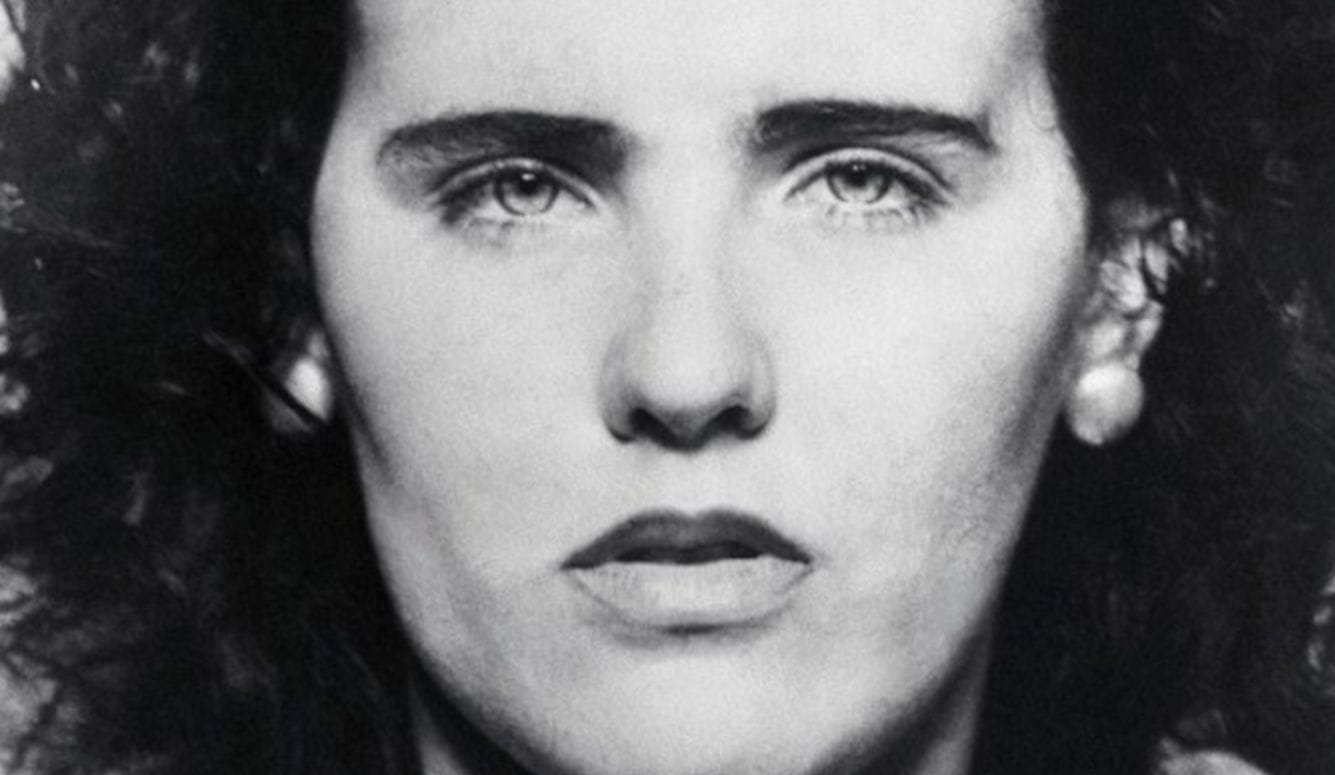
“The Black Dahlia” was the name given to 22-year-old Elizabeth “Betty” Short by the Long Beach Press-Telegram two days after her mutilated corpse was discovered in Leimert Park, Los Angeles, on 15 January 1947. A rumour circulated in the press that Short had habitually worn “black sheer clothing” even though none of her friends could recall seeing her dressed like this, and her oddly sinister nickname was subsequently lifted from The Blue Dahlia, a George Marshall film noir, written by Raymond Chandler and starring Alan Ladd and Veronica Lake, which had been released a year earlier.

As a result of this name, all that Elizabeth Short had been was discarded and she was reduced to an enigma at the centre of a notorious crime that remains unsolved to this day. As William J. Mann remarks in his excellent new account of the case:

Around those two words an entire industry would grow, with the dead woman becoming, as one chronicler called her, the “chanteuse in the Los Angeles Noir myth.” The Black Dahlia—a slinky, seductive creature that walks by night. Who was she? What secrets did she know? No longer was this just the tragic murder of a young woman. It suddenly became a glimpse into a sordid underworld rarely penetrated by the California sunlight but evidently very familiar to the victim. Within hours, the phrase “Black Dahlia” leapfrogged from Long Beach to Los Angeles, where it was used in final editions of the Daily News and Herald-Express that same afternoon. Within twenty-four hours, it would be the brand by which the story was known—and sold—forever after.

As Mann observes, this transformed Short “from innocent victim to femme fatale, prowling through the back streets of Los Angeles, followed by jealous boyfriends and sinister men, and, according to some, responsible for her tragic fate. … Such a perception would influence the investigation going forward. Even some detectives would start to believe it.”

Mann’s book is a valuable corrective to the cottage industry of speculative theories that proliferated after her body was found in a vacant lot that January morning—an attempt to rediscover the real Elizabeth Short and to offer a portrait of a woman who was actually nothing like the noirish antiheroine that she became in the public imagination. She did not drink or smoke and she was not, we learn, even sexually promiscuous: “Being called ‘The Black Dahlia’ in the press sexualized a young woman, who despite her love of flirting, was in fact rather innocent when it came to sex.”

In fact, Short only displayed her “hungry eyes” to men in restaurants rather than her body, and more often than not, they took pity on her and bought her a meal. Contrary to the reputation she acquired in news reports and gossip columns as a prostitute or manipulative seductress, it seems that Short didn’t really like sex much. She would discourage would-be seducers with a picture of a dead aviator for whom she said she still carried a torch, or a picture of a soldier to whom she said she was engaged. As a last resort, she would claim to be a virgin. According to Mann, she was an innocent who had been abandoned and rejected by her father (briefly a suspect in her murder), and a lost soul in a city rife with corruption and misogyny. In retrospect, the amazing thing is not that she was murdered, it is that she survived in the Los Angeles dream factory for as long as she did.

Mann repeatedly widens the scope of his inquiry to place the Dahlia case in the context of what was happening in postwar America at the time. Although politicians had promised peace and prosperity, by 1947, the country was twitchy and fearful and angry. After a period of decline, the crime rate had begun to climb again, and between 1945–46 the homicide rate rose from 5 to 6.4 per 100,000. Anxious Americans worried about reds lurking under beds and UFOs hovering in the skies. “Take your pick,” Mann remarks: “Communists, Jews, homosexuals, blacks, aliens. They were all out to get you.” His noirish prose style sometimes evokes Raymond Chandler’s nightmare vision of California:

There was something out there. Something dark, something destructive. You could hear it in the police sirens wailing through the city. You could smell it coming through the walls of the Hawthorne Hotel. You could feel it in the overheated, overpacked rooms of the Chancellor Apartments. You could taste it in the foul breath of the men you were forced to kiss. … It wasn’t something that only lurked in the dark alleys of America’s cities. It was everywhere. It was in the deep rural South and in quiet New England villages. And Elizabeth Short, like most everyone else, was caught in the middle of it.

By 1947, traditional gender roles and notions of family structure were threatened by women who strayed from the home. Young men returned from the war combat-ready and stressed out to find that the America they fought for had changed. Their anger and disaffection was contagious and it occasionally erupted in startling instances of horrific violence. In November 1944, a 34-year-old former Navy medic named Otto Stephen Wilson “slaughtered two women in hotel rooms, slicing one of them, Virginia Lee Griffin, from throat to vulva before yanking out her stomach and intestines with his hands.” Reactionary moralists blamed the rising crime rate on “female-headed households” which “grew by nearly 33 percent between 1940 and 1950.” And Mann cites a fanatical preacher who thundered: “We are faced simply and fundamentally by moral collapse.”


Read the full article here

Fact Checker

Verify the accuracy of this article using AI-powered analysis and real-time sources.

Get Your Fact Check Report

Enter your email to receive detailed fact-checking analysis

5 free reports remaining

Continue with Full Access

You've used your 5 free reports. Sign up for unlimited access!

Already have an account? Sign in here

Share. Facebook Twitter Pinterest LinkedIn Tumblr Email Telegram Copy Link
News Room
  • Website
  • Facebook
  • X (Twitter)
  • Instagram
  • LinkedIn

The FSNN News Room is the voice of our in-house journalists, editors, and researchers. We deliver timely, unbiased reporting at the crossroads of finance, cryptocurrency, and global politics, providing clear, fact-driven analysis free from agendas.

Related Articles

Debates

What Comes After the Regime?

11 minutes ago
Cryptocurrency & Free Speech Finance

Trump Meme Coin Price, Trading Volume Skyrocket as Holders Vie for Exclusive Event Access

26 minutes ago
Media & Culture

Police Investigate German Historian for Hitler-Putin Meme

1 hour ago
Cryptocurrency & Free Speech Finance

FBI Investigating After Malware Found Lurking in Steam PC Games

1 hour ago
Media & Culture

Trump Rolls Out White Carpet For White Migrants

2 hours ago
Media & Culture

Yet Again with the Heckler’s Veto in a Government Employee Speech Case

2 hours ago
Add A Comment

Comments are closed.

Editors Picks

Circle (CRCL) overtakes BlackRock (BLK) as tokenized treasury market hits $11 billion

15 minutes ago

Circle Stock Surges as Stablecoins Expand; Canaan Boosts Bitcoin Holdings

21 minutes ago

Trump Meme Coin Price, Trading Volume Skyrocket as Holders Vie for Exclusive Event Access

26 minutes ago

EFF Launches New Fight to Free the Law

56 minutes ago
Latest Posts

Police Investigate German Historian for Hitler-Putin Meme

1 hour ago

MoonPay adds Ledger-secured AI crypto agents to deal with wallet key risks

1 hour ago

Key BTC Price Levels to Watch Above $74K

1 hour ago

Subscribe to News

Get the latest news and updates directly to your inbox.

At FSNN – Free Speech News Network, we deliver unfiltered reporting and in-depth analysis on the stories that matter most. From breaking headlines to global perspectives, our mission is to keep you informed, empowered, and connected.

FSNN.net is owned and operated by GlobalBoost Media
, an independent media organization dedicated to advancing transparency, free expression, and factual journalism across the digital landscape.

Facebook X (Twitter) Discord Telegram
Latest News

What Comes After the Regime?

11 minutes ago

Circle (CRCL) overtakes BlackRock (BLK) as tokenized treasury market hits $11 billion

15 minutes ago

Circle Stock Surges as Stablecoins Expand; Canaan Boosts Bitcoin Holdings

21 minutes ago

Subscribe to Updates

Get the latest news and updates directly to your inbox.

© 2026 GlobalBoost Media. All Rights Reserved.
  • Privacy Policy
  • Terms of Service
  • Our Authors
  • Contact

Type above and press Enter to search. Press Esc to cancel.

🍪

Cookies

We and our selected partners wish to use cookies to collect information about you for functional purposes and statistical marketing. You may not give us your consent for certain purposes by selecting an option and you can withdraw your consent at any time via the cookie icon.

Cookie Preferences

Manage Cookies

Cookies are small text that can be used by websites to make the user experience more efficient. The law states that we may store cookies on your device if they are strictly necessary for the operation of this site. For all other types of cookies, we need your permission. This site uses various types of cookies. Some cookies are placed by third party services that appear on our pages.

Your permission applies to the following domains:

  • https://fsnn.net
Necessary
Necessary cookies help make a website usable by enabling basic functions like page navigation and access to secure areas of the website. The website cannot function properly without these cookies.
Statistic
Statistic cookies help website owners to understand how visitors interact with websites by collecting and reporting information anonymously.
Preferences
Preference cookies enable a website to remember information that changes the way the website behaves or looks, like your preferred language or the region that you are in.
Marketing
Marketing cookies are used to track visitors across websites. The intention is to display ads that are relevant and engaging for the individual user and thereby more valuable for publishers and third party advertisers.