

 Freedom Index
Listen to the article
Hello and welcome to another edition of Free Agent! Don’t be afraid to drop the gloves outside this week, even if it is cold out there.
We’ve got a great one for you today, covering everything from the Super Bowl to the Olympics to the Epstein files. Let’s get right into it.
Don’t miss sports coverage from Jason Russell and Reason.
- Even for sports-related subsidies, this is absolutely insane: Olathe, Kansas, has plans to create a 165-acre tax district around the new Chiefs practice facility, where for 30 years all sales, hotel, and property tax revenues in that district would go to the Chiefs instead of the city.
- Speaking of stadium subsidies, here’s economist J.C. Bradbury’s podcast interview with Reason‘s Eric Boehm on “The Real Reason You Pay for NFL Stadiums.” If you prefer text over watching or listening to podcasts, you can read a written version here: “There Are No Good Reasons To Subsidize Sports Stadiums. Governments Keep Doing It Anyway.”
- Seattle’s new mayor—a self-described socialist—”sees the World Cup as a deadline for the city to get as many unhoused Seattlites indoors as possible.”
- Amari Bailey played 10 games in the NBA. Now he wants to go back to college.
- Former University of Tennessee football coach Derek Dooley is running for one of Georgia’s Senate seats as a Republican.
- The government approved ESPN’s acquisition of NFL Media (including NFL RedZone, NFL Network, etc.)—why that transaction should require any kind of government review is beyond me.
- Balancing the budget on the back of your fantasy team: “Virginia Democrats introduced legislation to tax fantasy sports contests.“
- Woof:
Oh wow pic.twitter.com/zlyfhgBT80
— Jorge Galindo (@JorgeGalindo) January 30, 2026
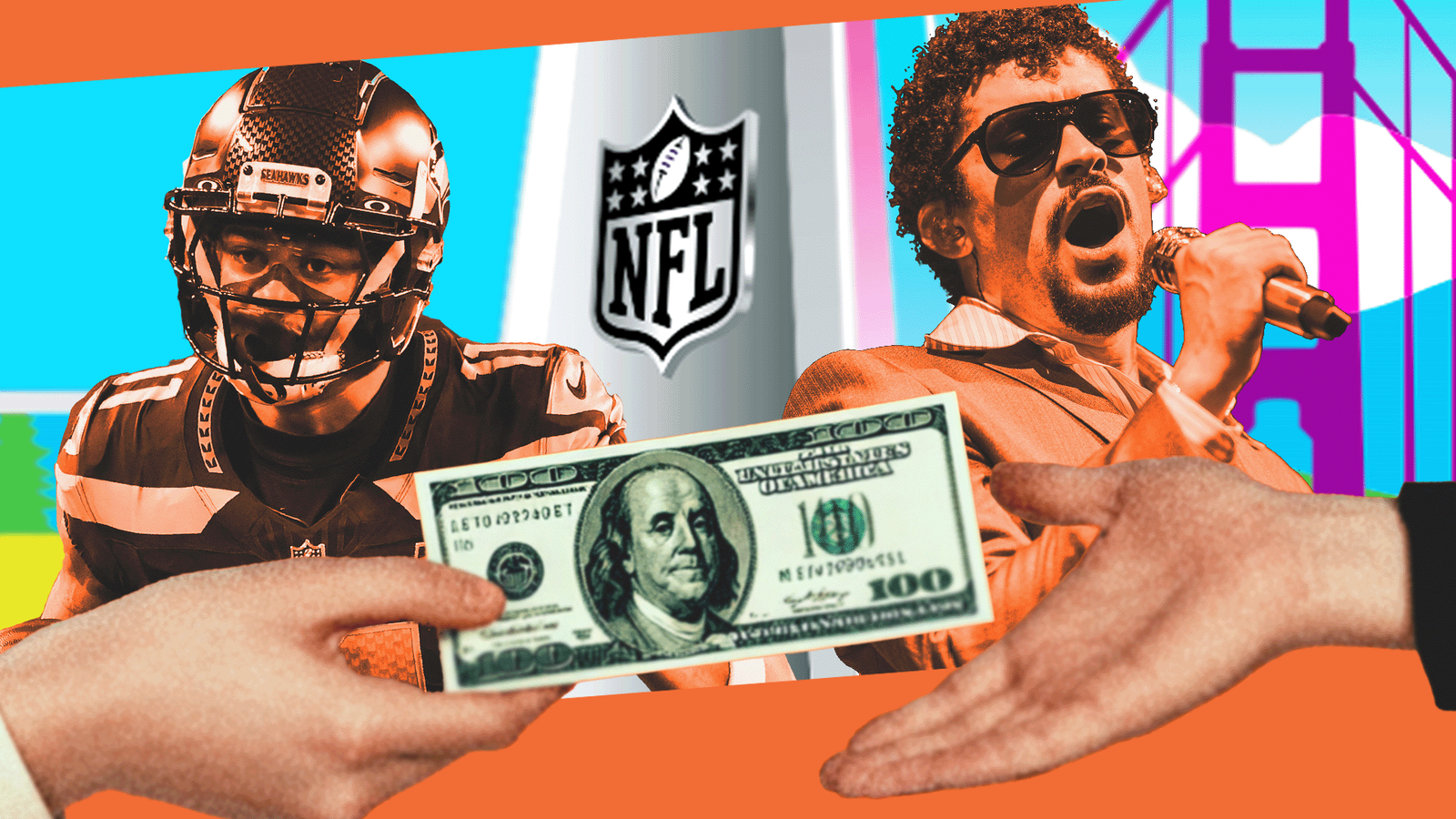
Since the first Super Bowls that I remember—John Elway’s back-to-back titles in the late ’90s—even non-sports fans have been excited for the commercials. Back then, about 80 million to 90 million Americans tuned in, and now it’s usually above 110 million, with the last Super Bowl setting a record American audience of 127.7 million viewers.
Many of those viewers are football fans, of course. They’d watch even if the commercials were the same repetitive ads they see every time they watch sports. But a lot of people tune in for the commercials and companies are now paying $10 million for the privilege of having your attention for 30 seconds.
Sometimes, people even enjoy watching the halftime show (to my fellow enjoyers of “white dude” music who haven’t really liked a show since the three-year run of Tom Petty, Bruce Springsteen, and The Who: Sorry, but you’re already tuning in anyway—the halftime show is supposed to bring in other viewers). That, too, is an ad that Apple pays $50 million a year for. The performer gets paid in exposure, not dollars, with the assumption that demand for their music, concert tickets, and merchandise will rise.
Tickets to the game itself are expensive. But for everyone else watching on TV, we’re basically getting paid by advertisers to enjoy the show they’re putting on for us. Advertisers bear the cost, we get to watch for free (albeit as part of our cable or streaming plan).
Then there’s the game: Competition within a defined set of rules that are (hopefully) fairly and evenly enforced. (Although the NFL’s off-field rules aren’t very capitalist, with its salary cap, a draft to redistribute talent to worse teams, and stiff speech rules.)
There’s also the food. The Super Bowl is not a time for your garden-grown lettuce and eggs from your free range chickens. The Super Bowl is for pizza and wings you got from the delivery place down the street, the awesome cheese dip that your friend makes from grocery store ingredients, and beers that are probably brewed in America but in breweries owned by multinational corporations.
Finally, the parties. Don’t show up to a Super Bowl party empty-handed. You should be engaging in informal “trade” with your host—they’ve cleaned their house and provided some food for you, so bring some other food and drinks in return.
The Super Bowl is a capitalist bonanza, and that’s what makes it great. (If only the game wasn’t being played in a government-owned stadium!)
The Super Bowl is not the best thing about capitalism—that would be the pathways out of poverty capitalism provides to millions of people every year. But the Super Bowl is a healthy byproduct of capitalism. The bigger it gets, the better, by bringing us all together to enjoy and appreciate it.
There are a lot of people in the Justice Department’s files involving Jeffrey Epstein! Here are the biggest sports-related names I could find.
Steve Tisch: The co-owner of the New York Giants shows up in the files at least 440 times, according to ESPN. His emails seem to be the most damning, with messages back and forth about various women. Tisch said in a statement that he and Epstein “had a brief association where we exchanged emails about adult women, and in addition, we discussed movies, philanthropy, and investments.” He claims he never took Epstein up on “any of his invitations.” The NFL is going to “look into the matter to understand the facts.” Even if he didn’t commit a crime, he could face a fine for “conduct detrimental to the integrity of and public confidence in” the league.
Ron Burkle: Formerly part owner of the Penguins and women’s soccer’s San Diego Wave, Burkle allegedly knew of Epstein’s interest in underage girls and an FBI tip suggests investigating him.
Todd Boehly: The co-owner of the Los Angeles Dodgers, Lakers, and Sparks—as well as soccer clubs Chelsea and Strasbourg—met Epstein at least twice. Boehly’s interactions, as far as we know, were strictly business. But these meetings were after Epstein served 13 months after pleading guilty to prostitution-related crimes.
Casey Wasserman: Wasserman is the head of the 2028 Los Angeles Olympics committee. He doesn’t appear to have a direct Epstein association—but he was all too connected to Epstein’s recruiter and onetime girlfriend Ghislaine Maxwell, sending her saucy messages.
Josh Harris: The owner of the Commanders, 76ers, Devils, and a future WNBA franchise seems to have had the weakest links to Epstein of anyone listed here. It’s unclear if Harris and Epstein ever met, and Harris claims he always rebuffed Epstein. But in at least one email Harris sought to meet with Epstein, asking him “U around any time from now to sunday?
Of course, just showing up in the files is not proof of wrongdoing—but these cases are not a great look. Front Office Sports has a longer list of names, most with even more tenuous connections, including Dan Snyder, Sammy Sosa, Kristaps Porzingis, and Robert Kraft.
The new Netflix documentary about the Miracle on Ice, called Miracle: The Boys of ’80, is quite good.
It starts by setting the scene very well: Two superpower countries coming together on the ice. One a dominant team full of seasoned professionals (who were listed as students or soldiers to get around the amateurism rules), the other a team of actual amateurs from Minnesota, New England, and the Midwest. Washington Post columnist George Will does well explaining the geopolitical stakes in the documentary.
As Al Michaels said early on in an interview, “What could top this?…Nothing.” That’s worth pondering: It’s hard to imagine a similar scenario right now where America could come off as the underdog against a team from a geopolitical superpower like China or Russia, at least in a sport Americans find worth watching (sorry, table tennis). It’s easy to imagine other countries using America as their sporting and geopolitical foil, though—thanks to President Donald Trump’s Greenland dreams, the men’s hockey game between the U.S. and Denmark on February 14 could be a bit of a trap game for the Americans.
The documentary details the six months of training, preparation, and roster-cutting that the U.S. team went through before the Olympics. New interviews with 16 of the 20 players on the roster drive home how much Herb Brooks was responsible for the team’s success, through off-ice organization (more games and long training camps), an emphasis on fitness through his famous “suicide” drills, and tactical acumen.
The documentary adds to the legend with archival footage of the games that even the players hadn’t seen before, and the crew did a great job finding news clips from the time and weaving them into the story.
The film is an easily digestible 100 minutes long. If you have time to watch it before the first U.S. men’s hockey game at the Olympics on February 12, I recommend it.
Many thanks to all the readers who responded to our survey on the Super Bowl! Turns out 72 percent of you are rooting for the Seahawks, with the Patriots getting just over a quarter of your support.
Based on the additional written responses, it seems like half of the Seahawks supporters are pro-Seahawks (“Lifelong Seahawks fan. I remember when 4-12 was considered a decent year.”) and the other half are just anti-Patriots (“I would root for Lucifer himself over the Pats.”).
Patriots supporters mostly seemed to be locals, though I thought this response was interesting: “I get sick of people, all over the U.S. (especially red states) ‘dumping’ on Boston, Massachusetts, & New England. And it’s not just sports!” Sam Darnold still had one hater, too: “I hate the Seahawks and USC. QB is a Trojan.”
Shoutout to the person who wrote “as a Michigan State fan, it would [be] great to see Kenneth Walker, Super Bowl champion.” Same, dude. Walker winning MVP is probably my best-case scenario.
There’s still time to vote before Sunday if you haven’t already! Heck, this isn’t scientific so vote again if you want.
With all due respect to another goalie fight, instead we’re going with a goalie goal to keep the team alive. Incredible stuff.
GOALKEEPER ANATOLIY TRUBIN SCORES A 98TH MINUTE GOAL AGAINST REAL MADRID TO SAVE BENFICA’S #UCL SEASON WITH THE FINAL TOUCH OF THE MATCH! ????
IMAGINE NOT LOVING FOOTBALL ???? pic.twitter.com/y0thIBEQb5
— CBS Sports Golazo ⚽️ (@CBSSportsGolazo) January 28, 2026
That’s all for this week. Enjoy watching the real game of the week—not the Olympics or the Super Bowl, but Florida Gulf Coast University club hockey’s Senior Night against Northeastern. I don’t think that’s actually viewable anywhere except in-person, so instead enjoy watching mixed doubles curling on Wednesday.
Read the full article here
Fact Checker
Verify the accuracy of this article using AI-powered analysis and real-time sources.