Close Menu
FSNN | Free Speech News NetworkFSNN | Free Speech News Network
  • Home
  • News
    • Politics
    • Legal & Courts
    • Tech & Big Tech
    • Campus & Education
    • Media & Culture
    • Global Free Speech
  • Opinions
    • Debates
  • Video/Live
  • Community
  • Freedom Index
  • About
    • Mission
    • Contact
    • Support
Trending

Bitcoin above $71,000, ETH, SOL, ADA zoom higher as cryptos shrugs off stock weakness

49 minutes ago

Alibaba Backs MetaComp to Expand Stablecoin Payment Network

54 minutes ago

Senate Overwhelmingly Passes CBDC Ban Attached to Bipartisan Housing Bill

55 minutes ago
Facebook X (Twitter) Instagram
Facebook X (Twitter) Discord Telegram
FSNN | Free Speech News NetworkFSNN | Free Speech News Network
Market Data Newsletter
Friday, March 13
  • Home
  • News
    • Politics
    • Legal & Courts
    • Tech & Big Tech
    • Campus & Education
    • Media & Culture
    • Global Free Speech
  • Opinions
    • Debates
  • Video/Live
  • Community
  • Freedom Index
  • About
    • Mission
    • Contact
    • Support
FSNN | Free Speech News NetworkFSNN | Free Speech News Network
Home»Opinions»Debates»Trump’s Greenland Gambit Threatens Post-War Democratic Order
Debates

Trump’s Greenland Gambit Threatens Post-War Democratic Order

News RoomBy News Room1 month agoNo Comments4 Mins Read212 Views
Share Facebook Twitter Pinterest Copy Link LinkedIn Tumblr Email VKontakte Telegram
Trump’s Greenland Gambit Threatens Post-War Democratic Order
Share
Facebook Twitter Pinterest Email Copy Link

Listen to the article

0:00
0:00

Key Takeaways

Playback Speed

Select a Voice

There are moments when geopolitical machinations reveal a government’s underlying character. The suggestion that the United States might purchase, annex, or otherwise take sovereign control of Greenland—an idea that’s been on Donald Trump’s mind since 2019—is one of them.

What looks like a simple play for minerals, surveillance stations, and military bases goes to an important moral question. Will the nation once viewed as the leading force for democracy and liberalism treat a territory controlled by an ally (in this case, Denmark) as if it were a commodity to be seized by force or purchased under duress? Or will it continue to respect the sovereign rights of others—a tendency that undergirds the international institutions joining Western democracies in common cause since the end of World War II?

Trump is certainly not the first US president to prioritise American interests over the letter of international law. But his predecessors typically did so when they were acting in (or against) rogue states that supported terrorism, attacked neighbours, or committed mass murder against their citizens. Saddam Hussein’s Iraq, for instance, checked all of these boxes. Denmark, by contrast, is a model democracy; not to mention a charter member of NATO.

Detail from US National Archives photo of US Secretary of State Dean Acheson signing the North Atlantic Treaty in Washington, D.C., on 4 April 1949. President Harry S. Truman Vice President Alben W. Barkley.

US President Harry Truman led the construction of the liberal international order in the late 1940s. And the United States continued to play a central role in the United Nations, the International Monetary Fund, the World Bank, the North American Aerospace Defense Command, and, of course, NATO itself. Of that organisation’s founding in 1949, Truman said: “In this treaty, we seek to establish freedom from aggression and from the use of force in the North Atlantic community.”

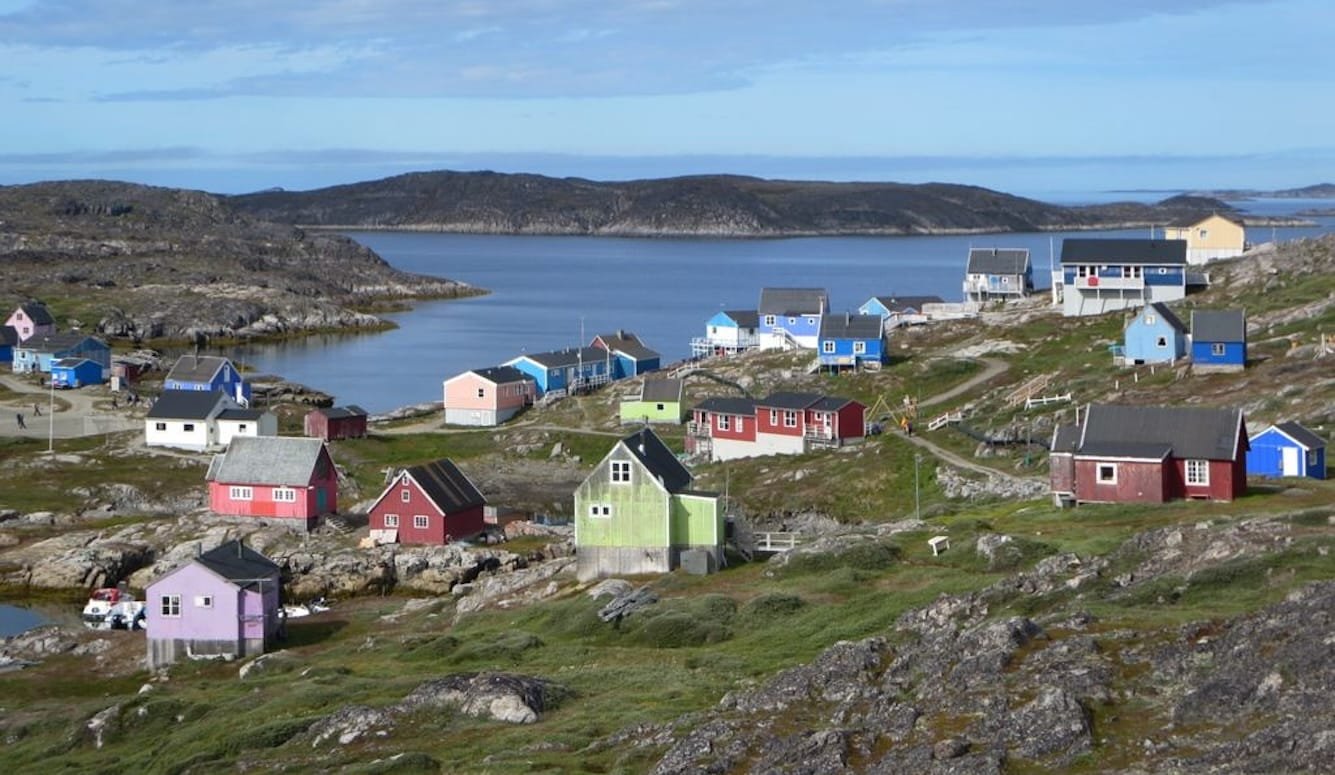
That community, then and now, includes Greenland—an autonomous territory that has long been part of what is formally known as the Kingdom of Denmark. But this hasn’t stopped Trump from using aggressive tactics to acquire the island, including threats of punitive tariffs against fellow NATO members that oppose his ambitions. Several European states, including France, Germany, Sweden, Norway, and the UK have taken these threats so seriously that they’ve recently sent symbolic military deployments to the island.

Speaking at the World Economic Forum in Davos, Switzerland on 21 January, Trump backed away from previous unsettling suggestions to the effect that he’d use military means to acquire Greenland. But no one knows whether that posture will change, as he’s been known to pivot abruptly on other geopolitical issues. (And the fact that Trump often seems to confuse Greenland with Iceland, an independent country 300 km away at its closest point, doesn’t inspire confidence that he’s yet studied the issue systematically.)

The strategic benefits offered by Greenland’s vast landmass and position in the middle of the North Atlantic are real. As historian Greg Koabel recently wrote in Quillette, this was widely understood throughout World War II. During the Cold War, the air bases and radar stations operated by United States and its NATO allies were seen as essential means to protect Western nations from a potential Soviet attack.

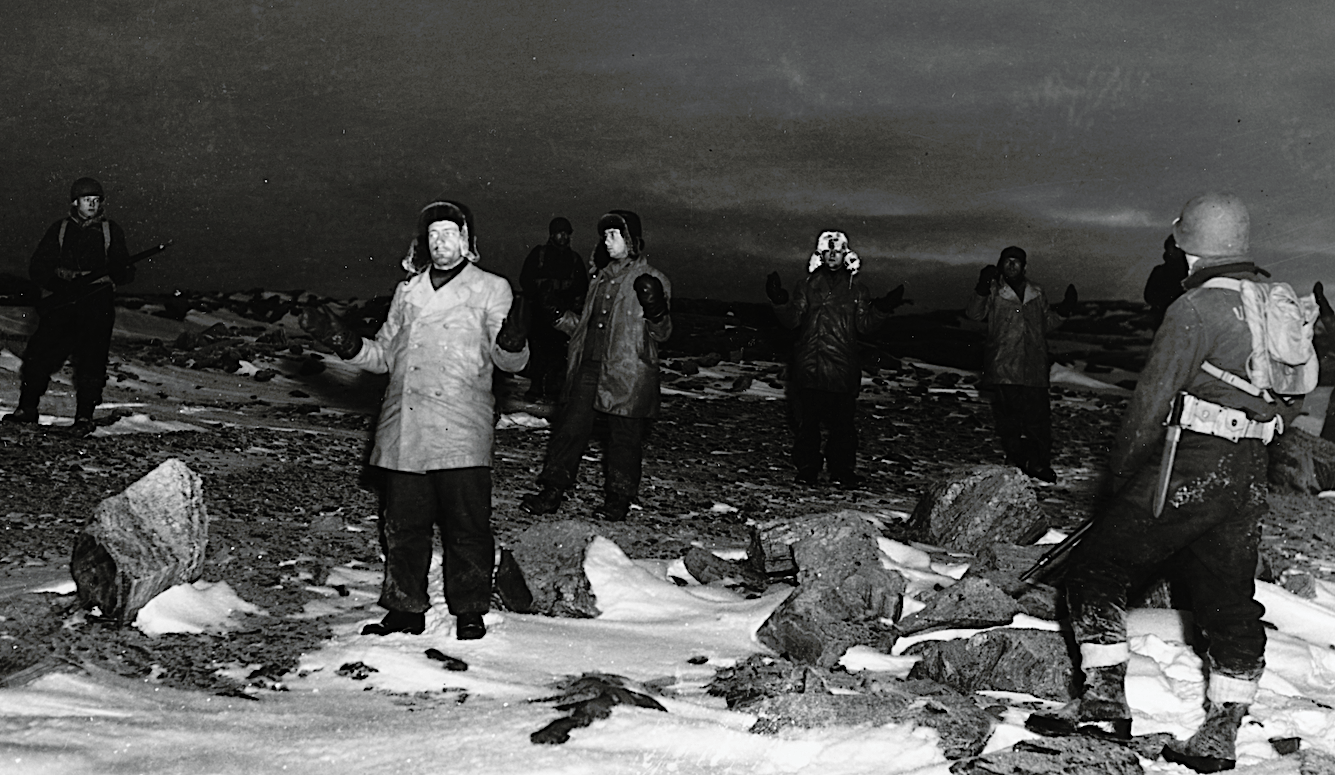
That Other Greenland Standoff

In April 1940, Danes, Germans, Brits, Americans, and Canadians had designs on the world’s largest island. Eighty-five years later, many of their arguments sound eerily familiar.
But Greenland is not terra nullius. It’s home to a (mostly) Inuit population whose roots on the island go back a millennium. Over time, these residents have gained almost complete autonomy under their self-government arrangement with Denmark. Trump’s apparent belief that the island is a prize to be won or bartered for—like one of those Caribbean colonies that European powers traded back and forth following the Napoleonic wars—is an insulting anachronism.

This approach is also self-defeating as a matter of foreign policy. For eight decades, the United States has not just been an architect, but also a beneficiary, of a rules-based international order built on reciprocal commitments. Even if nothing comes of Trump’s Greenland fixation, his manner of prosecuting it has sent all the wrong signals to America’s allies.


Read the full article here

Fact Checker

Verify the accuracy of this article using AI-powered analysis and real-time sources.

Get Your Fact Check Report

Enter your email to receive detailed fact-checking analysis

5 free reports remaining

Continue with Full Access

You've used your 5 free reports. Sign up for unlimited access!

Already have an account? Sign in here

Share. Facebook Twitter Pinterest LinkedIn Tumblr Email Telegram Copy Link
News Room
  • Website
  • Facebook
  • X (Twitter)
  • Instagram
  • LinkedIn

The FSNN News Room is the voice of our in-house journalists, editors, and researchers. We deliver timely, unbiased reporting at the crossroads of finance, cryptocurrency, and global politics, providing clear, fact-driven analysis free from agendas.

Related Articles

Cryptocurrency & Free Speech Finance

Senate Overwhelmingly Passes CBDC Ban Attached to Bipartisan Housing Bill

55 minutes ago
Media & Culture

Brickbat: Blocked and Reported

1 hour ago
Cryptocurrency & Free Speech Finance

How Alkimi is Fixing the ‘Opaque’ Online Advertising Model With AdFi

2 hours ago
Cryptocurrency & Free Speech Finance

CFTC Moves to Rein In Prediction Markets With Guidance, Rulemaking Review

3 hours ago
Cryptocurrency & Free Speech Finance

Bitcoin Is Rising While Bonds and Stocks Struggle—Here’s Why

4 hours ago
Cryptocurrency & Free Speech Finance

Adobe CEO Narayen Plans Exit as Tech Firms Restructure Around AI

5 hours ago
Add A Comment

Comments are closed.

Editors Picks

Alibaba Backs MetaComp to Expand Stablecoin Payment Network

54 minutes ago

Senate Overwhelmingly Passes CBDC Ban Attached to Bipartisan Housing Bill

55 minutes ago

Brickbat: Blocked and Reported

1 hour ago

Bitcoin’s early crash to $60,000 now looks like a warning for stocks

2 hours ago
Latest Posts

Democrats Promise to Oversee Reported DOJ Probe Into Binance

2 hours ago

How Alkimi is Fixing the ‘Opaque’ Online Advertising Model With AdFi

2 hours ago

Vietnam arrests journalist Le Anh Hung on ‘propaganda’ charge

3 hours ago

Subscribe to News

Get the latest news and updates directly to your inbox.

At FSNN – Free Speech News Network, we deliver unfiltered reporting and in-depth analysis on the stories that matter most. From breaking headlines to global perspectives, our mission is to keep you informed, empowered, and connected.

FSNN.net is owned and operated by GlobalBoost Media
, an independent media organization dedicated to advancing transparency, free expression, and factual journalism across the digital landscape.

Facebook X (Twitter) Discord Telegram
Latest News

Bitcoin above $71,000, ETH, SOL, ADA zoom higher as cryptos shrugs off stock weakness

49 minutes ago

Alibaba Backs MetaComp to Expand Stablecoin Payment Network

54 minutes ago

Senate Overwhelmingly Passes CBDC Ban Attached to Bipartisan Housing Bill

55 minutes ago

Subscribe to Updates

Get the latest news and updates directly to your inbox.

© 2026 GlobalBoost Media. All Rights Reserved.
  • Privacy Policy
  • Terms of Service
  • Our Authors
  • Contact

Type above and press Enter to search. Press Esc to cancel.

🍪

Cookies

We and our selected partners wish to use cookies to collect information about you for functional purposes and statistical marketing. You may not give us your consent for certain purposes by selecting an option and you can withdraw your consent at any time via the cookie icon.

Cookie Preferences

Manage Cookies

Cookies are small text that can be used by websites to make the user experience more efficient. The law states that we may store cookies on your device if they are strictly necessary for the operation of this site. For all other types of cookies, we need your permission. This site uses various types of cookies. Some cookies are placed by third party services that appear on our pages.

Your permission applies to the following domains:

  • https://fsnn.net
Necessary
Necessary cookies help make a website usable by enabling basic functions like page navigation and access to secure areas of the website. The website cannot function properly without these cookies.
Statistic
Statistic cookies help website owners to understand how visitors interact with websites by collecting and reporting information anonymously.
Preferences
Preference cookies enable a website to remember information that changes the way the website behaves or looks, like your preferred language or the region that you are in.
Marketing
Marketing cookies are used to track visitors across websites. The intention is to display ads that are relevant and engaging for the individual user and thereby more valuable for publishers and third party advertisers.