

 Freedom Index
Listen to the article
FIRE’s Free Speech Dispatch covers new and continuing censorship trends and challenges around the world. Our goal is to help readers better understand the global context of free expression. Want to make sure you don’t miss an update? Sign up for our newsletter.
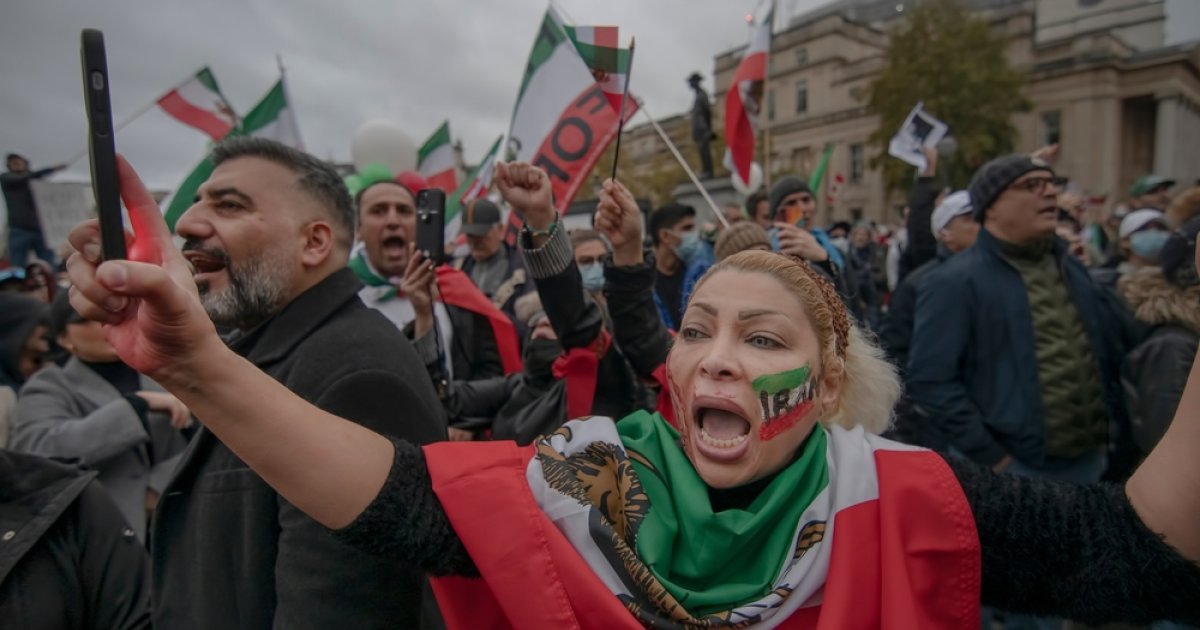
Iran escalates repression as protests spread nationwide
A familiar pattern of state repression has unfolded as mass protests spread in Iran. Authorities escalated their response through lethal force, mass arrests, communication blackouts, and the threat of executions. Demonstrations that began in late December over inflation and a collapsing currency quickly evolved into nationwide protests challenging the rule of Ayatollah Ali Khamenei more broadly. Death tolls are as of yet unclear, with different sources reporting numbers so far in the range from 6,000 to 12,000 to 30,000, and the exact number will likely be difficult to discern given widespread censorship. Security forces have also conducted thousands of arrests across all provinces.
As unrest intensified, Iran imposed a near-total internet shutdown, cutting off roughly 90% of connectivity while preserving selective access for government officials and state-linked platforms. The blackouts, combined with fast-track trials and the possible use of capital punishment (including in the case of detained protester Erfan Soltani), may continue to oppress the Iranian people for some time.
Online speech is powerful. That’s why Iran is silencing it.
Iran is killing protesters and cutting the internet to hide it. Censorship spreads globally—and democracies are flirting with dangerous tools.
Read More
Uganda employed similar tactics. Authorities cut nationwide internet access days before a presidential election this month, citing “misinformation” concerns as Yoweri Museveni sought a seventh term. The shutdown, which disrupted mobile money systems and opposition organizing, mirrors a broader global trend in which governments leverage digital control, emergency powers, and legal threats to contain political opposition at moments of vulnerability; often at the expense of free expression and public accountability.
Australia expands hate speech powers and counter-extremism laws after Bondi attack
Australia is moving forward with plans to significantly expand hate speech and counter-extremism laws following the Bondi Beach mass shooting, pledging tougher penalties, new criminal offenses, expanded visa cancellation powers, and a framework to target what it deems extremist organizations.
In legislation that passed last week, the government now has new powers to “list so-called hate groups, more easily deport or cancel the visas of individuals associated with hate groups, increase penalties for hate crime offences, and create new aggravated penalties for hate preachers and leaders who advocate violence.” It also includes a “new aggravated offence for adults who seek to radicalise children.” A provision addressing “promotion or incitement of racial hatred” was ultimately dropped from the legislation.
Home Affairs Minister Tony Burke said Australia’s leadership “would have liked the laws to be even stronger,” but has nevertheless passed “the strongest hate laws Australia’s ever had.” The Greens, a left-wing political party, objected to the legislation on the basis that it would “silence legitimate criticism of foreign nations undertaking human rights abuses.” Attorney General Michelle Rowland did not make clear every group that would be targeted, though she listed the National Socialist Network and Hizb ut-Tahrir, but said “there are a number of other factors that would need to be satisfied” other than accusations that Israel is committing genocide. The bill’s many critics, however, remain unconvinced.
After the Dec. 14 Bondi Beach mass shooting that killed 15 people during a Hanukkah celebration, New South Wales leaders also moved to tighten laws on hate speech, protests, and firearms, including a push to ban “globalize the intifada” chants. Indeed, a 53-year-old woman was detained in Sydney this month for wearing a jacket reading “globalise the intifada.” She alleges that she was wrongly arrested, and that police claimed the slogan was unlawful — but could not cite any specific law. She was released without charge.
UK also looks to crack down on chants it deems antisemitic
In the United Kingdom, Britain’s two largest police forces, the Metropolitan Police Service and Greater Manchester Police, announced a more assertive approach to policing antisemitism during protests. Officials plan to make arrests over certain chants and slogans, like “globalize the intifada,” that they say cause “increased fear in Jewish communities,” even if those chants have previously fallen short of prosecution thresholds.
UK police’s speech-chilling practice of tracking ‘non-crime hate incidents’
With complete disregard for free speech, since 2014 U.K. police have kept a database of people whose speech is perceived as ‘motivated by a hostility’ to race, gender, or other protected categories.
Read More
But in other news, UK police leaders are advocating scrapping most non-crime hate incidents, arguing that the system has expanded too far and drawn officers into monitoring online disputes that do not meet the threshold for criminal behavior. FIRE has repeatedly raised concerns about the chilling effects of sending police to investigate legal speech, not crime — and recent incidents in Miami Beach and Perry County, Tennessee show that we should be worried about this policing of online speech here in the United States too.
Religious speech, blasphemy, and buffer zones
- A retired Northern Ireland pastor, Clive Johnston, will stand trial on charges that he violated abortion buffer zone laws by preaching a gospel sermon near Causeway Hospital in Coleraine. The UK’s buffer zone laws have been under scrutiny from anti-abortion activists including Rose Docherty, arrested last year for holding a sign that read “Coercion is a crime, here to talk, only if you want” outside Queen Elizabeth University Hospital.
- In Poland, the justice ministry plans to amend its blasphemy laws so that people convicted of “offending religious feelings” can no longer be sentenced to prison, following a European Court of Human Rights ruling that the law violated free expression. The proposal would keep the offence but limit penalties to fines or community service. More reform is needed, but it’s nevertheless a positive development for free speech.
- Elsewhere, blasphemy laws continue to be enforced harshly. A Pakistani court in Chiniot sentenced an Ahmadi community member to life imprisonment under blasphemy statutes, alongside a concurrent three-year sentence, over alleged altered Quran translations.
- And in Bangladesh, a Hindu factory worker, Dipu Chandra Das, was lynched and set on fire following blasphemy allegations. A rights group documented 71 blasphemy-linked incidents targeting Hindus in Bangladesh between June and December 2025, involving arrests, mob violence, vandalism and multiple deaths.
Los Angeles Chinese Consulate guard maces protesters
In Los Angeles, a security guard hired by the Chinese Consulate was arrested after pepper-spraying pro-democracy protesters who were peacefully demonstrating to celebrate the U.S. capture of Nicolás Maduro. One of the men, who required medical attention, said the guard asked him, “Are you enjoying it?,” after spraying him.
Hong Kong’s pervasive censorship silences film, too
In Hong Kong, authorities banned the latest film by director Kiwi Chow, citing national security concerns. Chow said the film was a fictional thriller and not explicitly political, but believes his past work placed him under heightened scrutiny. The government “determined that it was ‘contrary to the interests of national security’… But how?” Chow said. “Nobody gave an explanation,”
Separately, four films were removed from the Hong Kong Film Award’s contenders list without explanation, despite appearing to meet eligibility rules. Industry figures suspect the exclusions may be linked to politically sensitive cast or crew members, raising further censorship concerns.
Europe promises new app W as competitor to X
European-led social media platform W was previewed last week at the World Economic Forum in Davos to address the “urgent need for a new social media platform built, governed and hosted in Europe” with “verification, free speech and data privacy at its core.” As our FIRE colleagues Greg Lukianoff and Adam Goldstein have pointed out, if “W is meant as just another alternative to X, and Europeans are free to use either platform as they see fit, then W might merely be a bad idea: a platform seemingly designed solely to comply with a complex array of European nations’ terrible free speech laws, each one more restrictive than the last.”
Don’t be too tempted by Europe’s plan to fix social media
The Digital Services Act will essentially oblige Big Tech to act as a privatized censor on behalf of governments — censors who will enjoy wide discretion under vague and subjective standards.
Read More
But given the threats to ban X and other regulation of social media platforms, there is a risk this will not compete, but dominate. And “given how willing European states are to jail their citizens for online speech, users should be cautious about speaking on a platform where anonymity is impossible.”
Pressure on the media, from South Korea to Venezuela
- South Korea’s National Assembly passed legislation allowing courts to impose heavy punitive damages on news outlets and large online platforms for disseminating “false or fabricated information,” despite warnings from journalists groups that the law could enable censorship. Supporters in President Lee Jae Myung’s Democratic Party say the bill is needed to combat disinformation, but critics argue its vague standards and steep penalties risk chilling investigative reporting and criticism of those in power.
- A report by Free Speech Collective documented 14,875 instances of free speech violations in India in 2025, including 117 arrests, widespread censorship, internet shutdowns, and the killing of eight journalists. The study said journalists were disproportionately targeted through arrests, harassment, legal action, and violence, while raising concerns about expanding state and regulatory controls over media academia, online platforms, and film certification.
- In Venezuela, at least 14 journalists were detained after the removal of Nicolás Maduro, with authorities confiscating phones and equipment and restricting reporting, though most were later released. Press groups warned the actions reflect a broader pattern of intimidation and criminalization of journalism under charges often used to suppress independent media.
Online speech, platforms, and youth access
- Roblox now requires users worldwide to verify their age through facial or ID checks to access chat features. Unverified users may still play but cannot chat.
- The dominoes from Australia’s ground-breaking — and troubling — social media age-gating law continue to fall. Now France is proposing a ban on social media access for children under 15 by September, backed by President Emmanuel Macron, citing risks such as exposure to “inappropriate content,” cyberbullying, and disrupted sleep.
- In its submission to a consultation for UK regulator Ofcom, Google warned new proposed measures to the Online Safety Act risked encroaching on users’ free speech. (Now where would Google get that idea…) Among the proposals were requirements for platforms to monitor and possibly hide “potentially” illegal content.
10 sentenced for ‘cyberbullying’ the first lady of France
A Paris court found 10 people guilty of cyberbullying France’s first lady for online posts “suggesting that Brigitte Macron was transgender and a pedophile.” One defendant received a six-month prison sentence (which may be served at home), others got suspended sentences, and all were ordered to attend cyberbullying awareness training and pay damages. Macron’s lawyer said of the sentencing, “what is important is that there are immediate cyberbullying awareness trainings, and for some of the defendants, a ban on using their social media accounts.”
Hate speech laws expand in India
Lawmakers in the Indian state of Karnataka have passed a bill criminalizing hate speech — expression “causing disharmony or enmity” — with penalties including fines and prison sentences of up to seven years. An opponent of the bill accused Karnataka’s government of “taking away people’s right to speech guaranteed by the constitution, and putting leaders of opposition and the media behind bars.”
Read the full article here
Fact Checker
Verify the accuracy of this article using AI-powered analysis and real-time sources.