

 Freedom Index

Listen to the article
The biggest obstacle to Bitcoin (BTC) being used as a payment method is tax policy, not scaling technology that reduces settlement times and transaction costs, according to Pierre Rochard, a board member for Bitcoin treasury company Strive.
“Here’s a metaphor: the best athlete can win against the worst athlete 100% of the time, if the best athlete plays. It drops to 0% if he doesn’t play and lets the weak athlete win,” Rochard said about BTC’s current lack of use as a method of payment.
In December 2025, the Bitcoin Policy Institute, a non-profit policy advocacy organization, sounded the alarm on the lack of a de minimis tax exemption for small Bitcoin transactions.
The lack of a de minimis tax exemption means that every time BTC is transferred to another party for payment, it is subject to taxes, hindering its use as a medium of exchange.
US lawmakers are considering limiting the de minimis tax exemption to overcollateralized dollar-pegged stablecoins, which are tokenized US dollars, backed 1:1 by fiat cash deposits or short-term government securities, which sparked backlash from Bitcoiners.
Related: Netherlands risks capital flight with unrealized gains tax on stocks, crypto
The Bitcoin community reacts to the lack of de minimis exemptions for BTC
In July 2025, Wyoming Senator Cynthia Lummis, an ally of the crypto industry, introduced a bill proposing a de minimis tax exemption on digital asset transactions of $300 or less.
The bill placed a $5,000 annual limit on exemptions and also included provisions to exempt cryptocurrencies used for charitable donations.
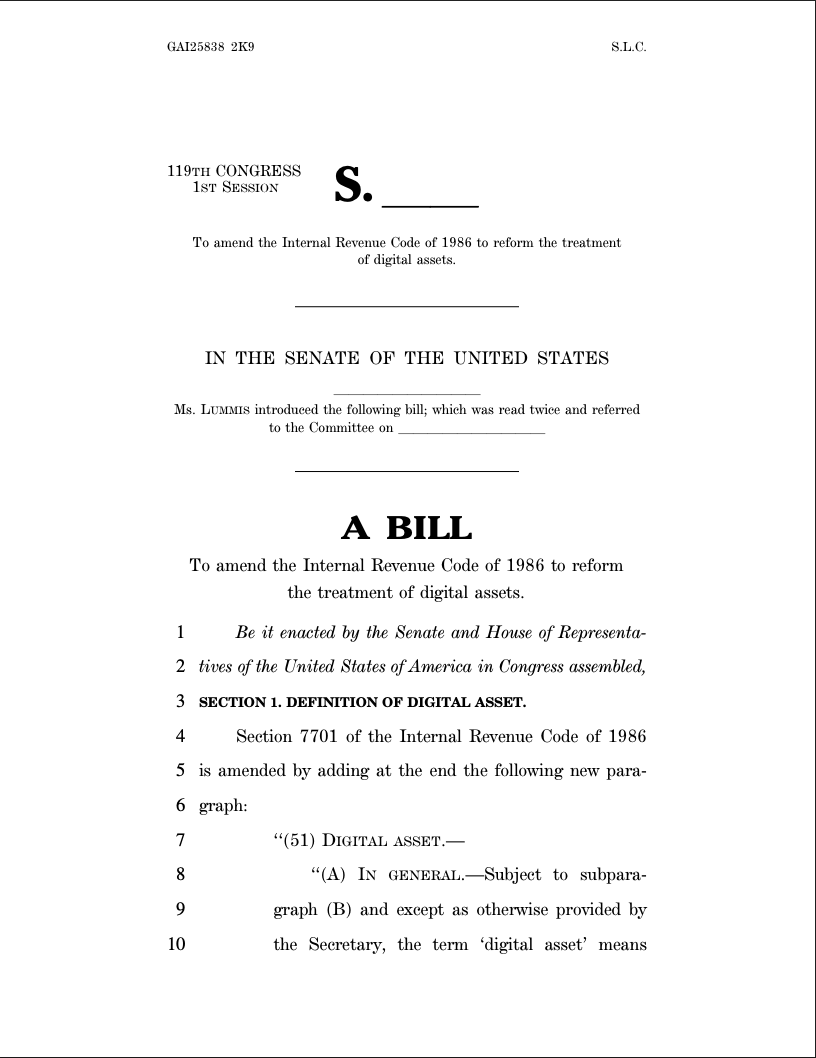
Lummis’ bill proposed deferring income from staking crypto to secure proof-of-stake blockchain networks or income earned from mining proof-of-work cryptocurrencies until those assets were sold.
Jack Dorsey, the founder of payments company Square, which integrated Bitcoin payments into its point-of-sale systems in October, called for a tax exemption on small BTC transactions.
“We want BTC to be everyday money ASAP,” Dorsey said. Meanwhile, others like Bitcoin advocate and co-founder of the Truth for the Commoner (TFTC) media outlet, Marty Bent, said the proposed tax exemption for stablecoins is “nonsensical.”
Magazine: How crypto laws changed in 2025 — and how they’ll change in 2026
Read the full article here
Fact Checker
Verify the accuracy of this article using AI-powered analysis and real-time sources.