

 Freedom Index
Listen to the article
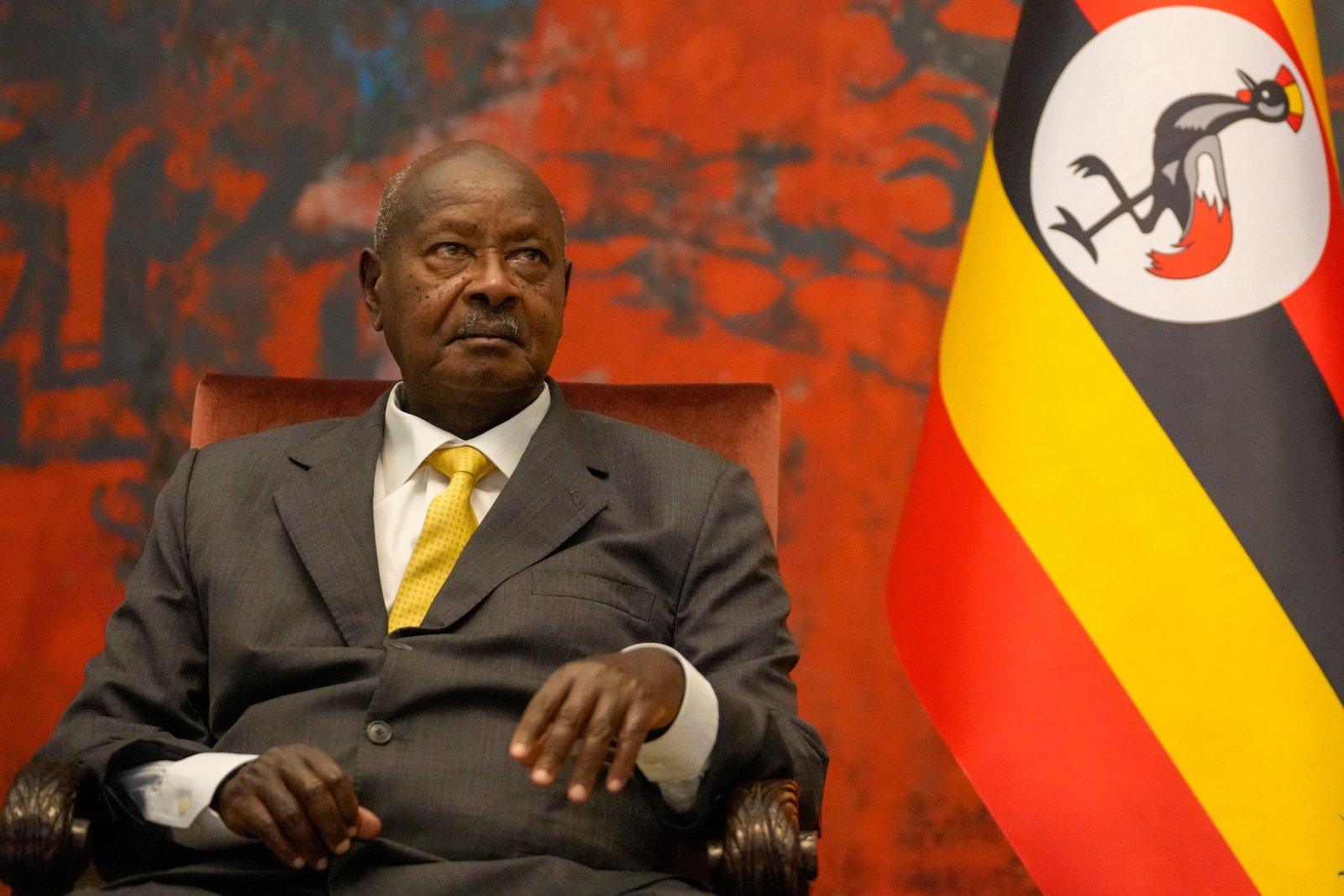
In the cover of digital darkness, Uganda’s long-serving president, General Yoweri Museveni, just “won” himself another five-year term in office that will extend his 40-year rule to 45 years come January 2031.
Afraid that the world would see the dirty ways in which the elections were conducted, he switched off the internet before polling started and ensured it remained off days after he was declared the winner. The reason behind this was simple: let the armed forces and the cadres of the ruling party deliver electoral victory to their benefactor without embarrassing footage of ballot boxes being stuffed with pre-ticked ballots and members of the opposition being brutalised and killed as they protest the actions of the criminal state.
In January 1981, Museveni claimed he had been cheated of electoral victory in the 1980 general elections, won by Apollo Milton Obote. In protest, he launched a guerilla armed struggle against Obote’s regime which brought him to power exactly five years later, on 26 January 1986. The wheel has come full circle: the man whose guerrilla war led to hundreds of thousands of deaths is doing the same thing he accused his predecessor of doing – mismanaging elections through myriad malpractices, the most regrettable of which is brutalising members of the opposition and killing some of them.
Ugandan writers have often commented on this sad state of affairs. In 1995, the year Museveni’s popularity peaked, the poet and scholar Timothy Wangusa published a poetry collection entitled Anthem for Africa in which he wrote, in part:
There is no new wisdom or new foolishness;
Every bloody deed enacts its ancient original,
And every saviour becomes the monster he killed.
1995, remember, was the year Uganda got its current constitution. Although far from a perfect document since it banned political parties, it had some good things, like presidential term limits (two five-year terms) and the presidential age limit (capping the age at which a person can stand for presidential office at 75 years of age). So, Ugandans were patient with Museveni. They knew that 10 years later, he would peacefully retire after serving two five-year terms. This did not happen. In 2005, he bribed Parliament to remove the term limits, and when he was about to turn 75, he bribed Parliament once again and had this last rail guard removed in December 2017. As I write this, he has just “won” another term to extend his rule to 45 years come January 2031.
In 2016, the Ugandan poet Peter Kagayi published his collection of poems, The Headline that Morning. In one of the poems in it, entitled In 2065, he boldly stated that nothing will have changed that much in 2065:
The president will be the president we have today,
And in a wheelchair, he will give his Nation Address
Only his son, then a Field Marshall, will read it on his behalf
And he will talk on his behalf
And he will rule on his behalf
I personally laughed off the poem as a hyperbolic worst-case scenario, because I did not think that Museveni would stay in power much longer. Remember, in January 2016 when this book came out, we still had the presidential age limit as our last guard-rail, having lost the presidential term limits in 2005. But something in Kagayi’s voice every time he read the poem indicated dead-seriousness: he meant every word he had written down. Indeed, in December 2017, two years after Kagayi’s poem came out, the age limit was removed as well. Here we are, with Museveni, at 81 years old, starting his 41st year as President of Uganda. He will always “win” the elections because they are organised by his lieutenants (remember, he handpicks members of the electoral commission). Besides, he has complete control of the army, headed by his son, General Muhoozi Kainerugaba, who will crush every protest threatening his father’s hold on power.
Unfortunately for Uganda, this “win” means that the country’s deterioration will continue unabated. Even by his own admission, corruption is rampant (almost out of his control, in fact) to the extent that the Speaker of Parliament Anita Among benefited from the theft of iron sheets meant for vulnerable people in Karamoja District, and got away with it. She is at the moment Museveni’s biggest supporter, which makes the old man happy. Through her, he has complete control of the house.
The public infrastructure is in bad shape. The roads in the central region of the country, Buganda, like in many other places in the country, are potholed. Kampala looks so terrible that I believe it is the most neglected capital city in the entire continent of Africa, if not in the entire world. The potholes are designed to swallow cars, Ugandans wryly put it.
Joblessness is the order of the day with thousands of young people (especially young women) leaving the country for the Middle East to work as domestic support staff. Meanwhile, the country gets deeper into debt because with a weak Parliament it is very easy to pass supplementary budgets and resolutions to borrow more and more money. As of June 2025, Uganda’s total public debt stood at approximately $32.3 billion. It is astonishing that someone can preside over such madness for forty years and still want to continue to be in charge, rather than retire and let someone else clean up the mess.
Organising general elections is a costly affair. Given this huge “cost of democracy”, as former finance minister Ezra Suruma put it in June 2006, we expect value in the form of transparency, with the candidates who emerge as winners being the ones who actually got elected by the citizens. Unfortunately, this is not the case. The outcome of the election is long known before the polling day because of systemic flaws in the way elections are organised.
To begin with, the Electoral Commission is not independent, it is constituted by the incumbent. Secondly, the Ugandan army continues to get involved in electioneering, moreover in a blatantly partisan way, as seen by their brutalisation of the members of the opposition before, during and after campaigns. Museveni’s biggest opposition Bobi Wine, whose real name is Robert Kyagulanyi, fled into hiding during the election period following threats from Museveni’s son Kainerugaba, with Wine saying he had escaped a raid on his home.
Finally, safeguards to ensure electoral integrity are done away with. For instance, biometric machines were procured at a hefty cost to ensure that a person votes just once. On polling day, these machines did not work, likely because of the internet shutdown that the government had ordered. Every presidential and parliamentary candidate is supposed to have agents at polling stations to ensure that the counting of ballots is done in a transparent way. There are claims that opposition politicians were dispersed by security forces.
It is no wonder that one of Museveni’s senior presidential advisors, Yiga Wamala, blatantly told the nation, a few days to polling day, not to think that elections could drive his boss out of power. “Vote and go home,” he said, describing how Museveni would be announced as the winner of the election, and after Museveni retires or dies, his son will succeed him. In other words, elections are a waste of time and money, as the winners are not decided by the people of Uganda, but by the might of the politicians who control the armed forces.
It is against this background that 10 years ago, I published a poem entitled I Miss Idi Amin in which I argued that because General Idi Amin (who ruled Uganda from 1971-1979) did not pretend to be a democrat, he saved the country huge sums of money. Let me conclude this reflection with three stanzas from the poem:
I miss Amin –
Rather than hold sham elections
Like other Ugandan presidents have done
He ruled by decree and saved the taxpayers money and time.
I miss Amin –
He made his intentions clear
And declared himself life president
Rather than hide behind sneaky constitutional amendments.
I miss Amin –
He had no place for one hundred ministers
And four hundred presidential advisors –
He saved the country billions of shillings in political patronage.
Read Danson Kahyana’s interview with Bobi Wine: Bobi Wine still standing up to oppression in Uganda, politically and musically
Read the full article here
Fact Checker
Verify the accuracy of this article using AI-powered analysis and real-time sources.