Close Menu
FSNN | Free Speech News NetworkFSNN | Free Speech News Network
  • Home
  • News
    • Politics
    • Legal & Courts
    • Tech & Big Tech
    • Campus & Education
    • Media & Culture
    • Global Free Speech
  • Opinions
    • Debates
  • Video/Live
  • Community
  • Freedom Index
  • About
    • Mission
    • Contact
    • Support
Trending

Inside the U.S. Military Buildup in Israel

23 minutes ago

Mercado Libre shuts down Mercado Coin, ending its loyalty-driven crypto experiment

50 minutes ago

Crypto Gains Political Clout Among 80% of UK Young Voters

53 minutes ago
Facebook X (Twitter) Instagram
Facebook X (Twitter) Discord Telegram
FSNN | Free Speech News NetworkFSNN | Free Speech News Network
Market Data Newsletter
Tuesday, March 31
  • Home
  • News
    • Politics
    • Legal & Courts
    • Tech & Big Tech
    • Campus & Education
    • Media & Culture
    • Global Free Speech
  • Opinions
    • Debates
  • Video/Live
  • Community
  • Freedom Index
  • About
    • Mission
    • Contact
    • Support
FSNN | Free Speech News NetworkFSNN | Free Speech News Network
Home»Opinions»Debates»The Dark Fusion of Spirituality and Conspiracy Theories
Debates

The Dark Fusion of Spirituality and Conspiracy Theories

News RoomBy News Room2 months agoNo Comments8 Mins Read493 Views
Share Facebook Twitter Pinterest Copy Link LinkedIn Tumblr Email VKontakte Telegram
The Dark Fusion of Spirituality and Conspiracy Theories
Share
Facebook Twitter Pinterest Email Copy Link

Listen to the article

0:00
0:00

Key Takeaways

Playback Speed

Select a Voice

In 2021, the body of New Age spiritual leader Amy Carlson was found mummified. Her eyes were missing from her corpse, her face was covered in glitter, and her skin was blue from ingesting large quantities of colloidal silver, which she thought
was a remedy for all ailments. She had died from alcoholism and anorexia weeks
earlier. Her followers had wrapped her body in a sleeping bag strung with Christmas lights—they had been waiting for “galactic beings” to come and collect her. Carlson was one of many online influencers who specialised in spiritual themes and conspiracy theories—a crossover that has come to be known as “conspirituality.”

Whenever anyone suggests I take colloidal silver, this is what I think of. Cult leader Amy Carlson died from chronic colloidal silver use. She literally turned blue from taking it everyday. It scares me. 😳 pic.twitter.com/rVv3efkLVD

— King Arthur Fan (@brandilwells) September 18, 2025

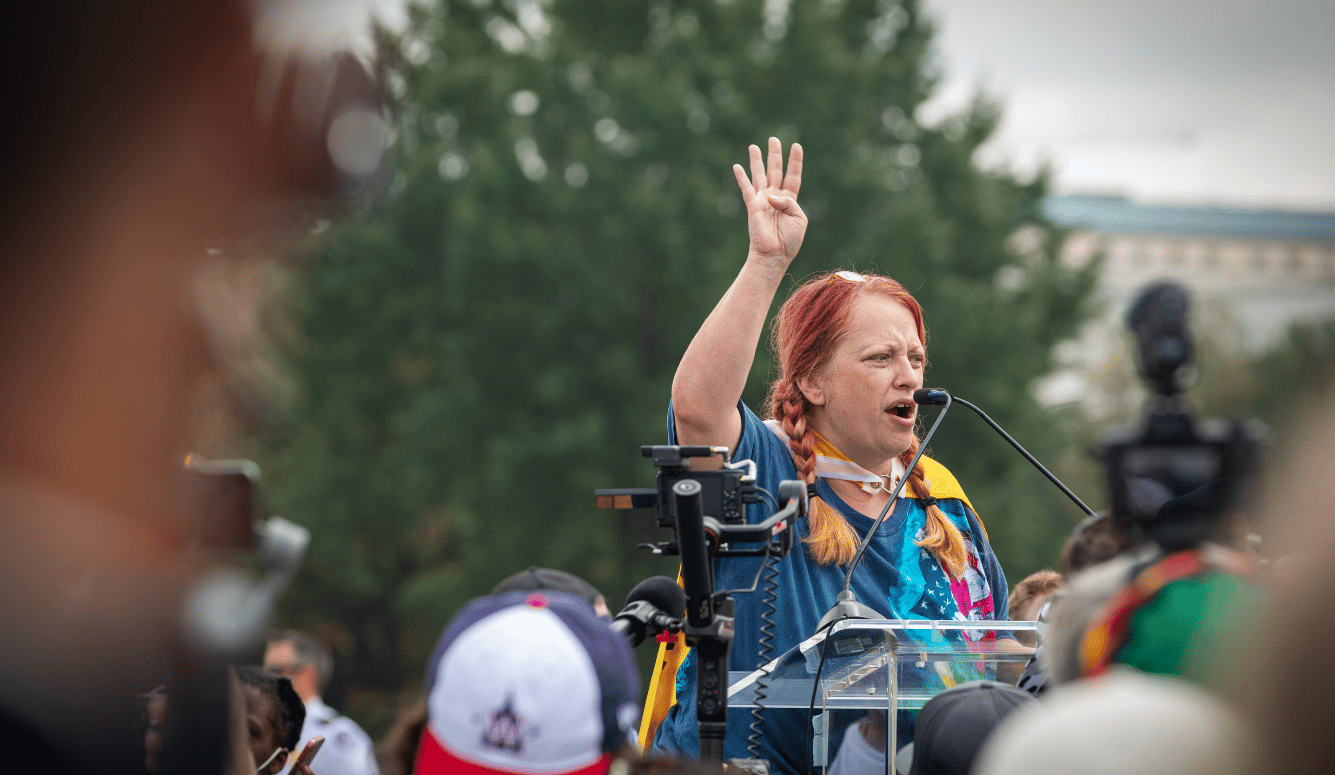
In her new book, The Conspiracists, California researcher Noelle Cook takes us into the murky depths of conspirituality and shows how these beliefs hijack people’s lives. Her research focuses on one of Carlson’s online followers, a woman named Yvonne. At around the same time Yvonne was following Carlson, she also participated in the 6 January Capitol riot. For her role in the attack, Yvonne was sentenced to 2 1/2 years in prison. A fellow January 6er named Tammy, who was also convicted and sentenced, is also profiled. The result is a highly readable case study of female vulnerability in middle age and how easily that vulnerability can be captured by online cults.

Along with their conspiritual beliefs, Yvonne and Tammy share a number of
similarities. Both women are in their fifties. Their histories are marked by significant trauma, including molestation or rape as children and abuse in intimate relationships when they were adults. Cook describes their conspiratorial beliefs as an elaborate coping mechanism: It is easier to endure despair when one can enter a fantasy world online, particularly one that casts the believer as an active participant in the eternal struggle between light and dark. In this sense, conspirituality offers meaning, community, and purpose.

What is striking about Cook’s portrait of Yvonne and Tammy is how little conventional politics actually colours their views. Despite having stormed the Capitol on 6 January, both women appear relatively uninterested in politics outside of sharing memes about Democrats on Facebook. Their primary commitments are spiritual rather than ideological. Donald Trump functions less as a political leader than as a deity within a broader New Age cosmology. And one is left with the impression that neither woman would have been particularly interested in politics at all had online communities not adopted Trump as a symbolic figure.

And despite being described as “right-wing,” their beliefs are not conservative in any meaningful sense. Yvonne and Tammy do not adhere to traditional religion, nor do they conserve families, homes, or institutions. They are instead immersed in a belief system populated by “starseeds,” “Ascension into 5D,” the “divine feminine,” “soul contracts,” and other New Age concepts. Such ideas gained popularity in the 20th century alongside feminism, environmentalism, and alternative medicine—movements that have never been associated with the Right.

But in 2020, a cultural shift took place. “The pandemic ultimately served as a superspreader of conspiracy theories,” Cook writes. Reflecting on the Conscious Life Expo, a New Age conference she attended in 2023, Cook observes that a program once dedicated to nutrition and environmentalism is now dominated by anti-vaccine and anti-government activism. “COVID drove both men and women to conspiracism … Men were more likely than women to see COVID as a Chinese bioweapon, a byproduct of 5G technology, or a hoax cooked up to make Donald Trump look bad,” while women were more interested in conspiracy theories involving children. While QAnon can be traced back to 2017, Cook argues that women were the reason it exploded during the pandemic. Indeed, far more women than men arrested for involvement in January 6 traced their political awakening to QAnon and its mission to “save the children.”

When Women Are Radicalised

Men aren’t the only ones susceptible to extremist thinking.

Women like Yvonne and Tammy are very rarely represented in mainstream media, sympathetically or otherwise. Not only because their beliefs are bizarre, but because they belong to a cognitive underclass: people without higher education, without stable jobs, without clear social roles, and without cultural or institutional power. Those at the bottom of the social hierarchy—financially, socially, and culturally—are seldom listened to or represented honestly. For presenting these lives without condescension or exploitation, Cook should be applauded. She avoids the easy temptation to dismiss or ridicule Yvonne and Tammy’s incoherent and often malign views. Instead, Cook focuses on the humans beneath the surface-level identities, revealing people in pain who are searching for hope, community, and a way to cope with a world in which they struggle to thrive.

At the same time, the book’s admirable neutrality leaves certain questions unanswered. While trauma clearly plays a role in shaping Yvonne and Tammy’s worldview, it cannot fully explain it. Many people experience abuse without embracing conspirituality, just as many conspiracy theorists do not have histories of abuse. Nor is it easy to reconcile Cook’s description of Yvonne as “extremely bright” with her lack of judgment.

And if trauma is granted an explanatory role in accounting for why people come to believe in conspiracy theories, then substance use must be considered as well. Tammy is described as going into rehab for drinking and later becoming a meth addict, while Yvonne speaks openly about taking magic mushrooms as part of her spiritual “work.” Years prior, Yvonne was dishonorably discharged from the Marines after being caught selling cocaine (she was also a user). Neurological explanations for belief in conspirituality are given short shrift by Cook, but we know that cannabis, cocaine, and methamphetamine use are all implicated in substance-induced psychotic disorder, with heavy users at greatest risk. To be clear: Belief in conspiracy theories or New Age spirituality on its own is not evidence of psychosis. But when combined with heavy or sustained drug use, it becomes difficult to separate an unconventional worldview from psychological disintegration.

Much like the drugs that induce psychosis, conspirituality itself also functions like an addictive substance. When under its spell, the capacity to enjoy ordinary life gradually narrows. Relationships with people who are not “users” or “followers” fray, and the world outside the obsession loses its pull. People addicted to online worlds—whether video games, online activism, or elaborate fantasy belief systems—often experience the same contraction of life, retreating into spaces that promise meaning and transcendence while quietly turning away from everything else.


Empathy may be one of the only methods by which conspiracy theorists can be reached, and Cook’s patience and compassion are essential to that task. But empathy alone is not sufficient. These belief systems are not benign. Amy Carlson—Yvonne’s original New Age guru—appeared on Dr. Phil less than a year before her death. During the episode, Carlson is shown locking a child in a dark cupboard as punishment. When the child emerges hysterical, she continues to confine him for longer and longer periods in the dark space. The footage shows that the child doesn’t calm down, and no other adults in the room intervene.

There is a bitter irony running through The Conspiracists that Cook hints at, but ultimately fails to explore. Tammy is a follower of QAnon, a movement obsessed with the protection of children. Yet in earlier years, her own alcoholism leads to her children being removed from her care and placed into foster homes—where they end up being sexually abused for years. Yvonne speaks of the “divine feminine” and of love being the highest value, yet also insists on having “no attachments,” including to her own family. Yvonne’s guru—Carlson—also abandons her own children to become “Mother God” on the internet, and to live a lifestyle where, according to one of her followers, she was “high from the moment she woke up to the moment she went to bed.”

This retreat from adulthood is not limited to parenting responsibilities. Tammy and Yvonne express no remorse over their participation in the 6 January riot. On the contrary, they both express denial, believing that they will “ascend to the 5th Dimension” before they are sentenced. In this context, conspirituality serves to shield both women from reflecting on their own destructive behaviour.

Cook goes to great lengths to explain that Yvonne and Tammy have latched onto conspirituality because of trauma. But there are other culprits lurking within Cook’s analysis: the Big Tech companies that engineer algorithmic rabbit holes, the grifters and cult leaders who exploit the vulnerable. Influencers make millions from women like Tammy and Yvonne, offering the illusion of moral purpose while leaving their followers more isolated from reality, and from people who actually care for them. In the modern attention economy, personal suffering is not alleviated—it is monetised.

What it means for democracy when large numbers of people retreat into online fantasy worlds also remains underexamined. Cook’s antidote is patience and compassion, but arguably these virtues are not enough. When belief systems lead to real-world harm, such as child abuse and neglect, participating in violent riots, and excusing or promoting heavy drug use, the question is no longer merely one of understanding, but of responsibility. Of course, the internet did not invent delusion, paranoia, or magical thinking, but it has enabled delusions to go viral. Just as we commit resources to fighting infectious diseases, we must also contain viruses of the mind.

This article was originally published at The Dispatch.


Read the full article here

Fact Checker

Verify the accuracy of this article using AI-powered analysis and real-time sources.

Get Your Fact Check Report

Enter your email to receive detailed fact-checking analysis

5 free reports remaining

Continue with Full Access

You've used your 5 free reports. Sign up for unlimited access!

Already have an account? Sign in here

Share. Facebook Twitter Pinterest LinkedIn Tumblr Email Telegram Copy Link
News Room
  • Website
  • Facebook
  • X (Twitter)
  • Instagram
  • LinkedIn

The FSNN News Room is the voice of our in-house journalists, editors, and researchers. We deliver timely, unbiased reporting at the crossroads of finance, cryptocurrency, and global politics, providing clear, fact-driven analysis free from agendas.

Related Articles

Media & Culture

Inside the U.S. Military Buildup in Israel

23 minutes ago
Cryptocurrency & Free Speech Finance

Uniblock Raises $5.2M to Unify Blockchain Infrastructure

60 minutes ago
Media & Culture

Bernie Sanders Has a Backdoor Plan To Socialize Sports Teams

1 hour ago
Cryptocurrency & Free Speech Finance

US Users Barred From KuCoin After $500K CFTC Settlement

2 hours ago
Media & Culture

David Ellison Pretends He Won’t Fire Half Of Reeling Hollywood If Pointless Warner Bros Merger Is Approved

2 hours ago
Media & Culture

Trump’s Unconstitutional Attack on Birthright Citizenship Finally Reaches the Supreme Court

2 hours ago
Add A Comment

Comments are closed.

Editors Picks

Mercado Libre shuts down Mercado Coin, ending its loyalty-driven crypto experiment

50 minutes ago

Crypto Gains Political Clout Among 80% of UK Young Voters

53 minutes ago

Uniblock Raises $5.2M to Unify Blockchain Infrastructure

60 minutes ago

Bernie Sanders Has a Backdoor Plan To Socialize Sports Teams

1 hour ago
Latest Posts

The media freedom delegation with Veran Matic, the chairperson of the management board of the Association of Independent Electronic Media (ANEM), who is facing open death threats Following a two-day mission to Belgrade on 26-27 March, the partner organisations of the Council of Europe’s Platform for the Safety of Journalists and the Media Freedom Rapid Response (MFRR) assessed that the past year had seen a continued deterioration, leaving the country in a prolonged and worsening press freedom crisis. In absence of the recognition by state officials about the severity of the current situation for the safety of journalists, the delegation warns that chances of further escalation in the severity of attacks against journalists remain dangerously high. Multiple reports of journalists being attacked while reporting on the local elections held in 10 municipalities on Sunday 29 March after the mission concluded, reinforce the delegation’s findings. The use of violence to restrict reporting and the absence of protections fosters a toxic environment that severely hinders the ability of journalists to work. The mission came at a time of unprecedented physical attacks on journalists and rampant online smear campaigns, led or amplified by influential members of the ruling party. Following the solidarity mission conducted by the MFRR in April 2025, the situation has worsened, despite repeated calls for action. Since the deadly collapse of Novi Sad train station canopy in November 2024 and the nationwide protests that followed, 294 press freedom violations targeting 513 media professionals and entities have been documented on the Mapping Media Freedom platform. During this time, Serbia has also been among the countries in Europe with the highest number of press freedom alerts on the CoE Platform. Following meetings with journalists, editors, trade unions and associations, the Supreme Public Prosecution office, the police, government and parliamentary officials, media outlets, the public service broadcaster, the international community and civil society bodies, the delegation is fearful that journalists are caught in a spiral of violence with few protections in place. The media freedom environment in Serbia is defined by physical attacks – often perpetrated by those charged with protecting journalists – verbal threats, including death threats, incitement to violence and divisive rhetoric, as well as extensive media capture. Violations also extend online; alongside online smear campaigns, coordinated bot attacks on social media accounts of independent media outlets and journalists, and Distributed Denial of Service (DDoS) attacks on news websites have emerged as new weapons of censorship. Unaccountable use of spyware against journalists and media workers, and the lack of swift and independent investigation into the cases remain an alarming concern that deserves serious attention from the authorities. So far, no accountability has been secured. The widespread violations have been documented in the alerts published on the Council of Europe Platform and Mapping Media Freedom platform, and confirmed by first hand testimony from journalists from print, broadcast and online media. During a meeting with Ana Brnabić, the President of the National Assembly of Serbia, the delegation discussed the climate for media freedom in Serbia and called on the authorities to live up to the heightened responsibilities of those in power to avoid discrediting, demonising and targeting journalists and condemn all attacks. While she told the delegation she was aware of specific high-profile threats to journalists and the heinous legacy of impunity exemplified by the killing of Slavko Ćuruvija, this did not appear to extend to the full spectrum of threats made to journalists, including by the ruling party and amplified by pro-government media tabloids, social media and supporters of the party. Ms Brnabić committed to improve the government’s response rate to alerts published on the Council of Europe Platform. Since the platform’s launch in 2015, 61% of alerts from Serbia have not been responded to. The non-response rate in 2025, coinciding with the documented increase in alerts, was 85%. The delegation welcomed this commitment, but reiterated our request that Ms. Brnabic halt political attacks and condemn them, if they come from others, as a vital first step in rebuilding trust in the state’s willingness to improve media freedom in the country. The increased violence against the press sparked by the nationwide protests in response to the November 2024 Novi Sad canopy tragedy, and the heavy state response that followed, has worsened through 2025 and continues into 2026. The Supreme Public Prosecution Office confirmed that there had been a 115% increase in the number of cases referred to it regarding media workers and a 367% increase in those related to physical attacks. This spike in criminal threats has been met with shocking levels of impunity. In 2025, only three convictions of those responsible for criminal attacks on journalists were secured by judicial authorities. A key factor, the delegation concluded, has been the continued breakdown of both the rule or law and the dedicated systems for the protection of journalists in Serbia. Poor response by the police to prosecutors’ requests concerning attacks on journalists results in the systematic failure to gather sufficient evidence to allow public prosecutions. The role of police is central to the question of journalist safety. However, when meeting the Ministry of Interior, the Belgrade City Police Directorate and the Criminal Police Directorate, the delegation was alarmed by the absence of any acknowledgement of the severity of the issue and the failings of the police force when protecting journalists or investigating violations aimed at journalists. The delegation was not informed about a single case of a police officer who has been held responsible for allegations of misconduct or their failure to act. Even when presented with concrete and well-documented examples of police perpetrating attacks, the law enforcement representatives did not respond in a manner that would suggest a willingness to learn from these failings to fulfil their legal responsibility to protect journalists. At the systemic level, the delegation expressed continued concern over the non-functioning of the Regulatory Authority for Electronic Media (REM) Council. The absence of a functional and independent REM Council represents a severe hindrance for the effective regulation of the overall electronic media and the licensing process. The situation also impacts the governance of Radio Television of Serbia (RTS), the public service broadcaster, as well as its oversight mechanisms. With the tenure of four members of the RTS board expiring in June, as well as a general election expected soon, the absence of the REM Council or any timeline by which it will be appointed will continue to embed uncertainty within RTS and the broader media space. In the meeting, Ms Brnabic expressed frustration over the situation and the desire to find a solution, in cooperation with international bodies. The delegation stresses that for credibility of the process to be acceptable under both Serbian law and EU accession progress mechanisms, the election must result in the appointment of a professional, pluralistic and ultimately independent body which acts in the public interest rather than in defence of political interests. These principles are absolutely non-negotiable for the process. The threat landscape facing journalists is diverse and complex. Increasingly, civil and criminal legal actions are deployed against journalists to curtail their reporting, through the threat of costly and time intensive court proceedings. Data held by the National Anti-SLAPP Working Group has identified 48 SLAPPs targeting journalists, editors, publishers and the media since 2020. Investigative outlet KRIK is currently facing 14 legal actions. While prominent outlets may be able to respond through public solidarity actions and receive funding support secured through crowdfunders to mount a defence, for local outlets, who are already struggling economically, an abusive legal action may be enough to shut down their reporting. The Council of Europe Recommendation on countering the use of SLAPPs establishes a detailed roadmap to ensure member states, such as Serbia, can meaningfully tackle abusive lawsuits and protect journalism. Ms Brnabić referenced an eagerness to address this issue and these recommendations provide a strong starting point. Despite clear data from Serbia’s own judicial authorities about the high numbers of attacks on journalists, following its meetings, the mission identified a fundamental disconnect between the seriousness of the situation on the ground and the assessment and response of the authorities. Clear political will is needed to break the downward spiral and ensure all attacks on the media are properly sanctioned under the law. Until then, and until political pressures on independent journalism are reduced, media freedom will continue to suffer, undermining Serbia’s EU accession aspirations. The mission partners will publish a report outlining findings and providing recommendations to the Serbian authorities, which will also be shared with the Council of Europe, European Union and the Organisation for the Security and Cooperation (OSCE). The mission was led by Article 19 Europe and joined by the Association of European Journalists (AEJ), Committee to Protect Journalists (CPJ), European Broadcasting Union (EBU), European Federation of Journalists (EFJ), European Centre for Press and Media Freedom (ECPMF), Index on Censorship, International Press Institute (IPI), Osservatorio Balcani Caucaso Transeuropa (OBCT) and Reporters Without Borders (RSF). Vlasti u Srbiji moraju da zaustave spiralu nasilja prema novinarima i novinarkama Sloboda medija u Srbiji ostaje zarobljena u silaznoj spirali usled rekordnog nivoa fizičkog nasilja prema novinarima i novinarkama, pretnji smrću i onlajn kampanja blaćenja, zabrinjavajućeg nivoa nekažnjivosti, kao i čvrste političke kontrole nad medijskim okruženjem, zaključila je koalicija organizacija za slobodu medija. Nakon dvodnevne misije u Beogradu, 26–27. marta, partnerske organizacije Platforme Saveta Evrope za zaštitu novinarstva i bezbednost novinara i inicijative Media Freedom Rapid Response (MFRR) ocenile su da je u protekloj godini došlo do daljeg pogoršanja, ostavljajući zemlju u produženoj i sve dubljoj krizi slobode medija. U odsustvu priznanja državnih zvaničnika o ozbiljnosti trenutne situacije u pogledu bezbednosti novinara i novinarki, delegacija upozorava da su šanse za dalje eskaliranje ozbiljnosti napada na novinare i novinarke opasno visoke. Brojni izveštaji o napadima na novinare i novinarke tokom izveštavanja o lokalnim izborima održanim u 10 opština u nedelju, 29. marta, nakon završetka misije, dodatno potvrđuju nalaze delegacije. Upotreba nasilja radi ograničavanja izveštavanja, kao i izostanak zaštite, stvaraju toksično okruženje koje ozbiljno otežava rad novinara i novinarki. Misija je sprovedena u trenutku nezapamćenog broja fizičkih napada na novinare  i novinarke i rasprostranjenih onlajn kampanja blaćenja, koje predvode ili pojačavaju uticajni članovi vladajuće stranke. Nakon misije solidarnosti koju je MFRR sproveo u aprilu 2025. godine, situacija se dodatno pogoršala, uprkos ponovljenim pozivima na delovanje. Od smrtonosnog urušavanja nadstrešnice železničke stanice u Novom Sadu u novembru 2024. godine i talasa protesta širom zemlje koji je usledio, na platformi Mapping Media Freedom dokumentovano je 294 kršenja slobode medija usmerena na 513 medijskih profesionalaca i subjekata. U tom periodu, Srbija je takođe bila među zemljama u Evropi sa najvećim brojem upozorenja o kršenjima slobode medija na Platformi Saveta Evrope. Nakon sastanaka sa novinarima, urednicima, sindikatima i udruženjima, Vrhovnim javnim tužilaštvom, policijom, predstavnicima vlade i parlamenta, medijima, javnim servisom, međunarodnom zajednicom i organizacijama civilnog društva, delegacija izražava zabrinutost da su novinari i novinarke zarobljeni u spirali nasilja uz vrlo ograničene mehanizme zaštite. Medijsko okruženje u Srbiji karakterišu fizički napadi – često počinjeni od strane onih koji su zaduženi za zaštitu novinara i novinarki – verbalne pretnje, uključujući pretnje smrću, podsticanje na nasilje i zapaljivu retoriku koja produbljuje podele, kao i izražena zarobljenost medija. Kršenja se šire i na onlajn prostor; pored kampanja blaćenja na internetu, koordinisani bot napadi na naloge nezavisnih medija i novinara na društvenim mrežama, kao i Distributed Denial of Service (DDoS) napadi na informativne sajtove, pojavili su se kao nova sredstva cenzure. Nekontrolisana upotreba špijunskog softvera protiv novinara i novinarki i medijskih radnika, kao i izostanak brzih i nezavisnih istraga u tim slučajevima, ostaju ozbiljan razlog za zabrinutost koji zahteva hitnu pažnju nadležnih organa. Do sada niko nije odgovarao za ove slučajeve. Rasprostranjena kršenja dokumentovana su kroz upozorenja objavljena na Platformi Saveta Evrope i Mapping Media Freedom platformi, a potvrđena su i neposrednim svedočenjima novinara i novinarki iz štampanih, elektronskih i onlajn medija. Tokom sastanka sa Anom Brnabić, predsednicom Narodne skupštine Republike Srbije, delegacija je razgovarala o stanju slobode medija u Srbiji i pozvala vlasti da ispune pojačanu odgovornost koju imaju kao nosioci vlasti, da se uzdrže od diskreditovanja, demonizacije i targetiranja novinara i i novinarki, te da osude sve napade. Iako je delegaciji rekla da je upoznata sa konkretnim pretnjama novinarima i novinarkama i sa zlokobnim nasleđem nekažnjivosti, koje ilustruje ubistvo Slavka Ćuruvije, činilo se da se to ne odnosi na čitav spektar pretnji upućenih novinarima i novinarkama, uključujući i one koje dolaze od vladajuće stranke, a koje dodatno pojačavaju provladini tabloidni mediji, društvene mreže i pristalice te stranke. Gospođa Brnabić se obavezala da unapredi stopu odgovora vlasti na upozorenja objavljena na Platformi Saveta Evrope. Od pokretanja Platforme 2015. godine, na 61% upozorenja iz Srbije nije odgovoreno. Stopa neodgovaranja u 2025. godini, koja se poklapa sa zabeleženim porastom broja upozorenja, iznosila je 85%. Delegacija je pozdravila ovo obavezivanje, ali je ponovila zahtev da gospođa Brnabić obustavi političke napade i da ih osudi kada dolaze od drugih, kao ključni prvi korak ka obnovi poverenja u spremnost države da unapredi slobodu medija u zemlji. Povećano nasilje nad medijima, podstaknuto masovnim protestima širom zemlje kao reakcijom na tragediju urušavanja nadstrešnice u Novom Sadu u novembru 2024. godine, kao i snažnim odgovorom države koji je usledio, dodatno se pogoršalo tokom 2025. i nastavlja se i u 2026. godini. Vrhovno javno tužilaštvo potvrdilo je da je došlo do povećanja od 115% u broju predmeta koji su mu upućeni u vezi sa medijskim radnicima, kao i do porasta od 367% u slučajevima koji se odnose na fizičke napade. Ovaj nagli rast krivičnih dela praćen je zabrinjavajućim nivoom nekažnjivosti. Tokom 2025. godine, pravosudni organi doneli su svega tri osuđujuće presude počiniocima krivičnih dela nad novinarima i i novinarkama. Ključni faktor, zaključila je delegacija, jeste kontinuirano urušavanje vladavine prava, kao i sistema namenjenih zaštiti novinara i novinarki u Srbiji. Nedovoljno efikasan odgovor policije na zahteve tužilaštva u vezi sa napadima na novinare i novinarke dovodi do sistematskog neuspeha u prikupljanju dovoljno dokaza koji bi omogućili pokretanje krivičnih postupaka. Uloga policije je ključna za pitanje bezbednosti novinara i novinarki. Međutim, tokom sastanaka sa Ministarstvom unutrašnjih poslova, Policijskom upravom za grad Beograd i Upravom kriminalističke policije, delegacija je bila zabrinuta zbog izostanka bilo kakvog priznanja ozbiljnosti problema i propusta policije u zaštiti novinara i novinarki i istrazi kršenja usmerenih protiv njih. Delegacija nije obaveštena ni o jednom slučaju u kojem je policijski službenik snosio odgovornost za navode o neprofesionalnom postupanju ili propust da reaguje. Čak i kada su predstavljeni konkretni i dobro dokumentovani primeri u kojima su policijski službenici bili počinioci napada, predstavnici organa za sprovođenje zakona nisu reagovali na način koji bi ukazivao na spremnost da iz ovih propusta izvuku pouke i ispune svoju zakonsku obavezu zaštite novinara i novinarki. Na sistemskom nivou, delegacija je izrazila kontinuiranu zabrinutost zbog nefunkcionisanja Saveta Regulatornog tela za elektronske medije (REM). Odsustvo funkcionalnog i nezavisnog Saveta REM-a predstavlja ozbiljnu prepreku za efikasno regulisanje elektronskih medija u celini, kao i za proces izdavanja dozvola. Ovakva situacija utiče i na upravljanje Radio-televizijom Srbije (RTS), javnim medijskim servisom, kao i na mehanizme njenog nadzora. Imajući u vidu da mandat četvoro članova Upravnog odbora RTS-a ističe u junu, kao i da se uskoro očekuju opšti izbori, odsustvo Saveta REM-a ili bilo kakvog vremenskog okvira za njegovo imenovanje nastaviće da produbljuje neizvesnost u vezi sa RTS-om i širim medijskim prostorom. Tokom sastanka, gospođa Brnabić je izrazila frustraciju zbog nastale situacije i želju da se pronađe rešenje, u saradnji sa međunarodnim telima. Delegacija naglašava da, kako bi proces bio kredibilan i prihvatljiv u skladu sa zakonodavstvom Srbije i mehanizmima pristupanja EU, izbor mora rezultirati imenovanjem profesionalnog, pluralističkog i istinski nezavisnog tela koje deluje u javnom interesu, a ne u odbrani političkih interesa. Ovi principi su apsolutno neupitni za ovaj proces. Spektar pretnji sa kojima se novinari i novinarke suočavaju raznovrstan je i složen. Sve češće se protiv novinara i novinarki koriste građanski i krivični postupci kako bi se ograničilo njihovo izveštavanje, kroz pretnju skupim i dugotrajnim sudskim procesima. Podaci Nacionalne radne grupe za borbu protiv SLAPP tužbi identifikovali su 48 SLAPP postupaka usmerenih protiv novinara, urednika, izdavača i medija od 2020. godine. Istraživački medij KRIK trenutno se suočava sa 14 sudskih postupaka. Dok veći i vidljiviji mediji ponekad mogu da odgovore kroz javne akcije solidarnosti i prikupljanje sredstava putem donacija za svoju odbranu, za lokalne medije, koji se već suočavaju sa ekonomskim poteškoćama, zloupotrebljeni pravni postupak može biti dovoljan da ugasi njihovo izveštavanje. Preporuka Saveta Evrope o suzbijanju zloupotrebe SLAPP tužbi uspostavlja detaljan okvir koji omogućava državama članicama, poput Srbije, da se na smislen način suprotstave ovakvim tužbama i zaštite novinarstvo. Gospođa Brnabić je ukazala na spremnost da se ovo pitanje reši, a ove preporuke predstavljaju snažnu polaznu osnovu. Uprkos jasnim podacima koje pružaju same pravosudne institucije Srbije o visokom broju napada na novinare i novinarke, nakon sastanaka misije uočen je dubok nesklad između ozbiljnosti situacije na terenu i procene i odgovora nadležnih organa. Neophodna je jasna politička volja kako bi se prekinula silazna spirala i obezbedilo da svi napadi na medije budu adekvatno sankcionisani u skladu sa zakonom. Dok se to ne dogodi, i dok se politički pritisci na nezavisno novinarstvo ne smanje, sloboda medija će nastaviti da trpi, podrivajući aspiracije Srbije za članstvo u Evropskoj uniji. Partneri misije objaviće izveštaj sa nalazima i preporukama upućenim vlastima u Srbiji, koji će takođe biti dostavljen Savetu Evrope, Evropskoj uniji i Organizaciji za evropsku bezbednost i saradnju (OEBS). Misiju je predvodila organizacija Article 19 Evropa, a učestvovali su i Udruženje evropskih novinara (AEJ), Komitet za zaštitu novinara (CPJ), Evropska radiodifuzna unija (EBU), Evropska federacija novinara (EFJ), Evropski centar za slobodu medija (ECPMF), Index on Censorship, Međunarodni institut za štampu (IPI), Opservatorija za Balkan Kavkaz Transevropa (OBCT) i Reporteri bez granica (RSF). READ MORE

2 hours ago

Bitcoin Cash (BCH) gains 1.5% as index trades flat

2 hours ago

OpenFX Raises $94M to Speed Cross-Border FX Payments with Stablecoins

2 hours ago

Subscribe to News

Get the latest news and updates directly to your inbox.

At FSNN – Free Speech News Network, we deliver unfiltered reporting and in-depth analysis on the stories that matter most. From breaking headlines to global perspectives, our mission is to keep you informed, empowered, and connected.

FSNN.net is owned and operated by GlobalBoost Media
, an independent media organization dedicated to advancing transparency, free expression, and factual journalism across the digital landscape.

Facebook X (Twitter) Discord Telegram
Latest News

Inside the U.S. Military Buildup in Israel

23 minutes ago

Mercado Libre shuts down Mercado Coin, ending its loyalty-driven crypto experiment

50 minutes ago

Crypto Gains Political Clout Among 80% of UK Young Voters

53 minutes ago

Subscribe to Updates

Get the latest news and updates directly to your inbox.

© 2026 GlobalBoost Media. All Rights Reserved.
  • Privacy Policy
  • Terms of Service
  • Our Authors
  • Contact

Type above and press Enter to search. Press Esc to cancel.

🍪

Cookies

We and our selected partners wish to use cookies to collect information about you for functional purposes and statistical marketing. You may not give us your consent for certain purposes by selecting an option and you can withdraw your consent at any time via the cookie icon.

Cookie Preferences

Manage Cookies

Cookies are small text that can be used by websites to make the user experience more efficient. The law states that we may store cookies on your device if they are strictly necessary for the operation of this site. For all other types of cookies, we need your permission. This site uses various types of cookies. Some cookies are placed by third party services that appear on our pages.

Your permission applies to the following domains:

  • https://fsnn.net
Necessary
Necessary cookies help make a website usable by enabling basic functions like page navigation and access to secure areas of the website. The website cannot function properly without these cookies.
Statistic
Statistic cookies help website owners to understand how visitors interact with websites by collecting and reporting information anonymously.
Preferences
Preference cookies enable a website to remember information that changes the way the website behaves or looks, like your preferred language or the region that you are in.
Marketing
Marketing cookies are used to track visitors across websites. The intention is to display ads that are relevant and engaging for the individual user and thereby more valuable for publishers and third party advertisers.