

 Freedom Index
Listen to the article
Adverbs were invented to serve other words and phrases, like Robin to Batman, literary sidekick to superhero, offering color and commentary about verbs and adjectives. They come in at least five flavors:
Adverbs of time tell the reader when something has or will happen, pointing to a date on the calendar (today, yesterday, tomorrow) and general time periods (forever, soon).
-
- Don’t worry, I’ll eventually get to it.
Adverbs of frequency tell the reader how often something has or will happen (constantly, frequently, rarely, always, daily, weekly, monthly, yearly).
-
- Nick usually cared when a close friend died.
Adverbs of manner tell the reader how something happened (slowly, beautifully, loudly, wisely). Adverbs of manner often stand next to the main verb.
-
- She harmlessly fired a weapon into the air.
Adverbs of degree tell the reader that something is intense (very, clearly, totally).
Adverbs of place tell the reader where something happened (everywhere, here, there, under, somewhere).
- Badverbs
Adverbs are not your friend. I believe the road to hell is paved with adverbs, and I will shout it from the rooftops. —Stephen King
Adverbs do many things for writers. They are frequently used in the law to intensify and hedge. I distrust hedge and intensifier adverbs, which I call badverbs, because they tell the reader what to think with no support or explanation. Badverbs are not your friend. They compromise the cause of clarity and distract from the message, breeding doubt in the reader’s brain and raising questions that harm, not help, your cause.
i. Intensifier Adverbs
Surely: the adverb of a man without an argument. —Edward St. Aubyn
Adverbs to intensify. Intensifier adverbs were invented to emphasize (absolutely, clearly, obviously), the lexical equivalent of an exclamation point.
Your argument utterly fails.
Most intensifier adverbs are unpersuasive; indeed, readers reflexively think the opposite. When frequently used, these screamers harm a writer’s veracity, competence and intelligence. They disrespect the reader, too.
It should come as no surprise that words like clearly and obviously do not bolster a weak argument:
The court outrageously found the blatantly unconstitutional statute was constitutional, which was obviously wrong and clearly reversible error.
The court held the statute was constitutional. It was not.
The first sentence might convey the depth of the writer’s opinion, but his word choice is unattractive and unproductive. The second sentence makes his point moderately because readers are more likely to consider it thoughtfully.
Read these sentences:
Plaintiff is completely honest.
Plaintiff is honest.
The first sentence hopes to convey a client’s absolute commitment to honesty, but the reader is left wondering why the writer changed a binary question—honest or dishonest—into a graduated scale.
Intensifier adverbs are standard fare for lazy and unconcerned writers who want to lecture and characterize, not show and explain. The worst part about intensifier adverbs is that those writers who depend on them miss the best chance to persuade:
The truck was going outrageously fast under the circumstances.
The truck was speeding at 102 miles an hour in a school zone.
Intensifier adverbs are commonly used to camouflage an unfinished product. Writers who use intensifier adverbs to hide gaps in law and logic mistake the adverb as a literary shortcut to persuasion. They offer half-baked thoughts in half-baked prose because they lack the time or ammunition to craft an argument from scratch.
Naked intensifier adverbs are the worst. They are often used to disguise bad facts and arguments. When so used, each intensifier adverb signifies a red flag, inadvertently erected to mark a problematic issue or fact. This use of adverbs offers a peek into the writer’s mind, unmasking self-perceived weaknesses. Just remember that an intensifier adverb frequently represents the last gasp of an advocate who lacks the goods to persuade.
Don’t believe me? Start looking for adverbs in opposing motions and briefs, and then ask yourself whether the adverb signals a weak or close argument.
The defendant is obviously wrong.
His case law is absurdly inapposite.
These adverbs doth protest too much, projecting weakness and breeding doubt. And remember that intensifier adverbs are like a promise. When used to characterize a fact or argument, the writer pinky promises to demonstrate or establish that fact or argument.
And yet we all use them, advertently and inadvertently. Stetson law professor Lance Long studied how and when state and federal court appellate judges used intensifier adverbs in appellate opinions and discovered they are most often used when things are clearly less clear in their chambers. Appellate judges were most likely to insert an intensifier adverb in dissents and majority responses to dissents, when two positions conflict and things are definitionally less clear.
[* * *]
Badverbs suck the energy from strong verbs and adjectives. Persuasive writers use vivid verbs and concrete nouns to make the reader think what was never said. Consider this example:
After robbing a Chandler bank, Jones led police on a high-speed car chase, spanning 25 miles of highways and residential areas in Chandler, Tempe and Phoenix, while aiming his revolver at random civilians, including a nine-year-old child, and twice firing at pursuing officers. Jones ditched his car near Mill Avenue in Tempe and ran to a movie theater, where he was arrested in the ticket line.
This paragraph has zero intensifier adverbs. And yet, after reading the paragraph, the intensifier adverbs leap into the reader’s mind. Jones acted outrageously, brazenly and dangerously.
Intensifier adverbs are sometimes required and appropriate. They must be used when the courts or legislature says so. And once a writer has performed the heavy lift and proven the point, he may treat himself to an intensifier adverb. Even still, the writers most entitled to use intensifier adverbs use them the least, letting their verbs and nouns do the job.
Meditation: Persuasive writers distrust badverbs. Without this literary shortcut, they must work with nouns and verbs to develop their writing, manually.
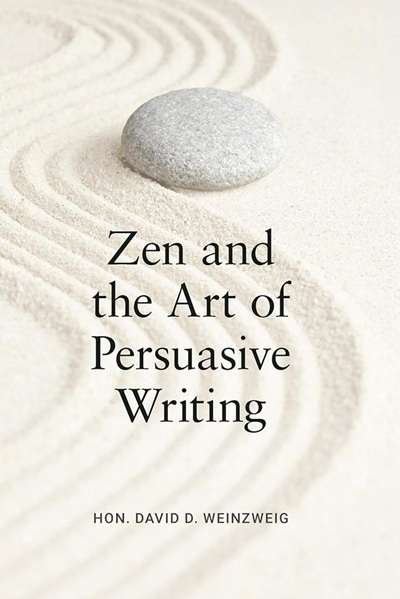
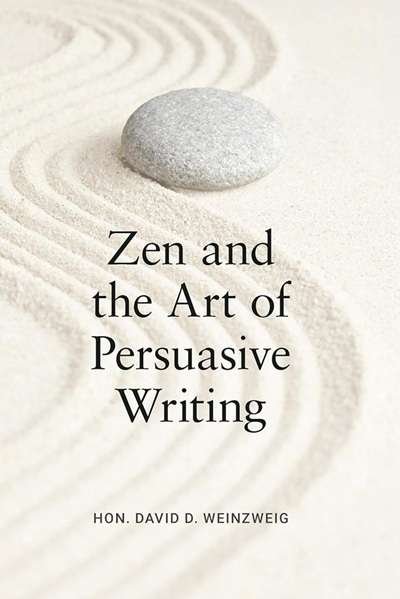
Learn more about adverbs and persuasion in the new book, Zen and the Art of Persuasive Writing. Purchase now where books are sold, including Amazon.
Read the full article here
Fact Checker
Verify the accuracy of this article using AI-powered analysis and real-time sources.