

 Freedom Index

Listen to the article
BNY, a financial services company that traces its roots back to one of the oldest financial institutions in the United States, launched tokenized bank deposits for its institutional clients on Friday.
Tokenized bank deposits are onchain cash balances or depositor claims against a bank. BNY will issue the tokenized bank deposits on an in-house permissioned blockchain network, according to an announcement from the company.
The onchain deposits will be used to support collateral and margin requirements, with additional functionality in the future, BNY said, adding:
“As global financial markets shift towards an always-on operating model, institutions are seeking faster and more efficient ways to move assets — with greater settlement certainty, transparency, lower friction and capability to unlock liquidity.”
The move by BNY is the latest blockchain-related development from a major financial institution, as banks and established players in traditional finance overhaul legacy financial infrastructure to meet the demands of the digital age.
Related: Tokenization will disrupt finance faster than digital disrupted media: Crypto exec
SEC proposes a shift to always-on capital markets
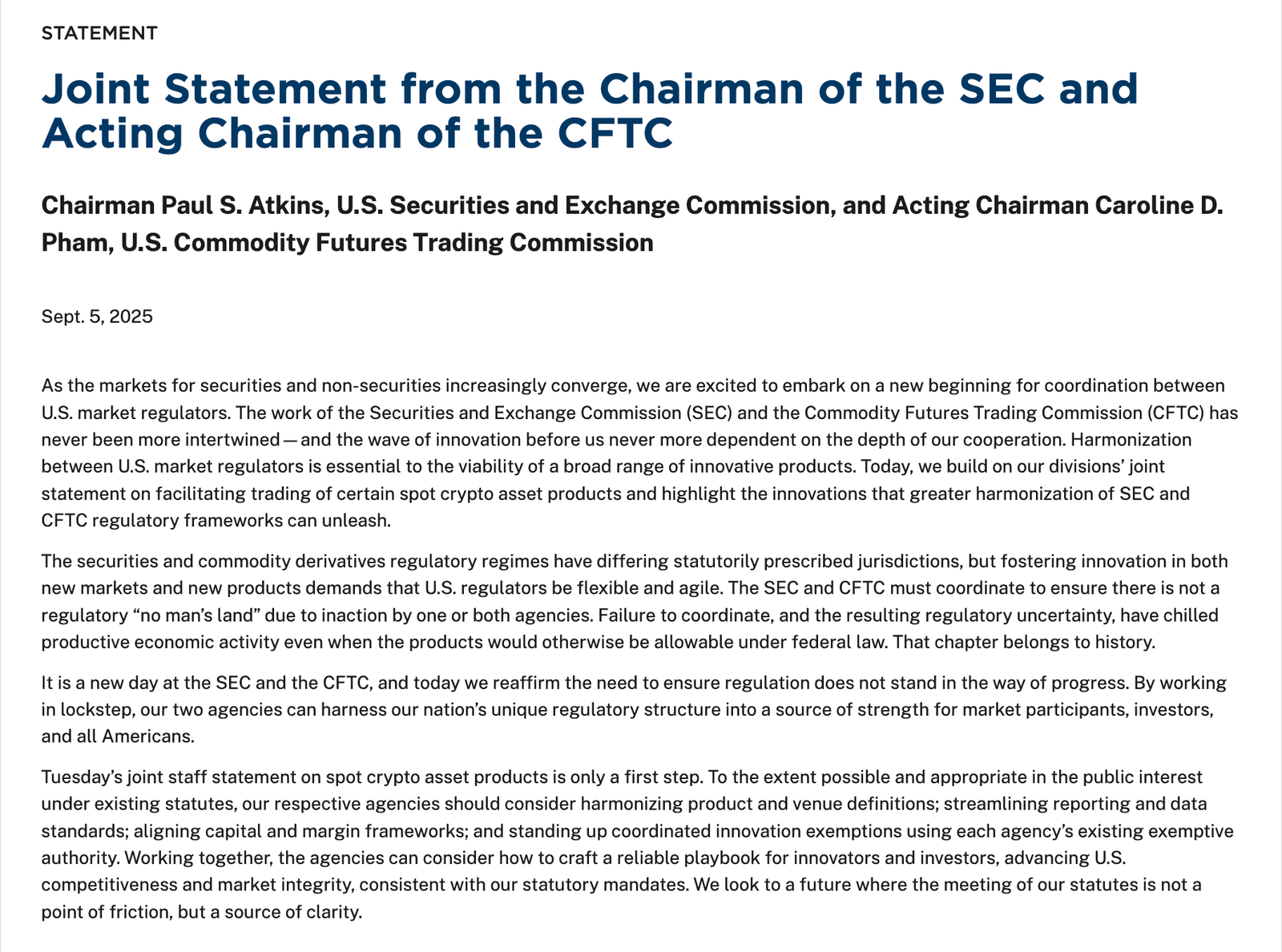
In September 2025, the US Securities and Exchange Commission (SEC) and the Commodity Futures Trading Commission (CFTC) released a joint statement proposing a shift to 24/7 capital markets.
“Further expanding trading hours could better align US markets with the evolving reality of a global, always-on economy,” the statement said.
The legacy financial system relies on a complex web of intermediaries and does not operate nights, weekends or certain holidays, leaving investors and traders stuck in positions when the market is closed.
Blockchain technology removes intermediaries and functions around the clock, reducing settlement times, transaction costs and friction in cross-border commerce.
Real-world asset tokenization (RWA), the process of representing physical or traditional assets on a blockchain, is one of the tools that enables 24/7 capital markets across asset classes, including traditionally illiquid assets like real estate and collectibles.
The SEC and CFTC acknowledged that 24/7 onchain markets and tokenization are more “viable” for certain asset classes and not others, adding that a “one-size-fits-all” approach to always-on markets may not work.
Magazine: TradFi is building Ethereum L2s to tokenize trillions in RWAs: Inside story
Read the full article here
Fact Checker
Verify the accuracy of this article using AI-powered analysis and real-time sources.