Close Menu
FSNN | Free Speech News NetworkFSNN | Free Speech News Network
  • Home
  • News
    • Politics
    • Legal & Courts
    • Tech & Big Tech
    • Campus & Education
    • Media & Culture
    • Global Free Speech
  • Opinions
    • Debates
  • Video/Live
  • Community
  • Freedom Index
  • About
    • Mission
    • Contact
    • Support
Trending

The Casual Cruelty Of The GOP’s Migrant Purge

4 minutes ago

Will AI Benefit Everyone?

6 minutes ago

Cameroonian journalist jailed in child kidnapping trial

11 minutes ago
Facebook X (Twitter) Instagram
Facebook X (Twitter) Discord Telegram
FSNN | Free Speech News NetworkFSNN | Free Speech News Network
Market Data Newsletter
Friday, January 30
  • Home
  • News
    • Politics
    • Legal & Courts
    • Tech & Big Tech
    • Campus & Education
    • Media & Culture
    • Global Free Speech
  • Opinions
    • Debates
  • Video/Live
  • Community
  • Freedom Index
  • About
    • Mission
    • Contact
    • Support
FSNN | Free Speech News NetworkFSNN | Free Speech News Network
Home»News»Media & Culture»Chief Justice Roberts on the Declaration of Independence
Media & Culture

Chief Justice Roberts on the Declaration of Independence

News RoomBy News Room4 weeks agoNo Comments5 Mins Read389 Views
Share Facebook Twitter Pinterest Copy Link LinkedIn Tumblr Email VKontakte Telegram
Chief Justice Roberts on the Declaration of Independence
Share
Facebook Twitter Pinterest Email Copy Link

Listen to the article

0:00
0:00

Key Takeaways

Playback Speed

Select a Voice

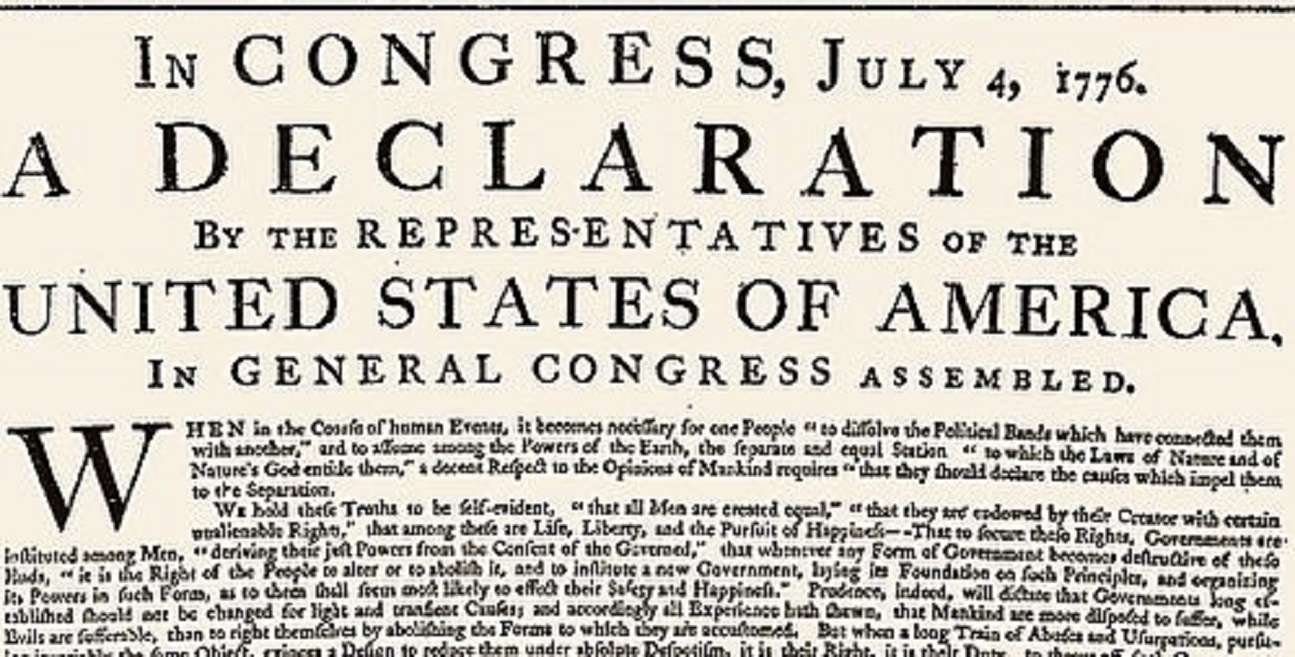
In his year-end report on the state of the federal judiciary, Chief Justice John Roberts makes some notable statements about the Declaration of Independence and its relevance to constitutional interpretation. The relevant section in Roberts’ report is occasioned by upcoming 250th anniversary of the Declaration, and much of it reads like standard civics book material. But there are a few noteworthy passages.

First, Roberts notes that the Declaration “sets out a statement of political values
based on Enlightenment principles.”  This endorsement of the idea that the United States is a “creedal nation” based on universal liberal values may seem obvious. But it’s at odds with the insistence of both far-leftists and right-wing ethno-nationalists that the Declaration and the Founding were meant to establish a nation promoting the interests of a specific racial or ethnic group (usually defined as Anglo-Saxon whites). I cannot know for sure. But I suspect that Roberts is aware of this dispute and included this language in the report for that reason.

Roberts rightly notes that the Declaration is ” a statement of national aspirations, not a codification of enforceable legal obligations,” and that its universalist aspirations were far from fully realized by the original 1787 Constitution. He particularly stresses the continued prevalence of racially based slavery, including its practice by many of the signers of the Declaration itself. B

But Roberts also emphasizes that “throughout our history [the Declaration] has played a signal role in the development of the Nation’s constitutional, statutory, and common law.” He approvingly cites Supreme Court justices who relied on its principles as tools for constitutional interpretation. This is notable in light of the longstanding debate about whether the Declaration is relevant to constitutional interpretation. Roberts appears to agree that, at least in some situations, it is.

It’s worth noting that this idea is perfectly consistent with originalism. If parts of the original Constitution and later amendments were intended to enforce the principles of the Declaration and were so understood at the time, this fact is relevant to any originalist interpretation of these provisions. I think it’s particularly relevant to claims that the Constitution’s structural constraints and protections for individual rights somehow do not apply to immigration restrictions, or apply with much lesser force. The principles of the Declaration of Independence strongly suggest otherwise. These natural rights principles are also relevant to interpretation of a range of other constitutional issues, such as property rights protected by the Takings Clause of the Fifth Amendment.

Finally, Roberts emphasizes that judicial independence was one of the objectives of the Declaration:

In the words of future Justice [James] Wilson during the ratification debates, the key passage of the Declaration’s preamble…. “is the broad basis on which our independence was placed,” and “on the same certain and solid foundation this system [the Constitution] is erected.”

The connection between these two foundational documents could not be clearer when it comes to the judicial branch. The Declaration charged that George III “has made Judges de- pendent on his Will alone, for the tenure of their offices, and the amount and payment of their salaries.” The Constitution corrected this flaw, granting life tenure and salary protection to safeguard the independence of federal judges and ensure their ability to serve as a counter-majoritarian check on the political branches. This arrangement, now in place for 236 years, has served the country well.

In normal times, this statement would be an obvious truism, hardly worthy of note. But it has special significance at a time when Trump and various administration officials have called for judges to be subservient to the executive, and give him sweeping deference on a vast range of important issues, ranging from tariffs to immigration to the domestic use of the military.

Whether Roberts’ statements about the Declaration, its principles, and judicial independence portend anything about the Court’s jurisprudence on key cases to be decided in the near future, remains to be seen. Roberts cannot control the votes of the other justices, and his own jurisprudence hasn’t always lived up to these ideals.

My general take on Roberts is that he’s good on some issues (e.g. – freedom of speech and constitutional property rights), but much less so on others (e.g. – some key issues related to immigration and executive power). But what he says in the report about the Declaration of Independence and its principles is both right and encouraging in its potential implications for the future.

Cornell law Prof. Michael Dorf has his own thoughts on the significance of these and other passages in Roberts’ year-end report, including an interesting comparison between Roberts’ take and Justice Thurgood Marshall’s famous 1987 speech on the bicentennial of the Constitution. I agree with some of his points, but differ on others. In particular, I think the above points about the principles of the Declaration are more compatible with originalism than Dorf suggests. But I agree that reliance on those principles is in tension with much of the Court’s recent reliance on later traditions. Those traditions often reflect failure to live up to the principles underlying the original meaning.

Read the full article here

Fact Checker

Verify the accuracy of this article using AI-powered analysis and real-time sources.

Get Your Fact Check Report

Enter your email to receive detailed fact-checking analysis

5 free reports remaining

Continue with Full Access

You've used your 5 free reports. Sign up for unlimited access!

Already have an account? Sign in here

#FreePress #MediaAndPolitics #MediaEthics #PoliticalMedia #PressFreedom
Share. Facebook Twitter Pinterest LinkedIn Tumblr Email Telegram Copy Link
News Room
  • Website
  • Facebook
  • X (Twitter)
  • Instagram
  • LinkedIn

The FSNN News Room is the voice of our in-house journalists, editors, and researchers. We deliver timely, unbiased reporting at the crossroads of finance, cryptocurrency, and global politics, providing clear, fact-driven analysis free from agendas.

Related Articles

Media & Culture

The Casual Cruelty Of The GOP’s Migrant Purge

4 minutes ago
Media & Culture

Will AI Benefit Everyone?

6 minutes ago
Cryptocurrency & Free Speech Finance

Blank Check Firm Linked to Crypto Exchange Kraken Raises $345 Million in Upsized IPO

36 minutes ago
Media & Culture

Trump Demands $10 Billion From Taxpayers For Leaked Tax Returns; His Own Lawyers Get To Decide What He Gets

1 hour ago
Media & Culture

There Are No Good Reasons To Subsidize Sports Stadiums. Governments Keep Doing It Anyway.

1 hour ago
Cryptocurrency & Free Speech Finance

Vitalik Buterin Withdraws $44.7M in ETH to Support Ethereum Growth Through ‘Mild Austerity’

2 hours ago
Add A Comment

Comments are closed.

Editors Picks

Will AI Benefit Everyone?

6 minutes ago

Cameroonian journalist jailed in child kidnapping trial

11 minutes ago

Visa and Mastercard aren’t buying the stablecoin hype for everyday payments

26 minutes ago

Bitcoin Loses Ground in Global Asset Rankings After Violent Selloff

29 minutes ago
Latest Posts

Blank Check Firm Linked to Crypto Exchange Kraken Raises $345 Million in Upsized IPO

36 minutes ago

Trump Demands $10 Billion From Taxpayers For Leaked Tax Returns; His Own Lawyers Get To Decide What He Gets

1 hour ago

There Are No Good Reasons To Subsidize Sports Stadiums. Governments Keep Doing It Anyway.

1 hour ago

Subscribe to News

Get the latest news and updates directly to your inbox.

At FSNN – Free Speech News Network, we deliver unfiltered reporting and in-depth analysis on the stories that matter most. From breaking headlines to global perspectives, our mission is to keep you informed, empowered, and connected.

FSNN.net is owned and operated by GlobalBoost Media
, an independent media organization dedicated to advancing transparency, free expression, and factual journalism across the digital landscape.

Facebook X (Twitter) Discord Telegram
Latest News

The Casual Cruelty Of The GOP’s Migrant Purge

4 minutes ago

Will AI Benefit Everyone?

6 minutes ago

Cameroonian journalist jailed in child kidnapping trial

11 minutes ago

Subscribe to Updates

Get the latest news and updates directly to your inbox.

© 2026 GlobalBoost Media. All Rights Reserved.
  • Privacy Policy
  • Terms of Service
  • Our Authors
  • Contact

Type above and press Enter to search. Press Esc to cancel.

🍪

Cookies

We and our selected partners wish to use cookies to collect information about you for functional purposes and statistical marketing. You may not give us your consent for certain purposes by selecting an option and you can withdraw your consent at any time via the cookie icon.

Cookie Preferences

Manage Cookies

Cookies are small text that can be used by websites to make the user experience more efficient. The law states that we may store cookies on your device if they are strictly necessary for the operation of this site. For all other types of cookies, we need your permission. This site uses various types of cookies. Some cookies are placed by third party services that appear on our pages.

Your permission applies to the following domains:

  • https://fsnn.net
Necessary
Necessary cookies help make a website usable by enabling basic functions like page navigation and access to secure areas of the website. The website cannot function properly without these cookies.
Statistic
Statistic cookies help website owners to understand how visitors interact with websites by collecting and reporting information anonymously.
Preferences
Preference cookies enable a website to remember information that changes the way the website behaves or looks, like your preferred language or the region that you are in.
Marketing
Marketing cookies are used to track visitors across websites. The intention is to display ads that are relevant and engaging for the individual user and thereby more valuable for publishers and third party advertisers.