

 Freedom Index
Listen to the article
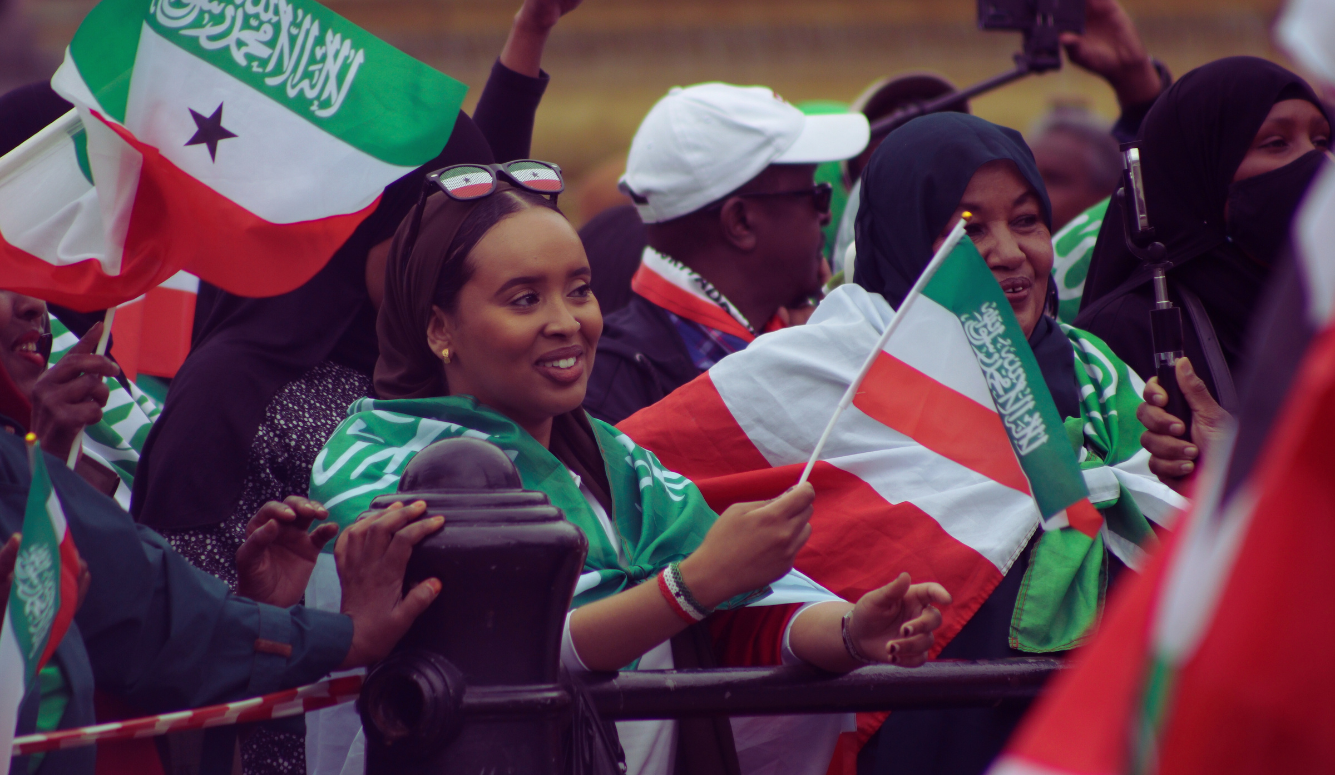
Say what you will about Benjamin Netanyahu, but he has a talent for catching audiences off guard. On 26 December, in a move almost no one anticipated, he formally recognised the Republic of Somaliland as a sovereign state. Israel is thus the first country to extend formal recognition to the fledgling nation, issued “in the spirit of the Abraham Accords” and, according to Netanyahu, at the direct behest of President Donald Trump.
Somaliland was a British protectorate from 1884 until it gained its independence in 1960 before voluntarily uniting with Somalia that same year. On 18 May 1991, following the collapse of the Somali state due to the disastrous and ultimately genocidal policies of the Siyad Barre government, Somaliland unilaterally declared independence, severed its ties with Mogadishu, and established its own system of government. For nearly three decades, Somaliland has received neither the international protection nor the large-scale aid and concessional lending extended to other embryonic postcolonial states.
Whereas many now consider Somalia a “functional failed state” plagued by warlordism, rampant corruption, prolonged tribal warfare, and sexual violence, Somaliland has emerged as a comparatively successful model of grassroots state-building. Since 1991, the aspiring state has overseen four presidential transitions through competitive elections and largely peaceful transfers of power. It has adopted a formal zero-tolerance stance toward the practice of female genital mutilation and has cultivated a private-sector-led economy sustained by diaspora remittances, domestic entrepreneurship, and relative internal stability: an unusual combination in the Horn of Africa.
“I am the happiest person in the world today,” declared President Abdullahi in his state address—a sentiment that has since resonated across Somalilander diaspora communities around the world. Predictably, the move has provoked significant backlash, not least from neighbouring Somalia. President Hassan Sheikh Mohamud denounced the recognition as a “naked invasion” and called for an emergency meeting of the UN Security Council.
Sudan Between Two Middle Easts
Between the jihad of the “Hamas of Africa” and the new order of the Abraham Accords, the choice in Sudan should be clear.
On the surface, Israel and Somaliland share very little beyond their emergence from the upheavals of the post–Second World War British colonial order, and there is scant public record of direct engagement between them prior to this week. So why was Netanyahu so eager to support Somaliland’s statehood?
Approximately four hundred kilometres away from Somaliland’s Port of Berbera, across the Gulf of Aden, lies the war-torn Republic of Yemen, in which the Iran-backed Ansar Allah (Houthi) movement has entrenched itself as a central node of Tehran’s regional pressure strategy. Since late 2023, the Houthis have dramatically expanded their operational range, launching ballistic missiles and long-range drones at Israeli territory. More alarmingly, the Houthis may be gaining access to strategic positions along Sudan’s Red Sea coastline from which to interfere with civilian commercial shipping in the Gulf of Aden—facilitated by the Iran-aligned Sudanese Armed Forces, which has drawn on Islamist mercenary networks in its brutal conflict with the Rapid Support Forces.
At the same time, the UAE–Saudi military buffer designed to contain the Houthis inside Yemen is visibly fraying. Nearly a decade into the conflict, the Saudi-led coalition has been hollowed out by fatigue, internal fragmentation, and the unreliability of local proxy forces. The result is a widening security vacuum along Yemen’s southern and eastern corridors, just as the Houthis expand their operational reach across the Red Sea and Gulf of Aden.
For much of the post-9/11 era, Djibouti was the keystone of US and allied counter-terrorism architecture in the Horn of Africa. Hosting Camp Lemonnier, the United States’ only permanent military base on the continent, it provided unparalleled access to the Bab al-Mandeb chokepoint and served as a hub for operations against Al-Shabaab in Somalia and jihadist networks in Yemen. Yet over the past decade, Djibouti’s strategic utility has steadily eroded. The country has pursued an increasingly transactional foreign policy, welcoming Chinese, Iranians, and other non-Westerners, who use the place as a base from which to evade international sanctions and conduct shady business dealings.
The Project 2025 initiative, published by the Heritage Foundation in April 2023 as a prelude to Trump’s second presidential campaign, explicitly calls for “the recognition of Somaliland statehood as a hedge against the U.S.’s deteriorating position in Djibouti,” as part of a mission to counter Chinese-led interference in American economic and security interests.
Somaliland also offers Israel and its Abraham Accords partners, particularly the UAE, a rare strategic asset: a stable, cooperative coastal partner directly opposite Yemen’s lawless eastern flank. Berbera, where the Dubai-based DP World company will be managing port operations for the foreseeable future, will provide a base for intelligence-sharing and logistical coordination to help combat the Houthis and reduce reliance on increasingly unstable countries like Djibouti. Somaliland will be a useful ally for the UAE, too, which has long sought to counter both Houthi expansion and Islamist proxy networks in southern Yemen.
Why Iran is the Key to Peace in the Middle East
Many Iranians perceive Israel as a potential ally in their struggle against Islamic oppression.
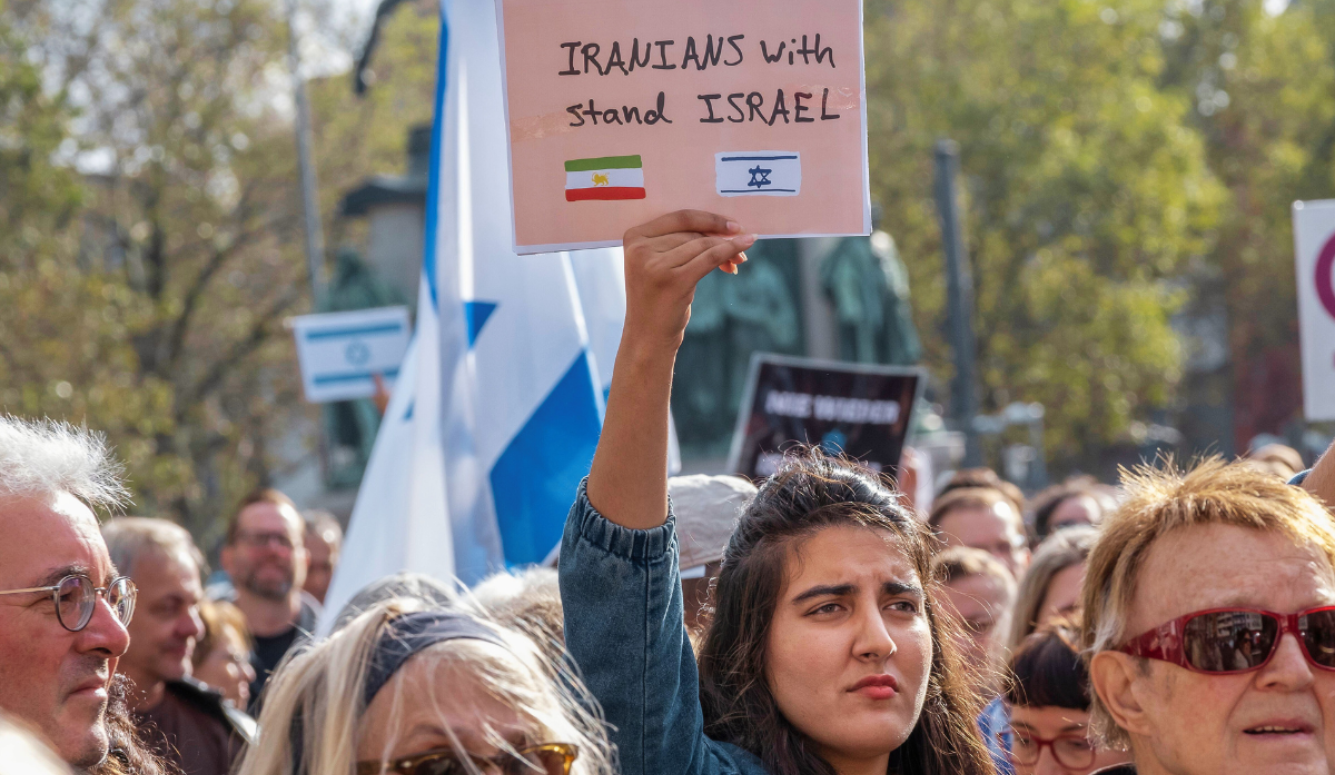
Over the past two years, Netanyahu has overseen a systematic campaign to weaken Iran’s so-called “Axis of Resistance,” a constellation of militias and proxy forces that Ayatollah Ali Khamenei’s advisors have described as “more important than bread and water.” Through military and intelligence operations and with the help of regional allies, Israel has dramatically restricted the movements of Iranian proxies in Lebanon, Syria, Gaza, and the Red Sea arena. Somaliland will provide a further ally in the fight against Iran.
And the timing is good: Iran’s position is weakening. Following Israeli strikes against Iranian military infrastructure in June and subsequent American strikes on Iranian nuclear facilities, Iran is facing political fragmentation amid a storm of resignations and mounting elite infighting. Iran is also contending with the prospect of imminent economic collapse, starkly illustrated by the recent liquidation of Ayandeh Bank, the country’s largest private financial institution.
The UN recently endorsed the Moroccan Autonomy Plan for the Western Sahara, a project to defeat the Iran-backed Polisario Front, a separatist militia fighting for the “self-determination” of the Sahrawi population within Morocco, and to stymie Iran’s attempts to increase its influence on the region. Iran has therefore now shifted its attentions to the Horn of Africa. Netanyahu’s move may be an attempt to challenge Iran’s dominance of critical maritime corridors in the Red Sea.
Netanyahu has other reasons, too, to be eager to recognise Somaliland. It deflects attention from the “Qatargate” affair—the scandalous revelation that the Israeli PM has been sending money to Doha, which has been dominating Israeli headlines. In addition, Netanyahu is facing trials on corruption charges and has spurred domestic outrage at the announcement that he himself will be heading Israel’s state inquiry into the intelligence failures that precipitated the 7 October 2023 massacres.
Somaliland spends around 65 percent of its national budget on security, leaving relatively little for education, healthcare, infrastructure, and economic development. The consequences of this are stark: the country is grappling with severe youth unemployment and has a GDP per capita of only around $1,500 USD, which places it among the poorest economies in the world—although it astronomically outperforms Somalia. The high defence expenditure is necessary, though, because Somaliland is located in an exceptionally dangerous part of the world.
To its credit, Somaliland has largely avoided the levels of sustained insurgent violence seen elsewhere (especially in neighbouring Somalia), but it has not been immune to jihadist penetration. As early as the 2000s, al-Qaeda–linked networks successfully recruited operatives inside Somaliland, culminating in the 2003 murder of four aid workers and the coordinated bombings of October 2008, which killed at least thirty people in Hargeisa. Somaliland has had to counter these threats without access to the military, diplomatic, and intelligence resources of developed countries, forcing it to rely instead on mustering soldiers.
To the south, Somaliland remains exposed to the Al-Shabaab terrorist group, whose operational reach extends well beyond its core areas of control in southern Somalia. While Al-Shabaab has struggled to establish sustained footholds inside Somaliland, the Islamist group has repeatedly attempted to destabilise the country through targeted attacks, assassinations, and other measures designed to undermine confidence in the state and deter foreign engagement.
To the east, piracy emanating from the neighbouring autonomous zone of Puntland continues to pose both a security and reputational risk. While piracy levels have fluctuated, the underlying drivers—economic desperation, weak maritime governance, and criminal networks—remain unresolved. Even limited pirate activity in Somaliland could scare away foreign investors and drive up insurance costs. And, without foreign funding, Somalilanders may find it prohibitively expensive to police their waters.
Saad Noor, the former Somaliland representative in Washington, once warned that if the Western countries continued to refuse to recognise Somaliland as a state, it would destabilise the place and a “Taliban-like regime” could emerge in the territory. As he told The Atlantic in October 2010: “[Without recognition,] our people’s hopes and adherence to the state will erode day to day. If you cannot employ and educate the young men and young women, if you cannot build roads, if you cannot bring businesses that provide jobs, everything will be in a state of continuous deterioration.”
Israel could provide vital assistance to Somaliland because of its expertise in state-building, security, counter-terrorism, border surveillance, maritime monitoring, and general threat-prevention.
The day after Netanyahu’s announcement, the Qatari Ministry of Foreign Affairs (MoFA) issued a statement denouncing the recognition while repeatedly referring to the institutions of the sovereign State of Israel as “occupation authorities.” The communiqué also invoked the need to preserve “stability” in the Horn of Africa—a ridiculous claim since the entire region has known little sustained stability for nearly five decades. Predictably, Qatar declared that it would be preferable for Israel to “recognize the State of Palestine.”
Another statement of condemnation issued by the ministry, this time co-signed by twenty-one Arab and Muslim states, including Algeria and Iran, cast the move as contrary to international law and warned that it “threatens international peace.” It further insinuated that Israel plans to relocate Palestinians to Somaliland from the West Bank and the Gaza Strip. The claim is patently absurd, yet it has gained traction within Islamist networks, including those maintained by Iran. That this statement—a typo-ridden mess clumsily assembled by a slave-owning petrostate and endorsed by some of the world’s worst abusers of human rights—was conspicuously not signed by any of the signatories to the Abraham Accords, such as Morocco, Bahrain, or the UAE, tells one all that needs to be known about its credibility.
Qatar has its own strategic interests in the Horn of Africa: it sustains pressure on Israel through the Houthis and other Islamist networks in the region. In Somalia, Qataris attempt to influence state policy through generous donations of foreign aid and the support of Muslim Brotherhood elements with Mogadishu’s governing elite.
Since 1996, Qatar has positioned itself as a mediator in a range of Horn of Africa disputes—from the Eritrea–Yemen conflict over the Hanish Islands to the Eritrea–Djibouti standoff at Ras Doumeira. Meanwhile, it has hosted Omar al-Bashir, the former Sudanese leader charged with genocide and crimes against humanity over atrocities in Darfur.
This is why Israel’s recognition of Somaliland poses such a problem for Doha. Somaliland represents a model of bottom-up stability that neither relies on Islamist mobilisation nor requires Qatar’s mediation. Worse still (for Qatar, that is), Israel threatens to help Somaliland defend itself, without Qatari help.
For the first time, an autonomous region long denied international standing has been acknowledged as a sovereign state not by the usual pantheon of Islamist or postcolonial patrons, but by Israel. Crucially, this has occurred in the framework of the Abraham Accords, which Abdullahi has publicly claimed Somaliland will join. The Abraham Accords began as a regional normalisation initiative but have expanded to encompass countries like Kazakhstan and possibly Indonesia.
The example of Somaliland may also inspire other stateless peoples in would-be autonomous regions. One such case is Kabylia, an Amazigh-Berber region in Algeria whose provisional government in exile has recently declared independence. While Kabylia’s circumstances differ markedly from Somaliland’s, the precedent is nonetheless clear. The Somaliland gamble suggests that a new pathway may be opening, in which emerging states that demonstrate internal cohesion, resist extremist domination, and align with a rules-based security order can find sponsors beyond the old gatekeepers. If that is so, then Somaliland is not an anomaly, but a new beginning: one more aligned with Israel’s interests than with Qatar’s.
Read the full article here
Fact Checker
Verify the accuracy of this article using AI-powered analysis and real-time sources.