

 Freedom Index
Listen to the article
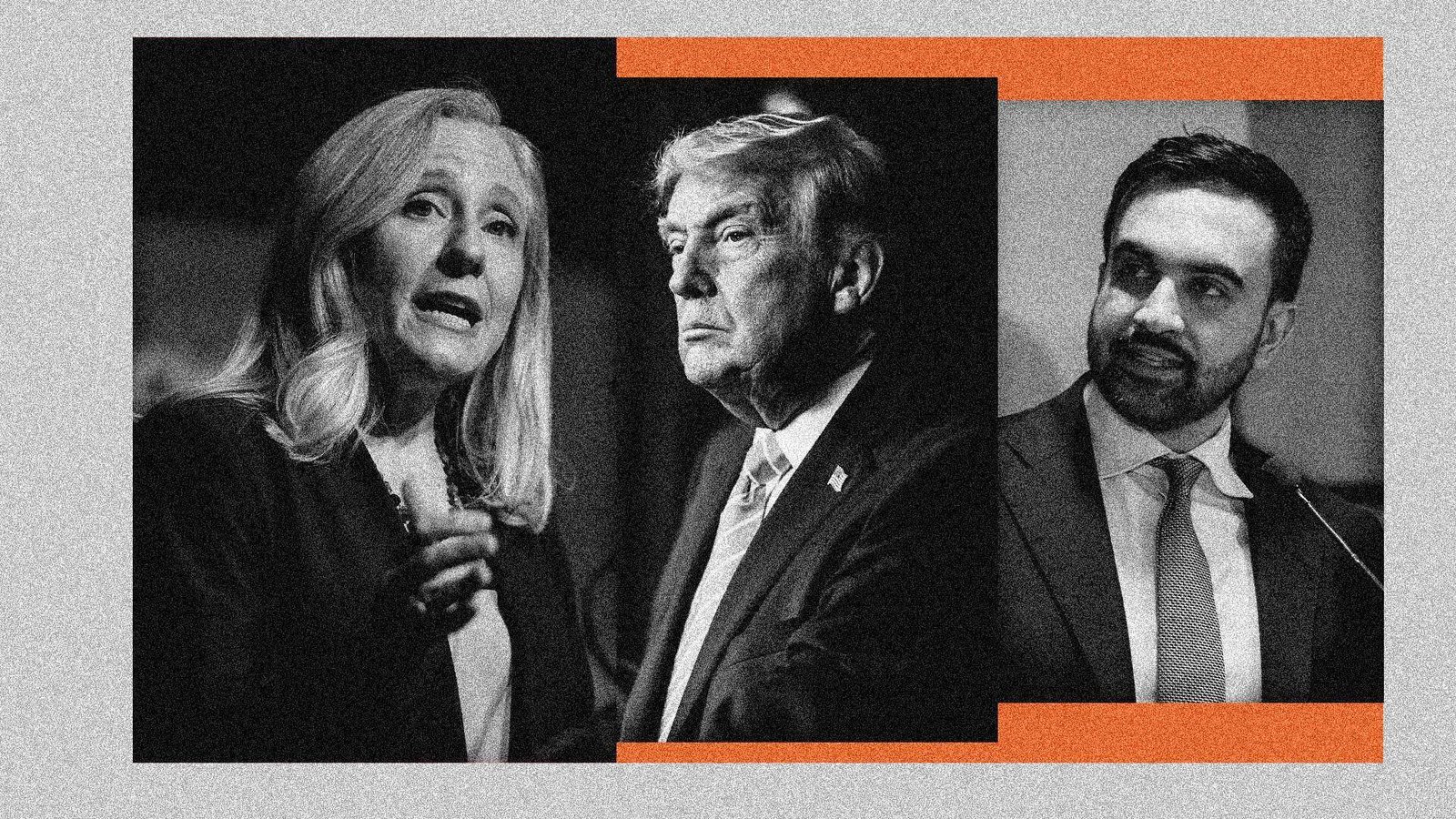
This week, incoming Virginia Gov. Abigail Spanberger released a policy agenda for her administration that’s allegedly intended to deliver lower living costs for the state’s residents.
None of her initial proposals—mandating utilities build more energy storage capacity, stretching out the eviction process for delinquent renters, and banning health insurers from charging additional fees to tobacco users—seems particularly promising.
As Manhattan Institute scholar Judge Glock pointed out on X, basically everything the governor-elect has proposed will raise, not lower, costs.
This is impressive in that every single one of VA Gov Spannberger’s affordability proposals increases costs:
Force health insurers to cover smokers at the same rate (premium increases)
Protect neighborhood pharmacies (drug price increases)
Extend time to terminate leases (rent…— Judge Glock (@judgeglock) December 30, 2025
That’s pretty disappointing (if not necessarily surprising) for a politician who just won her gubernatorial election by pitching herself as the “affordability” candidate.
Across the political spectrum, everyone is trying to say their agenda will enable Americans to buy more for less, while proposing policies that would leave everyone poorer.
Zohran Mamdani elevated himself from long-shot leftist candidate to soon-to-be Mayor of New York City with a relentless focus on making the Big Apple affordable to working-class residents. (His actual agenda is a lot more focused on using price controls to obscure how much everything actually costs.)
President Donald Trump has likewise claimed the mantle of “affordability,” even as he’s hiked tariffs on imported goods.
It’d be tempting then to dismiss affordability politics as empty messaging or even cynical rebranding for the same tired state interventions from both the left and the right.
And yet, free marketers have cause to be optimistic that partisan politics in 2026 might revolve around the question of affordability.
Whatever its failings at setting a policy agenda, the affordability framing does at least refocus partisan arguments on the thing that free marketers have the best answers for and on which free markets can actually deliver.
To paraphrase Joseph Schumpeter, the achievement of capitalism is enabling average people to consume more things for increasingly less effort.
It’s a promise that free markets keep delivering on. The real cost of the electronic device you’re using to read this article compared to what it would have been a decade ago should be evidence enough of that.
When it comes to questions about how to bring down the costs of healthcare or housing, free marketers have the best answers. Government regulations of prices and production are driving up costs. Eliminating those regulations will bring them back down.
The fact that politicians as different as Mamdani and Spanberger won on a common affordability message is evidence that voters are hungry for policy proposals that promise to bring everyday prices down.
The flawed, interventionist affordability platforms they offer are an opportunity for free marketers to clearly and patiently explain why their interventions will fail.
When they do fail, free marketers can reap the benefits of being right about the thing that people care about the most right now.
It’s fair to say that libertarian politics in 2025 was at a low ebb. A major reason for that is that too many of the political debates that have dominated the headlines and viral X posts have been either irrelevant to the cause of free markets or are divisive among the people who support them.
An appreciation for capitalist-enabled material progress can’t tell you a lot about whether the Jeffrey Epstein files should be released, for instance.
Support for small government doesn’t imply a particular position on whether the East Wing of the White House should be enlarged.
Laws of supply and demand don’t say who counts as a “Heritage American” or what’s the appropriate social sanction for people who said ugly things about the Charlie Kirk assassination.
Anyone remotely invested in the debate about the Trump-Kennedy Center rebranding has almost no time for the stock libertarian interjection that we really shouldn’t have a federal arts venue at all.
When our politics revolves around these squabbles, the cause of generally shrinking the size and scope of government doesn’t get a lot of play in the conversation.
Even when the story of the day did directly involve the proper role of the state in 2025, free marketers in good standing can end up on either side of an issue.
The Department of Government Efficiency (DOGE) was an incredibly clumsy, mostly unsuccessful effort by the Trump administration to accomplish a libertarian-ish goal of saving taxpayers’ money by making government more “efficient.”
Free marketers, even within the pages of Reason, are split on whether we should be mad at the dismal results or grateful for the effort.
Where Trump’s exercises of executive power have been the most alarming and most extreme, the mainstream debates about them generally devolve into much less compelling quibbling over the details.
Instead of arguing about whether the president can execute suspected drug smugglers on a whim, we end up debating whether two strikes on an alleged drug boat were justified or if one would have been enough.
The administration’s deportation drive has generally provoked procedural criticisms about individual raids and removals, not a more substantive defense of open immigration.
The front page debate about tariffs, and the president’s power to impose them unilaterally, is an exception that proves the rule.
Free marketers have been the leading critics of the Trump administration’s tariff regime, precisely because our ideas and the evidence offer a compelling case that raising taxes on imported goods makes things more expensive and people poorer.
Congressional Democrats have largely failed to turn voter anger about higher tariff-induced prices into their own compelling case against Trump precisely because they’re not free marketers and thus can’t fully abandon their own protectionist sympathies.
It’s notable that part of Spanberger’s winning message was criticism of Trump’s tariffs. (It’s convenient that she, as a governor of a state, has no power over trade policy.)
The daily partisan squabbles that dominate political news have long been of little interest to libertarians, who have a more fundamental critique of state power to share. For all that’s alarming and novel about politics during the second Trump administration, political debates revolving around superficial bullshit are par for the course.
It’s for this reason that affordability politics offers so much promise for the free market message in the coming year.
When a centrist Democrat says that we should make housing more affordable by making it harder to evict non-paying tenants, free marketers can counter with both sound theory and empirical evidence that making the rental housing business riskier for landlords leads them to raise costs to offset that risk.
When a socialist Democrat says we can make housing more affordable by getting rid of market prices entirely, we can point to how well that’s worked in the past.
And when a MAGA Republican says tariffs and immigration restrictions will lower Americans’ costs of living, we can counter with sound arguments that restrictions on the international movement of goods and people will do the opposite.
It’d be naive to think political debates in 2026 will be significantly more substantive than they were in 2025. Culture wars that are orthogonal to free market concerns will still drive much of the conversation.
But to the degree that politicians see an advantage in running on a message of affordability, that’s an opening for free marketers.
Explaining why making things cost more won’t make them cost less is frustrating. It’s also easy and compelling. The rise of affordability politics means that it will offer a lot of opportunities to deliver that simple message in the New Year.
Read the full article here
Fact Checker
Verify the accuracy of this article using AI-powered analysis and real-time sources.