Close Menu
FSNN | Free Speech News NetworkFSNN | Free Speech News Network
  • Home
  • News
    • Politics
    • Legal & Courts
    • Tech & Big Tech
    • Campus & Education
    • Media & Culture
    • Global Free Speech
  • Opinions
    • Debates
  • Video/Live
  • Community
  • Freedom Index
  • About
    • Mission
    • Contact
    • Support
Trending

Bitcoin Recovery Time Extends If Selloff Deepens Below $60K

34 minutes ago

Today in Supreme Court History: March 27, 1996

1 hour ago

Spot Bitcoin ETFs Break 4-Week Inflow Streak with $296M Outflows

2 hours ago
Facebook X (Twitter) Instagram
Facebook X (Twitter) Discord Telegram
FSNN | Free Speech News NetworkFSNN | Free Speech News Network
Market Data Newsletter
Saturday, March 28
  • Home
  • News
    • Politics
    • Legal & Courts
    • Tech & Big Tech
    • Campus & Education
    • Media & Culture
    • Global Free Speech
  • Opinions
    • Debates
  • Video/Live
  • Community
  • Freedom Index
  • About
    • Mission
    • Contact
    • Support
FSNN | Free Speech News NetworkFSNN | Free Speech News Network
Home»Cryptocurrency & Free Speech Finance»South Korea’s digital asset bill delayed over who can issue stablecoins
Cryptocurrency & Free Speech Finance

South Korea’s digital asset bill delayed over who can issue stablecoins

News RoomBy News Room3 months agoNo Comments3 Mins Read1,296 Views
Share Facebook Twitter Pinterest Copy Link LinkedIn Tumblr Email VKontakte Telegram
South Korea’s digital asset bill delayed over who can issue stablecoins
Share
Facebook Twitter Pinterest Email Copy Link

Listen to the article

0:00
0:00

Key Takeaways

Playback Speed

Select a Voice

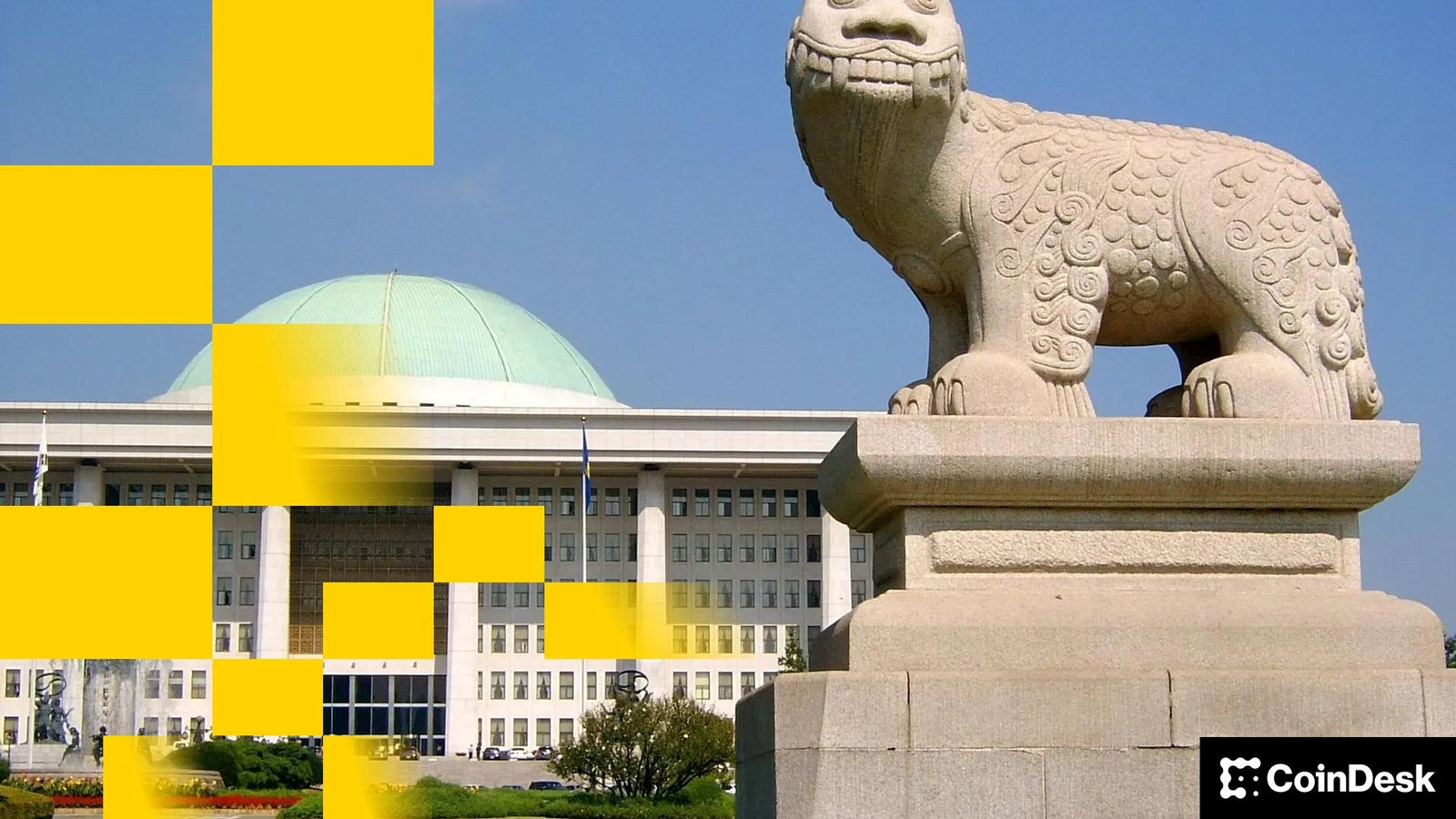
South Korea’s long-awaited Digital Asset Basic Act (DABA), a sweeping framework meant to govern crypto trading and issuance in one of Asia’s most active digital asset markets, has been delayed amid disagreements among regulators over stablecoin issuance.

The most significant disagreement centers on who should have the legal authority to issue KRW-pegged stablecoins, according to a Korea Tech Desk article. The Bank of Korea (BOK) argued that only banks with majority (51%) ownership should be permitted to issue stablecoins. It said financial institutions are already subject to stringent solvency and anti-money-laundering requirements and therefore the only ones in position to ensure stability and protect the financial system.

The Financial Services Commission (FSC), which oversees financial policy-making, is more flexible. It acknowledged the need for stability, but warned that a strict “51% rule” could stifle competition and innovation, blocking fintech firms with the technical expertise to build scalable blockchain infrastructure from participating, according to the report.

The FSC cited the European Union’s Markets in Crypto-Assets regulation, in which most licensed stablecoin issuers are digital asset firms rather than banks. It also pointed to Japan’s fintech-led yen stablecoin projects as an example of regulated innovation.

The deadlock highlights a broader global debate over whether banks or fintech firms should control fiat-backed stablecoins, a decision that could shape competition, innovation and monetary oversight.

The ruling Democratic Party of Korea (DPK) also opposes the BOK’s 51% rule, a Korea Times article reported last week.

“A majority of participating experts voiced concerns about the BOK’s proposal, with many questioning whether such a framework could deliver innovation or generate strong network effects,” DPK lawmaker Ahn Do-geol said. “It is also hard to find global legislative precedents in which institutions from a specific sector are required to hold a 51%.”

He said the BOK’s stability concerns could be mitigated through regulatory and technological measures, a view the lawmaker added, “is broadly shared among policy advisors”.

Foreign-issued stablecoins are also another key sticking point. According to an earlier draft of the government proposal prepared by the FSC, foreign-issued stablecoins would be allowed in South Korea if they are licensed and have a branch or subsidiary in the country. That would require issuers such as Circle, which issues USDC, the world’s second-largest stablecoin, to establish a local presence for the token to be legally used in the country.

The regulatory deadlock is expected to delay the bill’s passage until at least January, with full implementation now unlikely before 2026, according to AInvest. South Korea’s digital assets act marks a significant shift in a country that for nine years banned crypto, a stance that its financial watchdog began to soften earlier this year.


Read the full article here

Fact Checker

Verify the accuracy of this article using AI-powered analysis and real-time sources.

Get Your Fact Check Report

Enter your email to receive detailed fact-checking analysis

5 free reports remaining

Continue with Full Access

You've used your 5 free reports. Sign up for unlimited access!

Already have an account? Sign in here

Share. Facebook Twitter Pinterest LinkedIn Tumblr Email Telegram Copy Link
News Room
  • Website
  • Facebook
  • X (Twitter)
  • Instagram
  • LinkedIn

The FSNN News Room is the voice of our in-house journalists, editors, and researchers. We deliver timely, unbiased reporting at the crossroads of finance, cryptocurrency, and global politics, providing clear, fact-driven analysis free from agendas.

Related Articles

Cryptocurrency & Free Speech Finance

Bitcoin Recovery Time Extends If Selloff Deepens Below $60K

34 minutes ago
Cryptocurrency & Free Speech Finance

Spot Bitcoin ETFs Break 4-Week Inflow Streak with $296M Outflows

2 hours ago
Cryptocurrency & Free Speech Finance

XRP Sharpe Ratio Rise Aligns With Sustained Whale Inflows

3 hours ago
Cryptocurrency & Free Speech Finance

Ripple turns to AI to stress-test the XRP Ledger as institutional use cases scale

4 hours ago
Cryptocurrency & Free Speech Finance

Lummis Says CLARITY Act Offers Strong DeFi Protections

4 hours ago
Cryptocurrency & Free Speech Finance

ICE Adds $600M to Polymarket Investment Despite US Regulatory Scrutiny

5 hours ago
Add A Comment

Comments are closed.

Editors Picks

Today in Supreme Court History: March 27, 1996

1 hour ago

Spot Bitcoin ETFs Break 4-Week Inflow Streak with $296M Outflows

2 hours ago

Contrary to Allegations, the Data Show Little Fraud in Arizona School Choice Program

2 hours ago

XRP Sharpe Ratio Rise Aligns With Sustained Whale Inflows

3 hours ago
Latest Posts

No § 230 Immunity for Meta’s AI-Generated Ads

3 hours ago

Ripple turns to AI to stress-test the XRP Ledger as institutional use cases scale

4 hours ago

Lummis Says CLARITY Act Offers Strong DeFi Protections

4 hours ago

Subscribe to News

Get the latest news and updates directly to your inbox.

At FSNN – Free Speech News Network, we deliver unfiltered reporting and in-depth analysis on the stories that matter most. From breaking headlines to global perspectives, our mission is to keep you informed, empowered, and connected.

FSNN.net is owned and operated by GlobalBoost Media
, an independent media organization dedicated to advancing transparency, free expression, and factual journalism across the digital landscape.

Facebook X (Twitter) Discord Telegram
Latest News

Bitcoin Recovery Time Extends If Selloff Deepens Below $60K

34 minutes ago

Today in Supreme Court History: March 27, 1996

1 hour ago

Spot Bitcoin ETFs Break 4-Week Inflow Streak with $296M Outflows

2 hours ago

Subscribe to Updates

Get the latest news and updates directly to your inbox.

© 2026 GlobalBoost Media. All Rights Reserved.
  • Privacy Policy
  • Terms of Service
  • Our Authors
  • Contact

Type above and press Enter to search. Press Esc to cancel.

🍪

Cookies

We and our selected partners wish to use cookies to collect information about you for functional purposes and statistical marketing. You may not give us your consent for certain purposes by selecting an option and you can withdraw your consent at any time via the cookie icon.

Cookie Preferences

Manage Cookies

Cookies are small text that can be used by websites to make the user experience more efficient. The law states that we may store cookies on your device if they are strictly necessary for the operation of this site. For all other types of cookies, we need your permission. This site uses various types of cookies. Some cookies are placed by third party services that appear on our pages.

Your permission applies to the following domains:

  • https://fsnn.net
Necessary
Necessary cookies help make a website usable by enabling basic functions like page navigation and access to secure areas of the website. The website cannot function properly without these cookies.
Statistic
Statistic cookies help website owners to understand how visitors interact with websites by collecting and reporting information anonymously.
Preferences
Preference cookies enable a website to remember information that changes the way the website behaves or looks, like your preferred language or the region that you are in.
Marketing
Marketing cookies are used to track visitors across websites. The intention is to display ads that are relevant and engaging for the individual user and thereby more valuable for publishers and third party advertisers.