

 Freedom Index
Listen to the article
Wyoming Senator Cynthia Lummis, a pro-crypto United States lawmaker, said the recent proposal from Federal Reserve Governor Christopher Waller to give crypto companies access to “skinny” master accounts would end debanking under Operation Chokepoint 2.0.
Waller proposed the idea at the Payments Innovation Conference in October, allowing crypto and fintech startups, including payment-only banks, access to accounts at the Federal Reserve similar to the “master accounts” used by banks, but with restrictions. Lummis said:
“Governor Waller’s skinny master account framework ends Operation Chokepoint 2.0 and opens the door to real payments innovation. Faster payments, lower costs, better security — this is how we build the future responsibly.”
Operation Chokepoint 2.0 was described as a coordinated effort to deny banking services to crypto companies and their founders. More than 30 tech founders were debanked under the operation, according to venture capitalist Marc Andreessen.
The proposal from Waller highlights the regulatory shift in the US, with officials and lawmakers now embracing cryptocurrencies and other novel fintech startups as necessary upgrades to the payments system and the future of finance.
Related: Fed seeks input on account type attractive to crypto firms
Operation Chokepoint 2.0 never ended, crypto industry executives say
US President Donald Trump signed an executive order in August prohibiting banks from debanking Americans and businesses without lawful cause.
The order also instructed US banking regulators, including the Federal Deposit Insurance Corporation (FDIC), to identify banks and financial institutions that engaged in debanking and potentially slap these institutions with fines or other punitive actions.
However, crypto executives, project founders, and Web3 companies continued to report debanking issues despite the order and the Trump administration’s pro-crypto stance.
In November, Jack Mallers, the CEO of Bitcoin (BTC) payments company Strike, said he was debanked by financial services company JPMorgan without explanation.
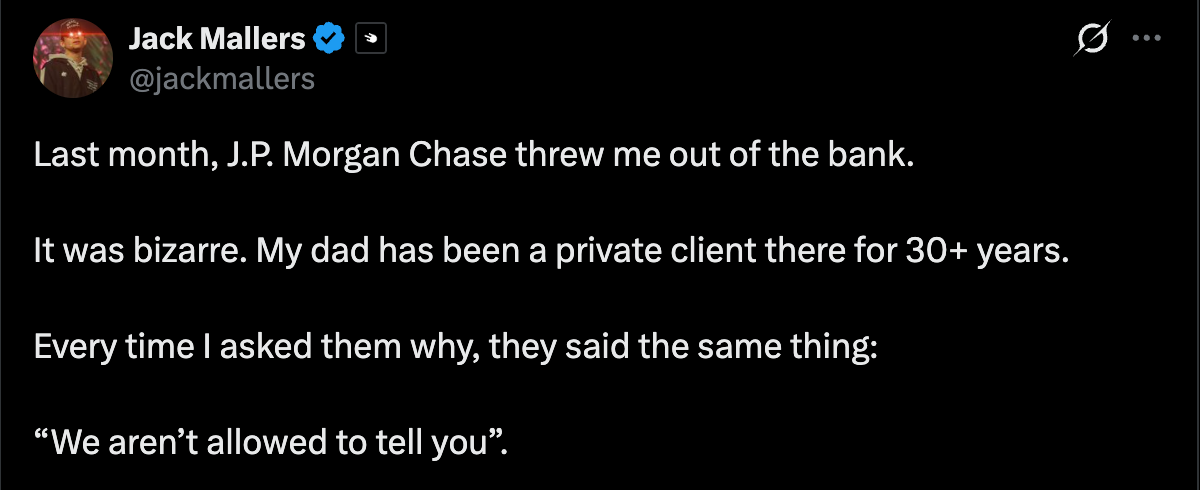
“Every time I asked them why, they said the same thing: ‘We aren’t allowed to tell you,’” Mallers said in a separate X post.
JP Morgan Chase also froze the bank accounts of stablecoin startup companies BlindPay and Kontigo in December, citing these companies’ alleged exposure to sanctioned jurisdictions as the reason.
Magazine: The one thing these 6 global crypto hubs all have in common…
Read the full article here
Fact Checker
Verify the accuracy of this article using AI-powered analysis and real-time sources.