

 Freedom Index
Listen to the article
Earlier this month, Hong Kong’s final remaining major opposition party announced its decision to disband, after 30 years of operation. According to a Reuters report, senior Hong Kong Democratic Party members had previously been approached by Chinese officials or “middlemen” who warned them to disband or “face severe consequences”.
It’s a move that comes after years of security crackdowns, not just for the Hong Kong Democratic Party, but for countless liberal voices.
In late April 2024, the Hong Kong Journalists Association – which has come under immense pressure from the Hong Kong government to disband in recent years – suddenly cancelled its live fundraising concert just four days before its scheduled date, citing force majeure. The event instead moved online. Ronson Chan, the then head of the union, explained on his Facebook page without giving a clear reason: “I really want to say that we’ve all tried our best. But alas, in this world, trying our best isn’t enough.”
A month later, the student press of Lingnan University scrapped a call for articles about the 1989 Tiananmen Massacre. The reason given was, again, force majeure, without any further comment.
Following the enactment of the National Security Law in June 2020, anyone hosting public events in Hong Kong has faced censorship or self-censorship, as state security has been elevated above all other considerations. Data compiled from news reports shows that at least 50 public events in Hong Kong have been cancelled since 2021 for clear political reasons or for reasons plausibly linked to the political stance of event organisers. Among them, 11 cited force majeure, and the use of this justification has been on the rise.
Under normal circumstances, force majeure refers to a legal clause used by event organisers to cancel activities due to natural disasters, riots or technical issues. In mainland China and Hong Kong, however, the term carries a different connotation since 2020.
“Usually, the Hong Kong government or those who pass on messages for the government would not allow their identities or the threats to be revealed,” said Chung Kim-wah, a former assistant professor of social science at Hong Kong Polytechnic University. “The targeted people have no choice but to agree to the demands, or face immeasurable legal and political consequences.”
He added: “The authorities have the military, the police, the national security and the legal system behind them. There is no normal or formal way for those targeted to resist, and thus it is force majeure.”
The first known case of political force majeure occurred in March 2023, when a screening of the British independent horror movie Winnie the Pooh: Blood and Honey was cancelled. Winnie the Pooh is often used to satirise Chinese leader Xi Jinping. When announcing the cancellation, the organiser, Moviematic, initially wrote on Instagram: “I believe you understand that in Hong Kong nowadays, many things are force majeure.” This line was later removed and replaced with “technical reasons.”
In 2024, four event cancellations cited force majeure. This year, six cancelled events have used the same reason. In some cases, the political link was more obscure. Last month, Japanese duo Yuzu cancelled concerts in Hong Kong, Shanghai and Taipei scheduled for December due to unavoidable circumstances. While the group itself is not in any way political, the cancellations may have been related to heightened tensions between China and Japan following remarks by Japanese Prime Minister Sanae Takaichi in early November regarding the use of force in the event of a Chinese attack on Taiwan.
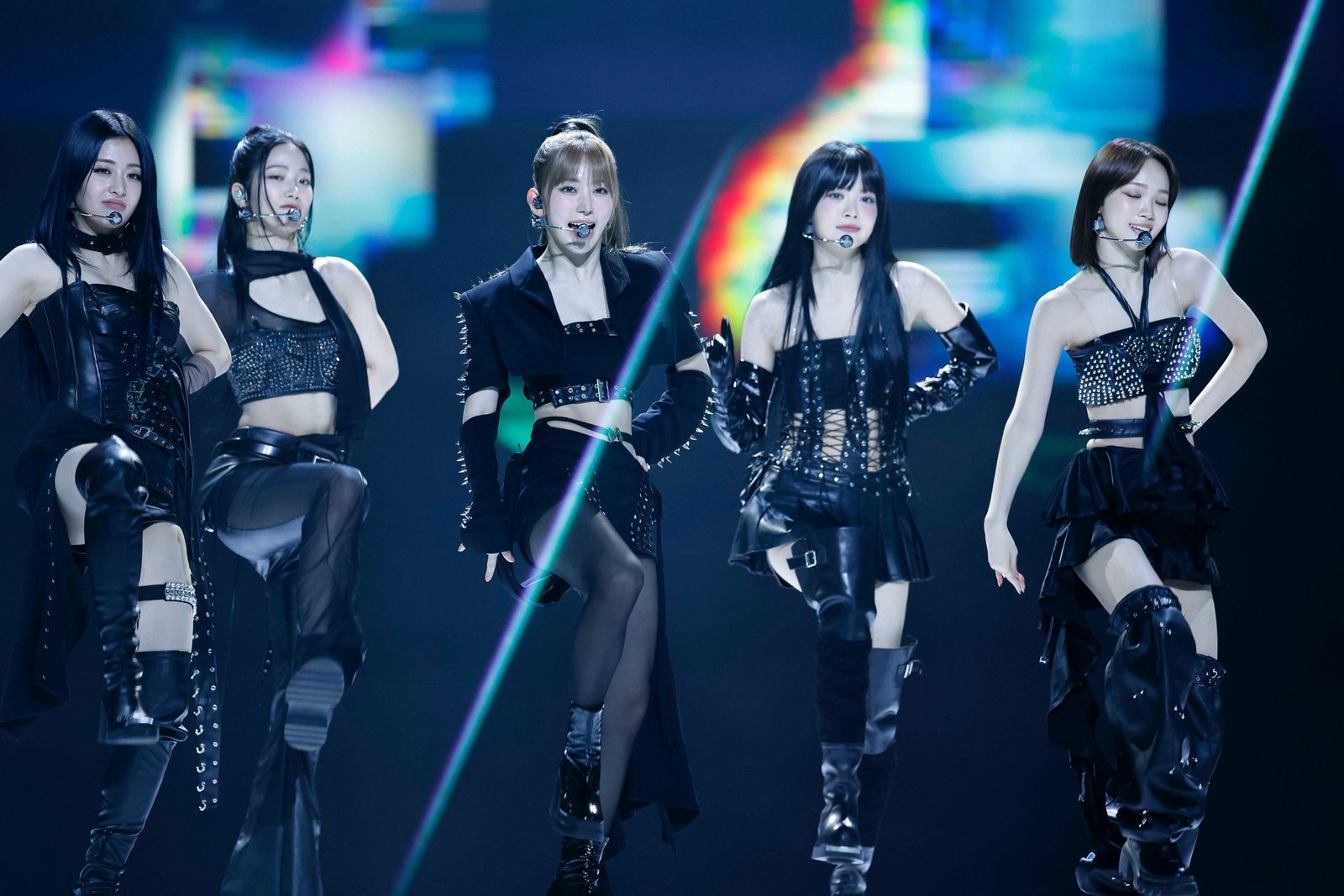
Since Takaichi’s remarks, yet more events by Japanese entertainers in mainland China have been abruptly cancelled, all citing force majeure. Similarly, an event by the Korean girl group Le Sserafim in Shanghai was cancelled for the same reason, possibly because the group includes two Japanese members. The pressure has even extended beyond China’s borders. Hong Kong singer Ekin Cheng was scheduled to perform in Tokyo on December 5, but the concert was cancelled 10 days beforehand, again with the same explanation.
“For Beijing, slapping force majeure on Yuzu and other Japanese acts is a low‑cost way to signal displeasure with Tokyo’s Taiwan stance, quietly punishing Japanese cultural exports while preserving deniability about overt political retaliation, turning cross‑border art and entertainment into a barometer of Beijing’s grievances rather than a neutral space for exchange,” said Athena Tong, a visiting researcher at the University of Tokyo.
The use of the term has also expanded beyond event cancellations. Following a massive fire at a housing estate in Tai Po on 26 November, University of Hong Kong journalism student Ellie Yuen gained significant attention on social media for reporting on the cause of the fire and speaking to international media outlets. A week later, she posted that she would no longer provide comments or undertake further work related to the incident “for obvious reasons”. In the Chinese version of the post, she used the term force majeure.
“This is a use of dark forces by the authorities, no different from that of a mafia,” said social scientist Chung. “It is an abuse of power that overrides constitutional and administrative authority.”
When organisers cite force majeure, it at least serves as a clear signal that politics may be involved. In other cases, however, the public is left to speculate.
This summer, Hong Kong’s largest LGBTQ+ event, Pink Dot, announced the cancellation of its October event, after its venue in the West Kowloon Cultural District withdrew without providing an explanation. In some instances, venues have offered implausible justifications. Before it disbanded this month, the Hong Kong Democratic Party has been forced to postpone its fundraising dinner six times since 2023 due to venue cancellations, with reasons ranging from urgent gas pipe maintenance to broken windows.
Private companies and venues have to face the public, and they have to come up with reasons, even if they are unjustifiable, Chung said. The authorities, however, do not have to face public pressure and do not even have to give a reason when forcing an event to be cancelled.
Benson Wong, a former assistant professor of political science at Hong Kong Baptist University, explained that in the current political climate, some people and groups in Hong Kong are seen as “untouchables,” from whom service providers and the broader society are pressured to “disconnect”.
“The weird excuses are a way of reflecting how twisted Hong Kong society is,” he said.
But groups have found new ways to avoid censorship, such as booking venues in a personal capacity and not announcing events beforehand, according to Wong. According to him, guerrilla events may be on the rise.
Read the full article here
Fact Checker
Verify the accuracy of this article using AI-powered analysis and real-time sources.