

Close Menu
FSNN | Free Speech News NetworkFSNN | Free Speech News Network
  • Home
  • News
    • Politics
    • Legal & Courts
    • Tech & Big Tech
    • Campus & Education
    • Media & Culture
    • Global Free Speech
  • Opinions
    • Debates
  • Video/Live
  • Community
  • Freedom Index
  • About
    • Mission
    • Contact
    • Support
Trending

Vitalik Buterin Withdraws $44.7M in ETH to Support Ethereum Growth Through ‘Mild Austerity’

8 minutes ago

Judge Says ICE Violated Court Orders in 74 Cases—See Them All Here

37 minutes ago

RCFP statement on arrests of journalists Don Lemon, Georgia Fort

53 minutes ago
Facebook X (Twitter) Instagram
Facebook X (Twitter) Discord Telegram
FSNN | Free Speech News NetworkFSNN | Free Speech News Network
Market Data Newsletter
Friday, January 30
  • Home
  • News
    • Politics
    • Legal & Courts
    • Tech & Big Tech
    • Campus & Education
    • Media & Culture
    • Global Free Speech
  • Opinions
    • Debates
  • Video/Live
  • Community
  • Freedom Index
  • About
    • Mission
    • Contact
    • Support
FSNN | Free Speech News NetworkFSNN | Free Speech News Network
Home»News»Global Free Speech»The law powering Tunisia’s crackdown on the press
Global Free Speech

The law powering Tunisia’s crackdown on the press

News RoomBy News Room1 month agoNo Comments6 Mins Read1,665 Views
Share Facebook Twitter Pinterest Copy Link LinkedIn Tumblr Email VKontakte Telegram
The law powering Tunisia’s crackdown on the press
Share
Facebook Twitter Pinterest Email Copy Link

Listen to the article

0:00
0:00

Key Takeaways

Playback Speed

Select a Voice

New York City, December 19, 2025 – Since President Kais Saied’s consolidation of power in 2021, Tunisia’s press freedom landscape has narrowed sharply. A single piece of legislation—Decree-Law No. 2022-54 on combating “crimes related to information and communication systems”—has become the legal hammer used to silence critics, criminalize routine reporting, and imprison at least five journalists. 

The release of lawyer and commentator Sonia Dahmani in late 2025 offered a brief moment of relief in Tunisia’s escalating crackdown on dissent. But even as Dahmani walked free, her legal battles continued, and Tunisia’s courts pressed ahead with prosecutions under Decree-Law 54, keeping other journalists behind bars and opening new cases against them. 

Dahmani: free, but still under threat

Tunisian lawyer and commentator Sonia Dahmani speaks at home in Tunis on November 27, 2025 after her release from prison. (Photo: AFP/Fethi Belaid)

The release of Dahmani, who the Committee to Protect Journalists honored with its 2025 International Press Freedom Award, followed months of international pressure and mounting criticism from human-rights groups after she was repeatedly sentenced under Decree-Law 54 for televised and radio commentary criticizing discrimination against migrants and the country’s political trajectory.

But her freedom remains conditional. She still faces multiple open cases, some carrying possible sentences of 10 and 20 years. Courts have not dropped her earlier convictions, leaving her under ongoing judicial scrutiny. Her sister Ramla remains sentenced in absentia for defending her online. 

Her November 2025 release, just hours after a European Parliament resolution condemning her imprisonment, was welcomed by press freedom advocates—who nevertheless insisted that all remaining charges be dropped. Her ordeal continues to symbolize Tunisia’s willingness to treat political speech as a criminal offense.

Zghidi and Bsaies: more than 500 days in detention
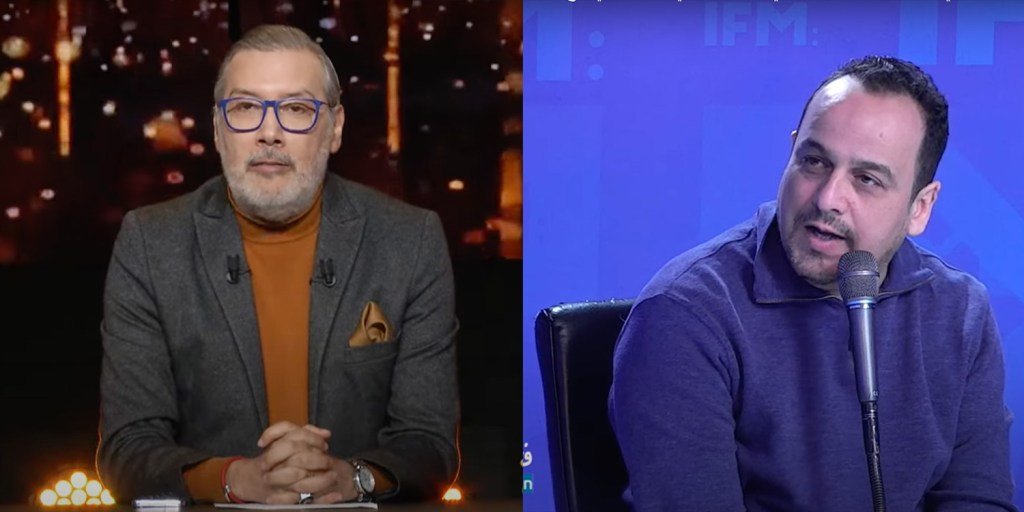
An image of journalists Borhen Bsaies (left) and Mourad Zghidi (right).
A Tunis court convicted radio journalists Borhen Bsaies (left) and Mourad Zghidi of defamation and spreading false news. (Screenshots: Carthage Plus/YouTube; IFM/YouTube)

While Dahmani is out, radio journalists Mourad Zghidi, and Borhen Bsaies remain in prison more than 500 days after their arrest. Despite the completion of an eight-month sentence issued earlier in 2025, the pair were not released. Instead, prosecutors opened new investigations, effectively extending their imprisonment indefinitely.

On December 11, the criminal chamber of the Primary Court in Tunis reviewed their case after a hearing lasting more than three hours. According to the defense, the new charges relate to alleged tax evasion, following charges of money laundering and financial concealment dating back to December 2024. 

The defense team requested the appointment of a reporting judge to verify the assets and funds attributed to the defendants, and sought their provisional release to allow them to pursue a tax settlement. The court reserved its decision on the requests, which is expected in the coming days.

Chadha Hadj Mbarek: five-year sentence and declining health

Less publicized, but equally alarming is the case of digital media producer Chadha Hadj Mbarek, who remains jailed on a five-year sentence linked to her work with a content production company. Rights groups report that her health has deteriorated in detention and that she has limited access to medical care.

Boughaleb: new sentence despite contested evidence

Veteran broadcaster Mohamed Boughaleb, released in February 2025, was issued a new two-year prison sentence in July 2025 under Article 24 of Decree-Law 54. The conviction was based on a Facebook post his lawyers argued he did not write. The defence presented expert digital analysis contesting the claims, but the court proceeded regardless.
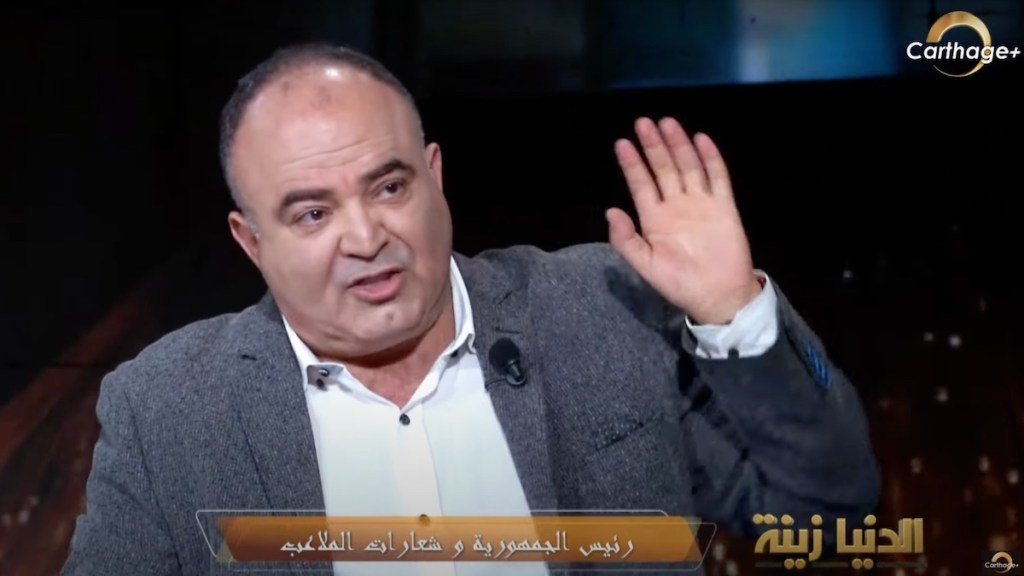
Mohamed Boughalleb, a reporter with local independent channel Carthage Plus and local independent radio station Cap FM, has been hit with a new sentence after serving his last.(Screenshot: Carthage Plus/YouTube)

This comes after Boughaleb served an eight-month prison sentence after being convicted of defamation for his social media posts and statements on television and radio.

A clear pattern of repression

Adopted in 2022, Decree-Law 54 has been used to target activists, lawyers, commentators, and ordinary citizens, in addition to journalists. Its vague provisions around “false news,” “rumors,” and “harm to public security” has given prosecutors broad discretion to criminalize commentary, satire, and investigative reporting.

Taken together, the five cases reveal a clear and deliberate pattern. Authorities move quickly against critics after a public comment or broadcast, launching criminal proceedings under Decree-Law 54 or similar security statutes, imposing detention or harsh penalties, then opening additional cases to prolong pressure even after terms are served.

According to the National Syndicate of Tunisian Journalists (SNJT), at least 39 cases have been brought against journalists for their work since May 2023, including under the cybercrime law and the counterterrorism law. Between April 2024 and April 2025, 10 prison sentences were issued against journalists, of which six were implemented, one suspended, and three were under appeal. It also recorded 32 prosecutions of journalists outside standard professional law frameworks, including Decree-Law 54 and others. As of December 1, CPJ counted at least three journalists who are still in prison for their reporting or expression.

At the same time, journalists have increasingly been barred from covering hearings, while trials are frequently closed and defence rights restricted. The chilling effect extends far beyond those behind bars.

“This is not a temporary restriction. It is a comprehensive attempt to stifle freedoms, to strike at the heart of journalism, at the livelihoods of its workers, and at the public’s right to know,” Ziad Debbar, the head of Tunisia’s National Syndicate of Journalists, said during a recent symposium to mark International Human Rights Day.

This does more than punish individuals — it has shaped Tunisia’s entire media ecosystem. Journalists have described increased self-censorship, while editors report delaying or canceling politically sensitive stories.

Dahmani’s release shows that pressure works — but the wider landscape is deteriorating, not improving. Tunisia risks cementing a system where independent journalism is functionally impossible and where the price of dissent is years of legal retaliation.

CPJ continues to call for the unconditional release of all journalists jailed for their word, the dismissal of all Decree-Law 54 cases, including those still pending against Dahmani, the repeal or fundamental reform of the law, and transparent, public judicial proceedings that uphold the right to fair trial.

Tunisia once inspired the region with its openness. Today, the fight is to keep its information space from closing altogether.

Read the full article here

Fact Checker

Verify the accuracy of this article using AI-powered analysis and real-time sources.

Get Your Fact Check Report

Enter your email to receive detailed fact-checking analysis

5 free reports remaining

Continue with Full Access

You've used your 5 free reports. Sign up for unlimited access!

Already have an account? Sign in here

Share. Facebook Twitter Pinterest LinkedIn Tumblr Email Telegram Copy Link
News Room
  • Website
  • Facebook
  • X (Twitter)
  • Instagram
  • LinkedIn

The FSNN News Room is the voice of our in-house journalists, editors, and researchers. We deliver timely, unbiased reporting at the crossroads of finance, cryptocurrency, and global politics, providing clear, fact-driven analysis free from agendas.

Related Articles

Global Free Speech

CPJ condemns arrests of journalists Don Lemon and Georgia Fort over Minnesota protests

2 hours ago
Global Free Speech

Alena Hnauk

2 hours ago
Global Free Speech

CPJ, partners call on Kyrgyzstan to free journalist Tajibek kyzy

5 hours ago
Global Free Speech

Costa Rica’s press freedom hangs in the balance ahead of presidential election

20 hours ago
Global Free Speech

2 DRC journalists detained for war reporting in restive east

23 hours ago
Global Free Speech

Saudi Arabia arrests program host Mohamed El-Sayed

1 day ago
Add A Comment

Comments are closed.

Editors Picks

Judge Says ICE Violated Court Orders in 74 Cases—See Them All Here

37 minutes ago

RCFP statement on arrests of journalists Don Lemon, Georgia Fort

53 minutes ago

Kevin Warsh’s return to the Fed sparks bitcoin jitters over rates, balance sheet cuts

56 minutes ago

Trump Picks Kevin Warsh as Next Federal Reserve Chair

59 minutes ago
Latest Posts

What Trump’s Fed Pick Kevin Warsh Means for Crypto

1 hour ago

Why Zohran Mamdani’s ‘free childcare’ plan won’t work for New York City

2 hours ago

CPJ condemns arrests of journalists Don Lemon and Georgia Fort over Minnesota protests

2 hours ago

Subscribe to News

Get the latest news and updates directly to your inbox.

At FSNN – Free Speech News Network, we deliver unfiltered reporting and in-depth analysis on the stories that matter most. From breaking headlines to global perspectives, our mission is to keep you informed, empowered, and connected.

FSNN.net is owned and operated by GlobalBoost Media
, an independent media organization dedicated to advancing transparency, free expression, and factual journalism across the digital landscape.

Facebook X (Twitter) Discord Telegram
Latest News

Vitalik Buterin Withdraws $44.7M in ETH to Support Ethereum Growth Through ‘Mild Austerity’

8 minutes ago

Judge Says ICE Violated Court Orders in 74 Cases—See Them All Here

37 minutes ago

RCFP statement on arrests of journalists Don Lemon, Georgia Fort

53 minutes ago

Subscribe to Updates

Get the latest news and updates directly to your inbox.

© 2026 GlobalBoost Media. All Rights Reserved.
  • Privacy Policy
  • Terms of Service
  • Our Authors
  • Contact

Type above and press Enter to search. Press Esc to cancel.

🍪

Cookies

We and our selected partners wish to use cookies to collect information about you for functional purposes and statistical marketing. You may not give us your consent for certain purposes by selecting an option and you can withdraw your consent at any time via the cookie icon.

Cookie Preferences

Manage Cookies

Cookies are small text that can be used by websites to make the user experience more efficient. The law states that we may store cookies on your device if they are strictly necessary for the operation of this site. For all other types of cookies, we need your permission. This site uses various types of cookies. Some cookies are placed by third party services that appear on our pages.

Your permission applies to the following domains:

  • https://fsnn.net
Necessary
Necessary cookies help make a website usable by enabling basic functions like page navigation and access to secure areas of the website. The website cannot function properly without these cookies.
Statistic
Statistic cookies help website owners to understand how visitors interact with websites by collecting and reporting information anonymously.
Preferences
Preference cookies enable a website to remember information that changes the way the website behaves or looks, like your preferred language or the region that you are in.
Marketing
Marketing cookies are used to track visitors across websites. The intention is to display ads that are relevant and engaging for the individual user and thereby more valuable for publishers and third party advertisers.