

 Freedom Index
Listen to the article
“Affordability” is the hot new policy frame in American politics. Zohran Mamdani won the New York City mayoralty vowing to slash the cost of living with rent freezes, “free” buses, and city-run grocery stores. Mikie Sherrill coasted to New Jersey’s governorship promising to cap electricity bills. Those Democrats’ success has now caught the GOP’s attention. “It’s all about prices,” Republican strategist Doug Heye told Reuters. “People are furious when they go out and spend money at the grocery store, and they can’t believe what they are spending.”
This poses an awkward policy challenge: Can politicians actually do anything to assuage voters’ annoyance with high prices? Sure, everyone wants cheaper housing, food, and health care. But most of the discontent stems from a burst of inflation that has had cash prices jumping 20 percent to 30 percent since 2020. This can’t be wished away. Wages rose faster than prices for most of this year, which should have eased discontent. Yet the griping hasn’t stopped, despite this “affordability” improvement. What people really seem to want is their 2019 price levels back.
That’s not going to happen—and shouldn’t. Inflation and deflation are macro beasts, driven by the imbalance between the growth in the money supply and real output. The only way to claw prices back to 2019 levels would be to crush demand by squeezing spending across the board, thus triggering a deep recession.
Yet “nothing can be done” and “just wait it out” doesn’t win elections, so bad ideas are filling the void. When voters demand action, politicians oblige with quick fixes like Mamdani’s rent caps—the kind of intervention that reliably spawns shortages, black markets, and chaos—or a flood of subsidies that merely shift costs around, while piling on new regulations that inflate prices further.
There is a better response, though not necessarily a simple one. Back in the 1970s, public frustration over rising prices helped pave the way for deregulation that actually brought transportation costs down. A smart, market-friendly response to today’s affordability angst would be to tell local, state, and federal officials to follow the same playbook. Forget price controls, subsidies, and stimulus gimmicks. If you’re serious about affordability, focus on lowering production costs. Do it by tearing down the barriers you have imposed that are choking the supply of essential goods and services.
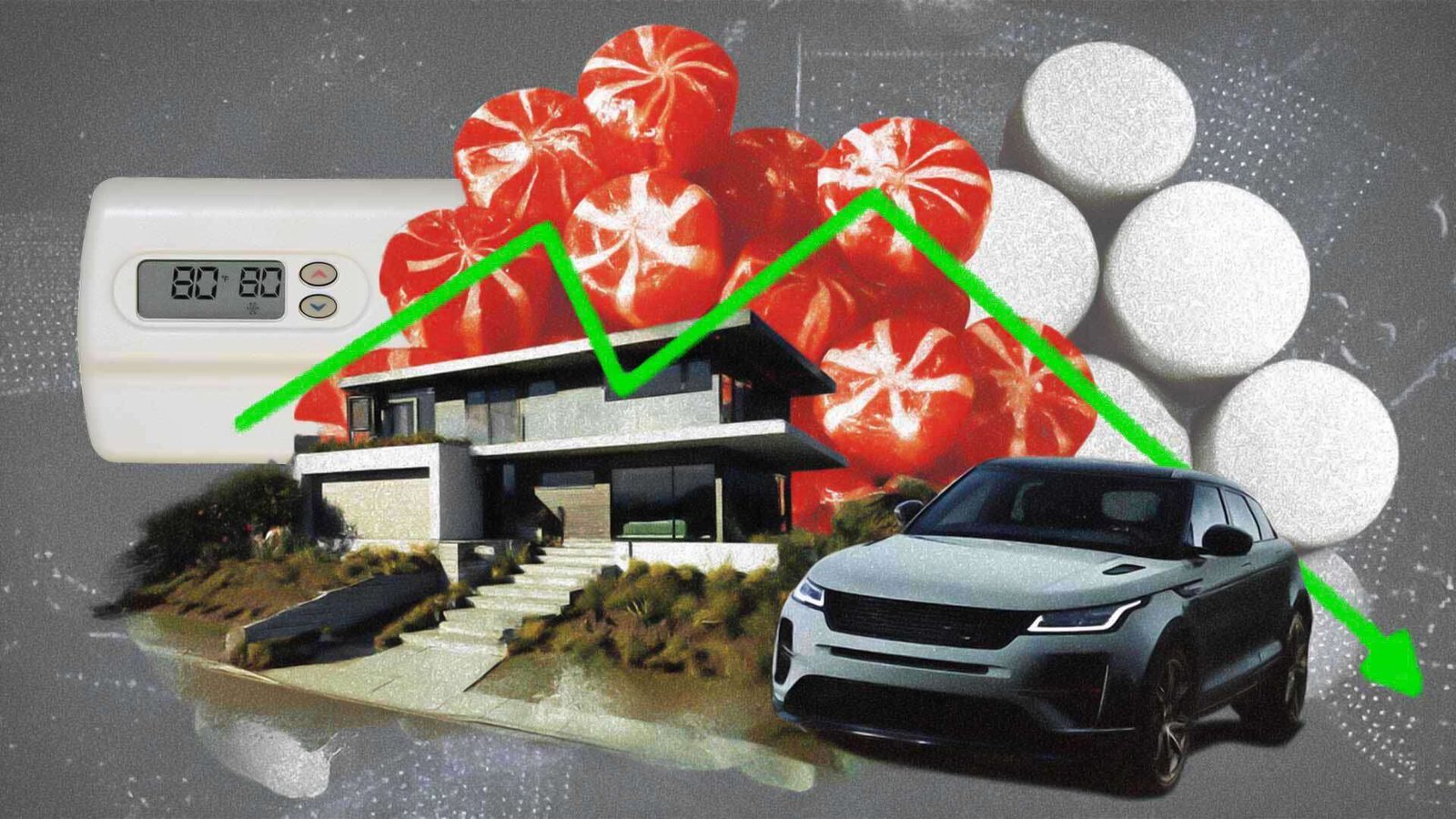
Americans spend almost 70 percent of their budgets on shelter (20.1 percent), transportation (17 percent), food (12.9 percent), health care (8 percent), utilities, fuels, and public services (6 percent), and household furnishings (3.2 percent), according to the 2023 Consumer Expenditure Survey. Every single one of those is tangled up in supply-choking regulation. To lower costs, officials should cut the red tape that inflates these prices. Here are 17 actions, across six categories, they can take to do so:
1. End Sugar Quotas
Food is ground zero in affordability politics. Inflation has driven food spending up 29 percent since 2019, with lower-income families now spending more than $1,000 a month on groceries. While economic conditions explain the bulk of this (egg prices, for example, soared in early 2025 because avian flu culled 11 percent of America’s egg-laying hens, before falling again), bad policies raise certain food prices structurally—starting with the sugar program. Sugar quotas and tariff-rate quotas have doubled U.S. sugar prices against world prices since 1982, costing consumers between $2.4 billion and $4 billion annually. Repeal would slash costs, providing cheaper cereals, candy, baked goods, and soft drinks. Ethanol mandates and milk pricing schemes deserve the same treatment.
2. End Tariffs on Food
New tariffs from President Donald Trump act as a further grocery tax. When the administration briefly slapped 40 percent duties on Brazilian coffee and other foods this year and then abruptly removed them, global coffee prices fell between 1 percent and 3 percent in a day. Want to cut supermarket costs fast? Start by scrapping tariffs on beef, sugar, and juice too.
3. Expand Agricultural Immigration Visas
Immigration crackdowns also drive up food prices. A 10 percent drop in farm labor can shrink fruit and vegetable production by 4.2 percent. With 42 percent of the crop workforce at risk of deportation or exit, today’s enforcement push is a recipe for labor disruption and higher prices. Expanding agricultural visas and ending the deportation merry-go-round would do the opposite: boost labor supply, keep crops from rotting, and take the edge off produce prices.
4. Expand the Scope of Independent Practices
Washington has spent decades turning health care into a mess of subsidies and third-party payments. Transforming it into a functioning market requires a comprehensive set of supply and demand reforms. But if Congress won’t strip away subsidies in the near term (the immediate effect of which would make health care less affordable for many), there are some clear ways to boost the supply of care and start bending costs down, whoever pays them. Out-of-pocket spending climbed to about $1,514 per person in 2023, making up roughly 11 percent of national spending on health consumption. Letting nurse practitioners, pharmacists, and clinical psychologists practice independently boosts access and lowers prices. Full-practice states provide significantly more health services than other states and have better overall health. Random assignment between medical doctors and nurse practitioners had no detectable differences in clinical outcomes, even as medical doctors charge 34 percent more than nurse practitioners for low-risk primary care doctor visits.
5. Allow More Over-the-Counter Medicines
Making safe meds—such as birth control and, eventually, GLP-1s—available over-the-counter increases access and lowers costs. When Opill, an over-the-counter birth control pill, launched at $19.99 per month, most women said they’d pay only between $1 and $10, showing how sensitive customers are to price.
6. Recognize Foreign Drug Approvals
Automatic approval for drugs and medicines approved by trusted foreign regulators (think the European Union, United Kingdom, Japan, Australia) would flood the market with more competition and me-too drugs, lowering prices further.
7. Scrap the Tariffs
Furnishings and durable household gear make up 23 percent of durable goods spending and 8 percent of all goods. These home-related costs spike by $7,000 when people buy a new home. Regulations set in Washington have been hiking the bill. In June, steel and aluminum tariffs doubled from 25 percent to 50 percent, jacking up costs on fridges, washers, dryers, ovens, and dishwashers. As of June, appliance prices were already tracking nearly 4 percent above pre-2025 trends. We’ve seen this movie before: Trump’s 2018 washer tariffs hiked washer prices by 12 percent, with even prices for untariffed dryers rising as manufacturers spread the pain. Consumers ended up paying an extra $1.5 billion annually. If you want cheaper appliances fast, scrap the tariffs.
8. Relax Licensing Requirements for Repairmen
Of course, you need people to install and fix appliances. HVAC and plumbing work is heavily licensed; more stringent requirements raise prices without obvious safety benefits. Excessively stringent state licensing requirements raise prices significantly for consumers in need of general home repair. Comparing the most to least stringent regulatory regimes, prices are over 15 percent higher for $200–$500 jobs when more stringent, and over 50 percent higher for jobs over $1,000—exactly the range for air-conditioning repairs or a water-heater install. Easing burdensome licensing for routine HVAC tasks and relaxing it for basic plumbing, in favor of simple registration and insurance requirements, would increase competition, shorten wait times, and push down the cost of keeping the kit in your home running.
9. Release Land for Building
We know how to make housing cheaper: allow more to be built. That starts with releasing more land in the West and also relaxing arbitrary urban growth boundaries around such cities as Portland, Oregon; San Jose, California; Honolulu, Hawaii; Virginia Beach, Virginia; and Knoxville, Tennessee.
10. Upzone
States and localities should tear down zoning codes that ban dense development, height limits that stifle building up, and mandates for parking spots and staircases that add thousands to unit costs. Upzoning alone increases local housing supply and living space by about 9 percent within a decade, dampening rent as a “viable policy for increasing housing affordability,” one recent Journal of Urban Economics study finds. Even in places where rents don’t fall significantly with land-use reform, more housing improves mobility, letting people move to where the jobs are and boosting real wages.
11. More By-Right Permits
Sweeping zoning reform takes time and requires assembling political coalitions. But states can slash costs right now by adopting “by-right” permitting for already-zoned projects. Making approvals automatic, unless the government can quickly prove why builders shouldn’t go ahead, would lower costs by thousands of dollars per home and mitigate developers’ risks. Pairing by-right rules with strict permit “shot clocks” and real judicial review can cut delay risk further, encouraging more new construction today.
12. Approve More Pipelines, More Quickly
Energy is another budget drainer. The average household spends about $1,730 a year on electricity and $2,700 on gasoline. Power prices are up 35 percent from 2020’s average. This is mostly because of inflation and rising demand. But surging demand requires flexible supply to avoid price surges. And governments create bottlenecks here. In New England, constrained gas pipelines mean wild price spikes when cold weather hits. During January 2022’s historic blizzard, New England’s day-ahead electricity prices blew past $100 per megawatt-hour 25 times. Approving more pipes, and forcing faster federal and state approvals, could mean the end of losing your shirt to pay your heating bill every winter.
13. End Tariffs on Goods Needed for Electrical Grids
We could also stop taxing grid buildouts through tariffs. Section 232 duties on imported steel, aluminum, and copper jack up the cost of poles, wires, and substations. The International Energy Agency estimates that materials comprise more than half of a new transformer’s total costs. Removing those duties would offer immediate relief while we reconsider reforming thornier climate regulations on power plants.
14. Repeal the Jones Act
Then there’s the Jones Act’s impact on energy transportation. That law’s requirement that cargoes between U.S. ports use U.S.-built, -owned, and -crewed vessels drives up the cost of transporting fuel. A 2023 working paper from economists for the Becker Friedman Institute for Economics found that eliminating the Jones Act would have cut East Coast gasoline, jet fuel, and diesel prices by $0.63–$0.82 per barrel in 2018–19, delivering $770 million per year in consumer benefits.
15. End the ‘Chicken Tax’
Want to cut transportation costs? Start by abolishing the 25 percent “chicken tax” on imported light trucks. Doing that, and resisting copycat auto tariffs, would show up directly in far lower sticker prices. Congress could also kill the kludgy Corporate Average Fuel Economy (CAFE) standards. These complex rules, intended to improve fuel efficiency, add cost and complexity to vehicles, raising prices. Furthermore, regulators impose laxer standards on trucks and SUVs as a sop to American automakers, essentially punishing companies for making smaller, cheaper cars (one reason such vehicles have largely disappeared from the market). Fortunately, the CAFE standards have recently begun resembling a dead letter. The One Big Beautiful Bill removed financial penalties for noncompliance, and the Trump administration recently relaxed the stricter targets previously set under President Joe Biden.
16. Allow Direct Sales
State dealer-franchise laws ban direct-to-consumer car sales, forcing buyers to buy from local monopolies. Economists have found that this hikes prices between 2 percent and 9 percent. The government should let automakers sell straight to drivers. While we’re at it, clear out the remaining taxi-cartel rules and greenlight driverless cabs, putting further downward pressure on local transport prices.
17. End or Ease Buy American Rules
The federal government should kill Buy American laws too. These rules force transit agencies to use U.S.-made steel, buses, and rail cars, even when imports are cheaper. The Federal Transit Administration now demands more than 70 percent domestic content, and it won’t grant a waiver unless U.S. parts push costs up by more than 25 percent. Those extra capital costs don’t disappear—they resurface as higher fares, steeper local taxes, or both. Add in endless environmental review delays, and you’ve got a recipe for overpriced infrastructure.
Those ideas aren’t the full menu. A serious affordability agenda would take aim at child care, clothing, and dozens of other essentials. Even in the areas covered here, there’s more that could be done. The guiding principle is clear: Trade liberalization and deregulation can unleash supply, expand consumer choice, and improve affordability—sometimes through lower prices, sometimes by making room for cheaper, lower-frills options. Even when prices don’t drop much, greater efficiency boosts wages.
In the long run, what people care about is how far their money goes. This requires economic growth. But after an inflation shock has jacked up prices, consumers aren’t in the mood to wait. Officials should respond by letting markets work, not by stumbling into price controls and costly subsidies.
And maybe next time, Washington could try not overstimulating the economy through reckless monetary and fiscal policy in the first place.
Read the full article here
Fact Checker
Verify the accuracy of this article using AI-powered analysis and real-time sources.