In brief
- The Executive Order creates an AI task force to contest state laws.
- Colorado’s new “algorithmic discrimination” statute was identified as an early target.
- Agencies were told to review state rules and weigh funding restrictions tied to compliance.
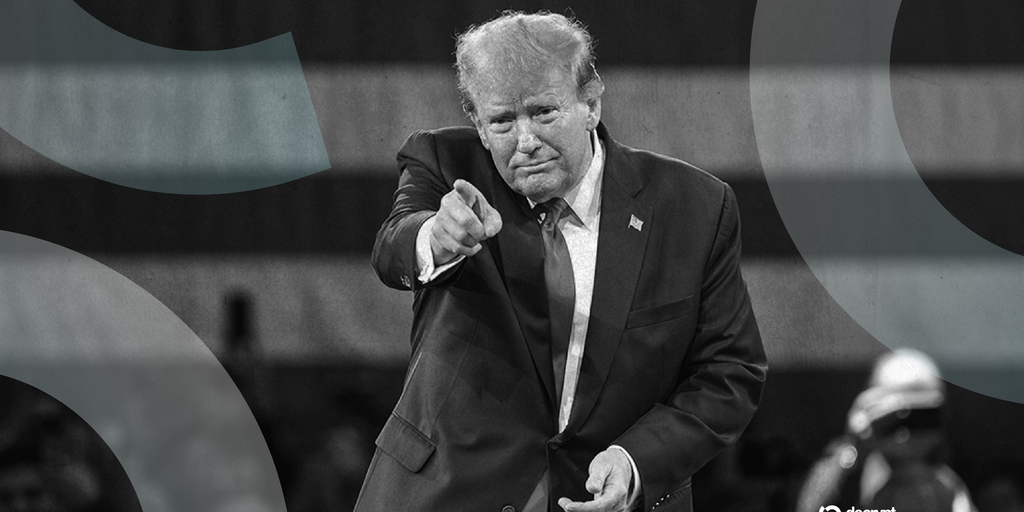
President Donald Trump signed an executive order on Thursday directing the Justice Department to challenge state artificial intelligence laws, setting up a direct confrontation with states that had advanced their own rules in the absence of federal legislation.
The order creates an AI Litigation Task Force under the Attorney General and instructed the Justice Department to contest state laws on federal preemption grounds and potential conflicts with interstate commerce protections.
The order identified Colorado’s new “algorithmic discrimination” statute as a key concern and signaled that additional state measures could face scrutiny.
“My administration must act with the Congress to ensure that there is a minimally burdensome national standard—not 50 discordant State ones,” Trump wrote in the order. “The resulting framework must forbid State laws that conflict with the policy set forth in this order.”
In the 2025 legislative session, all 50 states considered AI-related legislation, and 38 states enacted roughly 100 AI measures, according to a report from the bipartisan National Conference of State Legislatures.
In November, rumors began to circulate that Trump would issue an executive order to rein in state-backed AI policies.
Thursday’s executive order stipulates that “State-by-State regulation by definition creates a patchwork of 50 different regulatory regimes that makes compliance more challenging, particularly for start-ups.”
“To win, United States AI companies must be free to innovate without cumbersome regulation,” the order said. “But excessive State regulation thwarts this imperative.”
The order drew immediate criticism from labor groups, technology policy organizations, and AI researchers, who said the order sidestepped documented risks from AI systems, targeted the states trying to address them, and amounted to a power grab for big tech companies.
“President Trump’s unlawful executive order is nothing more than a brazen effort to upend AI safety and give tech billionaires unchecked power over working people’s jobs, rights, and freedoms,” labor union AFL-CIO wrote in a statement. “The EO attempts to intimidate states by threatening their federal funding and infringing on their legal right to enact commonsense protections that elected leaders on both sides of the aisle support.”
“This executive order is designed to chill state-level action to provide oversight and accountability for the developers and deployers of AI systems, while doing nothing to address the real and documented harms these systems create,” Alexandra Reeve Givens, President and CEO of the Center for Democracy and Technology, wrote.
“Anything that goes wrong, from AI-fueled cybercrime to bioweapons attacks facilitated by AI to teen suicides apparently linked to GenAI will be on his hands, and his reputation,” cognitive scientist, AI researcher, and author, Gary Marcus wrote on Substack. “And because he has become so tight with Silicon Valley, he will also be closely tied to any AI-tinged economic debacle that happens on his watch.”
Despite the criticism, some praised the administration’s preemption approach, while others supported it but criticized its execution.
“We need federal preemption of most state AI regulation in order to successfully compete with China in the race to lead AI,” Director of the Center for Technology and Innovation with the Competitive Enterprise Institute, Jessica Melugin, said.
“The White House gets the basic need for federal AI preemption right, but its failure to shepherd AI legislation through Congress threatens to undo the general progress the administration has made in securing American innovation,” Ryan Hauser, research fellow with the Mercatus Center at George Mason University, wrote.
The executive order followed Trump’s July directive barring federal agencies from using systems the administration described as exhibiting “ideological biases.”
Generally Intelligent Newsletter
A weekly AI journey narrated by Gen, a generative AI model.


 Freedom Index