Close Menu
FSNN | Free Speech News NetworkFSNN | Free Speech News Network
  • Home
  • News
    • Politics
    • Legal & Courts
    • Tech & Big Tech
    • Campus & Education
    • Media & Culture
    • Global Free Speech
  • Opinions
    • Debates
  • Video/Live
  • Community
  • Freedom Index
  • About
    • Mission
    • Contact
    • Support
Trending

The gold and silver bubbles may have popped; what it means for bitcoin (BTC)

24 minutes ago

SoFi Reports Record Q4 Earnings as Crypto, Stablecoin Push Expands

26 minutes ago

Bitcoin Mining Profits Hit 14-Month Low After Winter Storm Rocks Miners: CryptoQuant

33 minutes ago
Facebook X (Twitter) Instagram
Facebook X (Twitter) Discord Telegram
FSNN | Free Speech News NetworkFSNN | Free Speech News Network
Market Data Newsletter
Friday, January 30
  • Home
  • News
    • Politics
    • Legal & Courts
    • Tech & Big Tech
    • Campus & Education
    • Media & Culture
    • Global Free Speech
  • Opinions
    • Debates
  • Video/Live
  • Community
  • Freedom Index
  • About
    • Mission
    • Contact
    • Support
FSNN | Free Speech News NetworkFSNN | Free Speech News Network
Home»News»Global Free Speech»How Australia’s social media ban threatens free expression
Global Free Speech

How Australia’s social media ban threatens free expression

News RoomBy News Room2 months agoNo Comments5 Mins Read1,325 Views
Share Facebook Twitter Pinterest Copy Link LinkedIn Tumblr Email VKontakte Telegram
How Australia’s social media ban threatens free expression
Share
Facebook Twitter Pinterest Email Copy Link

Listen to the article

0:00
0:00

Key Takeaways

Playback Speed

Select a Voice

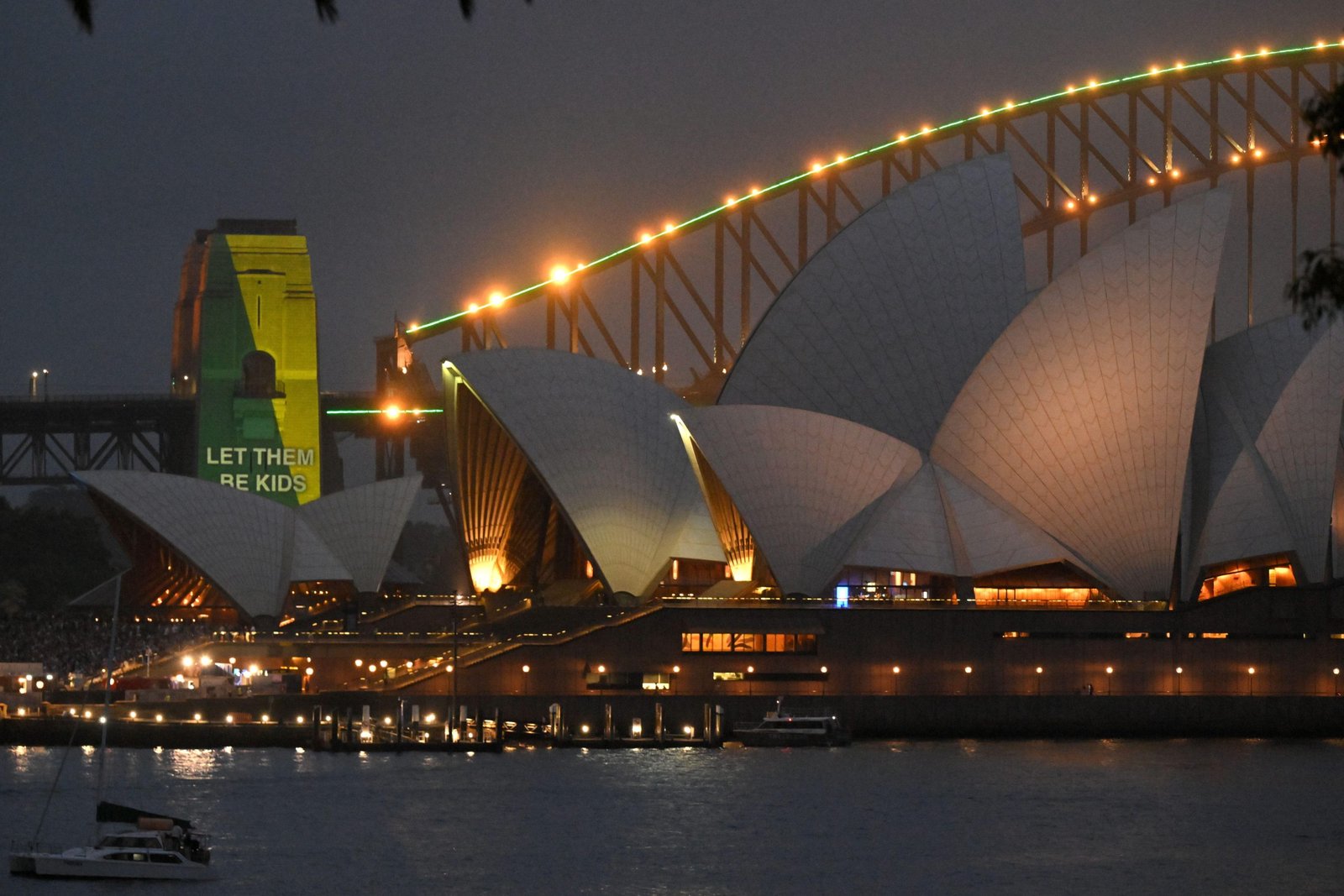
When Australia passed a world-first social media ban for teens, there was a display of national pride from the prime minister, and even the Sydney Harbour Bridge was lit up in the country’s national colours, green and gold, to celebrate the historic achievement.

The law, which came into effect on 10 December, requires 10 platforms to take “reasonable steps” to prevent under-16s from having accounts on their platforms, or risk fines of up to $49.5 million.

The Online Safety Amendment (Social Media Minimum Age) Bill 2024 had bipartisan support and sailed through Australian parliament last December. Seventy per cent of Australians are said to support it. 

Australia is being feted. The EU, Malaysia, and others are said to be watching, including the UK, although the culture secretary has expressed doubts over whether it could be enforced in the country.

But a barrage of human rights groups and others, including Index on Censorship, Amnesty International and Save the Children, have all criticised or opposed the ban.

Tom Sulston, head of policy at Australian charity Digital Rights Watch, told Index that they were broadly supportive of the idea that internet access is a human right. While the new law only restricts teens from accessing 10 specific sites – X, TikTok, Instagram, Snapchat, Threads, Facebook, YouTube, Reddit, Kick and Twitch – he said that the space these social media companies represent is enormous.

“They do occupy this space as the town square of digital society,” Sulston said. “So, is it proportionate to remove that right of access to a group of people in order to protect their safety, or under the guise of protecting their safety? We don’t think so.”

He added that there were alternative measures that many organisations were asking for, such as regulation and investment in digital literacy, which could have been put in place instead of an outright ban.

There is now an interesting legal conversation to be had about the ban, Sulston said. On 26 November, two 15-year-olds launched a legal challenge to the law, supported by rights group the Digital Freedom Project (DFP), in Australia’s High Court. They are arguing that all Australians have a constitutional implied right to freedom of political communication.

“Young people like me are the voters of tomorrow,” said one plaintiff Macy Neyland in a statement. “Why on earth should we be banned from expressing our views?” Neyland added that the situation was “like Orwell’s book Nineteen Eighty-Four”.

Noah Jones, who is also suing the government, told the media: “We’re disappointed in a lazy government that blanket-bans under-16s rather than investing in programmes to help kids be safe on social media. They should protect kids with safeguards, not silence.”

A direction hearing for the teens’ court challenge will be heard in February at the earliest.

Digital Freedom Project president John Ruddick, who is also a member of the New South Wales Legislative Council with the Libertarian Party, has branded the ban the world’s most draconian legislation. He said that it was “as Big Brother as you can get” and that “even the Chinese Communist Party would be drooling over this”.

Reddit was also reportedly looking at legal action, but has confirmed it will comply with the restrictions.

In submissions to Australia’s Senate Standing Committees on Environment and Communications last November, before it became law, the Australian Human Rights Commission said that it had “serious reservations” about the legislation. While it said that it understood the significance of protecting young people from online harm and the negative consequences of social media, the ban would affect some human rights outlined in international human rights treaties including the International Covenant on Civil and Political Rights and the UN Committee on the Rights of the Child.

These include the right to freedom of expression and information, and the freedom of association and peaceful assembly, as contained in both treaties.

Digital Rights Watch’s Sulston said that he was also worried about autocracies eyeing up the law. According to digital rights non-profit Access Now, 2024 was the worst year on record for internet shutdowns.

“Young people are not represented democratically, even in democratic societies. If you’re under the age to vote, then you get nothing,” Sulston said. “So being able to organise and develop political understanding and take political action online is really important for that cohort. You can see why it would be very attractive for authoritarian regimes to clamp down on that.”

But Sulston said that even though he considered the law a “disaster” and there was no evidence that it would improve children’s lives, it had already been showcased at the UN General Assembly and “deemed a great success”.

He said: “It’s really hard to see what a path to change looks like, because no matter how harmful it is, it seems we’re stuck with it.”

Read the full article here

Fact Checker

Verify the accuracy of this article using AI-powered analysis and real-time sources.

Get Your Fact Check Report

Enter your email to receive detailed fact-checking analysis

5 free reports remaining

Continue with Full Access

You've used your 5 free reports. Sign up for unlimited access!

Already have an account? Sign in here

Share. Facebook Twitter Pinterest LinkedIn Tumblr Email Telegram Copy Link
News Room
  • Website
  • Facebook
  • X (Twitter)
  • Instagram
  • LinkedIn

The FSNN News Room is the voice of our in-house journalists, editors, and researchers. We deliver timely, unbiased reporting at the crossroads of finance, cryptocurrency, and global politics, providing clear, fact-driven analysis free from agendas.

Related Articles

Global Free Speech

Cameroonian journalist jailed in child kidnapping trial

4 hours ago
Global Free Speech

CPJ condemns arrests of journalists Don Lemon and Georgia Fort over Minnesota protests

7 hours ago
Global Free Speech

Alena Hnauk

7 hours ago
Global Free Speech

CPJ, partners call on Kyrgyzstan to free journalist Tajibek kyzy

10 hours ago
Global Free Speech

Costa Rica’s press freedom hangs in the balance ahead of presidential election

1 day ago
Global Free Speech

2 DRC journalists detained for war reporting in restive east

1 day ago
Add A Comment

Comments are closed.

Editors Picks

SoFi Reports Record Q4 Earnings as Crypto, Stablecoin Push Expands

26 minutes ago

Bitcoin Mining Profits Hit 14-Month Low After Winter Storm Rocks Miners: CryptoQuant

33 minutes ago

The federal charges against Don Lemon raise serious concerns for press freedom

55 minutes ago

Bari Weiss Pauses Her Pathetic Podcast To Focus Full Time On Ruining CBS

58 minutes ago
Latest Posts

The Minneapolis Shootings Underline the Advantages of Body Cameras, Which DHS Has Been Slow To Adopt

59 minutes ago

Dollar trade might explain bitcoin’s terrible week

1 hour ago

European Commission Calls on 12 Countries to Implement Crypto Tax Rules

1 hour ago

Subscribe to News

Get the latest news and updates directly to your inbox.

At FSNN – Free Speech News Network, we deliver unfiltered reporting and in-depth analysis on the stories that matter most. From breaking headlines to global perspectives, our mission is to keep you informed, empowered, and connected.

FSNN.net is owned and operated by GlobalBoost Media
, an independent media organization dedicated to advancing transparency, free expression, and factual journalism across the digital landscape.

Facebook X (Twitter) Discord Telegram
Latest News

The gold and silver bubbles may have popped; what it means for bitcoin (BTC)

24 minutes ago

SoFi Reports Record Q4 Earnings as Crypto, Stablecoin Push Expands

26 minutes ago

Bitcoin Mining Profits Hit 14-Month Low After Winter Storm Rocks Miners: CryptoQuant

33 minutes ago

Subscribe to Updates

Get the latest news and updates directly to your inbox.

© 2026 GlobalBoost Media. All Rights Reserved.
  • Privacy Policy
  • Terms of Service
  • Our Authors
  • Contact

Type above and press Enter to search. Press Esc to cancel.

🍪

Cookies

We and our selected partners wish to use cookies to collect information about you for functional purposes and statistical marketing. You may not give us your consent for certain purposes by selecting an option and you can withdraw your consent at any time via the cookie icon.

Cookie Preferences

Manage Cookies

Cookies are small text that can be used by websites to make the user experience more efficient. The law states that we may store cookies on your device if they are strictly necessary for the operation of this site. For all other types of cookies, we need your permission. This site uses various types of cookies. Some cookies are placed by third party services that appear on our pages.

Your permission applies to the following domains:

  • https://fsnn.net
Necessary
Necessary cookies help make a website usable by enabling basic functions like page navigation and access to secure areas of the website. The website cannot function properly without these cookies.
Statistic
Statistic cookies help website owners to understand how visitors interact with websites by collecting and reporting information anonymously.
Preferences
Preference cookies enable a website to remember information that changes the way the website behaves or looks, like your preferred language or the region that you are in.
Marketing
Marketing cookies are used to track visitors across websites. The intention is to display ads that are relevant and engaging for the individual user and thereby more valuable for publishers and third party advertisers.