Close Menu
FSNN | Free Speech News NetworkFSNN | Free Speech News Network
  • Home
  • News
    • Politics
    • Legal & Courts
    • Tech & Big Tech
    • Campus & Education
    • Media & Culture
    • Global Free Speech
  • Opinions
    • Debates
  • Video/Live
  • Community
  • Freedom Index
  • About
    • Mission
    • Contact
    • Support
Trending

Today in Supreme Court History: March 9, 1937

25 minutes ago

Israel’s Wins in Gaza, Lebanon, Syria, Iran Need Violent Maintenance

34 minutes ago

U.S. Treasury Department says crypto mixers also have legitimate use cases

39 minutes ago
Facebook X (Twitter) Instagram
Facebook X (Twitter) Discord Telegram
FSNN | Free Speech News NetworkFSNN | Free Speech News Network
Market Data Newsletter
Tuesday, March 10
  • Home
  • News
    • Politics
    • Legal & Courts
    • Tech & Big Tech
    • Campus & Education
    • Media & Culture
    • Global Free Speech
  • Opinions
    • Debates
  • Video/Live
  • Community
  • Freedom Index
  • About
    • Mission
    • Contact
    • Support
FSNN | Free Speech News NetworkFSNN | Free Speech News Network
Home»News»Media & Culture»Virginia’s New Blue Trifecta Puts Right-To-Work on the Line
Media & Culture

Virginia’s New Blue Trifecta Puts Right-To-Work on the Line

News RoomBy News Room3 months agoNo Comments5 Mins Read339 Views
Share Facebook Twitter Pinterest Copy Link LinkedIn Tumblr Email VKontakte Telegram
Virginia’s New Blue Trifecta Puts Right-To-Work on the Line
Share
Facebook Twitter Pinterest Email Copy Link

Listen to the article

0:00
0:00

Key Takeaways

Playback Speed

Select a Voice

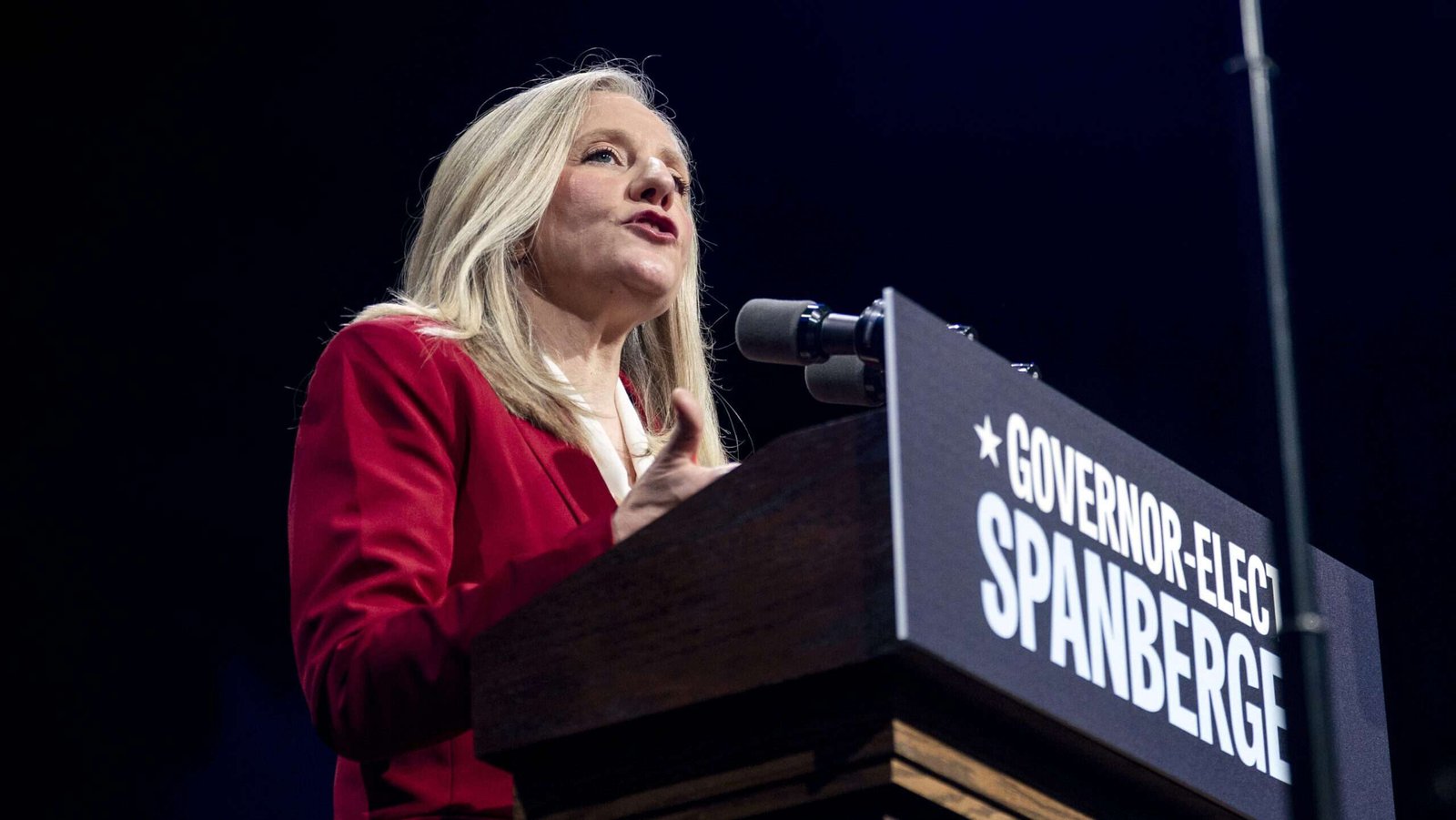
Given its proximity to Washington, D.C., Virginia has long had a reputation for its off-year elections swinging to whatever political party does not control the White House. After four years of Republican Gov. Glenn Youngkin—whose victory came on the back of Joe Biden’s first year as president—the commonwealth went strongly Democratic this year, electing incoming Gov. Abigail Spanberger amid President Donald Trump’s second term.

Virginia Democrats now have a trifecta in Richmond, and political winds suggest that this could finally spell the end of right-to-work in the state, after nearly 80 years of the law being on the books. 

Spanberger’s term doesn’t start until January, but state Democratic lawmakers have already introduced right-to-work repeal legislation that they hope to send to her desk. So far, Spanberger claims to oppose right-to-work’s repeal, but the coming weeks will show if she reverts to her career-long pro-union track record.

In late November, State Sen. Jennifer Carroll Foy (D–Woodbridge) introduced Senate Bill 32, which would repeal Virginia’s right-to-work law that prevents private sector workers from being forced to join a union or pay union agency fees as a condition of employment. During her gubernatorial campaign, Spanberger reiterated numerous times that she did not support repealing Virginia’s right-to-work law, saying that supporting repeal was a false litmus test for being pro-worker.

“I know there are those who think you can be pro-business or pro-union….I reject that idea,” said Spanberger in a campaign trail speech to the Virginia Chamber of Commerce. After the introduction of Foy’s repeal bill, a Spanberger spokesperson told the media the incoming governor “does not support repealing the current statute.”

But it’s unclear exactly what Spanberger does support, and a more granular reading of her campaign trail pledge leaves notable wiggle room. In her statements during the election, she claimed she did not support “full repeal,” while leaving the door open by saying “reforms may be necessary.”

Although it’s unclear what “partial” right-to-work repeal might look like, one potential clue may come from Virginia’s not-too-distant past. In 2020, then-Senate Majority Leader Dick Saslaw (D–Springfield) introduced legislation that was billed as a “partial repeal” of Virginia’s right-to-work law in that it did not force workers to join a union but could require the compulsory collection of so-called “agency fees” from non-union members.

Agency fees function as a union workaround for workers who refuse to join a union by still putting them on the hook to financially contribute to the union. In the 2018 case of Janus v. American Federation of State, County, and Municipal Employees (AFSCME), the U.S. Supreme Court struck down this practice for public sector employees as a violation of First Amendment rights, but agency fees can still be collected in the private sector if permitted under state law. A similar approach to Saslaw’s prior effort could perhaps be used by Virginia Democrats to effectively gut right-to-work, while simultaneously claiming it does not technically constitute Spanberger reneging on her campaign promise.

Past right-to-work repeal bills in Virginia have had a poor track record, even among state Democrats. A 2021 repeal bill was voted down in resounding—and bipartisan—fashion by a tally of 88–13 in the House of Delegates. But since that time, numerous moderate Democrats have retired from the state legislature, making it far from certain what a vote might look like now.

For her part, Spanberger’s past record includes cosponsoring the Protecting the Right to Organize (PRO) Act while serving in the House of Representatives. The PRO Act, which included a laundry list of pro-union desires, was notable for containing provisions that would have effectively overridden state-level right-to-work laws. The incoming governor also received substantial support from labor unions, including AFSCME, during her campaign.

Spanberger is right that the choice between being pro-business and pro-worker is often a false dichotomy. But there are better ways to strike this balance than “partial” repeals of right-to-work. For instance, Virginia could look to its neighbor, Maryland, where Democratic Gov. Wes Moore has initiated a portable benefits pilot program for gig economy workers. Portable benefit models allow gig workers to use Simplified Employee Pension-style funds to purchase benefits on exchanges, which they can then take with them from job to job.

As workers increasingly show a preference for flexible work and scheduling autonomy—which often means more gig and freelancing work—this is the type of pro-worker reform that moves labor policy into the 21st century, instead of staying stuck in the labor battles of yesteryear. In addition to Maryland, deep red states like Tennessee and Utah have also implemented portable benefit models, suggesting the bipartisan appeal of such an approach.

We’ll soon see if Virginia holds the line or becomes the second state since Michigan in 2023 to repeal right-to-work. Whatever happens, Virginia’s—and America’s—labor policy debate is badly in need of an update.

Read the full article here

Fact Checker

Verify the accuracy of this article using AI-powered analysis and real-time sources.

Get Your Fact Check Report

Enter your email to receive detailed fact-checking analysis

5 free reports remaining

Continue with Full Access

You've used your 5 free reports. Sign up for unlimited access!

Already have an account? Sign in here

Share. Facebook Twitter Pinterest LinkedIn Tumblr Email Telegram Copy Link
News Room
  • Website
  • Facebook
  • X (Twitter)
  • Instagram
  • LinkedIn

The FSNN News Room is the voice of our in-house journalists, editors, and researchers. We deliver timely, unbiased reporting at the crossroads of finance, cryptocurrency, and global politics, providing clear, fact-driven analysis free from agendas.

Related Articles

Media & Culture

Today in Supreme Court History: March 9, 1937

25 minutes ago
Debates

Israel’s Wins in Gaza, Lebanon, Syria, Iran Need Violent Maintenance

34 minutes ago
Cryptocurrency & Free Speech Finance

Elon Musk’s Grok Faces UK Backlash After AI Posts Mock Football Tragedies

42 minutes ago
Media & Culture

March Madness

1 hour ago
Debates

Iran at War: A Middle East Transformed

2 hours ago
Cryptocurrency & Free Speech Finance

Bitcoin Shows ‘Tentative Signs of Improvement’ as Iran Conflict Fears Wane

2 hours ago
Add A Comment

Comments are closed.

Editors Picks

Israel’s Wins in Gaza, Lebanon, Syria, Iran Need Violent Maintenance

34 minutes ago

U.S. Treasury Department says crypto mixers also have legitimate use cases

39 minutes ago

Zcash Devs Raise $25M From Major VCs After ECC Split

40 minutes ago

Elon Musk’s Grok Faces UK Backlash After AI Posts Mock Football Tragedies

42 minutes ago
Latest Posts

March Madness

1 hour ago

Iran at War: A Middle East Transformed

2 hours ago

Bithumb faces proposed 6-month partial ban over South Korea AML breaches

2 hours ago

Subscribe to News

Get the latest news and updates directly to your inbox.

At FSNN – Free Speech News Network, we deliver unfiltered reporting and in-depth analysis on the stories that matter most. From breaking headlines to global perspectives, our mission is to keep you informed, empowered, and connected.

FSNN.net is owned and operated by GlobalBoost Media
, an independent media organization dedicated to advancing transparency, free expression, and factual journalism across the digital landscape.

Facebook X (Twitter) Discord Telegram
Latest News

Today in Supreme Court History: March 9, 1937

25 minutes ago

Israel’s Wins in Gaza, Lebanon, Syria, Iran Need Violent Maintenance

34 minutes ago

U.S. Treasury Department says crypto mixers also have legitimate use cases

39 minutes ago

Subscribe to Updates

Get the latest news and updates directly to your inbox.

© 2026 GlobalBoost Media. All Rights Reserved.
  • Privacy Policy
  • Terms of Service
  • Our Authors
  • Contact

Type above and press Enter to search. Press Esc to cancel.

🍪

Cookies

We and our selected partners wish to use cookies to collect information about you for functional purposes and statistical marketing. You may not give us your consent for certain purposes by selecting an option and you can withdraw your consent at any time via the cookie icon.

Cookie Preferences

Manage Cookies

Cookies are small text that can be used by websites to make the user experience more efficient. The law states that we may store cookies on your device if they are strictly necessary for the operation of this site. For all other types of cookies, we need your permission. This site uses various types of cookies. Some cookies are placed by third party services that appear on our pages.

Your permission applies to the following domains:

  • https://fsnn.net
Necessary
Necessary cookies help make a website usable by enabling basic functions like page navigation and access to secure areas of the website. The website cannot function properly without these cookies.
Statistic
Statistic cookies help website owners to understand how visitors interact with websites by collecting and reporting information anonymously.
Preferences
Preference cookies enable a website to remember information that changes the way the website behaves or looks, like your preferred language or the region that you are in.
Marketing
Marketing cookies are used to track visitors across websites. The intention is to display ads that are relevant and engaging for the individual user and thereby more valuable for publishers and third party advertisers.