

 Freedom Index
Listen to the article
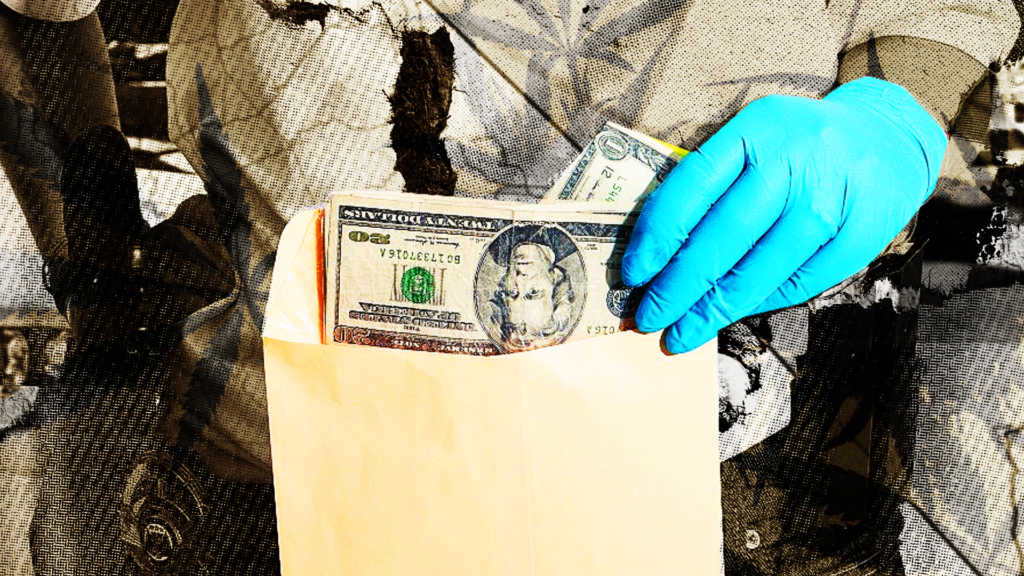
A year after the Drug Enforcement Administration (DEA) stopped seizing suspected drug money from airline passengers because of significant constitutional concerns, the Department of Homeland Security (DHS) is quietly keeping the practice alive.
The Dallas Morning News reported Monday that task forces of Homeland Security Investigations (HSI), Customs and Border Protection (CBP), and local police officers have been flagging suspicious passengers at two Dallas-area airports and using drug-sniffing dogs to get probable cause to search their luggage.
“Such searches have been conducted throughout the year at DFW Airport and Love Field, according to federal court records,” the newspaper reported. “And just like with the DEA tactic, agents often seize money from suspects without charging them with a crime, court records show.”
The shift is not only another example of mission creep at DHS, but the continuation of a program that civil liberties groups, media investigations, and independent and internal government reviews all concluded leads to innocent Americans having their cash seized.
Although it’s completely legal to fly domestically with large amounts of cash, police consider it indicative of drug trafficking, especially when combined with factors like a passenger booking a one-way ticket or having a short turnaround between flights. Federal task forces can seize suspected drug cash under civil asset forfeiture, a practice that allows law enforcement to seize property based on the mere suspicion that it’s connected to criminal activity. Even if the owner is never charged with a crime, and even if there isn’t a single gram of drugs found during the search, police can still take the money, forcing the owner to challenge the seizure in federal court.
For example, The Dallas Morning News investigation revealed that in one case this January, Homeland Security agents claimed they could smell marijuana coming from two suitcases belonging to a passenger arriving at Love Field. The search didn’t turn up any marijuana, but agents did find $800,000 in cash, which they seized. The passenger, who has not been charged with a crime, is contesting the seizure in federal court, according to the newspaper.
In another case, task force officers seized roughly $350,000 in cash from a passenger’s suitcases after a drug dog alerted on the luggage. The owner was not charged with a crime, and the government later settled the case by returning $178,000 to him.
Law enforcement groups say civil asset forfeiture is a vital tool to disrupt organized crime by targeting its illicit proceeds. And indeed, The Dallas Morning News story also includes a case of the same suspect being stopped three times by agents and found with large amounts of cash in his bag. Each time, his cash was seized and he was released. The man was later arrested after a search warrant on his house turned up seven pounds of marijuana.
But civil liberties groups say civil asset forfeiture lacks due process protections for innocent owners, who are forced to prove in court that their property is legitimate, and creates perverse profit incentives for police.
These are exactly the sort of problems that led the DEA to scrap the Transportation Interdiction Program (TIP). The DEA administrator announced in January that the agency was ending so-called “consensual searches” of travelers and their bags at airport gates and jet bridges under TIP. The administrator cited an internal review that found the program was outdated and resulted in few arrests. According to the administrator’s memo, between 2022 and 2024, DEA agents participating in TIP seized $22 million in suspected drug proceeds but only arrested 57 suspects.
TIP was already on life support at that point. The Justice Department temporarily suspended it last November after an Inspector General report outlined the significant risk of constitutional violations and litigation created by the searches. The report followed years of similar inspector general reports and media investigations.
In 2016, a USA Today investigation found the DEA had seized over $209 million from at least 5,200 travelers in 15 major airports over the previous decade.
A 2017 report by the Justice Department’s Inspector General found that the DEA seized over $4 billion in cash from people suspected of drug activity over the previous decade, but $3.2 billion of those seizures were never connected to any criminal charges.
That 2017 report warned that the DEA’s airport forfeiture activities were undermining its credibility: “When seizure and administrative forfeitures do not ultimately advance an investigation or prosecution, law enforcement creates the appearance, and risks the reality, that it is more interested in seizing and forfeiting cash than advancing an investigation or prosecution.”
Settlements like the one described by The Dallas Morning News only reinforce the appearance that profit incentives are driving forfeitures. If the government believes it seized narcotics revenue, why would it agree to return half of it? And if it doesn’t have confidence in the seizure, why not return all the money? There’s one obvious answer, and it’s not flattering to the feds.
It’s true that many of these forfeitures are never challenged. Drug dealers treat the cash seizures simply as the costs of doing business. But for innocent travelers, these seizures are a nightmare.
The Institute for Justice, a libertarian-leaning public interest law firm, filed a class-action lawsuit in 2020 on behalf of innocent passengers whose money was seized by the DEA. One of the lead plaintiffs in the suit is Terrence Rolin, a 79-year-old retired railroad engineer who had his life savings of $82,373 seized by the DEA after his daughter tried to take it on a flight out of Pittsburgh with the intent of depositing it in a bank. After the case went public, the DEA returned the money.
“You don’t forfeit your constitutional rights when you try to board an airplane,” Institute for Justice senior attorney Dan Alban said in a statement announcing the 2020 lawsuit. “It is time for TSA and federal law enforcement to stop seizing cash from travelers simply because the government considers certain amounts of cash ‘suspicious.'”
Another of the plaintiffs had $43,167 seized by the DEA as she was trying to fly home to Tampa, Florida, from Wilmington, North Carolina. She said the cash was from the sale of a used car, as well as money she and her husband intended to take to a casino. The DEA returned her money after she challenged the seizure as well.
Likewise, in 2021, the DEA returned $28,000 to Kermit Warren, a New Orleans man who said he was flying to Ohio to buy a tow truck when agents seized his life savings at the airport.
In all of these cases, DEA agents accused passengers of being involved in drug trafficking, only to hand the money back once they challenged the seizures.
The DEA correctly concluded that this sort of drug interdiction program produced too few results for far too many constitutional risks. DHS should bury it deeper, not resurrect it.
The Department of Homeland Security did not immediately respond to a request for comment.
Read the full article here
Fact Checker
Verify the accuracy of this article using AI-powered analysis and real-time sources.