Close Menu
FSNN | Free Speech News NetworkFSNN | Free Speech News Network
  • Home
  • News
    • Politics
    • Legal & Courts
    • Tech & Big Tech
    • Campus & Education
    • Media & Culture
    • Global Free Speech
  • Opinions
    • Debates
  • Video/Live
  • Community
  • Freedom Index
  • About
    • Mission
    • Contact
    • Support
Trending

Nuclear Power Regulators Scrap Rule Saying New Reactors Must Withstand 9/11-Style Plane Crashes

17 minutes ago

Trump-linked WLFI passes proposal letting $5 million stakers buy ‘direct access’ to team

45 minutes ago

Bitcoin Battles Macro Nerves and $75K Sellers This Week

46 minutes ago
Facebook X (Twitter) Instagram
Facebook X (Twitter) Discord Telegram
FSNN | Free Speech News NetworkFSNN | Free Speech News Network
Market Data Newsletter
Monday, March 16
  • Home
  • News
    • Politics
    • Legal & Courts
    • Tech & Big Tech
    • Campus & Education
    • Media & Culture
    • Global Free Speech
  • Opinions
    • Debates
  • Video/Live
  • Community
  • Freedom Index
  • About
    • Mission
    • Contact
    • Support
FSNN | Free Speech News NetworkFSNN | Free Speech News Network
Home»News»Media & Culture»No, SCOTUS Did Not ‘Invent’ Judicial Review in Marbury v. Madison
Media & Culture

No, SCOTUS Did Not ‘Invent’ Judicial Review in Marbury v. Madison

News RoomBy News Room3 months agoNo Comments4 Mins Read1,490 Views
Share Facebook Twitter Pinterest Copy Link LinkedIn Tumblr Email VKontakte Telegram
No, SCOTUS Did Not ‘Invent’ Judicial Review in Marbury v. Madison
Share
Facebook Twitter Pinterest Email Copy Link

Listen to the article

0:00
0:00

Key Takeaways

Playback Speed

Select a Voice

You may have heard that the U.S. Supreme Court “invented” the power of judicial review in a case called Marbury v. Madison (1803).

If you’re on the political left, you may have heard it from someone like New York Times columnist Jamelle Bouie, who once argued that judicial review “wasn’t enumerated in the Constitution and isn’t inherent in the [Supreme Court] as an institution.” For Bouie, that meant the idea of abolishing judicial review was a no-brainer in the fight against “judges nominated by [President Donald] Trump.”

If you’re on the political right, you may have heard it from someone like the conservative influencer Mike Cernovich, who recently argued that judicial review “isn’t anywhere in the Constitution” and “Marbury vs Madison was made up.” For Cernovich, that meant “judges do not have any supervisory power over Trump.”

Bouie and Cernovich undoubtedly disagree about a great many political matters. Yet their comments about judicial review and the Constitution are practically identical. They also happen to be equally wrong.

You’re reading Injustice System from Damon Root and Reason. Get more of Damon’s commentary on constitutional law and American history.

Under Article III of the Constitution, “the judicial Power of the United States shall be vested in one supreme Court, and in such inferior Courts as the Congress may from time to time ordain and establish.” That phrase—”the judicial Power”—was understood by both the framers and ratifiers of the Constitution to include the authority of the federal courts to nullify those legislative and executive actions that violated the Constitution, which is the same power that we now call judicial review.

During the Connecticut Ratification Convention in 1788, for example, Oliver Ellsworth, who had recently helped to draft the document at the 1787 Constitutional Convention in Philadelphia, explained that, “if the general legislature should at any time overleap their limits, the judicial department is a constitutional check. If the United States go beyond their powers, if they make a law which the Constitution does not authorize, it is void; and the judicial power, the national judges, who, to secure their impartiality, are to be made independent, will declare it to be void.” That’s judicial review.

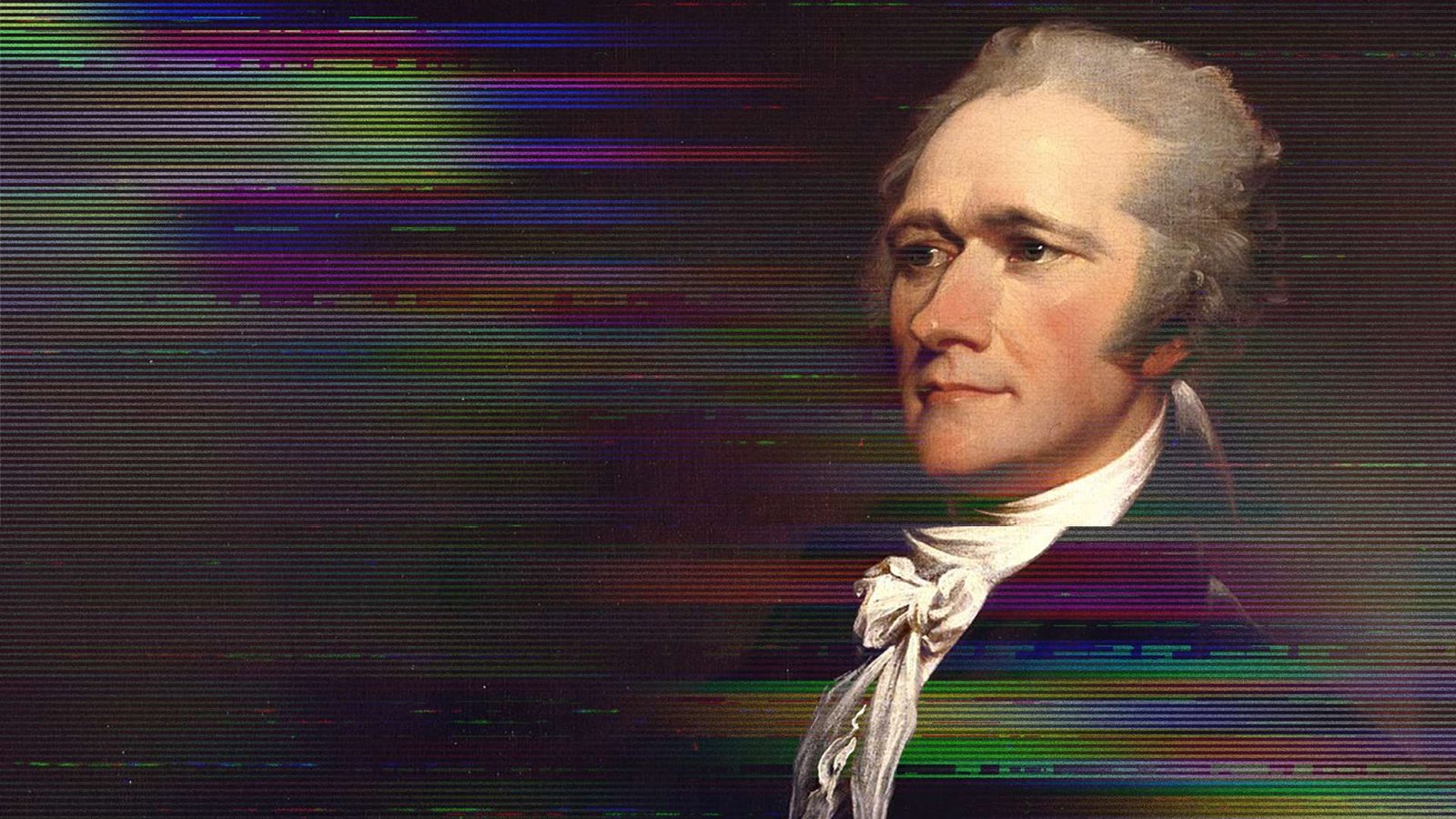
Alexander Hamilton made the same point in one of his most famous contributions to the Federalist Papers, the influential series of essays (written by himself, James Madison, and John Jay between October 1787 and May 1788) that both explained the meaning of the new Constitution and championed its ratification. The “duty” of the federal judiciary, Hamilton observed in Federalist No. 78, “must be to declare all acts contrary to the manifest tenor of the constitution void.”

Even Thomas Jefferson, who would later decry the Federalist Party’s influence over the federal judiciary, agreed at the time of the Constitution’s adoption that judicial review was inherent in the document. In a 1789 letter to Madison, for instance, Jefferson argued that one of the benefits of adding a Bill of Rights to the new Constitution would be “the legal check which it puts into the hands of the judiciary.” In other words, Jefferson expected the federal courts to wield the proposed Bill of Rights as a check against the legislative and executive branches via the judiciary’s existing power of judicial review.

Speaking of Madison, he memorably described the proper role of the federal courts under the Constitution as being “an impenetrable bulwark against every assumption of power in the legislative or executive.” That’s also what we now call judicial review.

So, instead of listening to the erroneous musings of a Bouie or a Cernovich, why not just take it straight from the source and listen to Ellsworth, Hamilton, Jefferson, and Madison, all of whom agreed that the power of judicial review is right there in the Constitution.

Read the full article here

Fact Checker

Verify the accuracy of this article using AI-powered analysis and real-time sources.

Get Your Fact Check Report

Enter your email to receive detailed fact-checking analysis

5 free reports remaining

Continue with Full Access

You've used your 5 free reports. Sign up for unlimited access!

Already have an account? Sign in here

Share. Facebook Twitter Pinterest LinkedIn Tumblr Email Telegram Copy Link
News Room
  • Website
  • Facebook
  • X (Twitter)
  • Instagram
  • LinkedIn

The FSNN News Room is the voice of our in-house journalists, editors, and researchers. We deliver timely, unbiased reporting at the crossroads of finance, cryptocurrency, and global politics, providing clear, fact-driven analysis free from agendas.

Related Articles

Media & Culture

Nuclear Power Regulators Scrap Rule Saying New Reactors Must Withstand 9/11-Style Plane Crashes

17 minutes ago
Media & Culture

Brickbat: Without Warning

2 hours ago
Cryptocurrency & Free Speech Finance

Australia Senate Panel Backs Crypto Framework in Latest Regulatory Push

6 hours ago
Cryptocurrency & Free Speech Finance

BlockFills Entities File Bankruptcy After Withdrawals Halted, Court Froze Bitcoin

7 hours ago
Cryptocurrency & Free Speech Finance

Traders Flip Senate Control Bet as Democrats Overtake Republicans on Kalshi, Polymarket

8 hours ago
Debates

The Russian Roots of US Antisemitism

11 hours ago
Add A Comment

Comments are closed.

Editors Picks

Trump-linked WLFI passes proposal letting $5 million stakers buy ‘direct access’ to team

45 minutes ago

Bitcoin Battles Macro Nerves and $75K Sellers This Week

46 minutes ago

Fed headlines central bank rate decisions, Gemini earnings: Crypto Week Ahead

2 hours ago

Australian Senate Committee Backs Digital Assets Framework Bill

2 hours ago
Latest Posts

Brickbat: Without Warning

2 hours ago

What next as bitcoin’s price trades above its 50-day average?

3 hours ago

SEC Drops Case Against BitClout Nader Al-Naji

3 hours ago

Subscribe to News

Get the latest news and updates directly to your inbox.

At FSNN – Free Speech News Network, we deliver unfiltered reporting and in-depth analysis on the stories that matter most. From breaking headlines to global perspectives, our mission is to keep you informed, empowered, and connected.

FSNN.net is owned and operated by GlobalBoost Media
, an independent media organization dedicated to advancing transparency, free expression, and factual journalism across the digital landscape.

Facebook X (Twitter) Discord Telegram
Latest News

Nuclear Power Regulators Scrap Rule Saying New Reactors Must Withstand 9/11-Style Plane Crashes

17 minutes ago

Trump-linked WLFI passes proposal letting $5 million stakers buy ‘direct access’ to team

45 minutes ago

Bitcoin Battles Macro Nerves and $75K Sellers This Week

46 minutes ago

Subscribe to Updates

Get the latest news and updates directly to your inbox.

© 2026 GlobalBoost Media. All Rights Reserved.
  • Privacy Policy
  • Terms of Service
  • Our Authors
  • Contact

Type above and press Enter to search. Press Esc to cancel.

🍪

Cookies

We and our selected partners wish to use cookies to collect information about you for functional purposes and statistical marketing. You may not give us your consent for certain purposes by selecting an option and you can withdraw your consent at any time via the cookie icon.

Cookie Preferences

Manage Cookies

Cookies are small text that can be used by websites to make the user experience more efficient. The law states that we may store cookies on your device if they are strictly necessary for the operation of this site. For all other types of cookies, we need your permission. This site uses various types of cookies. Some cookies are placed by third party services that appear on our pages.

Your permission applies to the following domains:

  • https://fsnn.net
Necessary
Necessary cookies help make a website usable by enabling basic functions like page navigation and access to secure areas of the website. The website cannot function properly without these cookies.
Statistic
Statistic cookies help website owners to understand how visitors interact with websites by collecting and reporting information anonymously.
Preferences
Preference cookies enable a website to remember information that changes the way the website behaves or looks, like your preferred language or the region that you are in.
Marketing
Marketing cookies are used to track visitors across websites. The intention is to display ads that are relevant and engaging for the individual user and thereby more valuable for publishers and third party advertisers.