

 Freedom Index
Listen to the article
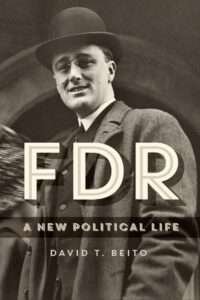
FDR: A New Political Life, by David T. Beito, Open Universe, 400 pages, $29.99
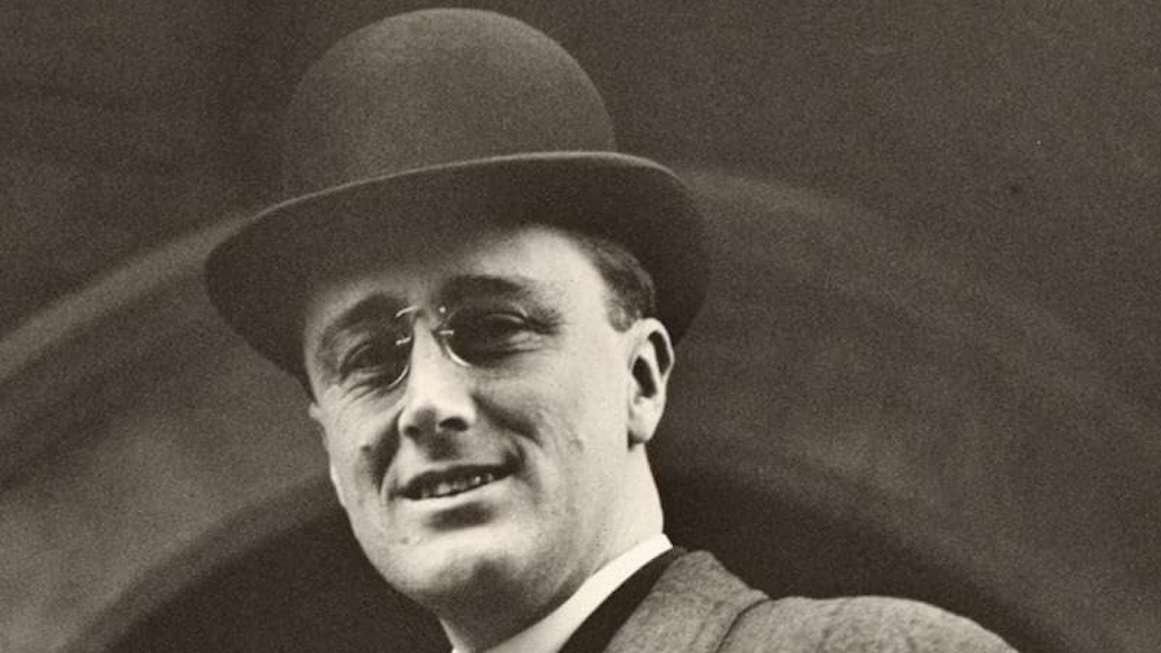
If there were any doubts that President Franklin Delano Roosevelt was one of the greatest scoundrels of American political history, David Beito’s new biography should settle the issue. Beito—whose previous book, The New Deal’s War on the Bill of Rights, did yeoman’s work exposing Roosevelt’s depredations against civil liberties—has now written FDR: A New Political Life, and it should help FDR get the villainous reputation he deserves.
Treachery was the consistent theme of Roosevelt’s political life. During his 1932 presidential campaign, FDR signaled that he would not take the United States currency off the gold standard, but he wasted no time in betraying that pledge when he took office. On April 5, 1933, Roosevelt commanded all citizens to surrender their gold to the government. No citizen was permitted to own more than $100 in gold coins, except for rare coins with special value for collectors. Anyone who possessed more than 5 gold Double Eagle coins faced 10 years in prison and a $250,000 fine. If you distrusted the government and sought to retain your gold, Roosevelt condemned you as a “hoarder.” But after the confiscation, FDR announced that gold would be henceforth valued at $35 an ounce, not $20 an ounce—thereby providing a windfall for the government.
FDR and his brain trust believed in the boundless concentration of power. The New York Times reported on March 12, 1933, that Secretary of Agriculture Henry Wallace and a group of farm lobbyists urged Roosevelt to ask for “farm dictator powers” to solve the agriculture crisis. The Roosevelt administration intentionally set U.S. crop prices far above world market prices, destroying farm exports and then claiming that the government needed boundless power over farmers to protect them against surpluses. Within a few years, the Agriculture Department (USDA) was dictating exactly how many acres of grain each wheat farmer could grow. An Indiana farmer exceeded his quota to grow wheat to feed to his hogs. The Roosevelt administration hounded him all the way to the Supreme Court, claiming it needed a free hand to “suppress…a public evil.”
Rexford Tugwell, Wallace’s no. 2, idolized Soviet dictator Josef Stalin’s collective farms, declaring in 1934: “Russia has shown that planning is practical….The success and enthusiasm of Sovietism almost guarantees an unlimited rise in Soviet standards of living.” This was after an artificial famine in Ukraine killed millions of peasants who had not surrendered their land. Tugwell also lauded fascism as “the cleanest, neatest, most efficiently operating piece of social machinery I’ve ever seen. It makes me envious.” In 1934, the top Nazi newspaper, the Völkischer Beobachter, hailed “Roosevelt’s adoption of National Socialist strains of thought in his economic and social policies….The president’s fundamental political course still contains democratic tendencies but is thoroughly infected by a strong national socialism.'”
Roosevelt sought to leave no vote unbought. Priming for the 1936 election, he launched the Works Progress Administration (WPA), which paid more than 4 million people in 1935. The WPA, popularly known as “We Poke Along,” aimed to hire as many people as quickly as possible for labor-intensive projects. The agency quickly gave leaf raking a bad name.
Beito highlights the WPA’s role in constructing concentration camps for Japanese-American detainees, noting that this was “perhaps the most gigantic single ‘WPA project’ of all time.” The agency’s employees built guard towers and spotlights to prevent any escapes, and they helped staff the camps. After World War II ended, the Japanese-American roundup was recognized as one of the greatest civil liberties atrocities of the 20th century. The fact that it took only a few memos to shift legions of WPA workers from leaf raking to concentration camp guards should be a red flag for future mass employment schemes.
In late 1938, synagogues across Germany were shattered in violent Nazi rampages known as Kristallnacht. Many Americans favored permitting far more German Jews to seek refuge in the United States, but “Roosevelt’s reaction to Kristallnacht was timid and lethargic,” Beito notes. “Presidential indifference” to refugee relief undercut legislation that would have opened the doors to 20,000 Jewish children from Germany.
H.L. Mencken, writing in The Baltimore Sun, scorned the Roosevelt administration’s foot-dragging and declared that it would be “much more honest and much more humane” to immediately admit all 400,000 German Jews here, stating that there was “no reason whatsoever for believing it would be impossible to absorb them, or even difficult.”
A seven-acre, 300,000 square foot monument to FDR near the Lincoln Memorial showcases a quote from his 1936 reelection campaign: “I hate war.” But as Beito points out, “In the two years after the breakout of [World War I in 1914] in Europe, Roosevelt tirelessly pushed for U.S. intervention in that conflict.” Roosevelt declared in 1916: “We’ve got to get into this war.” President Woodrow Wilson himself was reelected in 1916 on a campaign slogan, “He kept us out of war,” and then promptly dragged the U.S. into that bloodbath.
By the late 1930s, FDR was usually not openly bellicose—in part because so many Americans were still bitter about the frauds that permeated U.S. involvement in the first World War. In 1940, Roosevelt promised during his campaign for an unprecedented third presidential term: “Your boys are not going to be sent into any foreign wars.” But FDR was working tirelessly to find a pretext to drag America into World War II.
Beito notes that Roosevelt “repeatedly fumbled on pursuing prospects for peace in negotiations with Japan. The main consequence…was to push Tokyo further into the hands of the Axis. This was followed by FDR’s failure to aggressively pursue Japan’s proposals for a summit or, more fleetingly, to evacuate China….He was responsible, both through inattention and inflexibility, for needlessly heightening the likelihood of a Pacific war.” Beito believes that FDR did not know that the Japanese would attack at Pearl Harbor, though he and his top officials expected some Japanese military attack elsewhere in Asia at that time. But thanks to FDR’s “fixation on the North Atlantic, [he] had starved both Pearl Harbor and other U.S. forces in the Pacific of needed resources, such as observation planes.”
How many American soldiers and sailors died because of FDR’s missteps during the war? In the final years of the conflict, he gave a huge boost to Nazi propaganda when he floated plans to subjugate the German people permanently by banning all factories and even airplanes in the conquered territory. The president told Treasury Secretary Henry Morgenthau Jr., “We either have to castrate the German people or you have to go to treat them in such manner so they can’t just go on reproducing people who want to continue the way they have in the past.” FDR declared that after the war, every German “should be fed three times a day with…Army soup,” adding that “they will remember that experience all their lives.” Cordell Hull, Roosevelt’s long-serving secretary of state, condemned the Morgenthau plan (as it became known) as an “extreme starvation plan.” The combination of the Morgenthau Plan and the bombing of civilian areas in Dresden, Hamburg, and other German cities, killing nearly 600,000 civilians, may have spurred more Germans to want to keep fighting than to stop.
Japan continued fighting long after the war was lost, in part because the Roosevelt administration demanded unconditional surrender. After the U.S. obliterated Tokyo with fire bombing that killed almost 100,000 people, and then slaughtered even more with the atomic bombs dropped on Hiroshima and Nagasaki, the U.S. government flip-flopped. Beito notes, “Ironically, though the final surrender was labelled ‘unconditional,’ it only came after Truman assented after the bombs to a condition that the weary Japanese had insisted for months: keeping the emperor.”
FDR’s final betrayal occurred in January 1945, when he met at Yalta with Stalin and British Prime Minister Winston Churchill to make plans for the postwar world. Yalta became a synonym for the abandonment of oppressed people when Roosevelt and Churchill agreed to let Stalin occupy almost half of Germany and all of Poland, Czechoslovakia, Hungary, Romania, Bulgaria, and Yugoslavia. The “good war” begot more than 40 years of Communist tyranny in those lands.
Throughout the war, FDR had brazenly described his Soviet ally as one of the “freedom-loving Nations”; on returning from Yalta, he boasted to Congress: “As the Allied armies have marched to military victory, they have liberated people whose liberties had been crushed by the Nazis for four long years.” At that point, U.S. officials already knew that the “liberated” peoples of Eastern Europe were being savagely oppressed by the Red Army.
Intellectuals, academics, and most of the media slapped a halo over FDR to consecrate both his welfare state and his warring. FDR: A New Political Life is an antidote to that servility to Leviathan.
Read the full article here
Fact Checker
Verify the accuracy of this article using AI-powered analysis and real-time sources.