Close Menu
FSNN | Free Speech News NetworkFSNN | Free Speech News Network
  • Home
  • News
    • Politics
    • Legal & Courts
    • Tech & Big Tech
    • Campus & Education
    • Media & Culture
    • Global Free Speech
  • Opinions
    • Debates
  • Video/Live
  • Community
  • Freedom Index
  • About
    • Mission
    • Contact
    • Support
Trending

Facebook Guilty

6 minutes ago

CPJ, partners call for release of Turkish journalist İsmail Arı

17 minutes ago

CoinDesk 20 performance update: Stellar (XLM) gains 6% as all constituents rise

25 minutes ago
Facebook X (Twitter) Instagram
Facebook X (Twitter) Discord Telegram
FSNN | Free Speech News NetworkFSNN | Free Speech News Network
Market Data Newsletter
Wednesday, March 25
  • Home
  • News
    • Politics
    • Legal & Courts
    • Tech & Big Tech
    • Campus & Education
    • Media & Culture
    • Global Free Speech
  • Opinions
    • Debates
  • Video/Live
  • Community
  • Freedom Index
  • About
    • Mission
    • Contact
    • Support
FSNN | Free Speech News NetworkFSNN | Free Speech News Network
Home»News»Media & Culture»Is Marjorie Taylor Greene’s Break With Trump the Beginning of the End for MAGA?
Media & Culture

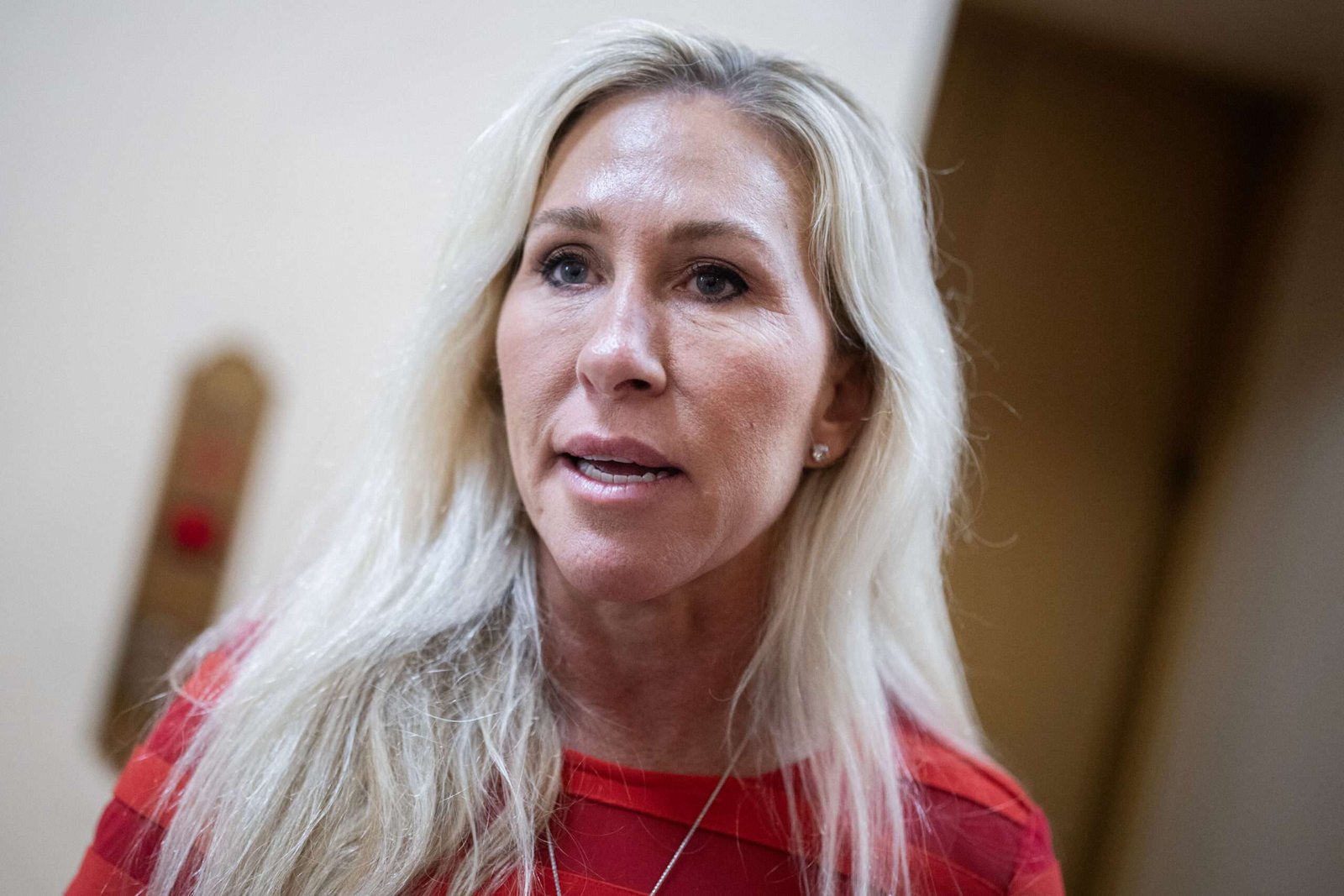
Is Marjorie Taylor Greene’s Break With Trump the Beginning of the End for MAGA?

News RoomBy News Room4 months agoNo Comments5 Mins Read1,140 Views
Share Facebook Twitter Pinterest Copy Link LinkedIn Tumblr Email VKontakte Telegram
Is Marjorie Taylor Greene’s Break With Trump the Beginning of the End for MAGA?
Share
Facebook Twitter Pinterest Email Copy Link

Listen to the article

0:00
0:00

Key Takeaways

Playback Speed

Select a Voice

The first Trump administration was fairly restrained, as it included plenty of old-school Republican adults in key positions. They kept the QAnon types and other crazies at bay. But the January 6 riots and Donald Trump’s effort to overturn the 2020 election gave a preview of tawdry things to come. His second term doesn’t even try to conceal that it’s based on the Idiocracy screenplay.

It’s easy to get dispirited by America’s political death spiral given that the MAGA faithful remain devoted to their leader no matter what new evidence emerges. They accuse critics—even those making calm, policy-oriented critiques—of suffering from a medical condition (Trump Derangement Syndrome). I’m more inclined to believe adherence to Trump’s grievance-based movement is a condition. Like with all viruses, there are signs this one might someday break.

For evidence, I offer none other than Rep. Marjorie Taylor Greene (R–Ga.). Until recently, most pundits have viewed Greene as the epitome of what’s gone wrong with the modern GOP, where there are “no enemies on the right” and conspiracy theories are as relevant as rationally based ones. Even some Trump-friendly writers have rolled their eyes at her statements.

Two years before her election, Greene posted her infamous Facebook comments about space lasers. Remarking on California’s wildfires, she wrote, “[O]ddly there are all these people who have said they saw what looked like lasers or blue beams of light causing the fires.” She referenced Rothschild Inc. and Jerry Brown and speculated about space solar generators. “Could that cause a fire? Hmmm, I don’t know. I hope not!”

As The New York Times reported in 2021, Greene “has repeatedly claimed in multiple videos and social media posts that several school shooting massacres were ‘false flag’ events perpetrated by government officials in an attempt to drum up support for gun control laws.” She’s described Democrats as pedophiles, and initially blamed left-wingers for the Capitol insurrection.

In Congress, she childishly heckled President Joe Biden. Greene has continued to offer meteorological opinions, remarking after Hurricane Helene in 2024 that some unspecified “they” control the weather. A Google search will yield many of her unusual opinions and behaviors. In past days, such opinions would hamper one’s political career, but in this bizarre new world, they seem to have greatly bolstered it.

“She has managed in just two years in Congress to accumulate real power, landing on important committees, and influencing the direction of Republican policies,” explained CBS News’ Leslie Stahl in the preamble to her 60 Minutes interview with Greene in 2023. Since then, she’s made headlines for controversial opinions about Ukraine and Russia, and has accused the Israelis of “genocide.”

Yet this is where the story gets interesting. In recent comments, Greene has sounded like one of the GOP’s more statesmanlike members. After former House Speaker Nancy Pelosi (D–Calif.) announced her retirement from Congress, Trump said: “The retirement of Nancy Pelosi is a great thing for America” and accused Pelosi of being “evil” and “corrupt.” Trump’s usual incivility roused the MAGA faithful.

But here’s what Greene had to say: “I served under her speakership in my first term of Congress, and I’m very impressed at her ability to get things done. I wish we could get things done for our party, like Nancy Pelosi was able to deliver for her party.” That’s a striking turnabout for someone who once liked an online comment saying “a bullet to the head would be quicker” to remove Pelosi from power. And this wasn’t just a one-off case of normalcy.

Here Greene goes again, sounding rather normal: “The cost of health care is killing people. That should be the top issue. Cost of living, electrical bills haven’t gone down, they’ve gone up. They’re dramatically higher, cost of food has gone up.” This has earned her strange new respect from some progressives, and the opprobrium of Trump, who says “she’s lost her way.”

At press time, Greene has called for the release of more Jeffrey Epstein files. Trump has been repeatedly criticizing her, which has led Greene to accuse the president of fueling threats against her. This is blowing up into a huge intra-MAGA fight, with the congresswoman seeming to get the upper hand. Many commentators figure it’s her latest shtick as she possibly prepares for a run for Georgia’s Senate seat. Who knows?

But it’s clear some right-wing voices are straying from the New Right orthodoxy. Writer Rod Dreher, a friend of Vice President J.D. Vance who is known for his harsh critiques of liberal democracy, penned a recent piece that warns: “Anti-Semitism is spreading like a virus among religious conservatives of the Zoomer generation.” This is not a “fringe movement,” he adds, and it “cannot be negotiated with, because it doesn’t have traditional demands. It wants to burn the whole system down.”

I find the current state of political affairs—from the right’s dalliance with racists and anti-Semites to the left’s embrace of open socialists—hard to fathom and more than a little worrisome. So perhaps I’m grasping at straws, but when the virus breaks for some of these once-outlying characters, then maybe there’s hope for the rest of the country.

This column was first published in The Orange County Register.

Read the full article here

Fact Checker

Verify the accuracy of this article using AI-powered analysis and real-time sources.

Get Your Fact Check Report

Enter your email to receive detailed fact-checking analysis

5 free reports remaining

Continue with Full Access

You've used your 5 free reports. Sign up for unlimited access!

Already have an account? Sign in here

Share. Facebook Twitter Pinterest LinkedIn Tumblr Email Telegram Copy Link
News Room
  • Website
  • Facebook
  • X (Twitter)
  • Instagram
  • LinkedIn

The FSNN News Room is the voice of our in-house journalists, editors, and researchers. We deliver timely, unbiased reporting at the crossroads of finance, cryptocurrency, and global politics, providing clear, fact-driven analysis free from agendas.

Related Articles

Media & Culture

Facebook Guilty

6 minutes ago
Cryptocurrency & Free Speech Finance

Morning Minute: Circle Plunges 20% Over Clarity Act Yield Changes

30 minutes ago
Media & Culture

Utah Court of Appeals Upholds Dismissal of Child Sexual Abuse Accusations

1 hour ago
Cryptocurrency & Free Speech Finance

Bitcoin ETFs Draw in $2.5B in a Month, Close to Erasing YTD Losses

2 hours ago
Media & Culture

Brendan Carr Tries To ‘Ban’ All Foreign Routers In Lazy, Legally Dubious Shakedown

2 hours ago
Media & Culture

Grant of Mental Health Pretrial Diversion for Man Accused of Attempted Murder Reversed

2 hours ago
Add A Comment

Comments are closed.

Editors Picks

CPJ, partners call for release of Turkish journalist İsmail Arı

17 minutes ago

CoinDesk 20 performance update: Stellar (XLM) gains 6% as all constituents rise

25 minutes ago

Bitcoin Rallies After Iran Strikes but Safe Haven Role Unproven

27 minutes ago

Morning Minute: Circle Plunges 20% Over Clarity Act Yield Changes

30 minutes ago
Latest Posts

Utah Court of Appeals Upholds Dismissal of Child Sexual Abuse Accusations

1 hour ago

Malak Mattar is a Gazan artist based in London This article first appeared in the Winter 2025 issue of Index on Censorship, Gen Z is revolting: Why the world’s youth will not be silenced, published on 18 December 2025. The tortuous process that led to the signing of the 1993 Oslo Accords only came about after sustained Palestinian resistance to Israel’s occupation of the West Bank and Gaza, beginning with the First Intifada of 1987-91. This pushed the international community into action, the subsequent negotiations including several Arab countries alongside Israel and representatives of the Palestinian nation. But the Oslo Accords did not live up to their promise, and did not end the conflict between Israel and Palestine. Thirty-two years on, and two years into Israel’s genocidal war in Gaza, President Trump’s 20-point peace plan similarly seeks to bring about a new Middle East. The cessation of hostilities presents an opportunity for comparing the two plans, and to ask a crucial question: Will this new initiative fare any better in bringing peace, justice and security to the region? Two groups were opposed to the Oslo Accords from the start: Israel’s right wing, and the Islamic resistance group Hamas. Today, the two groups are in control of their respective territories. Hamas holds sway in Gaza, and the ultra-nationalist religious parties have held the Israeli government hostage since the last parliamentary elections in 2022. In 1991, as the International Peace Conference that ultimately led to the Oslo Accords convened in Madrid, I was visiting Geneva, attending a meeting of the Palestinian Welfare Association. In different ways, many of us living in the Occupied Territories had struggled to bring an end to Israel’s occupation of our land. I took the path of human rights, exposing Israel’s repeated violations of international law. The Intifada of 1987-91 was Palestine’s war of liberation; collectively, we were proud of our success in bringing Israel to negotiate with the Palestinians. After my meetings in Geneva, I travelled to the town of Brunnen, to begin a three-day walk around Lake Lucerne. I needed to be by myself and to have some time to reflect. I was expecting that we were at the cusp of a period of peace and an end to our long-lasting struggle. I wanted to think about where this would leave us. Passing through the attractive city of Lausanne, I recalled visiting there with my parents in 1971, when I was 20. My father had often mentioned visiting the city in 1949, when he took part in the conference of the UN Palestine Conciliation Commission. Of the conference itself I knew very little, and I didn’t think to ask him more. As we entered the city, I could tell that my father was wistful, yet I still did not try to inquire what was going on in his mind. How I regret this, especially as the struggle for the right of return of Palestinian refugees forced out of their homes between 1948 and 1949 is still continuing. I was more interested in visiting the prison dungeon in the Château de Chillon, near Montreux on Lake Geneva. It was more than half a century before I learned fully about my father’s role while writing my book, We Could Have Been Friends, My Father and I. I left on the nine o’clock boat from Brunnen to Treib, and then started my hike. The Swiss, I had heard, would be doing their traditional annual walk around the lake, this year commemorating the 700th anniversary of their federation. I expected to find many walkers along the path but soon realised that those who had wanted to walk the route had already done so and gone. I was the only one hiking, and so I had the path to myself. Forty-two years after my father’s participation in the conference at Lausanne, another conference was taking place, this time in Madrid. Perhaps because the earlier conference in Lausanne had failed, the organisers of this new initiative wanted it to take place somewhere else. Spain, with its famous history of Arabs and Jews producing a rich civilisation together, was certainly a more auspicious venue. I did not know what one could reasonably expect from Madrid. James Baker, US Secretary of State, had consumed public attention with his lengthy deliberations about the procedure to be followed. At the time, it was claimed that Baker did not show the list of Palestinian participants to Israel in advance of the conference. A small gesture, but enough for Faisal Husseini, a recognised local leader, to claim a meaningful victory. We, he said, had the final say about our representatives, not Israel. But these were hollow words. Israel had, after all, excluded the Palestine Liberation Organization (PLO) and Palestinians from Jerusalem. But somehow, it was deemed good for morale if the Palestinians believed that Israel had not chosen their delegation for them. I hoped that this was not indicative of what was to come. On the eve of the Madrid conference, Israeli Prime Minister Yitzhak Shamir addressed the European Parliament. Highlights from his speech were broadcast on Israeli television’s evening news programme. It was not Palestinian self-determination that was an obstacle to peace, he told the parliamentarians, but rather the refusal of the Arab states to recognise Israel. Benjamin Netanyahu, more recently, has repeated similar claims. The broadcast then cut to Yigal Karmon, an adviser to Shamir on counter-terrorism affairs. No one – no one – would get to Madrid without Israel’s approval, he declared. “It is man by man,” he added, in his bad English. Karmon’s depressing words notwithstanding, the conference did take place. The floodgates of hope were ready to burst, and Israeli intransigence could not stop this. After Saddam Hussein’s defeat in the First Gulf War, a massive defence mechanism against the very notion of hope had emerged. And yet. The Palestinian Land Registration Department was packed with people buying land. Palestinians who were living in Kuwait were in Amman, waiting for the return. Before the selection of delegates, we had felt a long way from the march of events. Everything seemed to be happening above our heads. It is much the same today, the disillusion that has emerged from negotiations over Trump’s plan seeming very much like it did in 1991. But then, every peace conference must seem like a letdown. What war has ever brought satisfaction to everyone? Peace conferences, at best, are compromise agreements. Thereafter, everything depends on what the parties are able to make of them. Even so, there were objective indicators in the Oslo Accords pointing to disaster. First, the illegal Jewish settlements on our land were to remain in place, with no agreement on freezing their expansion. And then, there were no guarantees concerning the creation of an independent Palestinian state at the end of the process. Trump’s plan echoes these uncertainties. The withdrawal of the Israeli Defence Force (IDF) from Gaza is to be “based on standards, milestones, and timeframes linked to demilitarisation”, to be agreed upon by the IDF and the International Stabilisation Force created for Gaza. What does this mean in fact? That “Israel will retain security responsibility, including a security perimeter for the foreseeable future”. It also means that as of now, there is no end envisaged to the siege of Gaza. This means, amongst other things, that Gaza will not be able to import machinery required for reconstruction. The other problematic area in the plan relates to Palestinian statehood. The plan states that “while Gaza re-development advances and when the PA reform program is faithfully carried out, the conditions may finally be in place for a credible pathway to Palestinian self-determination and statehood”. Translation: even if the Palestinian Authority carried out the prescribed reforms, there is no guarantee that these will be followed by a Palestinian state. Palestinian interests, once again, were being determined without the input of Palestinians themselves. Back to 1991 and Lake Lucerne. Having reached the top of the first ascent, I began the descent. The lake was framed by steep cliffs, and the walk was not as easy as I had anticipated. But at least I had no worries about finding the path, as this was well marked. A refreshing wind blew as I walked and breathed in the crisp clean air. How different it was, I thought, to walk in this Swiss terrain rather than the familiar hills of Ramallah. Around Lake Lucerne, nature is washed and rejuvenated regularly. The rains collect in streams and waterfalls, or remain on the peaks in the form of snow or glaciers. I remembered, on my first visit to the region with my parents, being impressed with the rushing water. I was nervous, but also emboldened, by the powerful thrust of the water, gushing down forcefully. In Ramallah, where the rains are far less frequent, everything remains in place for years. A thin layer of lichen grows on rocks, giving them a leaden and ancient presence. But the most striking difference between Lake Lucerne and Ramallah is that their mountains are majestic: imposing, remote, safe from human domination. Ours are mere hills, easily reached, vulnerable to the greed of jealous suitors. As I continued my descent, the words of Haidar Abdul Shafi, head of the Palestinian delegation to Madrid, came back to me. In his speech he was addressing, “the Israeli people with whom we have had a prolonged exchange of pain.” What a brilliant way to put it. The tragedy, as I felt it, was that even if peace should be reached it would be impossible to undo the pain that had been inflicted and suffered up to this point. Before the whole world, Haider had pronounced: “We, the people of Palestine, stand before you in the fullness of our pain.” He was offering our adversary hope, by declaring that the Palestinian nation was willing to live side by side with them in peace, sharing the land as equals. Now that my wife Penny and I are older, I no longer think that everything is possible. Time has become a pivotal factor in my life. Sometimes one succeeds, and sometimes not. I have had my share of both. Either way, I have had to learn how to accept failure as failure, rather than as a temporary setback that I may still get a second chance to rectify. Will the wheels finally turn, I wondered? Abdul Shafi had indeed said what the Israelis claimed that they were hoping to hear. I wanted to believe that peace, in some form, was on its way. I was already beginning to think about what would come next.But while Abdul Shafi was speaking, Yitzhak Shamir had looked on with cold eyes. Most of what Abdul Shafi had said was forward-looking. The deeply-felt pain of the Palestinians had been given ample expression, but he had also paid recognition to the solidarity of those Israelis who had shared our pain with us. There was a reaching-out for the Israelis, and for the world, to accept our aspirations for self-determination, to correct the injustices caused to generations of Palestinians. But all the while Shamir looked on with a deadpan face, unimpressed and unmoved. But while Abdul Shafi was speaking, Yitzhak Shamir had looked on with cold eyes. Most of what Abdul Shafi had said was forward-looking. The deeply-felt pain of the Palestinians had been given ample expression, but he had also paid recognition to the solidarity of those Israelis who had shared our pain with us. There was a reaching-out for the Israelis, and for the world, to accept our aspirations for self-determination, to correct the injustices caused to generations of Palestinians. But all the while Shamir looked on with a deadpan face, unimpressed and unmoved. When it was his turn to speak, the Israeli prime minister began by decrying the attempts of others to re-write history. But then, he went on to do exactly that. He repeated the famous Zionist claim, that “hundreds of thousands of Arabs who lived in Mandatory Palestine were encouraged by their own leaders to flee from their homes.” He did not even deign to call us Palestinians. And then to what he deemed to be the “root cause of the conflict”: “Arab refusal to recognise the legitimacy of the State of Israel”. Shamir denied the Occupation, refused to acknowledge either the fundamental rights of the Palestinian nation or their suffering. The West Bank, for Shamir, was Judea and Samaria; he belittled our aspirations for a nation, declaring that while “the Arab nations” controlled a landmass of 14 million square kilometres, Israel (in his estimation including the Occupied Territories) controlled a mere 28,000 square kilometres. “The issue is not territory but our existence,” Shamir concluded There was nothing new in Shamir’s speech. If anything, it merely served as proof of Israel’s intransigence, the only difference being that it was now being proclaimed from the podium at the opening of the historic peace conference. This did not bode well for the future. Today, this same Israeli intransigence persists, Shamir’s rhetoric replaced with Netanyahu’s bluster.After my return from Switzerland that winter of 1991, a third snow of the year fell on Ramallah. I decided to take a walk on a street behind the Evangelical Home, on a path that ran parallel to Tireh Road. The hill ahead seemed colossal, as though the houses on it were perched atop a huge edifice. It was engulfed in fog, permitting only a blurred view of the limestone houses and the dark rock of the gardens behind. Towards the east, the sun (which I could see blurred like a shiny chalk ball in the west) was reflected in the clearing sky. Beneath that clear cap, the clouds and the fog below were still thick. The features of the familiar landscape were altered, the horizon redefined as a line slicing the eastern sky into thick stratus clouds and the clear sky. Beneath, one could spot here and there the hills behind, covered by a shimmering sheath of fog, milky white clouds shrouding the familiar hills in mystery. On my way back, I could not resist walking down towards the wadi. Every level I reached opened up the view, the fog receding. But the mystery ahead remained, elusive and out of reach. What, I wondered, would be the future of these hills if Israel were to get its way? What would happen if negotiations could not stop the Israeli intentions that even then I knew so well? Twenty-five years on, I now know this future. The hills where I had once enjoyed walking have now been militarised, with Israeli settlements perched atop. Armed settlers in balaclavas brandish machine guns, attacking farmers and peaceful villagers in their homes. There is nothing in Trump’s plan that is likely to alter any of this depressing reality. Apartheid has only been given a boost, and the new initiative will not bring peace to the Middle East. The Trump plan has been described as “sugar-coated neocolonialism” – not only a moral atrocity but a policy one, too. Like the earlier experiment of the Oslo Accords, the 20-point Trump peace plan is likely to only mark another dismal failure. And so, we will continue to suffer war after war, without hope of reprieve. All illustrations by Malak Mattar, a Gazan artist based in London READ MORE

1 hour ago

CIFR shares rise on new Hyperscaler agreement

1 hour ago

Subscribe to News

Get the latest news and updates directly to your inbox.

At FSNN – Free Speech News Network, we deliver unfiltered reporting and in-depth analysis on the stories that matter most. From breaking headlines to global perspectives, our mission is to keep you informed, empowered, and connected.

FSNN.net is owned and operated by GlobalBoost Media
, an independent media organization dedicated to advancing transparency, free expression, and factual journalism across the digital landscape.

Facebook X (Twitter) Discord Telegram
Latest News

Facebook Guilty

6 minutes ago

CPJ, partners call for release of Turkish journalist İsmail Arı

17 minutes ago

CoinDesk 20 performance update: Stellar (XLM) gains 6% as all constituents rise

25 minutes ago

Subscribe to Updates

Get the latest news and updates directly to your inbox.

© 2026 GlobalBoost Media. All Rights Reserved.
  • Privacy Policy
  • Terms of Service
  • Our Authors
  • Contact

Type above and press Enter to search. Press Esc to cancel.

🍪

Cookies

We and our selected partners wish to use cookies to collect information about you for functional purposes and statistical marketing. You may not give us your consent for certain purposes by selecting an option and you can withdraw your consent at any time via the cookie icon.

Cookie Preferences

Manage Cookies

Cookies are small text that can be used by websites to make the user experience more efficient. The law states that we may store cookies on your device if they are strictly necessary for the operation of this site. For all other types of cookies, we need your permission. This site uses various types of cookies. Some cookies are placed by third party services that appear on our pages.

Your permission applies to the following domains:

  • https://fsnn.net
Necessary
Necessary cookies help make a website usable by enabling basic functions like page navigation and access to secure areas of the website. The website cannot function properly without these cookies.
Statistic
Statistic cookies help website owners to understand how visitors interact with websites by collecting and reporting information anonymously.
Preferences
Preference cookies enable a website to remember information that changes the way the website behaves or looks, like your preferred language or the region that you are in.
Marketing
Marketing cookies are used to track visitors across websites. The intention is to display ads that are relevant and engaging for the individual user and thereby more valuable for publishers and third party advertisers.