

 Freedom Index
Listen to the article
When Millennials invented the girlboss, Gen Z responded with the tradwife, complete with homemade Cinnamon Toast Crunch cereals and BMIs of 18 after popping out a half-dozen kids.
It makes them easy to hate.
Typically conservative and Christian, these women have traditional marriages, embracing the idea that it’s OK for a woman to stay home, take care of their kids, and tend to the hearth.
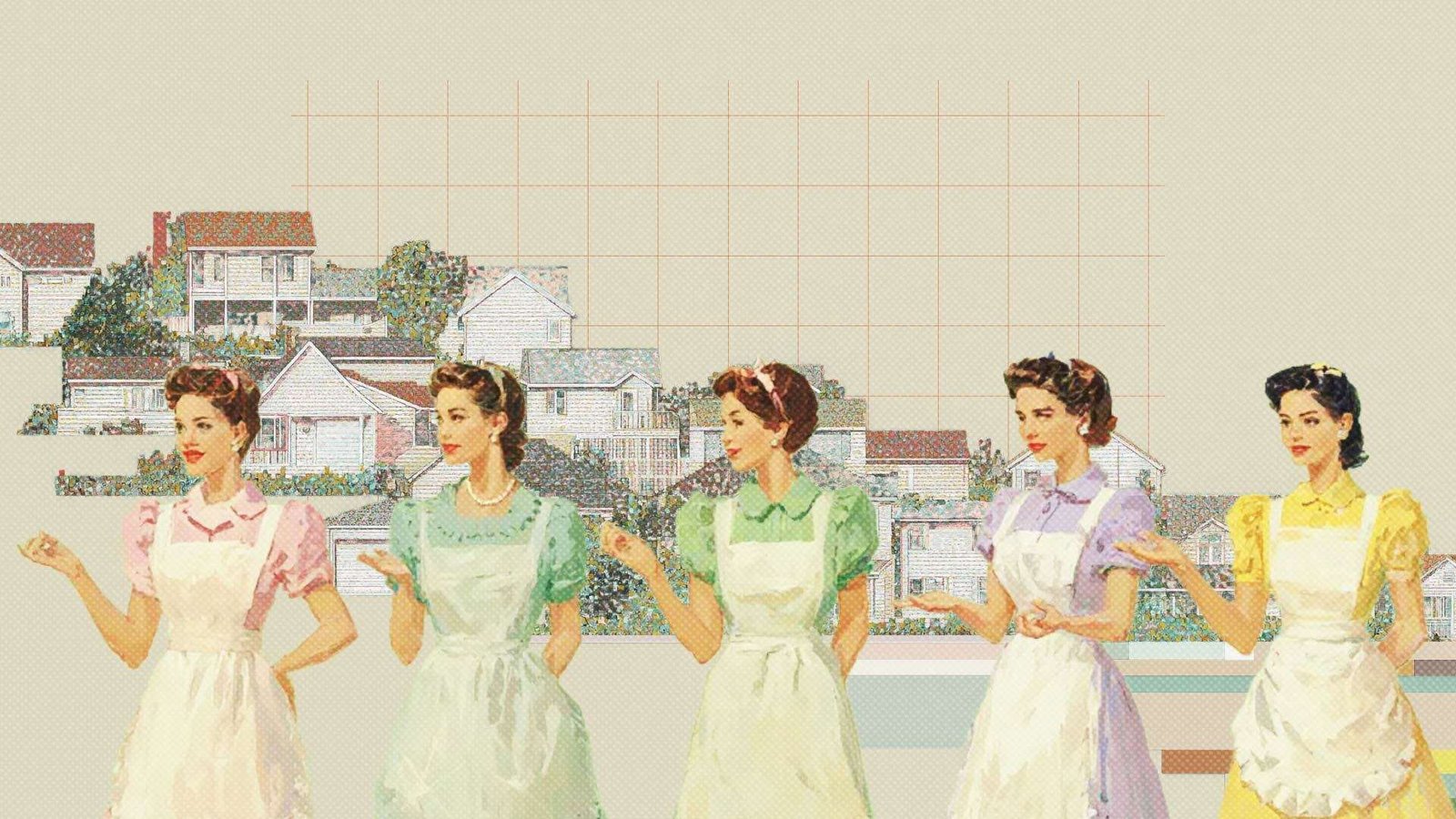
It’s a mindset, a lifestyle, but also an aesthetic that traffics in 1950s nostalgia.
Tradwives are also magnets for hate and judgment. “I’m sorry, 50 years ago was not a place I ever want to be back,” quipped The View‘s Whoopi Goldberg, mocking these women’s embrace of the older ways of structuring homes and marriages.
The critiques aren’t totally wrong: Tradwives are sometimes performative, a made-for-social-media phenomenon that can look a little ridiculous. The most successful ones are the most extreme, curated, and out of touch. The more modest ones, who traffic in budgeting tips and great recipes, garner smaller followings and less fame.
But this cultural movement warrants celebration, not contempt. Tradwives don’t want domestic servitude. They want the roles of wife, mother, and homemaker to count as respectable options for the 21st-century woman.
Tradwives are feminists, too.
The cultural stigma around being a homemaker traces back to the 1963 book, The Feminine Mystique, by Betty Friedan, which launched the second-wave feminist movement. Women were told to pursue “no greater destiny than to glory in their own femininity,” she wrote. They had been “taught to pity the neurotic, unfeminine, unhappy women who wanted to be poets or physicists or presidents.”
She compared deluded housewives to people marching into concentration camps, “suffering a slow death of mind and spirit.”
She disparaged women who “baked their own bread, sewed their own and their children’s clothes, kept their new washing machines and dryers running all day.”
The women’s liberation movement succeeded in giving women more choices, but it also sparked a cultural backlash that limited them.
Friedan was worried about women being stuck at home. Now, 55 percent of moms with kids at home work full time, and many women work more hours than they say they want.
Friedan was worried about our birthrate “overtaking India’s,” yet America’s fertility rate is now in free fall.
“In one cohort, Neo-traditionalism is going to feel like a LARP to some extent, no matter what you do,” New York Times columnist Ross Douthat tells Reason. “So the question is, are you creating something that your children can look at and say, OK, I’m Liz Wolfe’s daughter. This is like a model of how a marriage works, how churchgoing works, and how having kids works that I can carry forward as an inheritance. And maybe that’s impossible and modernity just dissolves and dissolves but that, that has to be the goal.”
Douthat worries that the digital age is one of extinction, in which many of our traditions and values get killed off, but that survival depends on “intentionality and intensity.”
“True traditionalism doesn’t make it,” adds Douthat. “You see this again in cultures that are still traditional and have sort of tried to put up bulwarks against the modern world. Like Islam in the Islamic Republic of Iran is not doing that well. Catholicism in Poland is not going that well. So you have to have some kind of reinvention of the traditional that belongs fully and that it belongs fully to the 21st century.”
Tradwives are taking part in the process of reinvention that Douthat alludes to: They’re deliberately retro, evoking an earlier era they believe was too thoughtlessly discarded.
But they aren’t trapped at home, barefoot and pregnant. Many help support their families with part-time jobs, while also running their households and raising their children.
They embrace social media to bring about a revival of the domestic sphere. They engage in just a little bit of performance to make the point clear.
Of course, being forced onto the housewife track was stifling for some women. Today’s tradwives don’t talk much about that, and have a certain showiness to them that rubs people the wrong way.
Hannah Neeleman, also known as BallerinaFarm, is the most famous tradwife. She’s a Mormon mother of eight who lives on a farm in Utah. But her husband is the heir to an airline fortune, and Neeleman is frequently criticized for how she’s really just a performer, not actually living out the homesteading lifestyle she claims.
She’s following in the tradition of Martha Stewart—who calls herself “the original fucking tradwife”—who ushered in an era of lavish homemaking in the ’80s and ’90s, which was all about spectacle.
But other tradwives truly follow in the footsteps of the ’50s housewives, who cared about thrift, and traded budget tips for how to get by, shaped by their memories of wartime rationing.
“We had very little, and we took the whole paycheck out in cash and we put it in the cash envelopes so I knew I could not go over this gas amount,” says Shaye Elliott of the Homemaker Chic Podcast, waxing poetic about leaner days early in her marriage. “There was almost an elation that came from that discipline and that skill development.”
“You need to control your money, or your money controls you,” she adds. “It doesn’t matter if you have five dollars or $5 million.”
These homemakers are reacting to a world in which it’s hard to scrape by on just one income, in which childcare options have grown more costly, and in which the expectations placed on parents have ballooned out of control.
Tradwife culture is a corrective for a world in which staying at home with small kids can be alienating, since fewer mothers make this choice than in decades past. There’s a lot less built-in community.
When children get older, parents and kids find that hostile design and stupid rules govern their neighborhoods and cities, making it hard for parents to give kids the independence they seek. This is made harder when you don’t know your neighbors.
Today’s intensive parenting culture expects so much oversight and involvement; the many moms who have entered the labor force are somehow still expected to spend a ton of time actively parenting.
“Labor force participation of women has gone up, but actually parenting time has also gone up and that’s at the expense of leisure time, more or less, and to some extent at the expense of housework,” Brown University economist and ParentData researcher Emily Oster tells Reason. “My parents were never there. You know, it was like 1980. Not in a bad way! It’s just like, I came home and then after dinner, we were like outside, whatever, watched some TV. We did our homework. This thing of like, I’m gonna spend my afternoon driving my kid to the like four different soccer tournaments and supervising this and that, I think that that is really different in terms of how people’s time is being used.”
Tradwives are rebelling against this dominant parenting culture. They’re more likely to choose homeschooling, to have a lot of kids, and to be involved in church communities. They don’t necessarily look down on women in the workforce—many of them embrace the side hustle—they just made a different set of choices.
The rise of the tradwife also speaks to something deeper: A common lamentation about the decline of the village, a sense that we’ve lost the built-in support systems that made parenthood and homemaking fun and pleasant and social.
The fact that women are doing so much more paid work has predictably led them to spend much less time on unpaid work, such as organizing church dinners, potlucks, or other community events for the very young and very old.
Lawyer turned writer/homeschooler Ivana Greco points out that while “we recognize the value that homemakers brought to the working world when they left the home,” we haven’t “fully internalized what we lost.” What’s vanished are “the community networks that wove us together.”
“Without homemakers to knit us together, society is falling apart,” writes Greco.
Tradwives know that building and maintaining a sense of community is hard work. “If you want a village,” writes the sexual-politics thinker Louise Perry, “you have to be willing to act as villager.” That means accepting and embracing your obligations to others, even when it feels like an infringement on your independence.
In our rush to free ourselves of obligations and commitments to become fully self-actualized, Friedan-style, we forgot how much dependence so many stages of life entail.
Tending to the hearth and building tighter social bonds are not dumb or performative acts. The world portrayed by the tradwives is an aspirational one, not because of the outward trappings—the beautiful mothers, well-dressed children, $30,000 AGA stoves, freshly-baked bread—but because it showcases truly meaningful things that are worth bringing back into fashion.
Friedan denigrated these pleasures, critiquing the “mystique of feminine fulfillment” defined by “pretty pictures of the American suburban housewife, kissing their husbands goodbye in front of the picture window, depositing their station wagonsful of children at school.”
She, and the third-wave feminists who followed her, failed to recognize that some women really did feel fulfilled by this lifestyle. They underestimated how many communities were brought closer together by the unpaid work done by these homemakers.
The tradwives have brought us full circle, restoring glamour to a lifestyle that the women’s liberation movement belittled.
Read the full article here
Fact Checker
Verify the accuracy of this article using AI-powered analysis and real-time sources.