

 Freedom Index
Listen to the article
For years, Bilal Jadallah was the quiet force defending independent journalism in the Gaza Strip — a mentor, protector, and the architect of rare safe spaces for Palestinian journalists working under constant threat. When he was killed in an Israeli strike on November 19, 2023, early on in the latest Israel-Gaza war, the loss reverberated far beyond Press House–Palestine, a media center he led as director general since its founding in 2013.
Today, scattered across Gaza and working under the extraordinary strain of what human rights groups and UN experts agree is a genocide, his colleagues are trying to continue the work of an organisation that was essential to providing safety equipment, training programs, legal aid and documenting violations against journalists in the territory.
In this interview, Hekmat Yosuf, the organization’s new director, spoke to CPJ about the legacy of Jadallah, a former CPJ collaborator, and how the institution is striving to adapt amid the devastation of war.
This interview has been translated from Arabic and edited for length and clarity.
Who was Bilal Jadallah, and what is his legacy in Palestinian journalism?
Bilal Jadallah was more than a Palestinian journalist. He was a courageous voice striving to build a professional, independent media environment in a complex, besieged reality. A reserved person, but deeply influential nonetheless, he believed journalism wasn’t just a profession but an ethical duty.
His legacy is a generation of young journalists whom he supported by empowering them with modern tools and continuous training. He transformed Press House – Palestine into a safe space for expression and media production, blending professionalism, protection and education. He played a key role in documenting violations against journalists and raised his voice locally and internationally to defend their right to work without fear.
What distinguished his approach was his commitment to everyone’s right to expression, regardless of political affiliation. He offered independent spaces free from political control or censorship and insisted that press freedom is part of human dignity, not a privilege.
He lives on in the journalists he trained, the institution he built, and the belief that truth can’t be silenced by bombs. After his death, I felt a deep responsibility to keep his vision alive: defending journalists, freedom of expression, and youth empowerment. Every documented story is a way to fight erasure and injustice. Rebuilding this institution is about protecting something greater than us: the Palestinian voice.
What does Press House – Palestine represent for journalists in Gaza? Before the war, what role did it play for both local and foreign journalists?
To journalists in Gaza before October 7, 2023, Press House – Palestine was more than just a professional headquarters. It was a sanctuary — a rare space for free expression and independent journalism amid enormous political, security and humanitarian pressures.
The institution was among the first to offer practical training in photography, written journalism, television production and mobile journalism, particularly for young media graduates and emerging reporters. It provided free workspaces, editing facilities and meeting rooms, and welcomed journalists from all political backgrounds without discrimination.
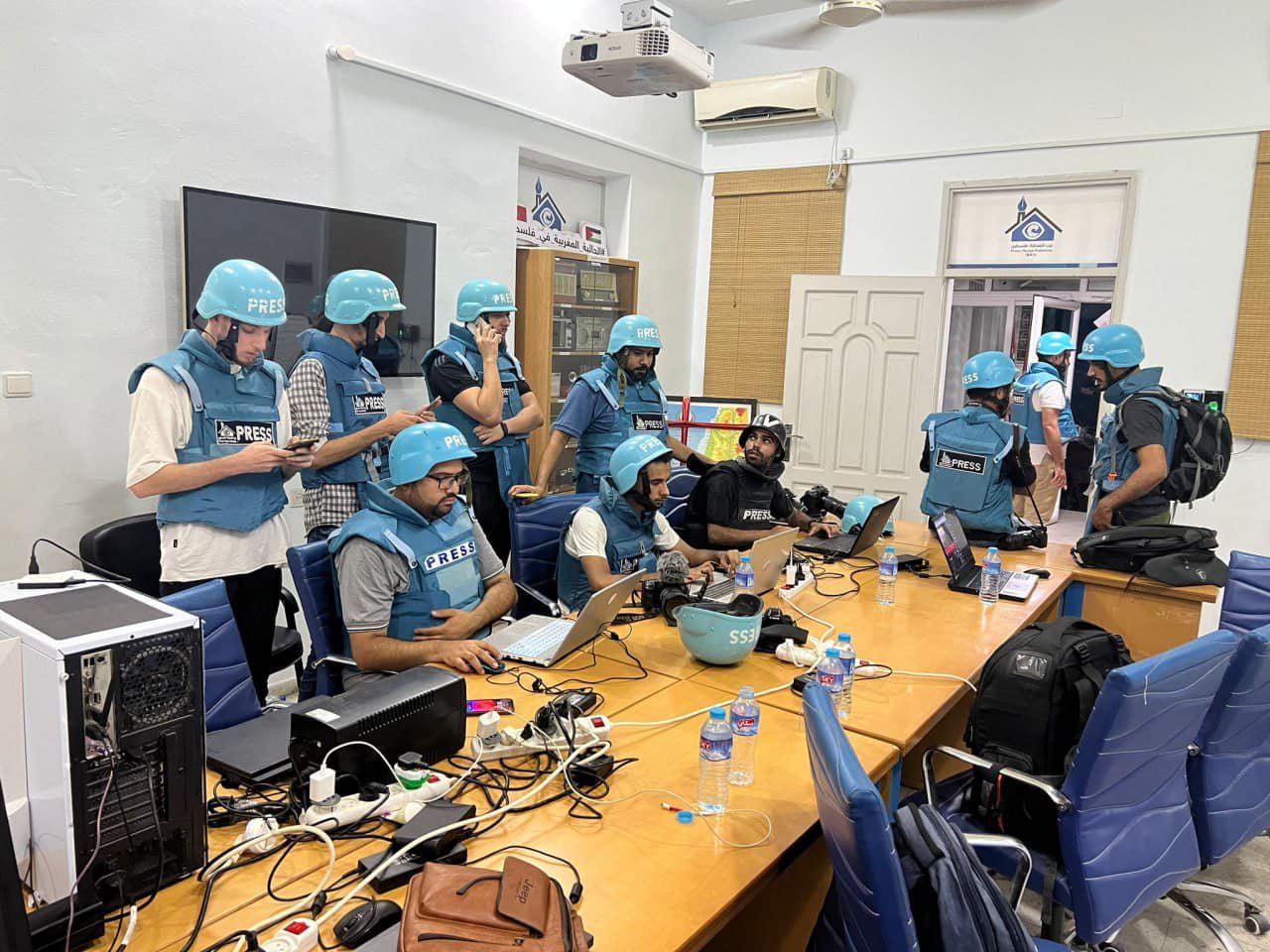
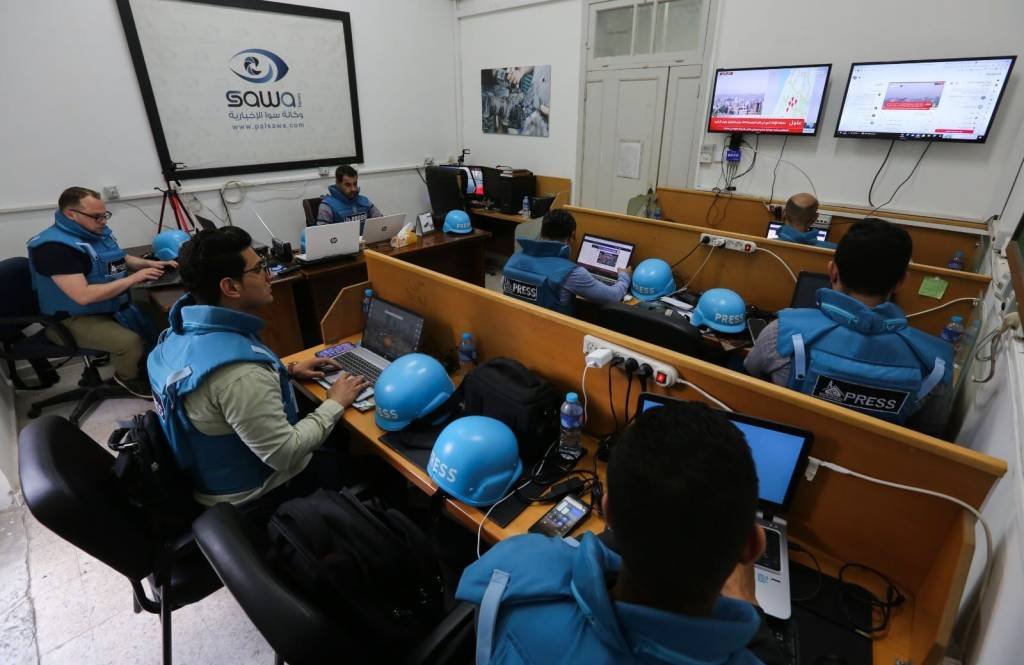
Its staff monitored violations against journalists and offered legal and moral support. It also provided safety equipment, including helmets and protective vests.
For foreign journalists covering Gaza, it offered reliable field information, facilitated connections with local reporters and provided logistical support that contributed to safer working conditions. It also organised press briefings and media events to highlight violations of journalists’ rights and everyday life under siege.
Over the course of the war, what happened to the media centre and its team?
Press House – Palestine was not spared from the ravages of the Israeli assault on Gaza. Like many civil society organizations, its offices faced repeated bombardment and communication and electricity outages. Our staff confronted severe restrictions on movement, limiting their fieldwork, and we lost three key team members, including Bilal Jadallah.
On the morning of October 7, 2023, we immediately organized shifts to maintain 24/7 operations, ensuring uninterrupted electricity and high-speed internet for journalists despite rapidly deteriorating conditions. Bilal instructed our colleagues to prepare safety gear — body armor and helmets clearly marked “Press” — to distribute to journalists who lacked protection.
We continued operating from the Gaza City office until October 13, when Israeli forces ordered evacuations. I live in al-Nuseirat in central Gaza, so I returned home and coordinated operations from there, while some colleagues remained at the office under bombardment.
On November 19, 2023, Bilal Jadallah was assassinated. His death brought immense sorrow. Bilal was not merely a director but a father figure. No one imagined such a thing could happen, given how cautious he was. His assassination was felt as a direct assault on press freedom in Gaza.
The team faced a leadership vacuum and it was deeply traumatic. Urgent decision-making became even more difficult. Many programs — including training, field initiatives, and outreach — had to be paused or scaled back. We also had to reassure partners and donors that Press House – Palestine would survive. We responded by restructuring into a smaller leadership group, adopting more flexible, decentralized decision-making.
What work has Press House – Palestine been able to continue during the fighting?
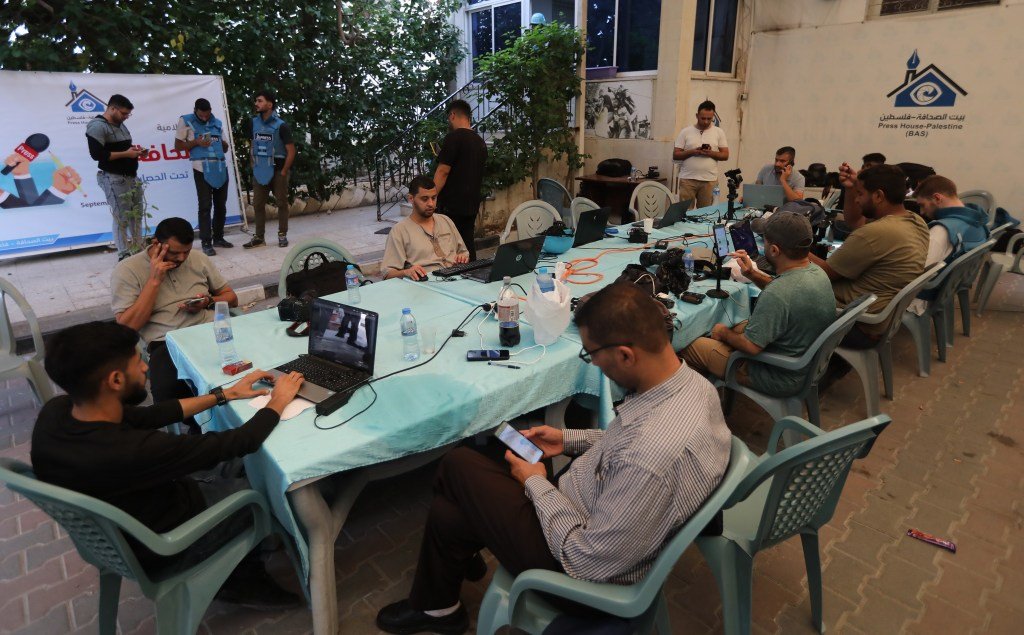
Despite all of this, we continued to offer temporary safe spaces, provide logistical and technical support, and maintain contact with international press freedom and media organizations to amplify Palestinian journalists’ voices.
Our independent news arm, Sawa News, has remained active 24/7. We established a temporary journalist camp in Deir al-Balah, in central Gaza, which has provided electricity, high-speed internet, and safer working conditions so journalists can carry on with their work. We have also provided psychological, social, and legal support to over 200 Palestinian journalists to help them continue in the profession and build their emotional resilience.
And with a fragile ceasefire in place, what are its plans going forward?
We’re entering a sensitive phase. We aim to resume psychological, legal, and social support for journalists. Training workshops and professional development will gradually restart. We’re strengthening mobile and field journalism, coordinating with donors, and working to rehabilitate our premises and restore operations. Flexibility, staff protection, and mission continuity are at the heart of our strategy. We’ve learned a lot about resilience, and we are applying those lessons to move forward.
Our rebuilding plan includes assessing damage, securing a safe temporary workspace, restoring archives and our media library, and designing more resilient digital systems. We are working to replace lost cameras, computers, and technical gear as funding allows. We’re also resuming training for students and graduates and maintaining donor relationships. Our goal is not only to restore the physical space, but to build a stronger, more adaptable institution.
How do you view the role of independent media in Gaza now, and how has the war reshaped journalism for Palestinians?
The war has changed everything. Journalism has become even more dangerous, with direct targeting of reporters and institutions. Communication blackouts, infrastructure damage, and siege conditions make newsgathering a life-threatening activity. Journalists constantly have to balance professional standards with personal safety. In Palestine, journalism is no longer just reporting — it is resistance, documentation, and survival.
Methods have also evolved. Journalists now rely more on mobile phones, digital platforms, and security tools. They constantly balance professional standards with personal safety. The public has turned more and more to independent media for trustworthy information.
What would you like the world to know about what the organization and independent media in Gaza needs today?
Journalists here are not just covering news — they are witnessing history, documenting abuses, and preserving memory. They face bombings, arrests, movement restrictions, and the destruction of infrastructure. But they continue, with courage and commitment. Their role is vital — they deserve protection and recognition.
We need concrete support, not just statements of solidarity. Press House – Palestine requires help to rebuild its physical premises, replace equipment, and restore digital infrastructure. We need reliable power, internet, and emergency communication tools.
Journalists need psychological, legal, and financial support — including fast legal aid when detained or harassed. People need to understand that institutions like Press House – Palestine are essential to preserving press freedom and democracy in Palestine. Supporting them is an investment in truth.
Read the full article here
Fact Checker
Verify the accuracy of this article using AI-powered analysis and real-time sources.