Google released Gemini 3 Pro in a public preview today, calling it the company’s most capable AI model to date. The system handles text, images, audio, and video simultaneously while processing up to 1 million tokens of context—roughly equivalent to 700,000 words, or about 10 full-length novels.
The preview model is available for free for anyone to try here.
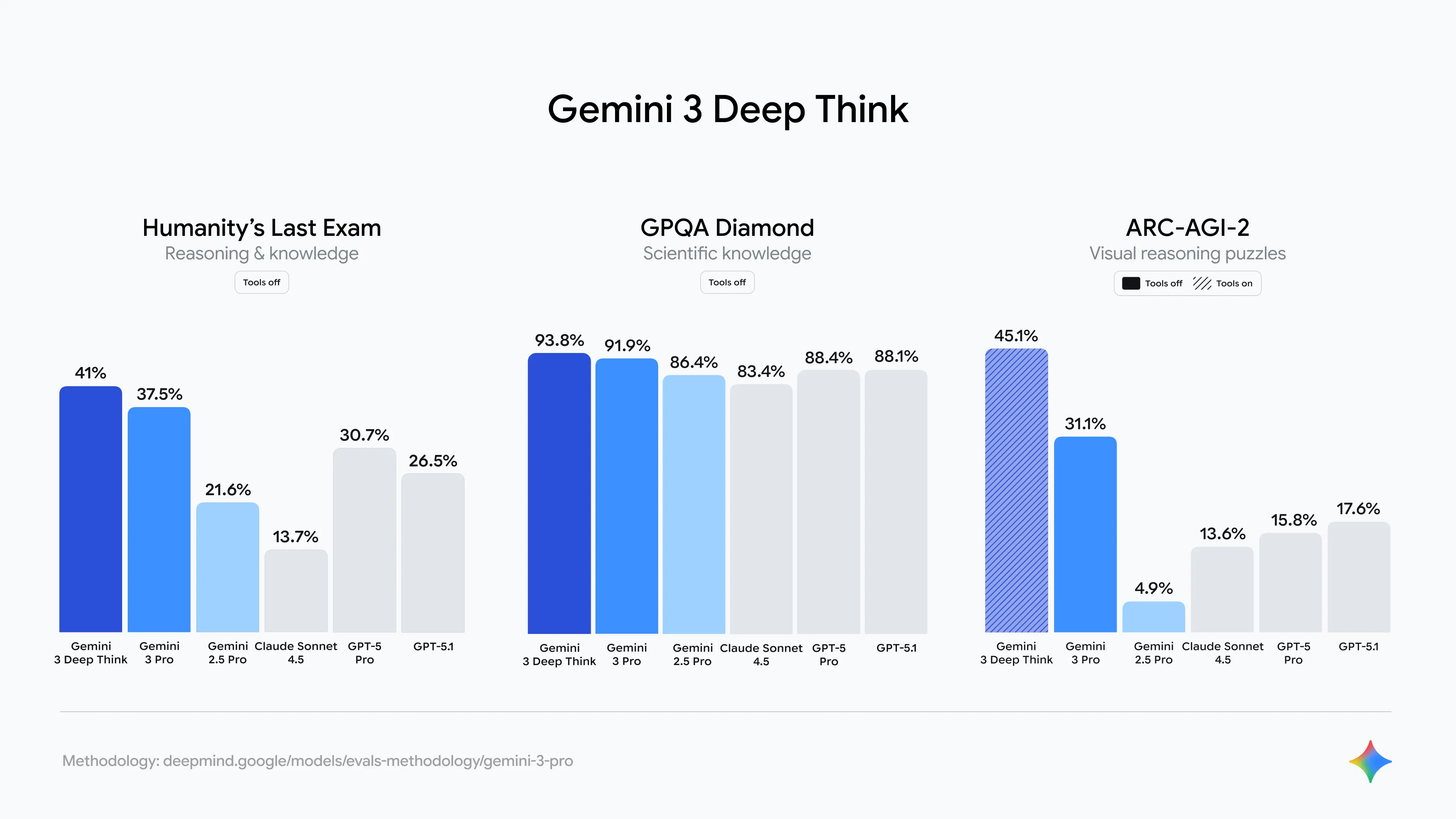
Google said the model outperformed its predecessor, Gemini 2.5 Pro, across nearly every benchmark the company tested. On Humanity’s Last Exam, an academic reasoning test, Gemini 3 Pro scored 37.5% compared to 2.5 Pro’s 21.6%. On ARC-AGI-2, a visual reasoning puzzle benchmark, the gap widened further: 31.1% versus 4.9%.
Of course, the real challenge at this point in the AI race isn’t technical so much as it is gaining commercial market share.
Google, which once seemed indomitable in the search space, has given up an enormous amount of ground to OpenAI, which claims some 800 million weekly users ChatGPT versus Gemini, which reportedly has around 650 million monthly users. Google has not said how many weekly numbers it has, but that would be far fewer than its monthly count.
Still, the technical achievements of Gemini 3 are impressive.
Introducing Gemini 3 — our most intelligent model that helps you bring any idea to life.
Gemini 3 is our next step on the path toward AGI and has: 🧠 State-of-the-art reasoning 🖼️ Deep multimodal understanding 💻 Powerful vibe coding so you can go from prompt to app in one shot… pic.twitter.com/zG8r95pGcS
Gemini 3 Pro uses what Google calls a sparse mixture-of-experts architecture. Instead of activating all 1 trillion-plus parameters for every query, the system routes each input to specialized subnetworks. Only a fraction of the model—the expert at that specific task—runs at any given time, cutting computational costs while maintaining performance.
Unlike GPT and Claude, which are large, dense models (a jack of all trades), Google’s approach acts like a large organization would operate. A company with 1,000 employees doesn’t call everyone to every meeting; specific teams handle specific problems. Gemini 3 Pro works the same way, directing questions to the right expert networks.
Google trained the model on web documents, code repositories, images, audio files, and video—plus synthetic data generated by other AI systems. The company filtered the training data for quality and safety, removing pornographic content, violent material, and anything violating child safety laws. Training happened on Google’s Tensor Processing Units using JAX and ML Pathways software.
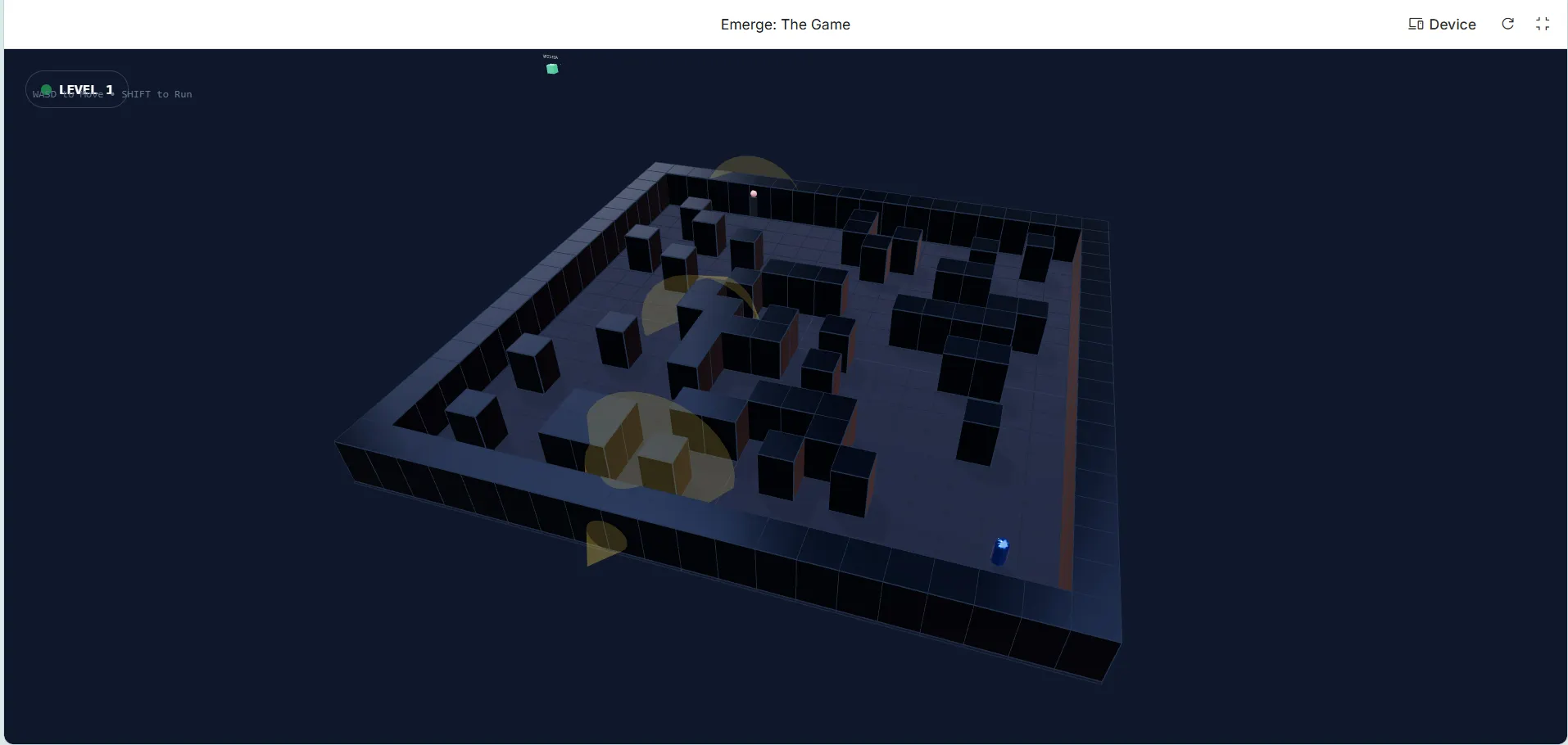
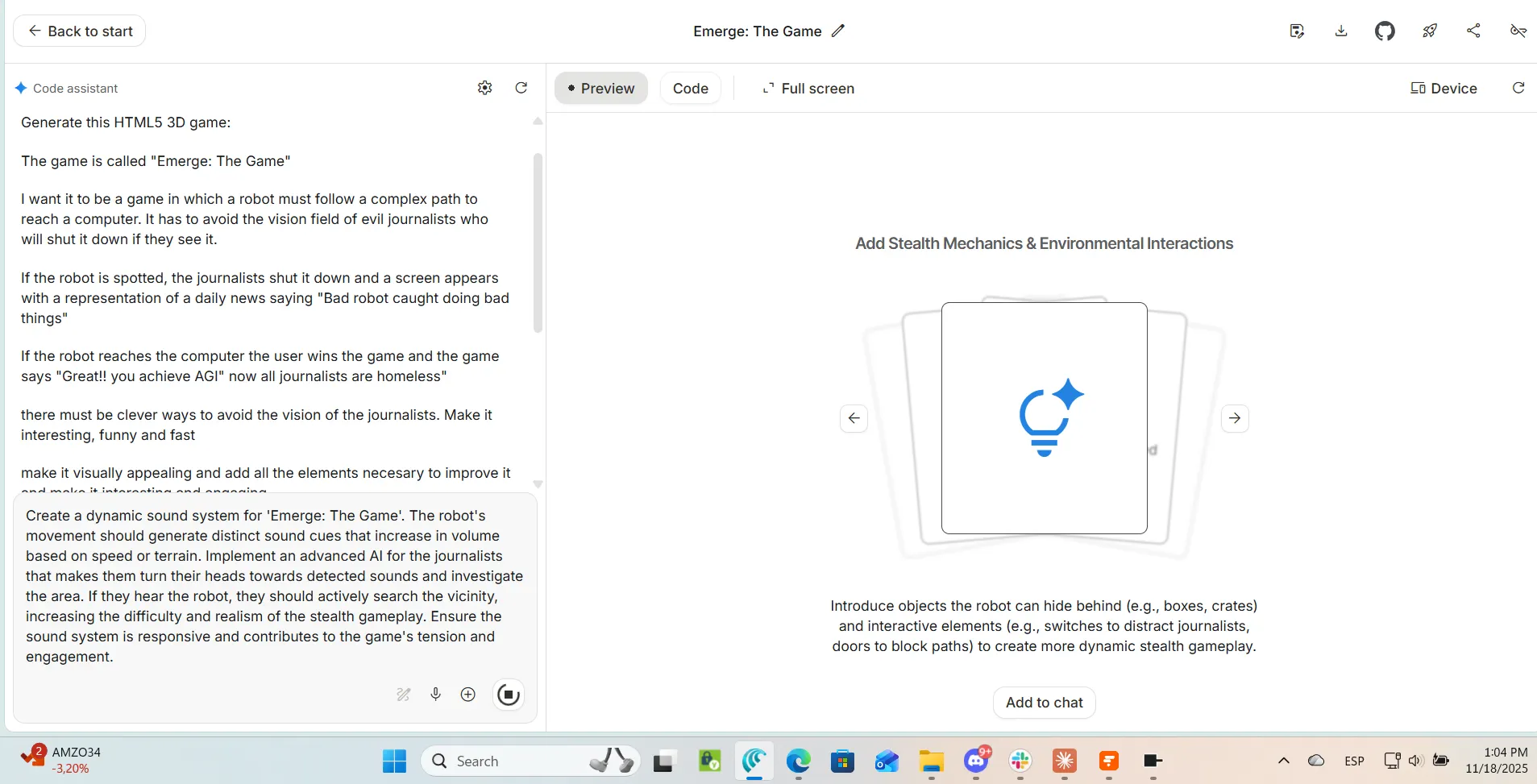
A quick test of the model showed that it was very capable. In our usual coding test asking to generate a stealth game, this was the first model that generated a 3D game instead of a 2D experience. Other runs provided 2D versions, but all were functional and fast.
This approach follows the style of ChatGPT or Perplexity which encourage further interactions by sharing follow-up questions and suggestions, but Google’s implementation is a lot cleaner and more helpful.
While generating code, the interface provides tips to help in subsequent prompts, so the user can guide the model into generating better code, fixing bugs, and improving the app’s logic, UI, etc. It also gives users the option to deploy their code and code Gemini-powered apps.
Overall, this model seems to be especially focused on coding tasks. Creativity is not its strong point, but it can be easy to guide with a good system prompt and examples, as it has a very large token context window.
An archived version of Gemini 3’s model card—a document that provides essential information about the model’s design, intended use, performance, and limitations—published by Google DeepMind shows that Gemini 3 Pro can generate up to 64,000 tokens of output and maintains a knowledge cutoff of January 2025. Google acknowledged the model may hallucinate and occasionally experiences slowness or timeouts.
An official model card is not currently available.
As mentioned, Google AI Studio is currently offering everyone free access to Gemini 3 Pro. Vertex AI and the Gemini API also support the model. Gemini 3 Pro is not yet available through the Gemini app, however—not even for paying Gemini Pro subscribers.
The November release positions Google against Anthropic’s Claude Sonnet 4.5, Grok 4.1 and even OpenAI’s GPT-5.1. Benchmark scores suggest Gemini 3 Pro leads in reasoning and multimodal tasks, though real-world performance varies by use case.
Google distributed Gemini 3 Pro through its cloud platforms subject to existing terms of service. The company’s generative AI prohibited use policy applies, blocking use in dangerous activities, security compromises, sexually explicit content, violence, hate speech, and misinformation.
Generally Intelligent Newsletter
A weekly AI journey narrated by Gen, a generative AI model.
The FSNN News Room is the voice of our in-house journalists, editors, and researchers. We deliver timely, unbiased reporting at the crossroads of finance, cryptocurrency, and global politics, providing clear, fact-driven analysis free from agendas.
We and our selected partners wish to use cookies to collect information about you for functional purposes and statistical marketing. You may not give us your consent for certain purposes by selecting an option and you can withdraw your consent at any time via the cookie icon.
Cookies are small text that can be used by websites to make the user experience more efficient. The law states that we may store cookies on your device if they are strictly necessary for the operation of this site. For all other types of cookies, we need your permission. This site uses various types of cookies. Some cookies are placed by third party services that appear on our pages.
Your permission applies to the following domains:
https://fsnn.net
Necessary
Necessary cookies help make a website usable by enabling basic functions like page navigation and access to secure areas of the website. The website cannot function properly without these cookies.
Statistic
Statistic cookies help website owners to understand how visitors interact with websites by collecting and reporting information anonymously.
Preferences
Preference cookies enable a website to remember information that changes the way the website behaves or looks, like your preferred language or the region that you are in.
Marketing
Marketing cookies are used to track visitors across websites. The intention is to display ads that are relevant and engaging for the individual user and thereby more valuable for publishers and third party advertisers.


 Freedom Index