

 Freedom Index
Listen to the article
In the wake of the police killing of George Floyd in 2020, lawmakers across the country responded by passing laws making it easier for the public to access law enforcement records.
In New York, for example, lawmakers repealed a decades-old statute that had shielded police disciplinary files, granting the public long-sought access to officers’ records. And in Colorado, lawmakers passed a law requiring the prompt release of “all unedited video and audio recordings” of incidents in which there is a complaint of officer misconduct.
“In a landscape that tends to be so bleak — delays and denials left and right — one good thing came out of such a miserable situation,” said Reporters Committee for Freedom of the Press Staff Attorney Gunita Singh, “and that was the law was changing for the better.”
But not in Pennsylvania.
In the Keystone State, a statute known as Act 22 governs access to video and audio recordings created by law enforcement agencies. Instead of promoting transparency, the law passed in 2017 forces requesters to navigate procedural hurdles that make it unnecessarily difficult for journalists and the public to obtain police body-worn camera footage and other recordings.
But that hasn’t stopped Reporters Committee attorneys, led by Pennsylvania Local Legal Initiative Attorney Paula Knudsen Burke, from taking police departments to court to challenge their refusal to turn over bodycam and dashcam recordings under the restrictive law. Over the past few years, Burke has litigated six Act 22 cases on behalf of local journalists and newsrooms, several of which are ongoing.
Three of those cases have resulted in settlements in which police departments have agreed to turn over bodycam footage. And earlier this month, a case litigated by Burke and Singh resulted in what appears to be the first court order granting a request to access police recordings under Act 22.
“Other states are moving in the direction of transparency and progress, and we’re stagnant, if not going backwards,” Burke said. “Despite the fact that it’s an uphill challenge, these lawsuits are worth bringing. As our recent settlements and court victory have shown, they can play a crucial role in shining a spotlight on the actions of law enforcement in Pennsylvania.”
Understanding Act 22
Before 2017, access to bodycam footage and other law enforcement recordings in Pennsylvania was governed by the Right-to-Know Law, the state’s primary public records statute that members of the press and public have long used to obtain government records. The passage of Act 22 created a separate, more burdensome, process for accessing bodycam recordings.
Under the law, requesters must submit a formal written request that includes an explanation of the purpose for seeking the video, something that is not required under the Right-to-Know Law. Act 22 requests must be filed in person or by certified mail within 60 days of an encounter with police.
Since 2014, Philadelphia has spent over $20 million on a bodycam program intended to promote transparency and accountability within the police department. But because of the barriers to access imposed by Act 22, Burke argues the program has fallen short.
“Why are we spending money on something that the public is paying for and doesn’t get to see?” Burke said.
Not only does Act 22 present physical challenges, forcing requesters to hand-deliver requests in a tight time frame, it also requires extensive detail in initial requests. By demanding specifics such as the date, time, location, and description of the incident, the law places an unfair burden on the requester.
“The whole reason people are seeking government records is because they don’t have all the information at the outset,” said Singh, who is litigating several Act 22 cases alongside Burke. “To put a burden on requesters that could potentially be insurmountable and making it harder to access government records is frustrating.”
Six Act 22 lawsuits
Burke’s push to litigate Act 22 cases began in 2021, just a few months after she joined the Reporters Committee.
That January, on behalf of journalist Hurubie Meko and LNP Media, she filed the first Act 22 case to be heard by a court in Pennsylvania, seeking access to police bodycam footage capturing a clash between protesters and law enforcement in Lancaster during demonstrations in 2020. The lawsuit led to negotiations with the district attorney, ultimately resulting in the disclosure of more than a dozen hours of police bodycam footage.
The following year, Burke helped The Patriot-News/PennLive and its reporter Charles Thompson reach an agreement with a local district attorney’s office that allowed Thompson to watch the unredacted and complete bodycam footage of police officers involved in the fatal shooting of a man who refused to surrender to police officers when they arrived at his home to serve a warrant for his arrest.
More recently, Burke and Singh have teamed up to bring additional Act 22 lawsuits on behalf of Pennsylvania journalists and newsrooms. In three cases — The Tribune-Democrat v. City of Johnstown, Nexstar Media v. Pennsylvania State Police, and Nephin v. City of Lancaster — Reporters Committee attorneys are helping newsrooms challenge Act 22 denials based on claims that recordings contained evidence related to a criminal investigation. The lawsuits argue, however, that redaction, such as blurring, is the appropriate way to handle exempt information, rather than withholding records entirely.
In Nephin, a judge recently ordered the city of Lancaster to release all police bodycam and dashboard camera footage capturing the controversial arrests of teenagers who were riding their bicycles on city streets in March. The ruling came just one day after Reporters Committee attorneys argued in court on behalf of LNP | Lancaster Online that the public interest in accessing the recordings outweighed the city’s interests in keeping them secret.
As LNP reported, it appears to be the first time a court has granted a request to access police bodycam videos under Act 22.
“The court’s order this week may be the first successful ruling on the merits of an Act 22 case in the state,” Singh told LNP. “But it won’t be the last.”
The court victory in the LNP case was followed by more good news in a separate Act 22 case Burke filed on behalf of the Centre Daily Times in October. In that case, the newsroom and its reporter Bret Pallotto sought access to bodycam footage from Pennsylvania State Police officers who were present during a U.S. Immigration and Customs Enforcement action in Centre County that resulted in the arrest of 24 people.
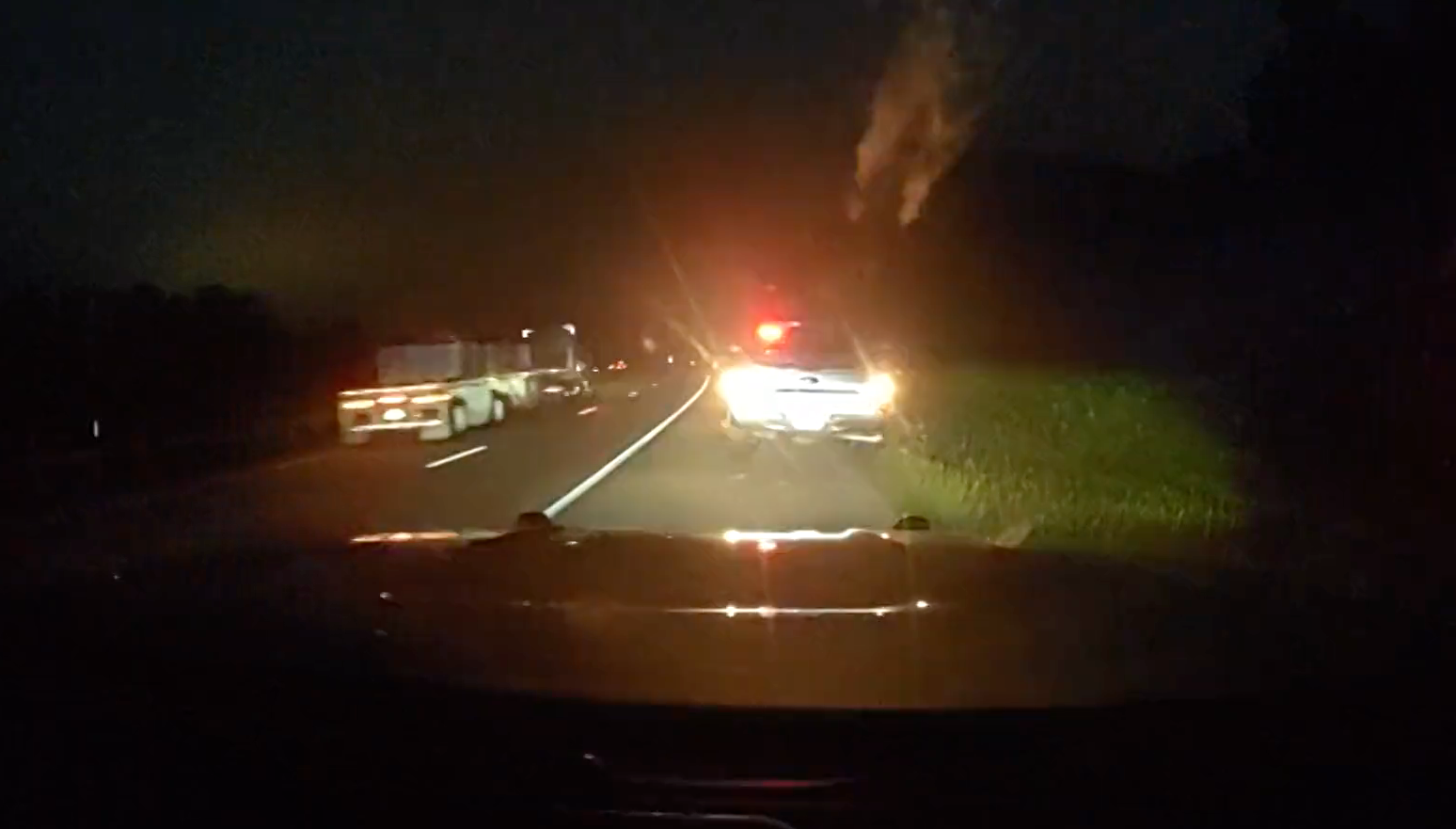
Following the lawsuit, the state police agreed to turn over troopers’ dashcam footage of the immigration enforcement action. As the Centre Daily Times reported after obtaining the recordings, the dashcam videos “appear to verify the role and public statements of the state police,” which had said that its troopers did not conduct the traffic stops. The state police told the newspaper that because the troopers were not involved in the enforcement action, they did not activate their bodycams.
Litigating Act 22 cases is not easy. But Burke and Singh say the fight is worth it considering the public good that results from making bodycam footage available to local communities.
“Releasing bodycam footage isn’t just important to expose misconduct,” Singh said. “It’s just as important to demonstrate what police do right. That helps build trust.”
The Reporters Committee for Freedom of the Press is the leading pro bono legal services provider for journalists and news organizations in the United States, offering direct legal representation, amicus curiae support, and other legal resources to protect First Amendment freedoms and the newsgathering rights of journalists. Stay up-to-date on our work by signing up for our newsletters and following us on Bluesky, LinkedIn, Instagram, and Facebook.
Read the full article here
Fact Checker
Verify the accuracy of this article using AI-powered analysis and real-time sources.