Close Menu
FSNN | Free Speech News NetworkFSNN | Free Speech News Network
  • Home
  • News
    • Politics
    • Legal & Courts
    • Tech & Big Tech
    • Campus & Education
    • Media & Culture
    • Global Free Speech
  • Opinions
    • Debates
  • Video/Live
  • Community
  • Freedom Index
  • About
    • Mission
    • Contact
    • Support
Trending

Indonesian journalists attacked over reporting at mineral processing plant

11 minutes ago

ECB unveils tokenized finance roadmap as Europe pushes to reduce reliance on foreign infrastructure

22 minutes ago

SEC, CFTC Handshake on Memo to Regulate Markets in Harmony

23 minutes ago
Facebook X (Twitter) Instagram
Facebook X (Twitter) Discord Telegram
FSNN | Free Speech News NetworkFSNN | Free Speech News Network
Market Data Newsletter
Thursday, March 12
  • Home
  • News
    • Politics
    • Legal & Courts
    • Tech & Big Tech
    • Campus & Education
    • Media & Culture
    • Global Free Speech
  • Opinions
    • Debates
  • Video/Live
  • Community
  • Freedom Index
  • About
    • Mission
    • Contact
    • Support
FSNN | Free Speech News NetworkFSNN | Free Speech News Network
Home»News»Media & Culture»AI Art in Call of Duty: Black Ops 7 Leads Rep. Ro Khanna To Call for More Regulation
Media & Culture

AI Art in Call of Duty: Black Ops 7 Leads Rep. Ro Khanna To Call for More Regulation

News RoomBy News Room4 months agoNo Comments3 Mins Read1,206 Views
Share Facebook Twitter Pinterest Copy Link LinkedIn Tumblr Email VKontakte Telegram
AI Art in Call of Duty: Black Ops 7 Leads Rep. Ro Khanna To Call for More Regulation
Share
Facebook Twitter Pinterest Email Copy Link

Listen to the article

0:00
0:00

Key Takeaways

Playback Speed

Select a Voice

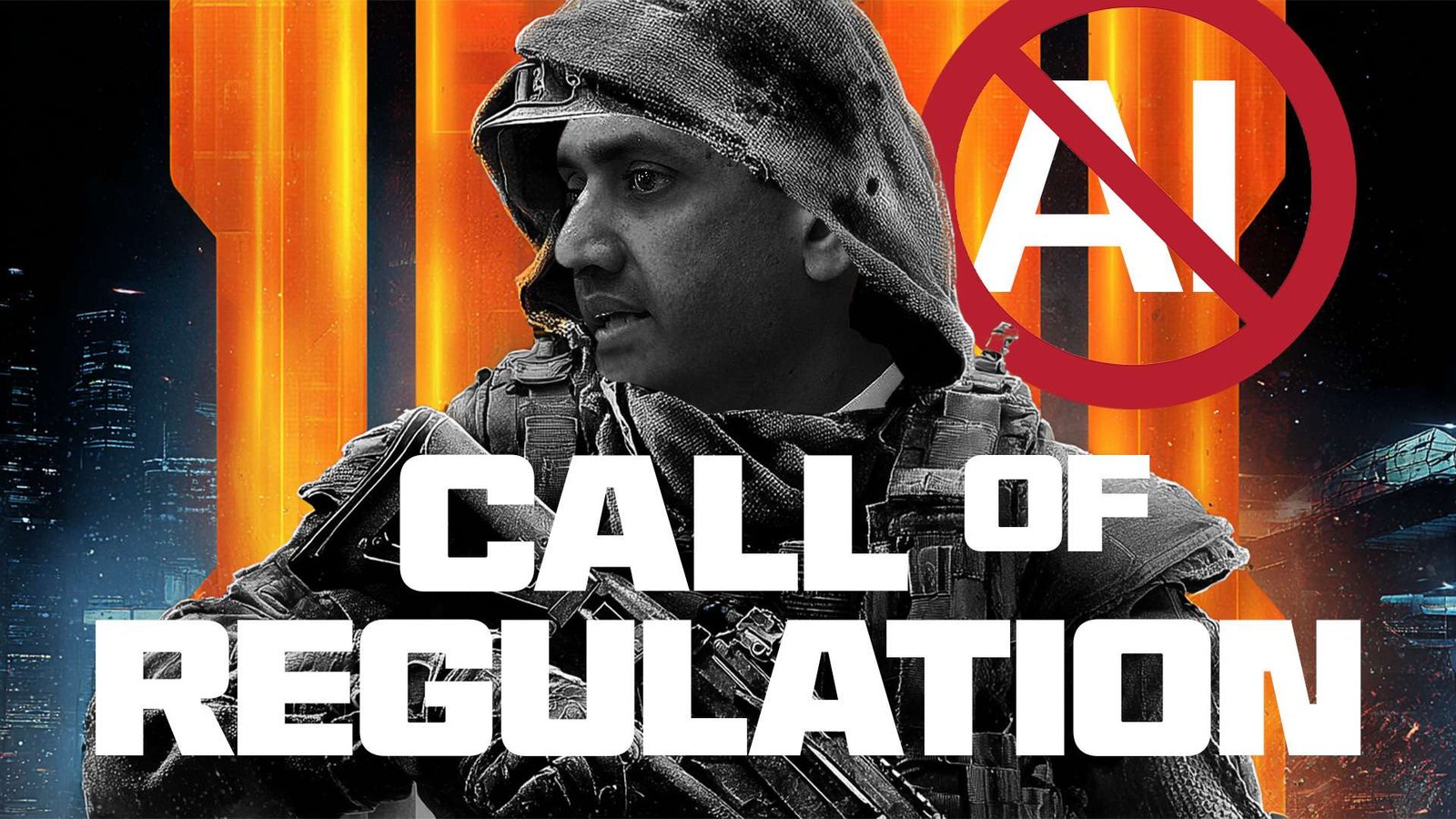
Rep. Ro Khanna (D–Calif.) called for regulation that would stop companies from replacing workers with AI on Friday, following denunciations of Call of Duty: Black Ops 7 for featuring AI-generated art. The constituency of video game designers may be niche, but Khanna’s proposal is sweeping: a tax on mass displacement that would throttle technological adoption and slow economic growth.

Black Ops 7, the latest installment in the Call of Duty franchise, was released Friday. That day, video game journalists called attention to the game’s apparent use of “AI-generated artwork across its core assets,” including calling cards, posters, and reward icons.

But AI was not used to synthesize the game’s most significant visual elements, including the landscapes, character models, vehicles, or weapon animations. And even those upset by the inclusion of any AI-generated art acknowledge that Activision, the game’s developer, disclosed that its “team uses generative AI tools to help develop some in game assets.”

Lewis White, FRVR editor in chief, lambasts the game’s AI-generated calling cards as “images prompted by a bored intern who doesn’t have a creative bone in their body.” Product quality is certainly grounds for condemnation from consumers, but White also objects on the grounds that, “When [he pays] for a game, [he pays] for a service to the creatives making that game.” It’s a mistake, however, to view products as job programs—this only leads to higher costs and to people using spoons instead of shovels to move earth.

About 66 percent of creative professionals who use AI tools say they make better content with it, and 58 percent reported an increase in the quantity of content, according to an Adobe survey published in February 2024. In short, AI doesn’t necessarily just substitute the work of creative professionals; it complements their work too.

Regardless of AI’s benefits, Khanna insists “we need regulations [to] prevent companies from using AI to eliminate jobs [and] there should be a tax on mass displacement.” AI is merely one of many tools that can replace certain jobs; if the government should prevent companies from eliminating jobs with AI, then it should prevent companies from doing so with any other technology. The predictable result of such invasive government management of businesses would be economic stagnation and shrinkage—leaving everyone worse off.

A tax on “mass displacement” is a tax on creative destruction, the process by which resource-, energy-, and labor-intensive modes of production are replaced with less costly ones that better satisfy consumer preferences. Khanna’s requirement for “artists [to] have a say in how AI is deployed” would arbitrarily privilege the interests of a narrow group of producers over the rest of us.

Khanna insists that he is not for a “Luddite complete ban,” but supports “guardrails for worker input before deployment” and tax reforms to discourage “excessive automation.” What such generalities mean in practice is to substitute workers’ interest to secure the largest share of revenue for themselves with business owners’ interest to produce the best product at the lowest price. The latter is conducive to a growing economy that benefits everyone; the former is not.

Read the full article here

Fact Checker

Verify the accuracy of this article using AI-powered analysis and real-time sources.

Get Your Fact Check Report

Enter your email to receive detailed fact-checking analysis

5 free reports remaining

Continue with Full Access

You've used your 5 free reports. Sign up for unlimited access!

Already have an account? Sign in here

Share. Facebook Twitter Pinterest LinkedIn Tumblr Email Telegram Copy Link
News Room
  • Website
  • Facebook
  • X (Twitter)
  • Instagram
  • LinkedIn

The FSNN News Room is the voice of our in-house journalists, editors, and researchers. We deliver timely, unbiased reporting at the crossroads of finance, cryptocurrency, and global politics, providing clear, fact-driven analysis free from agendas.

Related Articles

Cryptocurrency & Free Speech Finance

Crypto Traders Turn to Hyperliquid for Oil Bets Amid Iran Volatility

29 minutes ago
Media & Culture

He Was Arrested Over a Bogus Drug Tests. Now He’s Suing.

1 hour ago
Cryptocurrency & Free Speech Finance

Wells Fargo Applies for WFUSD Trademark, Signaling Use in Crypto and Stablecoins

1 hour ago
Media & Culture

The Ninth Circuit’s En Banc Shadow Docket

2 hours ago
Cryptocurrency & Free Speech Finance

Most AI Chatbots Will Help a Teen Plan a Mass Shooting, Study Finds

3 hours ago
Media & Culture

Daily Deal: The 2026 Ultimate Web Development And Coding Bundle

3 hours ago
Add A Comment

Comments are closed.

Editors Picks

ECB unveils tokenized finance roadmap as Europe pushes to reduce reliance on foreign infrastructure

22 minutes ago

SEC, CFTC Handshake on Memo to Regulate Markets in Harmony

23 minutes ago

Crypto Traders Turn to Hyperliquid for Oil Bets Amid Iran Volatility

29 minutes ago

He Was Arrested Over a Bogus Drug Tests. Now He’s Suing.

1 hour ago
Latest Posts

SEC, CFTC end years of rivalry with deal that will mean combined crypto oversight

1 hour ago

Pro Traders Anticipate Low Odds of a Bitcoin Rally Toward $78,000

1 hour ago

Wells Fargo Applies for WFUSD Trademark, Signaling Use in Crypto and Stablecoins

1 hour ago

Subscribe to News

Get the latest news and updates directly to your inbox.

At FSNN – Free Speech News Network, we deliver unfiltered reporting and in-depth analysis on the stories that matter most. From breaking headlines to global perspectives, our mission is to keep you informed, empowered, and connected.

FSNN.net is owned and operated by GlobalBoost Media
, an independent media organization dedicated to advancing transparency, free expression, and factual journalism across the digital landscape.

Facebook X (Twitter) Discord Telegram
Latest News

Indonesian journalists attacked over reporting at mineral processing plant

11 minutes ago

ECB unveils tokenized finance roadmap as Europe pushes to reduce reliance on foreign infrastructure

22 minutes ago

SEC, CFTC Handshake on Memo to Regulate Markets in Harmony

23 minutes ago

Subscribe to Updates

Get the latest news and updates directly to your inbox.

© 2026 GlobalBoost Media. All Rights Reserved.
  • Privacy Policy
  • Terms of Service
  • Our Authors
  • Contact

Type above and press Enter to search. Press Esc to cancel.

🍪

Cookies

We and our selected partners wish to use cookies to collect information about you for functional purposes and statistical marketing. You may not give us your consent for certain purposes by selecting an option and you can withdraw your consent at any time via the cookie icon.

Cookie Preferences

Manage Cookies

Cookies are small text that can be used by websites to make the user experience more efficient. The law states that we may store cookies on your device if they are strictly necessary for the operation of this site. For all other types of cookies, we need your permission. This site uses various types of cookies. Some cookies are placed by third party services that appear on our pages.

Your permission applies to the following domains:

  • https://fsnn.net
Necessary
Necessary cookies help make a website usable by enabling basic functions like page navigation and access to secure areas of the website. The website cannot function properly without these cookies.
Statistic
Statistic cookies help website owners to understand how visitors interact with websites by collecting and reporting information anonymously.
Preferences
Preference cookies enable a website to remember information that changes the way the website behaves or looks, like your preferred language or the region that you are in.
Marketing
Marketing cookies are used to track visitors across websites. The intention is to display ads that are relevant and engaging for the individual user and thereby more valuable for publishers and third party advertisers.