Close Menu
FSNN | Free Speech News NetworkFSNN | Free Speech News Network
  • Home
  • News
    • Politics
    • Legal & Courts
    • Tech & Big Tech
    • Campus & Education
    • Media & Culture
    • Global Free Speech
  • Opinions
    • Debates
  • Video/Live
  • Community
  • Freedom Index
  • About
    • Mission
    • Contact
    • Support
Trending

SEC Proposes New Standards for US Transfer Agents

2 minutes ago

Cathie Wood’s Ark Invest Buys $37 Million in Bitcoin and Payments Firm Block

3 minutes ago

Free Speech Unmuted: The Process Is The Punishment: ABC v. FCC with Stuart Benjamin

30 minutes ago
Facebook X (Twitter) Instagram
Facebook X (Twitter) Discord Telegram
FSNN | Free Speech News NetworkFSNN | Free Speech News Network
Market Data Newsletter
Tuesday, September 1
  • Home
  • News
    • Politics
    • Legal & Courts
    • Tech & Big Tech
    • Campus & Education
    • Media & Culture
    • Global Free Speech
  • Opinions
    • Debates
  • Video/Live
  • Community
  • Freedom Index
  • About
    • Mission
    • Contact
    • Support
FSNN | Free Speech News NetworkFSNN | Free Speech News Network
Home»News»Media & Culture»The New Luddites Want To Pump the Brakes on Driverless Cars
Media & Culture

The New Luddites Want To Pump the Brakes on Driverless Cars

News RoomBy News Room10 months agoNo Comments4 Mins Read2 Views
Share Facebook Twitter Pinterest Copy Link LinkedIn Tumblr Email VKontakte Telegram
The New Luddites Want To Pump the Brakes on Driverless Cars
Share
Facebook Twitter Pinterest Email Copy Link

Listen to the article

0:00
0:00

Key Takeaways

Playback Speed

Select a Voice

As demand for self-driving services such as Waymo grows, so does evidence of their safety. The autonomous ride-hailing service reports astronomical reductions in motor vehicle–related crashes and injuries in its autonomous vehicles (A.V.s) compared to cars helmed by humans.

But with innovation comes those who fear it. A recent incident in San Francisco, California, in which a Waymo vehicle struck and killed a “bodega cat” reignited fears and sparked outrage. In response, San Francisco city supervisor Jackie Fielder is demanding new restrictions on the A.V. company’s operations, holding a related rally and asserting that the community must be “put before tech oligarchs.” 

In a statement, Waymo claimed the “cat darted under [the] vehicle as it was pulling away.” The death of a pet is always tragic, but the reality is that human drivers are far more likely to be involved in harmful accidents than driverless vehicles are. Policymaking should be based on evidence, not sensationalized outrage.

Across 96 million miles of operation, Waymo cars reflect a sharp reduction in motor vehicle–related injuries and deaths. When compared to human drivers, the report indicates 91 percent fewer serious injuries, 92 percent fewer pedestrian crashes with injuries, and 79 percent fewer crashes resulting in airbag deployment. 

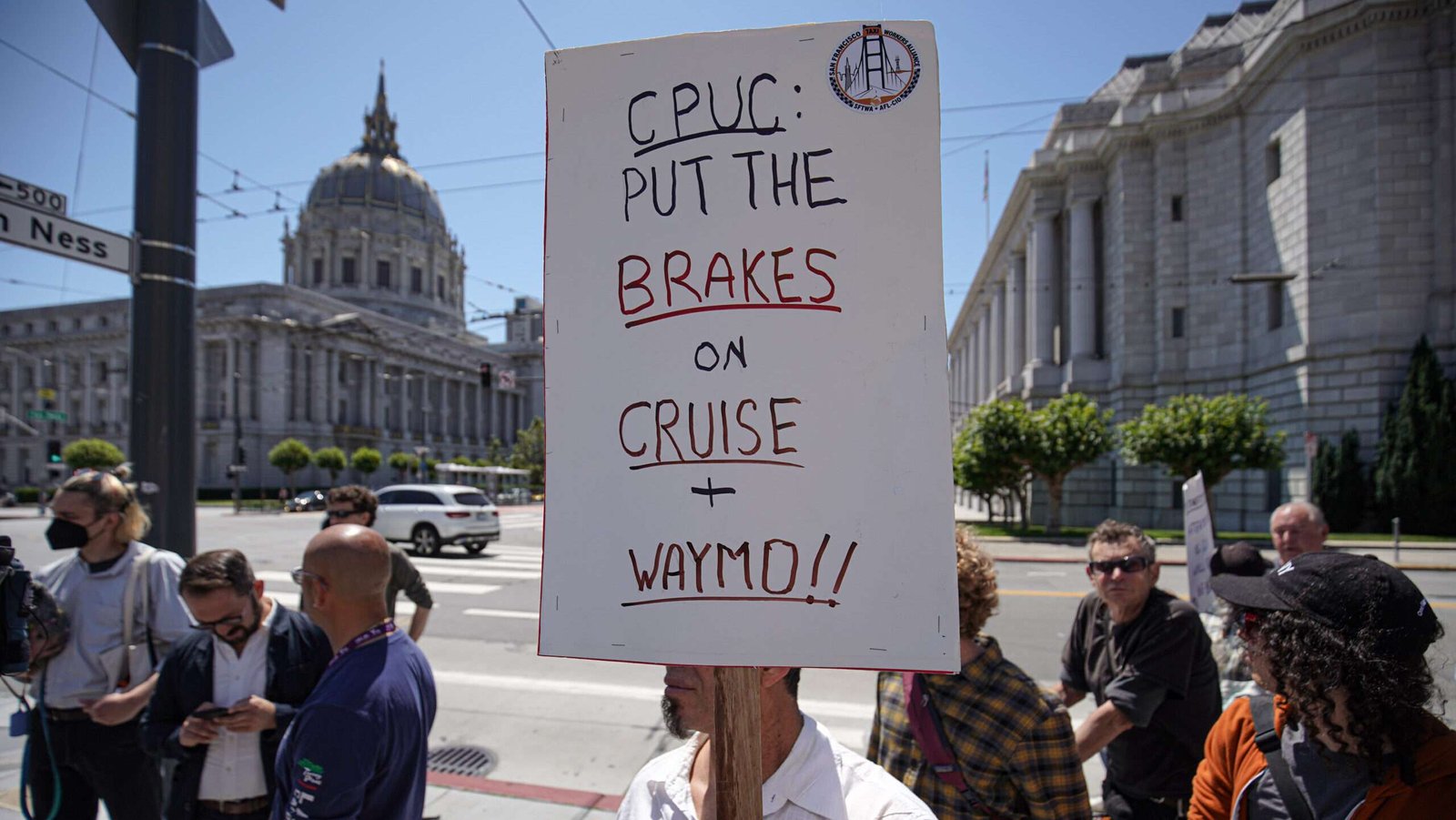
Yet, just this summer, the Boston Teamsters Union called for their city to “hit the brakes” on Waymo and pass an ordinance to study the impact of A.V.s on “the economy, traffic, and public safety,” and to establish an advisory board composed of “trade unionists and other stakeholders” to “guide any future rules for AV operators.” The ordinance has the support of several members of the Boston City Council, but Waymo spokesman Ethan Teicher warned that the proposal would “ban autonomous vehicles based on vibes.”

With the city’s approval process in limbo, Waymo says it has “no definite plans” for a commercial launch in Boston; however, the company is already mapping the city’s streets in preparation for offering service if regulations allow. 

The protectionist ordinance would hand regulatory power to industry competitors and unions, depriving Bostonians of a safe and popular service. Appointing members of an interest group to oversee a committee with direct power over the operation of their competitors is a blatant conflict of interest. All transportation companies should compete freely for customers as in any other industry.

Boston is hardly an outlier in the broader anti-A.V. campaign. Last year, the city of San Francisco filed a lawsuit against the California commission that approved an expansion of A.V. operations. Statewide, a Teamsters-backed bill that would have required human drivers in all heavy autonomous trucks passed the legislature, but was vetoed by Democratic Gov. Gavin Newsom. Although Newsom’s veto prevented the measure from taking effect, its passage demonstrates the same political muscle organized labor is flexing in Boston. The Teamsters are pushing a similar bill in Texas as well.

The New York State Federation of Taxi Drivers protested outside of Gov. Kathy Hochul’s Manhattan office, asserting that autonomous vehicles could “threaten the livelihoods” of more than 200,000 New Yorkers. Its president went as far as to call anyone opposing a ban on autonomous vehicles an “enemy” of New York City’s transportation industry. 

Back in 2023, a group of 26 labor unions sent a letter to the U.S. Department of Transportation urging it to end the “unsafe” operation of autonomous vehicles. In 2021, a bill sponsored by Sen. John Thune (R–S.D.) to loosen federal A.V. regulations was killed in committee after fierce opposition from unions. Just this September, Sen. Josh Hawley (R–Mo.) declared, “We ought to ban” A.V.s, pledging to introduce related legislation.

These efforts form a coordinated resistance to market-driven modernization. The rhetoric may invoke safety, jobs, and public interest, but the real goal is to enlist the government as a weapon against competition. 

Meanwhile, there is a clear market demand. Waymo’s weekly ridership has surged from 10,000 to more than 250,000 in less than a year. The A.V. company, among others, is seeking to provide a service that consumers clearly want. Why should bureaucracy stand in the way?

History is littered with failed attempts to resist technological progress—efforts now proven absurd. Civilization didn’t cave when the Luddites resisted textile mechanization in the early nineteenth century, nor did it cave when unions representing gaslight and horse-drawn carriage workers resisted electric lighting and automobiles. If those seeking to hinder advancements like these had their way, humanity would have never climbed out of the Stone Age. And today, we should not allow contemporary Luddites to thwart the unfolding progress of humanity.  

To fully realize human flourishing, America must embrace the future—not fear it.

Read the full article here

Fact Checker

Verify the accuracy of this article using AI-powered analysis and real-time sources.

Get Your Fact Check Report

Enter your email to receive detailed fact-checking analysis

5 free reports remaining

Continue with Full Access

You've used your 5 free reports. Sign up for unlimited access!

Already have an account? Sign in here

Share. Facebook Twitter Pinterest LinkedIn Tumblr Email Telegram Copy Link
News Room
  • Website
  • Facebook
  • X (Twitter)
  • Instagram
  • LinkedIn

The FSNN News Room is the voice of our in-house journalists, editors, and researchers. We deliver timely, unbiased reporting at the crossroads of finance, cryptocurrency, and global politics, providing clear, fact-driven analysis free from agendas.

Related Articles

Cryptocurrency & Free Speech Finance

Cathie Wood’s Ark Invest Buys $37 Million in Bitcoin and Payments Firm Block

3 minutes ago
Media & Culture

Free Speech Unmuted: The Process Is The Punishment: ABC v. FCC with Stuart Benjamin

30 minutes ago
Cryptocurrency & Free Speech Finance

X Data Breach? Users Are Getting Flooded With Password Reset Emails Nobody Requested

1 hour ago
Media & Culture

2,400 Baseball Games for the Price of 1

2 hours ago
Media & Culture

The Biggest Revelation In Recent NYT Expose Is Justice Scalia Wasn’t Planning on Dying

3 hours ago
Cryptocurrency & Free Speech Finance

Gal Gadot Defends AI Use in Bitcoin Film: ‘Work With It or Be Out of the Game’

3 hours ago
Add A Comment

Comments are closed.

Editors Picks

Cathie Wood’s Ark Invest Buys $37 Million in Bitcoin and Payments Firm Block

3 minutes ago

Free Speech Unmuted: The Process Is The Punishment: ABC v. FCC with Stuart Benjamin

30 minutes ago

Guidance on public photography should be shared with everyone in the UK not just asylum seekers. Photo: Getty Images for Unsplash+ Asylum seekers in the UK are being misled by the Home Office over laws about photographing people in public places and are being threatened that their asylum claims might be refused and could be kicked out of the country. On 19 August, the Home Office issued a poster entitled “Do not photograph or film people in public” as part of a series of guidance over consequences of behaviour for those seeking asylum. The poster is part of a nine-page booklet that aims to help asylum seekers understand what is expected of them when living in the UK and covers issues such as sexual consent and domestic abuse. The release of the booklet is controversial because the guidance it contains applies to everyone in the UK and not just asylum seekers. Its publication now could be seen as a politically motivated sop to those who want to crack down on all immigration, even though Britain is legally bound to admit genuine refugees. In the introduction, the Home Office says, “We understand that coming to a new country can be difficult, and that laws and customs here may be different from your home country.” The poster says, “In the UK, you should not take pictures or videos of someone without their permission. This includes taking pictures or videos in public spaces, like streets of parks, or in private spaces, like at home.” However, the poster is misleading. There is a common misconception that photographing people in public places without their consent is illegal. It is not. There are some situations where there are restrictions, for example where photography is restricted by law, such as outside military facilities where photography is prohibited because of national security concerns. Photography is also not permitted where an individual has a reasonable expectation of privacy, such as in the changing room of a clothes shop. Many commercial, privately owned spaces also have rules regarding photography. Sheffield’s Meadowhall shopping centre, for example, says filming and photography is not permitted unless authorised. Where there are no restrictions, consent is not required by law but many legitimate street photographers follow codes of conduct where they might seek consent. The Royal Society of Photographers, for example, recommends that “particular care should be taken when photographing children and vulnerable people, with consideration given to consent, safeguarding, privacy and the potential impact of making or sharing an image”. It adds, “Photographers should also consider how images of identifiable people are subsequently used, especially where their use could imply endorsement or raise concerns about commercial exploitation.” Repeated photography of a person without their consent could be illegal if it crosses into harassing behaviour that is likely to cause alarm or intimidation. This is banned by the Protection from Harassment Act 1997. Photographers must also not share pictures of a sexual nature, for example upskirting, without the subject’s permission. This is banned under the Criminal Justice and Courts Act 2015. When asked about the poster, a Home Office spokesperson said: “We expect everyone who comes to the UK to abide by our laws. If they do not, they will face consequences, including the refusal of their asylum claim and removal from the UK.” They added, “These resources were produced for asylum seekers so there can be no possible misunderstanding of what we expect. The poster is designed to communicate two separate messages: Firstly, that individuals should not take photographs of others without their consent. Secondly, that sharing photographs or videos of a sexual nature without someone’s permission is a serious criminal offence.” There are subtle indications that the Home Office knew that what it was publishing was incorrect. Looking at the poster closely, it appears that the word “should” has been added later, suggesting that it previously said “must” – the font used is subtly different (see below). The information contained in a new Home Office poster is incorrect The Home Office did not respond to our request for comment when we asked about this. The spokeperson said of the poster, “It does not suggest that you can go to prison for taking someone’s photo in public.” There are nuances of English grammar at play here. One person who commented on the BPPA’s statement on Instagram said, “It doesn’t say there’s a legal requirement not to? It says you shouldn’t which to be quite frank is good, if simplified, advice for asylum speakers for whom English is not a first language.” However the heading of the poster is unequivocal. It says, “Do not”. Anyone, even those using English as a second language, would be unlikely to misconstrue that. The original wording still appears to be on the Home Office website. In the booklet’s introduction it says: “In the UK, we respect people’s privacy. This means you must not take photographs or videos of someone without their consent.” (emphasis mine). Photographers and photojournalists and their unions have been quick to call on the Home Office to clarify the poster. The British Press Photographers’ Association (BPPA) has commented on the document. It said, “Recently issued Home Office guidance that states permission is needed to photograph people in public is incorrect and harmful. There is no legal requirement to seek permission when photographing in public. The BPPA hopes an immediate correction will be issued.” Séamus Dooley, NUJ assistant general secretary, said: “This communication not only runs the risk of misleading asylum seekers, it could also have serious consequences for our members – particularly photographers and videographers who regularly carry out their work in public places. It also spreads public confusion that could serve to inhibit public interest journalism. Press photographers and other lens-based journalists perform a legitimate and important function in reporting and recording events in public spaces. “The union is very concerned that the spread of inaccurate information around the right to photograph and film people in public without permission could expose our members to increased hostility and harassment as well as wrongful accusations of criminality and unjustifiable stops by the police. This would undermine journalists’ right to report and the public’s right to know. READ MORE

46 minutes ago

Robinhood's new crypto network is printing cash, and it's sending Arbitrum's token soaring

57 minutes ago
Latest Posts

21 Financial Giants Form Venture for G7 Stablecoins

1 hour ago

X Data Breach? Users Are Getting Flooded With Password Reset Emails Nobody Requested

1 hour ago

2,400 Baseball Games for the Price of 1

2 hours ago

Subscribe to News

Get the latest news and updates directly to your inbox.

At FSNN – Free Speech News Network, we deliver unfiltered reporting and in-depth analysis on the stories that matter most. From breaking headlines to global perspectives, our mission is to keep you informed, empowered, and connected.

FSNN.net is owned and operated by GlobalBoost Media
, an independent media organization dedicated to advancing transparency, free expression, and factual journalism across the digital landscape.

Facebook X (Twitter) Discord Telegram
Latest News

SEC Proposes New Standards for US Transfer Agents

2 minutes ago

Cathie Wood’s Ark Invest Buys $37 Million in Bitcoin and Payments Firm Block

3 minutes ago

Free Speech Unmuted: The Process Is The Punishment: ABC v. FCC with Stuart Benjamin

30 minutes ago

Subscribe to Updates

Get the latest news and updates directly to your inbox.

© 2026 GlobalBoost Media. All Rights Reserved.
  • Privacy Policy
  • Terms of Service
  • Our Authors
  • Contact

Type above and press Enter to search. Press Esc to cancel.

🍪

Cookies

We and our selected partners wish to use cookies to collect information about you for functional purposes and statistical marketing. You may not give us your consent for certain purposes by selecting an option and you can withdraw your consent at any time via the cookie icon.

Cookie Preferences

Manage Cookies

Cookies are small text that can be used by websites to make the user experience more efficient. The law states that we may store cookies on your device if they are strictly necessary for the operation of this site. For all other types of cookies, we need your permission. This site uses various types of cookies. Some cookies are placed by third party services that appear on our pages.

Your permission applies to the following domains:

  • https://fsnn.net
Necessary
Necessary cookies help make a website usable by enabling basic functions like page navigation and access to secure areas of the website. The website cannot function properly without these cookies.
Statistic
Statistic cookies help website owners to understand how visitors interact with websites by collecting and reporting information anonymously.
Preferences
Preference cookies enable a website to remember information that changes the way the website behaves or looks, like your preferred language or the region that you are in.
Marketing
Marketing cookies are used to track visitors across websites. The intention is to display ads that are relevant and engaging for the individual user and thereby more valuable for publishers and third party advertisers.