

 Freedom Index
Listen to the article
Over the past year, many Texas politicians and university leaders have pursued hamfisted and unconstitutional higher education reforms that too often violate the expressive rights of students and faculty.
We recently explained how some government officials misread the law and used online outrage to chill controversial speech and punish a Texas A&M professor for protected expression. Other recent highlights from Texas include a campus speech law prohibiting expressive activities after 10:00 p.m. and a systemwide ban on drag shows at Texas A&M schools. In both cases, FIRE filed suit and won preliminary victories ensuring students can continue exercising their expressive rights.
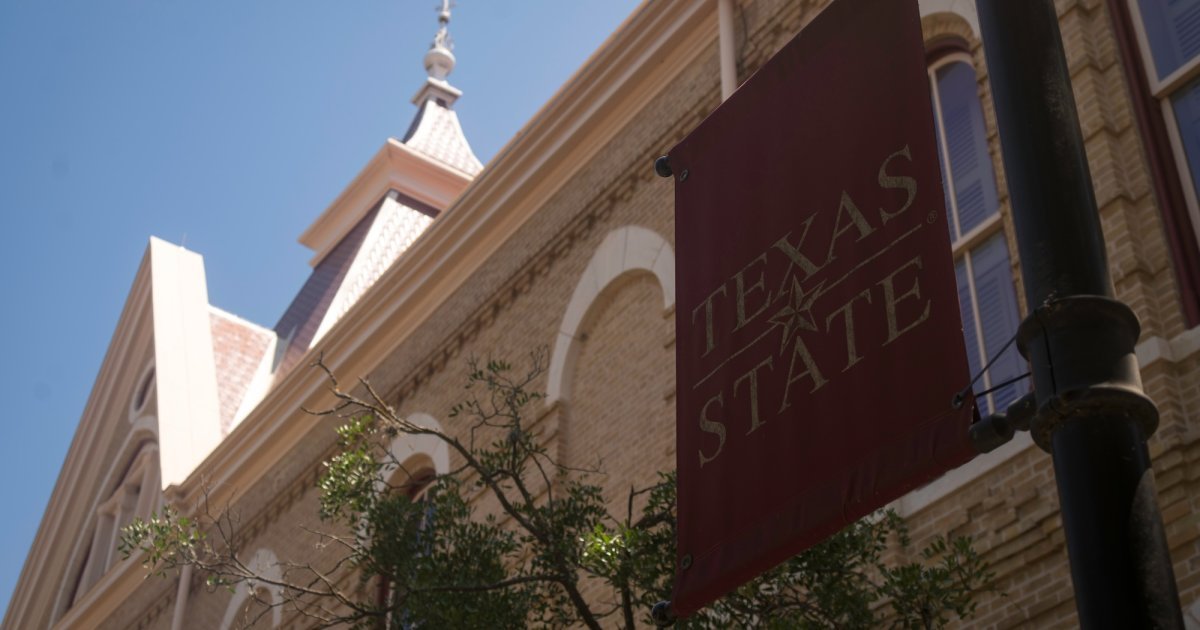
Recently, FIRE learned that Texas State University is taking its own stab at institutional reform. It is conducting a “curricular review” built around a guide titled “Value Neutral Instruction and the Curriculum,” which encourages faculty to frame their teaching around inquiry and intellectual exploration, rather than beginning from predetermined conclusions.
This is a sound pedagogical goal. Professors should present competing arguments and perspectives to students, teach them to evaluate the evidence and think critically, and arrive at their own conclusions. And the guidance does much more than most to protect the core of academic freedom and stay within constitutional bounds. However, like many other efforts at curricular reform, it nevertheless risks chilling protected expression and infringing upon academic freedom. The Devil, as they say, is in the details.
The good
Much of the guidance is framed as best practices, not mandatory policy. That matters because academic freedom requires giving faculty broad latitude to direct classroom discussion and design syllabi as they see fit. The guidance also focuses more on teaching style than class content, which limits the scope of the risks discussed below.
It also promises that faculty may “share their own scholarly perspective when relevant,” and that academic freedom includes the right to “pursue truth without political constraints” and reach “controversial scholarly conclusions.” Those provisions are essential because faculty at public colleges have the First Amendment right to teach pedagogically relevant material. And unlike many reform efforts that offer vague nods to academic freedom, this language specifies what faculty can actually do — pursue truth, reach controversial conclusions, and share their views in class.
Regarding course content, the guidance makes clear that faculty may “cover any topic, including obvious moral wrongs,” and when it comes to “contested questions . . . neutral instruction does not avoid these topics” (more on that later). This is a far cry from the many bills we’ve opposed that identify certain “divisive concepts” and restrict the freedom to discuss them in class. Here again, constitutional considerations demand nothing less. The Supreme Court has explained that the First Amendment “does not tolerate laws that cast a pall of orthodoxy over the classroom.”
VICTORY: Federal court halts Texas’ ‘no First Amendment after dark’ campus speech ban
A federal judge issued a preliminary injunction blocking the University of Texas from enforcing a law that bans virtually all free speech on public university campuses after dark
Read More
The guidance also protects the right of students to come to their own conclusions, stating that they should not be graded on viewpoint-based criteria, such as “whether [they] agree with [a] particular ideology.” Along the same lines, the guidance warns against class learning objectives that assume students will leave with particular viewpoints, highlighting some examples that it claims are “frequently flagged”:
- “Students will value diversity”
- “Students will demonstrate commitment to social justice”
- “Students will recognize their privilege”
- “Students will develop empathy for marginalized groups”
- “Students will embrace antiracist identity”
If this type of learning objective is common, as the guidance claims, that’s a real problem for students’ freedom to come to their own well-reasoned conclusions. Such learning outcomes stray from education and veer into indoctrination.
The guidance instead suggests that students should leave any class with the ability to:
Remember: Retrieve relevant knowledge.
Understand: Construct meaning from material.
Apply: Use procedures in given situations.
Analyze: Break material into parts and determine relationships.
Evaluate: Make judgments based on criteria.
Create: Put elements together to form coherent whole.
In sum: Students should learn the material, understand the material, and be able to apply the material to reach their own well-reasoned conclusions. These are high-level learning objectives, and setting them is well within the purview of university decision-makers.
The risks
While the language highlighted above may be unobjectionable, or even desirable on its face, it’s important to remember the context in which it comes: a review of the entire curriculum. This review might fairly aim to target courses with ideologically prescriptive learning outcomes, but it could also be a leverage point for strictly applying the guidelines and targeting disfavored ideas. We have warned schools that curricular reviews targeting certain ideas can violate the First Amendment by creating a chilling effect.
And right off the bat, the guidance dips its toe in these waters by advising faculty to avoid using particular words or phrases in course titles and descriptions. For example, the guidance cautions against using the following words in course titles: “Dismantling, Decolonizing, Interrogating, Challenging, Centering, Combating, Liberation, Resistance, Activism, Justice-Oriented, Transformative, Anti-[Group], and Pro-[Political Position].”
Although public university leaders may give some direction to educational style and goals, the guidance’s focus on particular words suggests a level of pedagogical micromanagement that will chill expression and undermine faculty autonomy.
If this process results in Texas State censoring professors or banning ideas from the classroom, we urge faculty to reach out to FIRE.
And its core framing language — “value-neutral instruction” — is itself fraught. Texas State positions this principle as a defining feature of its curriculum going forward, but public university faculty members have a First Amendment right to share their non-neutral views on relevant material. Though despite this framing concern, the guidance explicitly protects that right.
The guidance also says professors should consider whether a class reading list “represent[s] intellectual pluralism.” But as ever with this type of direction, the question is: how much pluralism is enough?
The key with these provisions will be how they’re applied, particularly within the context of the curricular review. Are they merely best practices that serve as high-level pedagogical guidance from the university? Or are they policies that will be strictly enforced to target disfavored ideas and micromanage classroom discussion?
Similarly, although the guidance tells faculty that they should not “avoid [controversial] topics,” it adds that “neutral instruction . . . approaches them differently.” Suggested best practices include avoiding straw-man arguments, focusing on the logical structures of different arguments, modeling intellectual humility, and prioritizing process over outcome. In general, this is legitimate pedagogical guidance. But again, professors must retain wide latitude to apply them in different ways that fit particular classroom environments and pedagogical imperatives. And these standards must never serve as a pretext to punish professors for expressing or defending controversial but relevant ideas.
In this fraught moment for higher education, we must remember that not every attempt at institutional reform is created equal. Some are good-faith attempts to redirect educational approaches and goals. Others attempt to police ideas and micromanage discussion. In Texas State’s case, there’s both reason for caution and room for optimism. We’ll soon see whether university leaders are serious about academic freedom when the rubber meets the road.
If this process results in Texas State censoring professors or banning ideas from the classroom, we urge faculty to reach out to FIRE. Faculty can submit a case online or reach out to us via our 24-hour Faculty Legal Defense Fund hotline at 254-500-FLDF (3533).
Read the full article here
Fact Checker
Verify the accuracy of this article using AI-powered analysis and real-time sources.