Close Menu
FSNN | Free Speech News NetworkFSNN | Free Speech News Network
  • Home
  • News
    • Politics
    • Legal & Courts
    • Tech & Big Tech
    • Campus & Education
    • Media & Culture
    • Global Free Speech
  • Opinions
    • Debates
  • Video/Live
  • Community
  • Freedom Index
  • About
    • Mission
    • Contact
    • Support
Trending

Saylor Hints Strategy Bought More Bitcoin

21 minutes ago

NYSE Exchanges Remove Cap Limiting Crypto Options

2 hours ago

Bitcoin Price Slides but Holds Up Better Than Stocks as Oil Shock Continues

2 hours ago
Facebook X (Twitter) Instagram
Facebook X (Twitter) Discord Telegram
FSNN | Free Speech News NetworkFSNN | Free Speech News Network
Market Data Newsletter
Monday, March 23
  • Home
  • News
    • Politics
    • Legal & Courts
    • Tech & Big Tech
    • Campus & Education
    • Media & Culture
    • Global Free Speech
  • Opinions
    • Debates
  • Video/Live
  • Community
  • Freedom Index
  • About
    • Mission
    • Contact
    • Support
FSNN | Free Speech News NetworkFSNN | Free Speech News Network
Home»News»Media & Culture»This Foreign Policy Precedent Might Aid Trump’s Tariffs at SCOTUS
Media & Culture

This Foreign Policy Precedent Might Aid Trump’s Tariffs at SCOTUS

News RoomBy News Room4 months agoNo Comments5 Mins Read161 Views
Share Facebook Twitter Pinterest Copy Link LinkedIn Tumblr Email VKontakte Telegram
This Foreign Policy Precedent Might Aid Trump’s Tariffs at SCOTUS
Share
Facebook Twitter Pinterest Email Copy Link

Listen to the article

0:00
0:00

Key Takeaways

Playback Speed

Select a Voice

If you followed last week’s U.S. Supreme Court oral arguments over President Donald Trump’s supposed power to impose tariffs without first receiving clear authorization from Congress, you may have noticed that Solicitor General John Sauer repeatedly cited a Supreme Court precedent called United States v. Curtiss-Wright Export Corporation (1936). By my count, Sauer mentioned Curtiss-Wright six times by name during the arguments and referenced it obliquely several times more.

Why? The answer is simple enough: If a majority of the Supreme Court views Learning Resources v. Trump as a kind of progeny of Curtiss-Wright, then Trump’s tariffs stand a good chance of emerging victorious.

You’re reading Injustice System from Damon Root and Reason. Get more of Damon’s commentary on constitutional law and American history.

The origins of the Curtiss-Wright case lie in a mostly forgotten military conflict from the 1930s between Bolivia and Paraguay known as the Chaco War. In 1934, Congress passed a resolution granting President Franklin Roosevelt discretionary power to stop U.S. firms from selling arms to either of those two nations. Roosevelt exercised this power via presidential proclamation.

The Curtiss-Wright Export Corporation then sued, arguing that the resolution was an illegal delegation of congressional power to the executive branch. The company’s principal argument was that if Congress wished to prohibit the sale of arms to a particular nation, then Congress had to pass a specific law to that effect. What Congress could not do was simply hand off its own legislative power and let the president make law via executive order.

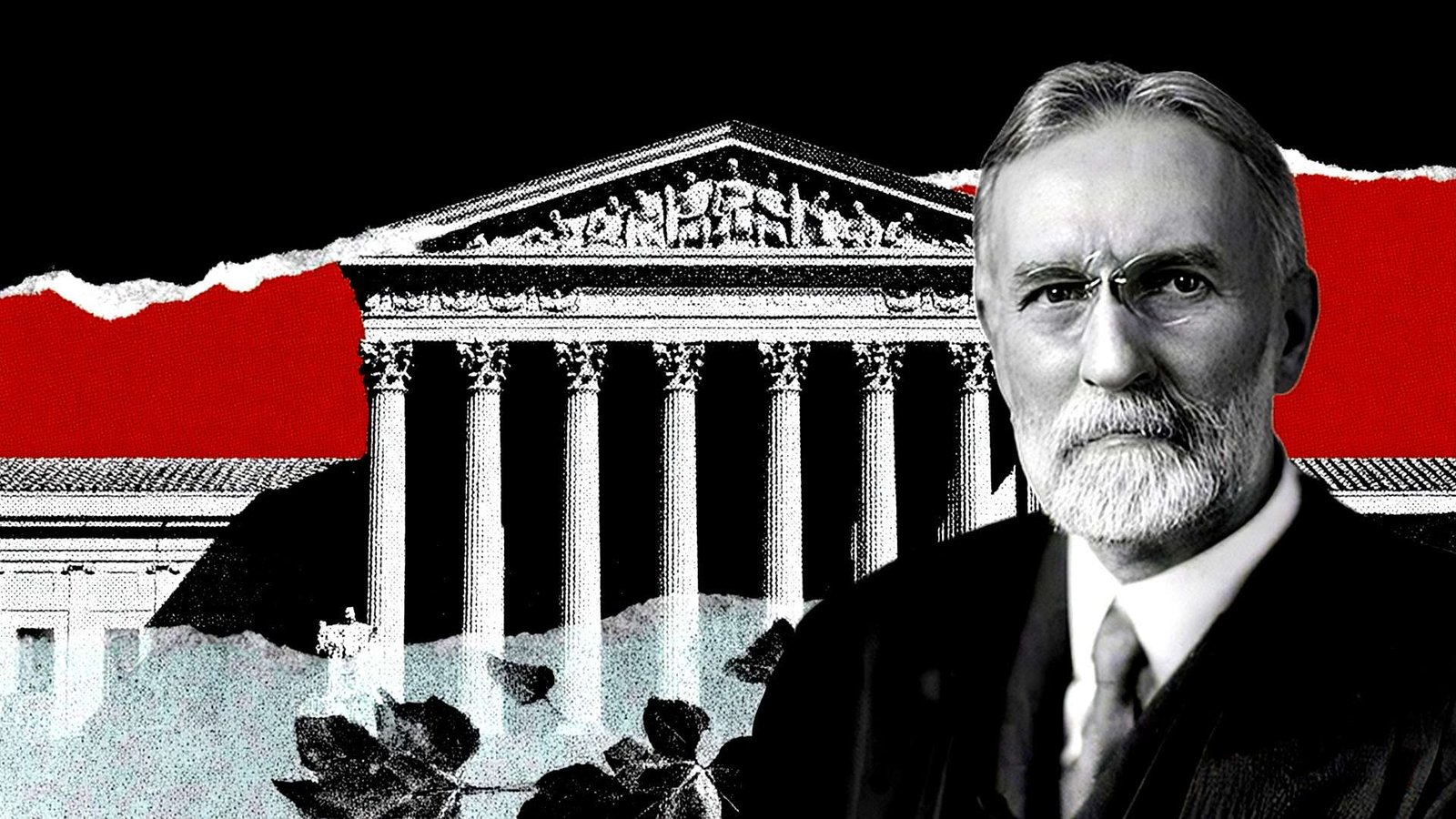
But the Supreme Court disagreed and handed Roosevelt a sweeping win. “It is important to bear in mind that we are here dealing not alone with an authority vested in the President by an exertion of legislative power,” declared the majority opinion of Justice George Sutherland, but also with the “plenary and exclusive power of the President in the field of international relations—a power which does not require as a basis for its exercise an act of Congress.”

When foreign affairs were at stake, Sutherland maintained, the president should be afforded the strongest possible degree of judicial deference. “The powers of external sovereignty,” he wrote, do “not depend upon the affirmative grants of the Constitution.” Rather, according to Sutherland, “this vast external realm” involves the “plenary and exclusive power of the President as the sole organ of the federal government.”

A few years ago, I profiled Sutherland and his judicial legacy, noting that “it’s safe to assume that when the White House wants a free hand to operate in the name of foreign affairs, Curtiss-Wright will be invoked.”

That was certainly true last week. According to the solicitor general, the Trump administration relied on Curtiss-Wright for the proposition that “the nondelegation doctrine for domestic affairs does not apply with the same force as it does in foreign affairs.”

If a majority of the Supreme Court decides that Trump’s tariffs are best understood as a foreign affairs matter—rather than understanding the tariffs as a domestic matter that involves placing new taxes on American businesses and consumers—then the majority may grant Trump the Curtiss-Wright-style deference that Sauer kept bringing up.

Chief Justice John Roberts notably grappled with that aspect of the government’s argument. The “foreign commerce part,” Roberts told Sauer, is “two-facing. Yes, of course, tariffs and dealings with foreign powers, but the vehicle is imposition of taxes on—on Americans, and that has always been the core power of Congress.” Roberts added: “So, to have the President’s foreign affairs power trump that—that basic power for Congress seems to me to kind of at least neutralize between the two powers, the executive power and the legislative power.”

The chief justice asked tough questions of both sides last week, but this line of questioning must have been especially worrying for Sauer. Roberts is, after all, a well-known advocate of judicial deference towards the president in the realm of foreign affairs. Yet Roberts seemed doubtful of the notion that Trump’s tariffs should really count as foreign affairs here. This could mean that Roberts, who might be inclined to accept the Curtiss-Wright argument in other cases, won’t buy it in this case.

In many ways, that line of questioning by Roberts captured the fundamental conflict at the heart of this case. The president has no independent constitutional authority to impose taxes or tariffs because those powers are spelled out in Article I and thus reside exclusively with Congress. But if the Trump administration can shift the legal focus away from Congress and onto what Sauer called the president’s “own inherent authority to address foreign-arising emergencies,” then Trump may benefit from the sweeping judicial deference embraced by Curtiss-Wright.

In other words, if the Supreme Court looks at this case from one angle, it’s a separation of powers dispute in which the president has clearly overstepped. But if the Court looks at it from another angle, it’s a foreign affairs matter in which the president might get wide leeway to operate. I know which way I view it. We’ll find out soon which way the Court does.

Read the full article here

Fact Checker

Verify the accuracy of this article using AI-powered analysis and real-time sources.

Get Your Fact Check Report

Enter your email to receive detailed fact-checking analysis

5 free reports remaining

Continue with Full Access

You've used your 5 free reports. Sign up for unlimited access!

Already have an account? Sign in here

Share. Facebook Twitter Pinterest LinkedIn Tumblr Email Telegram Copy Link
News Room
  • Website
  • Facebook
  • X (Twitter)
  • Instagram
  • LinkedIn

The FSNN News Room is the voice of our in-house journalists, editors, and researchers. We deliver timely, unbiased reporting at the crossroads of finance, cryptocurrency, and global politics, providing clear, fact-driven analysis free from agendas.

Related Articles

Cryptocurrency & Free Speech Finance

Bitcoin Price Slides but Holds Up Better Than Stocks as Oil Shock Continues

2 hours ago
Debates

A Critical Review of Naoise Mac Sweeney’s New Book

3 hours ago
Debates

Too Vague to Restrict Immigration

5 hours ago
Cryptocurrency & Free Speech Finance

How AI Is Being Used to Clear Court Backlogs in LA

14 hours ago
Media & Culture

Today in Supreme Court History: March 22, 1957

16 hours ago
Media & Culture

What Happens If There’s a Murder in Antarctica?

17 hours ago
Add A Comment

Comments are closed.

Editors Picks

NYSE Exchanges Remove Cap Limiting Crypto Options

2 hours ago

Bitcoin Price Slides but Holds Up Better Than Stocks as Oil Shock Continues

2 hours ago

A Critical Review of Naoise Mac Sweeney’s New Book

3 hours ago

Tokenized Deposits Gain Ground as Banks Move Money Onchain

3 hours ago
Latest Posts

Too Vague to Restrict Immigration

5 hours ago

BTC Performance Driven By Individuals While Central Banks Drive Gold Price

6 hours ago

If one trader can force the outcome of a prediction market, it shouldn’t be tradable

7 hours ago

Subscribe to News

Get the latest news and updates directly to your inbox.

At FSNN – Free Speech News Network, we deliver unfiltered reporting and in-depth analysis on the stories that matter most. From breaking headlines to global perspectives, our mission is to keep you informed, empowered, and connected.

FSNN.net is owned and operated by GlobalBoost Media
, an independent media organization dedicated to advancing transparency, free expression, and factual journalism across the digital landscape.

Facebook X (Twitter) Discord Telegram
Latest News

Saylor Hints Strategy Bought More Bitcoin

21 minutes ago

NYSE Exchanges Remove Cap Limiting Crypto Options

2 hours ago

Bitcoin Price Slides but Holds Up Better Than Stocks as Oil Shock Continues

2 hours ago

Subscribe to Updates

Get the latest news and updates directly to your inbox.

© 2026 GlobalBoost Media. All Rights Reserved.
  • Privacy Policy
  • Terms of Service
  • Our Authors
  • Contact

Type above and press Enter to search. Press Esc to cancel.

🍪

Cookies

We and our selected partners wish to use cookies to collect information about you for functional purposes and statistical marketing. You may not give us your consent for certain purposes by selecting an option and you can withdraw your consent at any time via the cookie icon.

Cookie Preferences

Manage Cookies

Cookies are small text that can be used by websites to make the user experience more efficient. The law states that we may store cookies on your device if they are strictly necessary for the operation of this site. For all other types of cookies, we need your permission. This site uses various types of cookies. Some cookies are placed by third party services that appear on our pages.

Your permission applies to the following domains:

  • https://fsnn.net
Necessary
Necessary cookies help make a website usable by enabling basic functions like page navigation and access to secure areas of the website. The website cannot function properly without these cookies.
Statistic
Statistic cookies help website owners to understand how visitors interact with websites by collecting and reporting information anonymously.
Preferences
Preference cookies enable a website to remember information that changes the way the website behaves or looks, like your preferred language or the region that you are in.
Marketing
Marketing cookies are used to track visitors across websites. The intention is to display ads that are relevant and engaging for the individual user and thereby more valuable for publishers and third party advertisers.