

 Freedom Index
Listen to the article
Gas fees on the Ethereum layer-1 blockchain dropped to just 0.067 Gwei on Sunday, amid a lull in the crypto markets sparked by October’s historic market crash.
The average price for executing a swap on Ethereum is just $0.11, non-fungible token (NFT) sales carry a fee of $0.19, bridging a digital asset to another blockchain network will cost users $0.04, and onchain borrowing costs $0.09 at the time of this writing, according to Etherscan.
Ethereum network transaction fees hit a recent high of 15.9 Gwei on October 10, the day of the market flash crash that caused some altcoins to shed over 90% of their value within 24 hours.
However, by October 12, fees dropped back down to just 0.5 Gwei and mostly remained well below 1 throughout October and November.
Investors and traders may take advantage of the low transaction fees to execute onchain transactions on the base layer. However, analysts and crypto industry executives warn that the excessively low fees might spell trouble for the Ethereum ecosystem.
Related: Ethereum fees hover near pennies as daily transactions top 1.6M
The Ethereum base layer has seen a loss of revenue since 2024
During the 2021 bull run, transaction fees on the Ethereum layer-1 could cost users $150 or more during times of network congestion.
However, following the Ethereum Dencun upgrade in March 2024, which lowered transaction fees for Ethereum’s layer-2 scaling networks, fees contracted significantly, causing Ethereum’s revenue to decline by 99%.
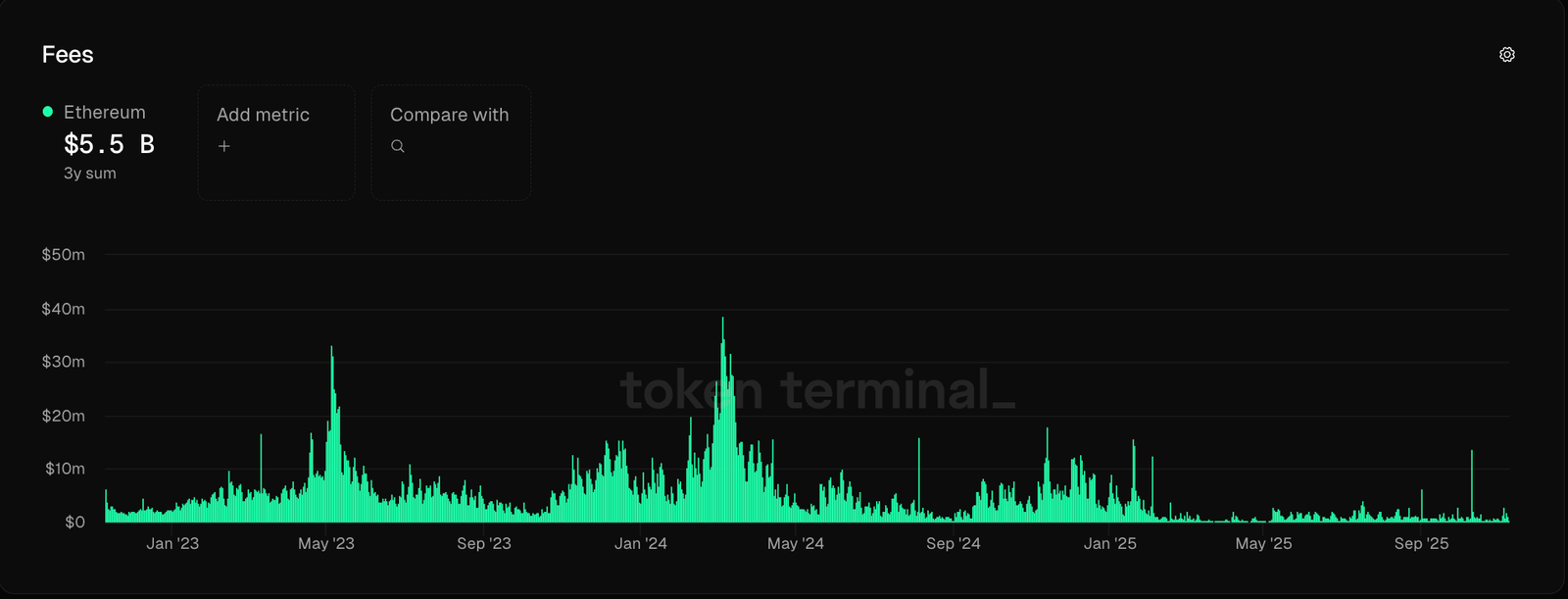
Critics say the low network fees are unsustainable for any blockchain network and present both financial and security challenges due to the lack of revenue to incentivize validators or miners to process transactions and secure the blockchain.
Because fees are responsive to user demand, low fees and revenues could also signal that users are moving away from a particular blockchain network.
Ethereum, in particular, has chosen a scaling strategy that relies on an ecosystem of separate layer-2 networks, which represents a double-edged sword, according to research from crypto exchange Binance.
While layer-2 networks allow Ethereum to scale and compete with newer, high-throughput chains, the Layer-2 networks are also cannibalizing revenue from the base layer, creating additional competition for Ethereum within its own ecosystem.
Magazine: How Ethereum treasury companies could spark ‘DeFi Summer 2.0’
Read the full article here
Fact Checker
Verify the accuracy of this article using AI-powered analysis and real-time sources.