

 Freedom Index
Listen to the article
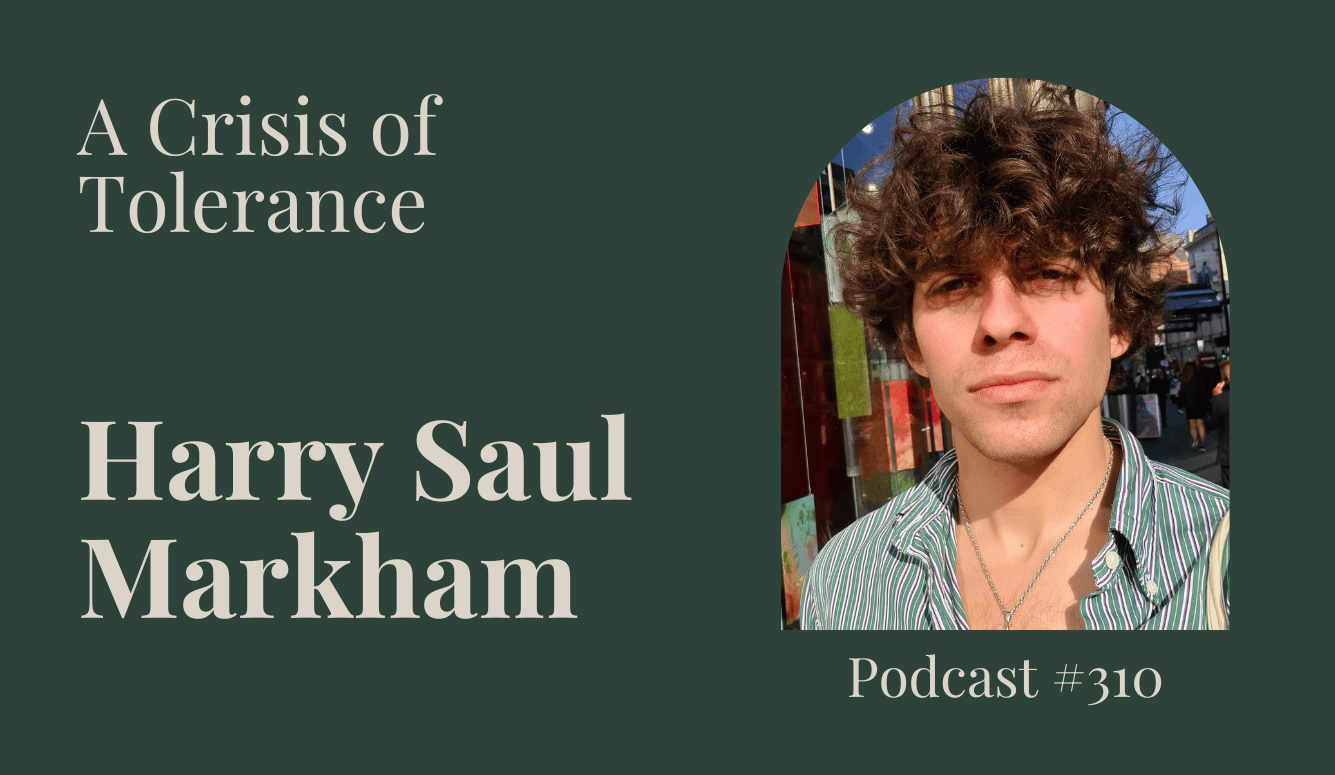
Introduction: My guest this week is Harry Saul Markham. He is the author of the recent book The Melted Pot: Diversity, Antisemitism and the Limits of the Tolerance. I can’t stress enough how important—indeed how urgent—Harry’s work is. I hope you enjoy my conversation with Harry Saul Markham.
Transcript
The following transcript has been lightly edited for readability.
Iona Italia: Let’s dive straight in. You have just been addressing Parliament, is that correct?
Harry Saul Markham: Well, not exactly. I had an event in Parliament—I wasn’t addressing Parliament per se, but I was addressing a large gathering. In fact, it was a sold-out event in Parliament, very kindly hosted by Suella Braverman, the former Home Secretary, to discuss my book.
II: My goodness. Fantastic. So, tell us how that went—what was the main topic, and why were you invited?
HSM: Well, it was tremendously educational, for one. This event was quite unique, not only because it was discussing my book, but because it brought together people from across the political and religious divide to discuss the threats to our secular liberal democracy. Perhaps most extraordinary was that it provided an opportunity for devout Muslim voices in Britain to express their solidarity not only with the Jewish community but with the very integrity of liberal democracy itself.
And in that sense, it was incredibly powerful—quite moving in parts, actually—because you really sensed that this was working across the political, religious, and social divide, bringing together all sorts of people. We had individuals from the hard Left, and others from the opposite side, as it were. And there I was, stuck in the middle with you.
It was an opportunity for us to really discuss these threats and to present some bold ways forward to save Britain.
II: So, what were some of the bold ways forward?
HSM: Gosh. Well, for one thing, we have to counter what’s been described as the “Voldemort effect”—that is, we exist in a state of denial so grave that we won’t even give these issues a name. The first step is to disrupt the pathology of denial.
Another step is to ensure that the liberal centre ground is fit for purpose. My view is that this will only come through cultural reform. That is to say, the political crisis we see today—one that I’ve detailed and highlighted—is at its core cultural, even philosophical.
So I’ve argued that we need a cultural reckoning with the very fabric and values of British society—and indeed, Western European society. We were discussing how we might achieve a paradigm shift in discourse: the very way we talk about these things, even think about them. So it’s about ensuring this issue is addressed not only politically, but also culturally.
We also discussed how we can amplify the voices of others in different communities—particularly within our Muslim communities—to tackle what I’ve called “Islamism beyond Islamists”: the normalisation of Islamist thinking in large swathes of our Muslim communities. We explored how to work alongside Muslims who feel troubled and worried about the current trajectory, and how to ensure their voices are protected.
Ultimately, one of the biggest obstacles preventing people from even talking about this issue is fear. Fear exists among non-Muslim actors—particularly those who occupy positions within our liberal elites—but also, of course, it runs very strongly among Muslims who do want to speak out. Many don’t, because they feel the consequences could be too serious.
And what we want is to promote a society which is diverse, which embraces the dignity of difference. I happen to think there is a particular virtue in having a diverse, multicultural melting pot. But when the pot is melted, I argue that can be extremely problematic. It prevents us from unleashing the potential—the real good—of living in a diverse society.
II: So, when did you first become interested in this topic? When did the first seeds of this book begin?
HSM: Well, in central London in May 2021, I was with my mother—I’m a good Jewish boy, so I go everywhere with my mother—and we went to counter a pro-Palestine gathering in Whitehall, which is just near where the Prime Minister’s office is.
II: 2021—yes, okay.
HSM: Some years ago now. But this was at the height of a particular war between Israel and militants in Gaza. We went to show solidarity with Israel and, for that matter, with British Jews. Because of course, during that time, some quite astonishing things happened. There was the infamous “rape the Jews” incident being bellowed through North London—an area with a high concentration of Jews. Synagogues were vandalised. My local rabbi was physically attacked. It was a pretty frightening time.
So, we went simply to show our support and solidarity. We were a small group, largely made up of grandmothers—we were just singing and waving flags. Singing “Hava Nagila.” So, we were hardly offensive or incendiary—certainly well within the law and exercising our right to protest.
And we were greeted by this mob—this infuriated, foaming-at-the-mouth mob of men, many of whom were accompanied by their children. They subjected us—this small group of counter-protesters, maybe 12–15 in number—to the most horrendous abuse: intimidating Arabic chants, the throwing of missiles towards us—including a very large rock.
My friend—bless him, it was his first demonstration in London, having just arrived from Paris—was hit in the head with a rock. It could have killed him. It was just horrendous.
What was most striking about that experience wasn’t just what happened, but the fact that it happened here, in London—in the centre of multicultural tolerance.
II: What the hell?
HSM: I had to go home—I was incredibly distressed. It really scarred me, it really affected me. But I had to dwell on one question: How could this be, here in Britain? In multicultural, tolerant Britain?
And then I realised that ultimately, we need a reckoning with those very values—those ideas. Because it’s precisely those ideas which, to me, seem to be without boundaries—no moral or established boundaries. And as a result, we’ve ended up tolerating things that don’t particularly like us very much.
And I thought, okay, I ought to [do something about this]… Initially it began as an article. Then, partly another motivation of mine was that I saw the people addressing this issue weren’t people I particularly trusted—that is, people who lean quite heavily towards the populist hard Right. And I thought, you know what? Centrists need to get their act together. They need to be able to deal with these issues and articulate difficult, unpalatable points of view, but do so within the boundaries of liberal democratic processes and norms.
That’s exactly what I try to do. That was my motivation.
II: I’m glad you talked about fear. I’m very familiar with this discussion. It feels as though these kinds of incidents—these kinds of concerns about both Islamism and what I just call “thug Islam” in the UK—this Muslim show of strength among the more illiberal part of the Muslim community, especially young Muslim men… I feel as though this has been going on forever.
I was first aware of it in 1989, with the Rushdie fatwa. There were people protesting in London, wanting Rushdie—who was in the UK at the time—to be deported to Iran so he could be hanged. Bookshops that sold The Satanic Verses were being bombed. His translator was killed.
I remember the response from the Muslim community—ninety percent of them were either participating or unwilling to criticise. And this has been a continual pattern in the UK. People have been very afraid to do anything about it.
And as you say in the book—and I like the fact that you’re so clear about this—there are two aspects to this fear. One is the fear of being accused of racism, of being accused of being far-right, etc. And the other is a literal, physical fear of violent repercussions from the Muslim community.
What we’ve done in the past is allow just a few very brave people to speak up. And those people have ended up like the teacher at Batley School—in hiding or dead. There’s strength in numbers. If we could get together, we could tackle this problem—we could spread the danger. But that has never happened in the past.
I’m glad to see that you’re fighting for this now. That the fight continues.
HSM: Well, thank you—that’s incredibly insightful. One of the things I’ll say is that the Batley schoolteacher, for example, he wasn’t intending to be brave. That’s what’s so remarkable about that whole affair. He displayed those images in a pedagogical context—to teach his students about what some people perceive as blasphemy.
Read the full article here
Fact Checker
Verify the accuracy of this article using AI-powered analysis and real-time sources.