

 Freedom Index
Listen to the article
In an era of remote work and countless streaming services, it’s difficult to imagine life without not just the internet, but Wi-Fi. An April 2024 report by Parks Associates found 80 percent of American households with home internet access also had a wireless router, allowing them to get online without having to sit by a particular wall port.
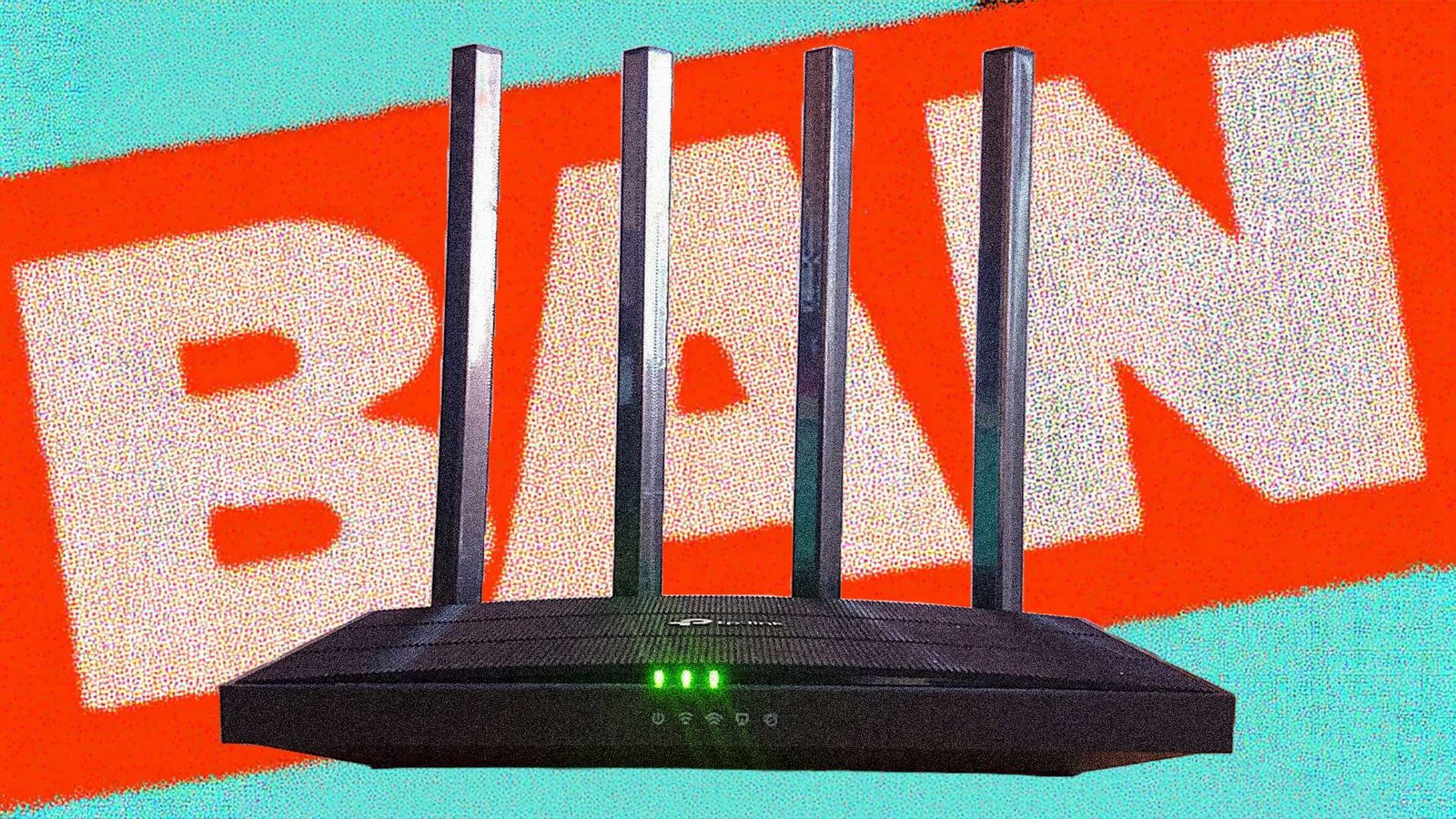
Now, the federal government is fanning Americans’ hysteria about China in an attempt to ban the sale of a particular company’s wireless routers.
“More than a half-dozen federal departments and agencies backed a proposal to ban future sales of the most popular home routers in the United States on the grounds that the vendor’s ties to mainland China make them a national security risk,” Joseph Menn reported last week at The Washington Post.
Officials are concerned about TP-Link, a company accounting for 65 percent of the home and small business wireless router market. Its routers also rank highly on best-of lists.
“The ban was proposed by the Commerce Department and supported this summer by an interagency process that includes the Departments of Homeland Security, Justice and Defense,” Menn wrote. “Commerce officials concluded TP-Link Systems products pose a risk because the U.S.-based company’s products handle sensitive American data and because the officials believe it remains subject to jurisdiction or influence by the Chinese government.”
TP-Link was founded in Shenzhen, China. In 2022, the company began a restructuring process, cleaving into two separate companies: TP-Link Systems, headquartered in Irvine, California, and TP-Link Technologies, based in China.
“Despite having similar names, these companies have entirely different ownership, management, and operations,” TP-Link Systems claims on its website. “As a company headquartered in the United States, no government—foreign or domestic—has access to and control over the design and production of our routers and other devices.”
The majority of TP-Link Systems’ workforce is still based in China, though CEO Jeffrey Chao says all the most sensitive positions and new investments have moved to the U.S.
“No direct evidence of such spying has ever been found or disclosed,” writes Michael Kan of PC Magazine. “Still, US officials argue that TP-Link’s routers are insecure, which could enable hackers to easily compromise them and attack US networks.” Microsoft announced in November 2024 that Chinese hackers were exploiting flaws in TP-Link routers to launch cyberattacks on Microsoft users.
This is not new, nor is it unique to TP-Link. “Routers can be a security nightmare,” notes The Washington Post‘s Shira Ovide. “Criminals or government-backed hackers have remotely hijacked people’s routers as launchpads for scams or corporate spying. Your personal information probably won’t be stolen if your router is hijacked. But it’s not great if your gadgets are unwitting participants in crime.”
It’s not even a problem unique to routers: More and more everyday devices now have “smart” versions with internet connectivity, from cameras and video doorbells to everyday appliances like refrigerators and thermostats. Many times in recent years, hackers have gained access to these products and used them in cyberattacks. As yet, no lawmakers have called for a wholesale ban on all smart home devices.
But a potential TP-Link ban seems to have bipartisan support: The inquiry began under President Joe Biden, with support from both major parties.
“Because TP-Link routers are made in the PRC [People’s Republic of China] with Chinese technology, there are concerns that state-sponsored hackers may be able to more easily compromise the routers and infiltrate U.S. systems,” according to an August 2024 letter from the House Select Committee on the Strategic Competition Between the United States and the Chinese Communist Party, signed by both the Democratic and Republican ranking members. “Moreover, TP-Link is subject to draconian ‘national security’ laws in the PRC and can be forced to hand over sensitive U.S. information by Chinese intelligence officials.”
“Commerce should immediately prohibit future sales of TP-Link [small and home office] networking equipment in the United States,” according to a May 2025 letter to Commerce Secretary Howard Lutnick from Republican lawmakers. “Each day we fail to act, the CCP wins while American competitors suffer, and American security remains at risk.”
But it’s worth pointing out that government officials have presented no evidence of any actual misconduct implicating TP-Link. Instead, the investigation and calls for a ban are entirely based on the fear of what could happen.
It’s the same justification lawmakers from both major parties used last year to pass a bill forcing TikTok, the video-sharing social media platform whose parent company is based in Beijing, to either sell itself to a company outside China or cease operations in the U.S.
“Lawmakers who support taking action against TikTok say the intelligence case is clear: the app represents a data security threat and is a vector for Chinese propaganda,” Justin Hendrix and Ben Lennett of Tech Policy Press wrote at the time. But “there is little evidence to date that TikTok has been any more of a channel for Chinese influence to reach Americans than the other major social media platforms….It is incumbent upon lawmakers to seek the declassification and urgent publication of as much of the intelligence related to TikTok and its potential use as a tool by the Chinese government as possible. The public deserves more than hypotheticals.”
Instead, hypotheticals are all we’ve gotten. TikTok challenged the ban, and courts that took up the case bought the government’s argument that a ban was justified because TikTok’s ownership could pose a threat to U.S. national security.
Of course, since reentering office in January, President Donald Trump has simply declined to enforce the ban. In an executive order signed on his first day, Trump said the fact that the law went into effect before his inauguration “interferes with my ability to assess the national security and foreign policy implications of the Act’s prohibitions before they take effect.”
Lawmakers felt TikTok, under Chinese ownership, was too big a threat to operate within the United States, while Trump decided it was a bigger problem if it didn’t; meanwhile, neither side has shown any proof to back up its position.
Now, government agencies may ban a single company’s popular products over similarly hysterical fears of what could one day happen.
Read the full article here
Fact Checker
Verify the accuracy of this article using AI-powered analysis and real-time sources.