Close Menu
FSNN | Free Speech News NetworkFSNN | Free Speech News Network
  • Home
  • News
    • Politics
    • Legal & Courts
    • Tech & Big Tech
    • Campus & Education
    • Media & Culture
    • Global Free Speech
  • Opinions
    • Debates
  • Video/Live
  • Community
  • Freedom Index
  • About
    • Mission
    • Contact
    • Support
Trending

Trump Is Back To Seeking Regime Change in Iran

6 seconds ago

Crypto made new friends in U.S. primaries, but focus now shifts to general election

27 minutes ago

Bitcoin Drops to $76.4K as Demand Turns Negative, Asian Stocks Slide

32 minutes ago
Facebook X (Twitter) Instagram
Facebook X (Twitter) Discord Telegram
FSNN | Free Speech News NetworkFSNN | Free Speech News Network
Market Data Newsletter
Wednesday, September 2
  • Home
  • News
    • Politics
    • Legal & Courts
    • Tech & Big Tech
    • Campus & Education
    • Media & Culture
    • Global Free Speech
  • Opinions
    • Debates
  • Video/Live
  • Community
  • Freedom Index
  • About
    • Mission
    • Contact
    • Support
FSNN | Free Speech News NetworkFSNN | Free Speech News Network
Home»News»Media & Culture»The GOP’s ‘Capitalism’ is Central Planning with MAGA Branding
Media & Culture

The GOP’s ‘Capitalism’ is Central Planning with MAGA Branding

News RoomBy News Room10 months agoNo Comments4 Mins Read2 Views
Share Facebook Twitter Pinterest Copy Link LinkedIn Tumblr Email VKontakte Telegram
The GOP’s ‘Capitalism’ is Central Planning with MAGA Branding
Share
Facebook Twitter Pinterest Email Copy Link

Listen to the article

0:00
0:00

Key Takeaways

Playback Speed

Select a Voice

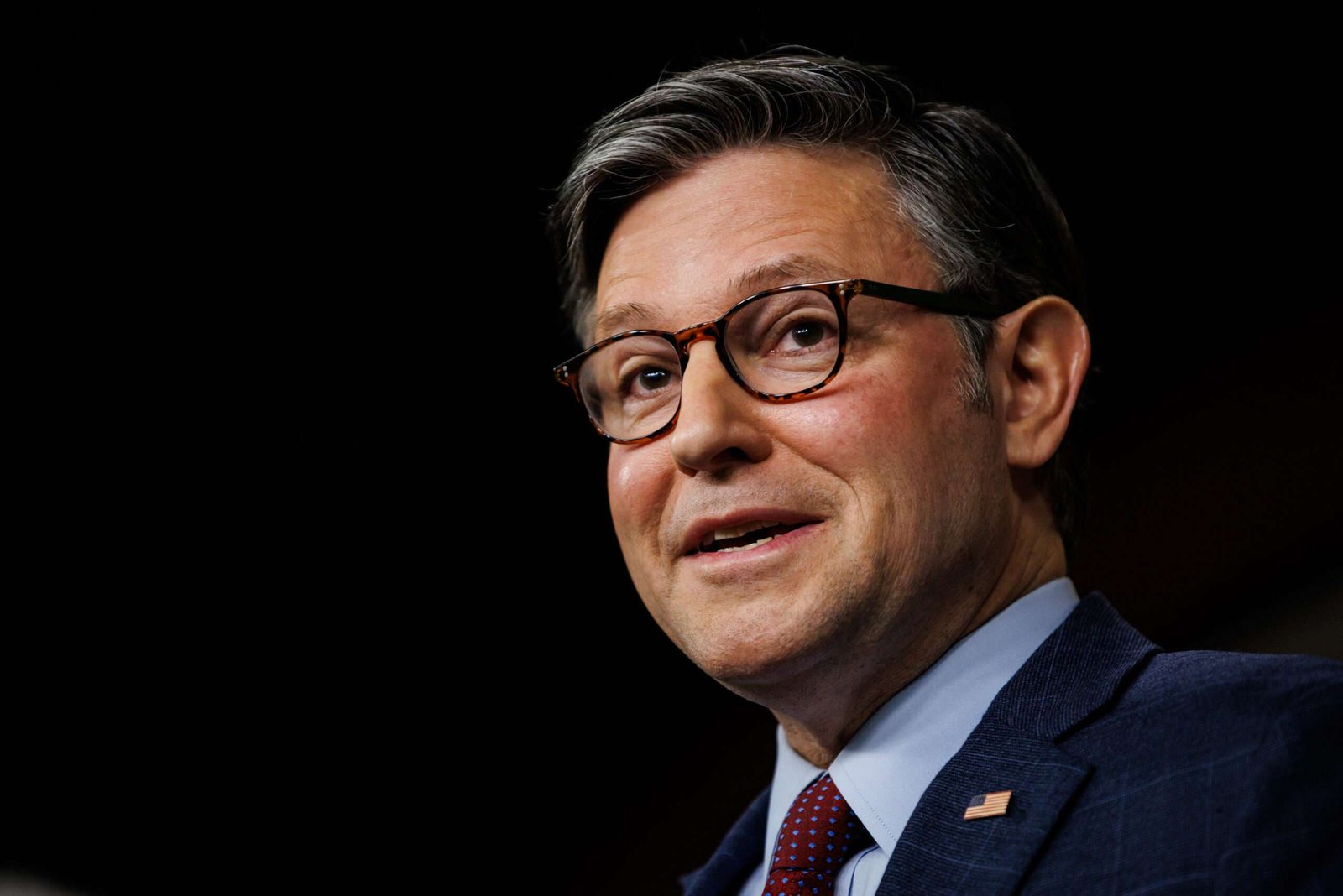
When House Speaker Mike Johnson (R–La.) lashed out at last weekend’s “No Kings” rallies soon to arrive on Washington’s National Mall, he reached for an old conservative refrain: “They hate capitalism. They hate our free enterprise system.”

I am sure he’s correct about some of the protesters. But the message rings hollow coming from a party leader that stands by as President Donald Trump does precisely what Johnson rightly decries: substituting political control for market choice and ruling by executive order.

Indeed, what began as a populist revolt against so-called elites has become a program of state ownership, price fixing and top-down industrial control. Take a look.

Recently, the Trump administration quietly converted CHIPS Act subsidies into an $8.9 billion equity purchase in Intel, making Washington a 10 percent owner of one of America’s largest technology companies. Commerce Secretary Howard Lutnick insists “this is not socialism.” That’s semantics.

Socialism is government control of the means of production. When the government becomes your largest shareholder, that’s a strong first step.

The Intel case offends two basic economic truths. First, no group of officials can ever know enough to guide a complex industry better than millions of private investors, engineers, and consumers spending their own money. Second, the power to “partner” with business is the power to control it.

The more political capital the government invests, the more it demands in return. It’s only a matter of time until politically favored locations, suppliers, or hiring quotas shape Intel’s decisions. That isn’t capitalism.

The administration has taken shares in companies before, and it likely will again. In July, the Pentagon became the largest shareholder in MP Materials, considered the only fully operating rare-earth mine of scale in the U.S. The deal guarantees a 10-year price floor for MP output at nearly double the current market rate. MP competitors were rightly shocked.

Yet Treasury Secretary Scott Bessent recently told CNBC that Washington will continue to “set price floors” and “forward-buy” commodities “across a range of industries” to encourage more investments into U.S. production and away from China.

While this may encourage more U.S. investments in the short term, guaranteeing an unfair advantage over competitors by setting a minimum price reduces American companies’ long-run incentives to innovate and produce better output. Economists have understood for more than a century what happens when the government fixes prices above their market level: Buyers purchase less, sellers produce more, surpluses pile up and waste follows. It’s the logic of failed farm-price support in the 1930s.

There are far better options than schemes like these. As for those rare-earth minerals, the U.S. sits on billions of dollars’ worth, yet MP is almost alone in extracting them. That’s in part because excessive regulation keeps the potential locked underground, deterring investment in innovative mining solutions, processing plants, magnet factories, and the skilled workforce needed to turn our geological abundance into economic value. Deregulation is the free-market way. Mimicking the Chinese model isn’t.

If that’s not enough, the administration has nationalized all but in name the company called U.S. Steel. To approve its market-driven purchase by Nippon Steel, Trump required a “golden share,” giving him veto power over plant closures, production levels, investments, even pricing. The White House effectively dictates how U.S. Steel can operate inside the United States.

In the name of economic patriotism, we have recreated the structure of the state-owned enterprises that American trade negotiators once fought against in China and Europe. The same government that lectures Beijing about state capitalism and non-market behaviors now practices it at home.

Future presidents of either party will inherit this precedent and run with it. If the White House can seize control of a steel company today, it can do the same to an automaker, chip designer, or energy producer tomorrow in the name of whatever is deemed an emergency at the time.

Republicans once warned that socialism begins with good intentions and ends with bureaucratic command. They were right. If we ever see a Sovietization of American capitalism, it probably won’t come through a Workers’ Party or a proletarian revolution. It will more likely come through populists managing markets.

The U.S. became prosperous because the government did not own or direct industry. Entrepreneurs built the modern economy precisely because they were free to invest, trade, and fail when something doesn’t offer enough to consumers. Interventionist industrial policy betrays that legacy.

So, Mr. Johnson, while many of the protesters don’t share my free-market beliefs, it’s not obvious to me how an administration that sets prices, owns companies, and dictates production loves capitalism or free enterprise either.

COPYRIGHT 2025 CREATORS.COM

Read the full article here

Fact Checker

Verify the accuracy of this article using AI-powered analysis and real-time sources.

Get Your Fact Check Report

Enter your email to receive detailed fact-checking analysis

5 free reports remaining

Continue with Full Access

You've used your 5 free reports. Sign up for unlimited access!

Already have an account? Sign in here

Share. Facebook Twitter Pinterest LinkedIn Tumblr Email Telegram Copy Link
News Room
  • Website
  • Facebook
  • X (Twitter)
  • Instagram
  • LinkedIn

The FSNN News Room is the voice of our in-house journalists, editors, and researchers. We deliver timely, unbiased reporting at the crossroads of finance, cryptocurrency, and global politics, providing clear, fact-driven analysis free from agendas.

Related Articles

Media & Culture

Trump Is Back To Seeking Regime Change in Iran

6 seconds ago
Cryptocurrency & Free Speech Finance

Crypto Groups Push SEC for Tailored Rules on Novel ETFs

35 minutes ago
Media & Culture

Why the Right Is Embracing State Power

1 hour ago
Cryptocurrency & Free Speech Finance

OpenAI’s Astra Becomes Its First AI Model With ‘Critical’ Hacking Abilities

2 hours ago
Media & Culture

Invasion of the Robot Teachers

2 hours ago
Cryptocurrency & Free Speech Finance

Tether Sued Over Alleged Unlawful Freeze of $42.4 Million in USDT

3 hours ago
Add A Comment

Comments are closed.

Editors Picks

Crypto made new friends in U.S. primaries, but focus now shifts to general election

27 minutes ago

Bitcoin Drops to $76.4K as Demand Turns Negative, Asian Stocks Slide

32 minutes ago

Crypto Groups Push SEC for Tailored Rules on Novel ETFs

35 minutes ago

In China and Hong Kong, remembrance is a crime

54 minutes ago
Latest Posts

Texas and Florida Step Back from ALPRs

57 minutes ago

Why the Right Is Embracing State Power

1 hour ago

Joshua Wong has spent more than 2,000 consecutive days behind bars More than a decade ago, Hong Kong watched a bespectacled teenager emerge from a student movement and become one of the most recognisable voices of his generation. Joshua Wong was barely old enough to vote when much of the world learned his name. He devoted his adolescence and then his twenties to arguing that Hong Kong people should have a say in their own future. Today, he is 29. He has spent more than 2,000 consecutive days behind bars. And after pleading guilty to another national security charge, he once again doesn’t know when – or whether –he will be free. I met Joshua in 2013, when he was 16 and I was 14. He had recently helped lead a student movement opposing the Hong Kong government’s attempt to introduce Chinese nationalist education into our schools. He was sharp, stubborn, and unapologetic. Most importantly to those of us who were younger, he seemed entirely unconvinced by the idea that being young meant we should remain quiet. Joshua Wong speaks to US congressmen in 2019 Joshua believed we had every right to speak about the future because it was our future too. He went on to become one of the student leaders of the 2014 Umbrella Movement and later co-founded Demosistō, a political party advocating self-determination for Hong Kong. Arrests, court appearances, and prison sentences gradually became part of his life. Then, in November 2020, Joshua entered prison and didn’t come home. The Hong Kong outside his cell has changed almost beyond recognition since then. Newspapers have been forced to close down. Civil society organisations and political groups have disbanded. Democracy activists have been imprisoned or driven into exile, like me. Books disappeared from shelves. People have deleted old social media posts, withdrawn from political life, and learned to choose their words more carefully. Hong Kong’s freedoms haven’t disappeared only through arrest and prosecutions. They’ve disappeared through the fear those prosecutions create. And slowly, Joshua himself has been made to disappear from everyday life. In January 2021, while already detained, he was arrested under the National Security Law for participating in an unofficial primary election held the previous year. He was eventually sentenced to four years and eight months in that case. He had been expected to complete his existing prison term in January 2027. But the authorities weren’t finished with him. In June 2025, while Joshua was still incarcerated, police arrested him again. This time, prosecutors accused him of conspiring to “collude with foreign forces” through international advocacy. He has now pleaded guilty to the charge. His sentencing remains ahead of him, and in cases deemed sufficiently grave, the offence can carry life imprisonment. It would be easy to regard this as simply another prosecution of a prominent Hong Kong democracy activist. That would miss the larger point. Joshua’s case matters not only because the authorities have deprived one man of his freedom. It matters because of what his prosecution tells everyone who once exercised the freedoms Hong Kong was supposed to protect. The prosecution has reached back into Joshua’s public life: his speeches, media interviews, campaigns, social media posts, and meetings with foreign politicians – all before the NSL existed – and presented them as the background to the charge. These weren’t secret acts. They were part of Hong Kong’s public political life. Joshua spoke openly. He met politicians openly. He gave interviews openly. He advocated internationally in full view of the government and the world. A society doesn’t have to formally outlaw every opinion to make people afraid to express one. All it has to do is demonstrate what might happen to those who speak too loudly. This is what makes Joshua’s prosecution bigger than Joshua. The authorities don’t need to imprison every young Hong Konger who attended a protest, who campaigned for democracy, spoke to a journalist or posted on social media. They only need to make an example of someone everybody remembers doing so. They know this well. Joshua was proof to my generation that a teenager’s voice could matter. His imprisonment risks being turned into proof of the opposite: that speaking can follow you for years; that yesterday’s advocacy can become tomorrow’s evidence; and that even after one sentence ends, another can be waiting in the docks. This is how censorship moves beyond newspaper offices and political organisations and takes up residence in people’s minds. People learn to silence themselves, beating the authorities to the punch. For those of us who knew Joshua when we were kids, that transformation is particularly painful. We grew up believing that using our voices was an act of citizenship, and Joshua taught us that. Joshua’s case now poses another question for us: will we learn the lesson his jailers want to teach us – or will we remember the one Joshua taught us first. Frances Hui is the policy and advocacy manager at the Committee for Freedom in Hong Kong Foundation. READ MORE

1 hour ago

Subscribe to News

Get the latest news and updates directly to your inbox.

At FSNN – Free Speech News Network, we deliver unfiltered reporting and in-depth analysis on the stories that matter most. From breaking headlines to global perspectives, our mission is to keep you informed, empowered, and connected.

FSNN.net is owned and operated by GlobalBoost Media
, an independent media organization dedicated to advancing transparency, free expression, and factual journalism across the digital landscape.

Facebook X (Twitter) Discord Telegram
Latest News

Trump Is Back To Seeking Regime Change in Iran

6 seconds ago

Crypto made new friends in U.S. primaries, but focus now shifts to general election

27 minutes ago

Bitcoin Drops to $76.4K as Demand Turns Negative, Asian Stocks Slide

32 minutes ago

Subscribe to Updates

Get the latest news and updates directly to your inbox.

© 2026 GlobalBoost Media. All Rights Reserved.
  • Privacy Policy
  • Terms of Service
  • Our Authors
  • Contact

Type above and press Enter to search. Press Esc to cancel.

🍪

Cookies

We and our selected partners wish to use cookies to collect information about you for functional purposes and statistical marketing. You may not give us your consent for certain purposes by selecting an option and you can withdraw your consent at any time via the cookie icon.

Cookie Preferences

Manage Cookies

Cookies are small text that can be used by websites to make the user experience more efficient. The law states that we may store cookies on your device if they are strictly necessary for the operation of this site. For all other types of cookies, we need your permission. This site uses various types of cookies. Some cookies are placed by third party services that appear on our pages.

Your permission applies to the following domains:

  • https://fsnn.net
Necessary
Necessary cookies help make a website usable by enabling basic functions like page navigation and access to secure areas of the website. The website cannot function properly without these cookies.
Statistic
Statistic cookies help website owners to understand how visitors interact with websites by collecting and reporting information anonymously.
Preferences
Preference cookies enable a website to remember information that changes the way the website behaves or looks, like your preferred language or the region that you are in.
Marketing
Marketing cookies are used to track visitors across websites. The intention is to display ads that are relevant and engaging for the individual user and thereby more valuable for publishers and third party advertisers.