Close Menu
FSNN | Free Speech News NetworkFSNN | Free Speech News Network
  • Home
  • News
    • Politics
    • Legal & Courts
    • Tech & Big Tech
    • Campus & Education
    • Media & Culture
    • Global Free Speech
  • Opinions
    • Debates
  • Video/Live
  • Community
  • Freedom Index
  • About
    • Mission
    • Contact
    • Support
Trending

Trump Is Back To Seeking Regime Change in Iran

58 seconds ago

Crypto made new friends in U.S. primaries, but focus now shifts to general election

28 minutes ago

Bitcoin Drops to $76.4K as Demand Turns Negative, Asian Stocks Slide

33 minutes ago
Facebook X (Twitter) Instagram
Facebook X (Twitter) Discord Telegram
FSNN | Free Speech News NetworkFSNN | Free Speech News Network
Market Data Newsletter
Wednesday, September 2
  • Home
  • News
    • Politics
    • Legal & Courts
    • Tech & Big Tech
    • Campus & Education
    • Media & Culture
    • Global Free Speech
  • Opinions
    • Debates
  • Video/Live
  • Community
  • Freedom Index
  • About
    • Mission
    • Contact
    • Support
FSNN | Free Speech News NetworkFSNN | Free Speech News Network
Home»News»Media & Culture»The Best Kind of Amnesia
Media & Culture

The Best Kind of Amnesia

News RoomBy News Room10 months agoNo Comments7 Mins Read2 Views
Share Facebook Twitter Pinterest Copy Link LinkedIn Tumblr Email VKontakte Telegram
The Best Kind of Amnesia
Share
Facebook Twitter Pinterest Email Copy Link

Listen to the article

0:00
0:00

Key Takeaways

Playback Speed

Select a Voice

I’m forgetting we ever had a government: Isn’t it wild how the government shutdown keeps going on and on and yet it’s barely driving the news?

To be fair, “government shutdown” was always a stupid misnomer: The many so-called “essential” services that remain up and running—and the fact that backpay is typically paid out to furloughed workers—make it so shutdowns don’t do so much to either save taxpayers money or to permanently slash the size of government. They do, however, simulate what life would be like without certain programs and departments, and one takeaway from this one is that lots of government functions can and should be put on the chopping block.

The Reason Roundup Newsletter by Liz Wolfe Liz and Reason help you make sense of the day’s news every morning.

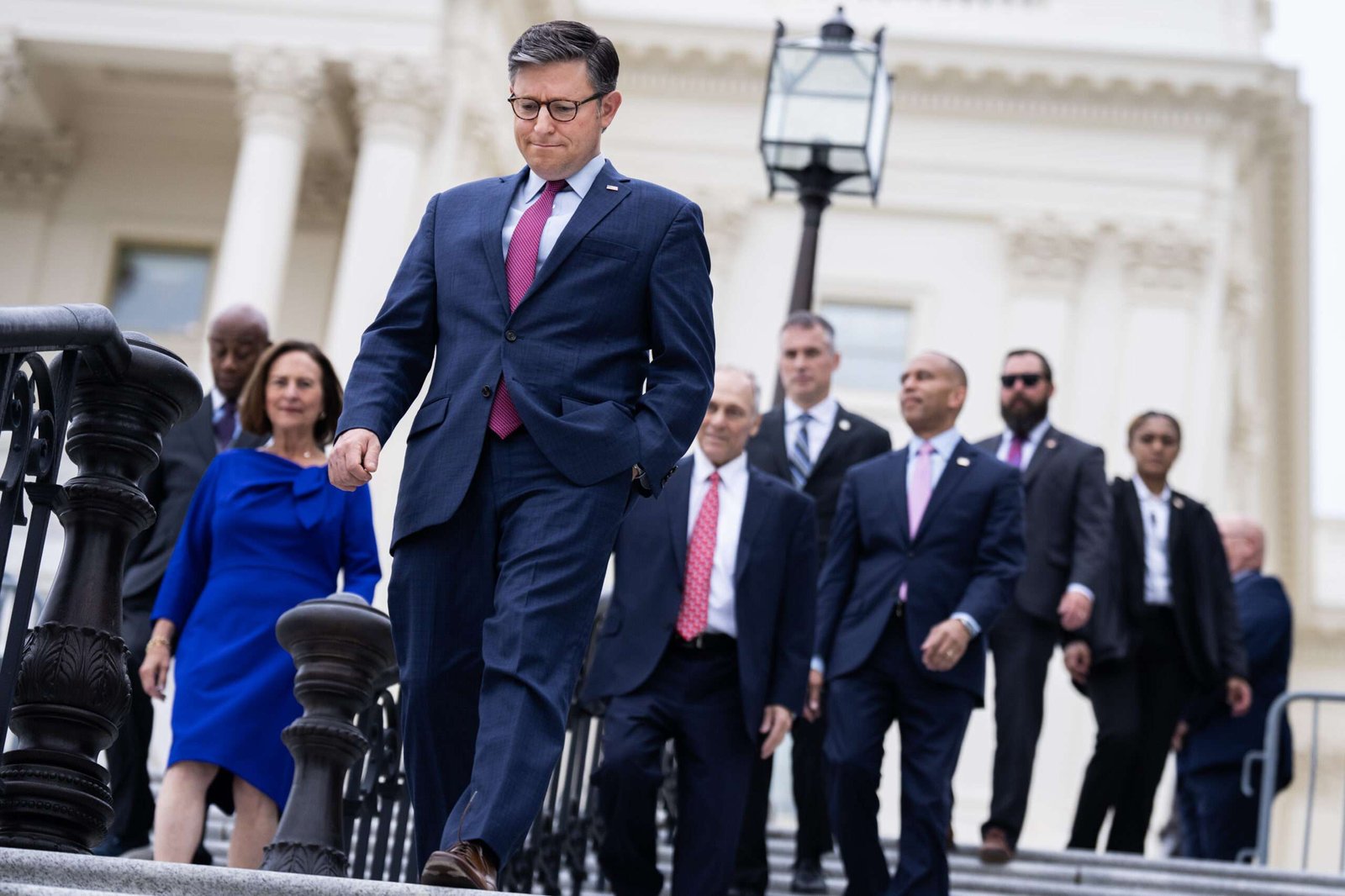
Yesterday, yet another funding resolution failed in the Senate, the 11th of its kind. “Mike Johnson, the House speaker, has for weeks kept the House shuttered on an extended recess, and defended his strategy as necessary to push Senate Democrats into passing the House’s continuing resolution without policy additions,” reports The Guardian. “But Democrats have refused to support the measure without provisions addressing healthcare subsidies under the Affordable Care Act, which are set to expire at the end of the year.”

“The shutdown, which began on 1 October, has become the longest full government shutdown in US history,” adds The Guardian, “and the third-longest when including partial shutdowns. If it extends past Tuesday, it will surpass the 21-day shutdown of 1995-96 to claim second place. Only the 35-day partial shutdown during Donald Trump’s first term, from December 2018 to January 2019, has lasted longer.” (Full shutdowns are still not technically full, but are basically defined by the number of services and functions affected; during the full shutdowns of 2013 and 2018, a little shy of 1 million federal employees were furloughed.)

Of course, some government functions are valuable but not exactly urgent—like maintaining/modernizing the nuclear weapons arsenal. The roughly 1,400 people who work on this project were furloughed earlier this week. The effects of that decision won’t really be felt, but you could make the case that shutdowns hinder and slow down the sorts of long-term projects we need to prioritize. Other government functions—like immigration enforcement, described below—have remained beefed up throughout this shutdown. The administration has also found creative ways to soften the blow of the shutdown, including using research and development funds to make it so members of the military don’t miss a paycheck. Other services, like food stamps, might be affected if the shutdown extends for longer, with payments delayed or missed.

Perhaps the most striking thing about this shutdown, though, is how minor a news item it’s been so far. NPR seems upset, but few others have considered this headline news of late.

Trump, meanwhile, has taken the opportunity to do various small cuts: $8 billion in green energy projects in blue states; reductions in force—not furloughs!—have allegedly started, but the extent is not known (and the lawsuits that so frequently accompany them will take time to percolate through the courts).


Scenes from New York: Earlier this week, the right-wing influencer Savannah Hernandez posted a video taken at the corner of Broadway and Canal, where tons of counterfeit goods are sold:

WATCH: A huge group of African illegal immigrants are operating a black market on the corner of Broadway and Canal St in New York City.

The entire sidewalk is filled with illegals who state they are from Senegal and I watched as they fled police.

This corner looks exactly… pic.twitter.com/wdIJO1oVZV

— Savanah Hernandez (@sav_says_) October 19, 2025

She claims it’s men who came over from Senegal within the past few years, pretty much all of whom admit to being here illegally.

“There is NOTHING cool about bowing to criminal Africans while they block your RIGHT of way with their Chinese garbage, and—this should go without saying—there is NOTHING cool much less CHIC about buying a knockoff Goyard tote from them,” writes @junker_jo on X. “It’s destructive nihilism that if left unchecked will make the city (and therefore the world!) Hell on Earth!”

I’m not sure I’d go quite so far. Illegal immigrants selling goods that don’t really harm anyone don’t personally bother me that much. But yesterday afternoon, more than two dozen federal law enforcement agents visited Canal and busted the scene. “During this law enforcement operation, rioters who were shouting obscenities, became violent and obstructed law enforcement duties, including blocking vehicles and assaulting law enforcement,” a Department of Homeland Security spokesman claimed. “Already one rioter has been arrested for assault on a federal officer.”

“The enforcement action comes just days after federal agents arrested two men outside the Row Hotel in Midtown, a city-run migrant shelter,” reports Gothamist. “Officials said the men were allegedly tied to a Venezuelan gang, part of what McLaughlin described as a broader effort to ‘restore law and order’ in New York City.”

This seems like a much more worthy target. But there’s also a broader question of whether New York ought to be a place of lawlessness or not. Street vendors operating without permits don’t worry me much, but there is an inherent unfairness to the many people who choose to operate their businesses legally. And the goods sold by these guys on Canal Street were probably gotten via unsavory means, so there’s the question of whether authorities want to encourage those supply lines or attempt to eradicate them.


QUICK HITS

  • “On Sept. 2, Everytown for Gun Safety, an organization funded by billionaire Michael Bloomberg, announced a new firearms training initiative called Train SMART. Everytown’s website describes a program ‘created by veterans who bring the military’s proven principles of firearms training, safety, and responsibility to the civilian market,'” writes Slate. “It promises accessible, affordable preparation for new and current gun owners who want to protect their families or to hunt and shoot recreationally.” Naturally, the group’s supporters are pissed, because this concedes that guns are a reality, something secured by our rights here in America, and a means of defense that’s not disappearing anytime soon.
  • A whole podcast episode on the Baumol effect! This is all women (OK, maybe just me) secretly want.
  • Once you see it, you can’t unsee:

Their ardent fans won’t admit it but Zohran Mamdani and Pete Buttigieg have very similar vibes

— Zaid Jilani (@ZaidJilani) October 22, 2025

They are both type As inspired by their somewhat Marxist fathers to be strivers in politics and punched way above their weight

— Zaid Jilani (@ZaidJilani) October 22, 2025

  • Interesting piece from The New York Times on Wyoming’s quest to funnel more students to both college and technical programs.
  • Turns out, extreme peanut avoidance for babies and children was a bad idea: “A landmark trial in 2015 found that feeding peanuts to babies could cut their chances of developing an allergy by over 80 percent. In 2017, the National Institute of Allergy and Infectious Diseases formally recommended the early-introduction approach and issued national guidelines,” per The New York Times. “The new study, published Monday in the journal Pediatrics, found that food allergy rates in children under 3 fell after those guidelines were put into place—dropping to 0.93 percent between 2017 and 2020, from 1.46 percent between 2012 and 2015. That’s a 36 percent reduction in all food allergies, driven largely by a 43 percent drop in peanut allergies.”
  • Reason‘s very own Zach Weissmueller is in town debating whether Oregon’s drug decriminalization is proof drug decrim will fail elsewhere. Here’s a documentary he produced on the matter, and here’s a picture from last night:

Two huge accomplishments: My work buddy @TheAbridgedZach performed wonderfully in last night’s Soho Forum debate on drug decriminalization in Oregon AND I managed to wear heels despite being in my third trimester. Hard to say which is more impressive tbh pic.twitter.com/C63bAJUF14

— Liz Wolfe (@LizWolfeReason) October 22, 2025


Read the full article here

Fact Checker

Verify the accuracy of this article using AI-powered analysis and real-time sources.

Get Your Fact Check Report

Enter your email to receive detailed fact-checking analysis

5 free reports remaining

Continue with Full Access

You've used your 5 free reports. Sign up for unlimited access!

Already have an account? Sign in here

Share. Facebook Twitter Pinterest LinkedIn Tumblr Email Telegram Copy Link
News Room
  • Website
  • Facebook
  • X (Twitter)
  • Instagram
  • LinkedIn

The FSNN News Room is the voice of our in-house journalists, editors, and researchers. We deliver timely, unbiased reporting at the crossroads of finance, cryptocurrency, and global politics, providing clear, fact-driven analysis free from agendas.

Related Articles

Media & Culture

Trump Is Back To Seeking Regime Change in Iran

58 seconds ago
Cryptocurrency & Free Speech Finance

Crypto Groups Push SEC for Tailored Rules on Novel ETFs

36 minutes ago
Media & Culture

Why the Right Is Embracing State Power

1 hour ago
Cryptocurrency & Free Speech Finance

OpenAI’s Astra Becomes Its First AI Model With ‘Critical’ Hacking Abilities

2 hours ago
Media & Culture

Invasion of the Robot Teachers

2 hours ago
Cryptocurrency & Free Speech Finance

Tether Sued Over Alleged Unlawful Freeze of $42.4 Million in USDT

3 hours ago
Add A Comment

Comments are closed.

Editors Picks

Crypto made new friends in U.S. primaries, but focus now shifts to general election

28 minutes ago

Bitcoin Drops to $76.4K as Demand Turns Negative, Asian Stocks Slide

33 minutes ago

Crypto Groups Push SEC for Tailored Rules on Novel ETFs

36 minutes ago

In China and Hong Kong, remembrance is a crime

55 minutes ago
Latest Posts

Texas and Florida Step Back from ALPRs

58 minutes ago

Why the Right Is Embracing State Power

1 hour ago

Joshua Wong has spent more than 2,000 consecutive days behind bars More than a decade ago, Hong Kong watched a bespectacled teenager emerge from a student movement and become one of the most recognisable voices of his generation. Joshua Wong was barely old enough to vote when much of the world learned his name. He devoted his adolescence and then his twenties to arguing that Hong Kong people should have a say in their own future. Today, he is 29. He has spent more than 2,000 consecutive days behind bars. And after pleading guilty to another national security charge, he once again doesn’t know when – or whether –he will be free. I met Joshua in 2013, when he was 16 and I was 14. He had recently helped lead a student movement opposing the Hong Kong government’s attempt to introduce Chinese nationalist education into our schools. He was sharp, stubborn, and unapologetic. Most importantly to those of us who were younger, he seemed entirely unconvinced by the idea that being young meant we should remain quiet. Joshua Wong speaks to US congressmen in 2019 Joshua believed we had every right to speak about the future because it was our future too. He went on to become one of the student leaders of the 2014 Umbrella Movement and later co-founded Demosistō, a political party advocating self-determination for Hong Kong. Arrests, court appearances, and prison sentences gradually became part of his life. Then, in November 2020, Joshua entered prison and didn’t come home. The Hong Kong outside his cell has changed almost beyond recognition since then. Newspapers have been forced to close down. Civil society organisations and political groups have disbanded. Democracy activists have been imprisoned or driven into exile, like me. Books disappeared from shelves. People have deleted old social media posts, withdrawn from political life, and learned to choose their words more carefully. Hong Kong’s freedoms haven’t disappeared only through arrest and prosecutions. They’ve disappeared through the fear those prosecutions create. And slowly, Joshua himself has been made to disappear from everyday life. In January 2021, while already detained, he was arrested under the National Security Law for participating in an unofficial primary election held the previous year. He was eventually sentenced to four years and eight months in that case. He had been expected to complete his existing prison term in January 2027. But the authorities weren’t finished with him. In June 2025, while Joshua was still incarcerated, police arrested him again. This time, prosecutors accused him of conspiring to “collude with foreign forces” through international advocacy. He has now pleaded guilty to the charge. His sentencing remains ahead of him, and in cases deemed sufficiently grave, the offence can carry life imprisonment. It would be easy to regard this as simply another prosecution of a prominent Hong Kong democracy activist. That would miss the larger point. Joshua’s case matters not only because the authorities have deprived one man of his freedom. It matters because of what his prosecution tells everyone who once exercised the freedoms Hong Kong was supposed to protect. The prosecution has reached back into Joshua’s public life: his speeches, media interviews, campaigns, social media posts, and meetings with foreign politicians – all before the NSL existed – and presented them as the background to the charge. These weren’t secret acts. They were part of Hong Kong’s public political life. Joshua spoke openly. He met politicians openly. He gave interviews openly. He advocated internationally in full view of the government and the world. A society doesn’t have to formally outlaw every opinion to make people afraid to express one. All it has to do is demonstrate what might happen to those who speak too loudly. This is what makes Joshua’s prosecution bigger than Joshua. The authorities don’t need to imprison every young Hong Konger who attended a protest, who campaigned for democracy, spoke to a journalist or posted on social media. They only need to make an example of someone everybody remembers doing so. They know this well. Joshua was proof to my generation that a teenager’s voice could matter. His imprisonment risks being turned into proof of the opposite: that speaking can follow you for years; that yesterday’s advocacy can become tomorrow’s evidence; and that even after one sentence ends, another can be waiting in the docks. This is how censorship moves beyond newspaper offices and political organisations and takes up residence in people’s minds. People learn to silence themselves, beating the authorities to the punch. For those of us who knew Joshua when we were kids, that transformation is particularly painful. We grew up believing that using our voices was an act of citizenship, and Joshua taught us that. Joshua’s case now poses another question for us: will we learn the lesson his jailers want to teach us – or will we remember the one Joshua taught us first. Frances Hui is the policy and advocacy manager at the Committee for Freedom in Hong Kong Foundation. READ MORE

1 hour ago

Subscribe to News

Get the latest news and updates directly to your inbox.

At FSNN – Free Speech News Network, we deliver unfiltered reporting and in-depth analysis on the stories that matter most. From breaking headlines to global perspectives, our mission is to keep you informed, empowered, and connected.

FSNN.net is owned and operated by GlobalBoost Media
, an independent media organization dedicated to advancing transparency, free expression, and factual journalism across the digital landscape.

Facebook X (Twitter) Discord Telegram
Latest News

Trump Is Back To Seeking Regime Change in Iran

58 seconds ago

Crypto made new friends in U.S. primaries, but focus now shifts to general election

28 minutes ago

Bitcoin Drops to $76.4K as Demand Turns Negative, Asian Stocks Slide

33 minutes ago

Subscribe to Updates

Get the latest news and updates directly to your inbox.

© 2026 GlobalBoost Media. All Rights Reserved.
  • Privacy Policy
  • Terms of Service
  • Our Authors
  • Contact

Type above and press Enter to search. Press Esc to cancel.

🍪

Cookies

We and our selected partners wish to use cookies to collect information about you for functional purposes and statistical marketing. You may not give us your consent for certain purposes by selecting an option and you can withdraw your consent at any time via the cookie icon.

Cookie Preferences

Manage Cookies

Cookies are small text that can be used by websites to make the user experience more efficient. The law states that we may store cookies on your device if they are strictly necessary for the operation of this site. For all other types of cookies, we need your permission. This site uses various types of cookies. Some cookies are placed by third party services that appear on our pages.

Your permission applies to the following domains:

  • https://fsnn.net
Necessary
Necessary cookies help make a website usable by enabling basic functions like page navigation and access to secure areas of the website. The website cannot function properly without these cookies.
Statistic
Statistic cookies help website owners to understand how visitors interact with websites by collecting and reporting information anonymously.
Preferences
Preference cookies enable a website to remember information that changes the way the website behaves or looks, like your preferred language or the region that you are in.
Marketing
Marketing cookies are used to track visitors across websites. The intention is to display ads that are relevant and engaging for the individual user and thereby more valuable for publishers and third party advertisers.