Close Menu
FSNN | Free Speech News NetworkFSNN | Free Speech News Network
  • Home
  • News
    • Politics
    • Legal & Courts
    • Tech & Big Tech
    • Campus & Education
    • Media & Culture
    • Global Free Speech
  • Opinions
    • Debates
  • Video/Live
  • Community
  • Freedom Index
  • About
    • Mission
    • Contact
    • Support
Trending

Streamlining and Taxes

28 minutes ago

BTC price bounce is no bullish revival, with anything from $68,000 to $80,000 seen as a marker: Crypto Daily

46 minutes ago

Kraken Joins FIFA World Cup 2026 as Crypto Exchange Sponsor

47 minutes ago
Facebook X (Twitter) Instagram
Facebook X (Twitter) Discord Telegram
FSNN | Free Speech News NetworkFSNN | Free Speech News Network
Market Data Newsletter
Wednesday, June 10
  • Home
  • News
    • Politics
    • Legal & Courts
    • Tech & Big Tech
    • Campus & Education
    • Media & Culture
    • Global Free Speech
  • Opinions
    • Debates
  • Video/Live
  • Community
  • Freedom Index
  • About
    • Mission
    • Contact
    • Support
FSNN | Free Speech News NetworkFSNN | Free Speech News Network
Home»Cryptocurrency & Free Speech Finance»U.S. Fed’s Barr Catalogues Dangers to be Dodged in Future Stablecoin Regulations
Cryptocurrency & Free Speech Finance

U.S. Fed’s Barr Catalogues Dangers to be Dodged in Future Stablecoin Regulations

News RoomBy News Room8 months agoNo Comments4 Mins Read1,101 Views
Share Facebook Twitter Pinterest Copy Link LinkedIn Tumblr Email VKontakte Telegram
U.S. Fed’s Barr Catalogues Dangers to be Dodged in Future Stablecoin Regulations
Share
Facebook Twitter Pinterest Email Copy Link

Listen to the article

0:00
0:00

Key Takeaways

Playback Speed

Select a Voice

WASHINGTON, D.C. — The crypto sector and some of the financial giants on Wall Street are sprinting to put stablecoin infrastructure in place well before the U.S. watchdogs set up their regulations, and Federal Reserve Governor Michael Barr took a moment on Thursday to remind the industry’s legal experts of the hazards posed by nominally safe assets.

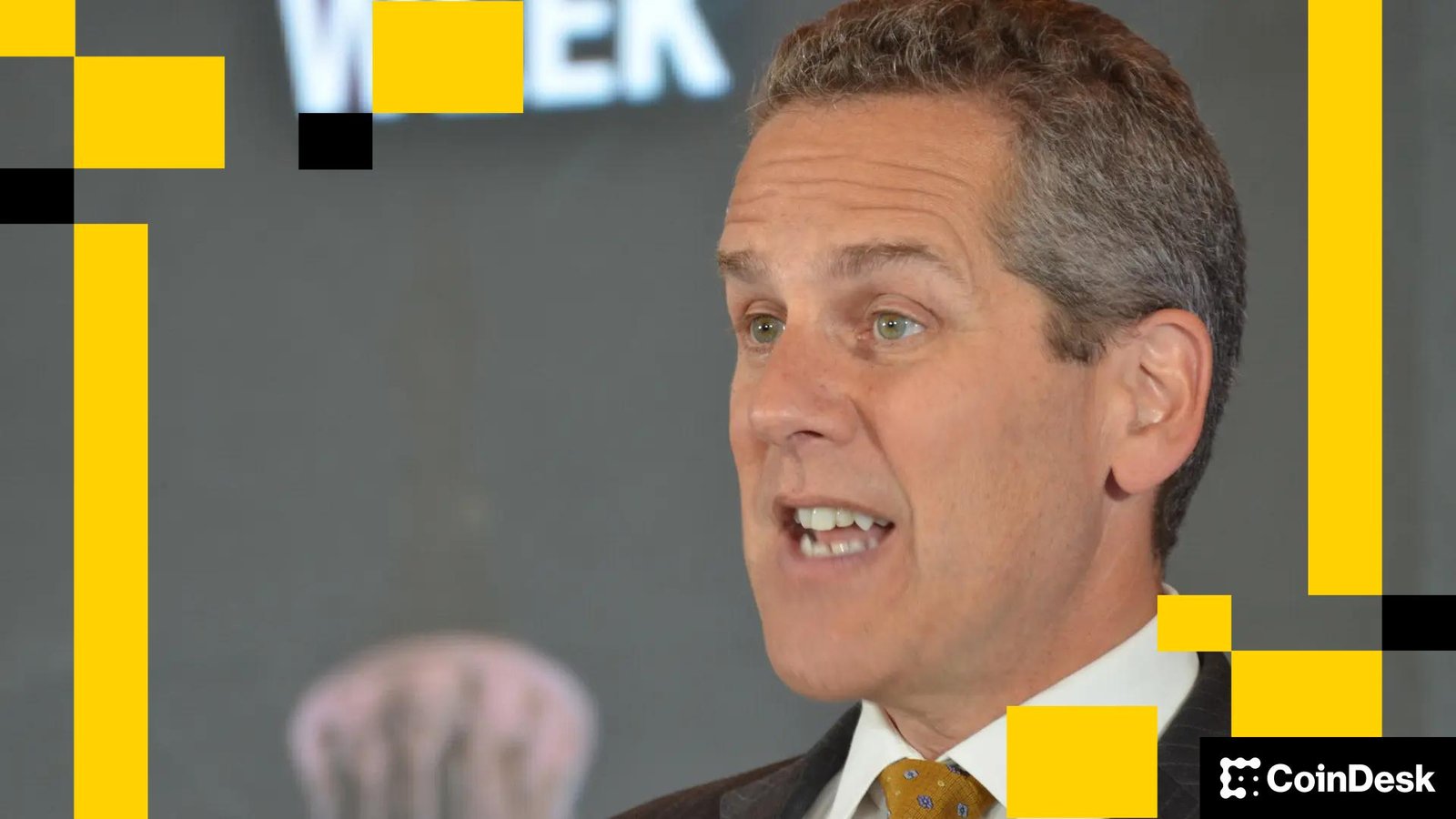
“Issuing liquid liabilities redeemable at par but backed by assets, even high-quality ones, about which creditors might have questions makes private money vulnerable to run risk,” Barr said during a DC Fintech Week event in Washington, pointing out that allowable reserves such as uninsured deposits could pose dangers.

He was the Fed’s top financial-supervision official as the board’s previous vice president in that role, but he stepped down when the administration of President Donald Trump arrived. The digital assets sector saw Barr as part of the “debanking” trend in which industry insiders accused banking regulators of encouraging banks to step away from their businesses, and the Fed and other U.S. regulators have recently reversed the more restrictive crypto policy stance they’d taken during his tenure.

But Barr remains on the seven-member Fed board and cautioned the agencies that are writing stablecoin rules — including his own — of “the long and painful history of private money created with insufficient safeguards.”

Barr offered the U.S. experience with money market funds as an example, noting the Reserve Primary Fund “broke the buck” — fell off its $1 value per share — in 2008 as the global financial crisis got underway, and how the more recent covid pandemic put pressure on such funds again.

Despite the passage of the Guiding and Establishing National Innovation for U.S. Stablecoins (GENIUS) Act, the banking regulators haven’t yet written the rules they’ll need to implement it, leaving the industry in a kind of unregulated gray area. As this continues, the world’s leading stablecoin, Tether’s USDT, is run offshore and under a reserve approach that wouldn’t qualify against the pending U.S. standard (though Tether is also planning a full entry into U.S. markets).

“Stablecoin issuers traditionally retain profits from investing reserve assets and therefore have a high incentive to maximize the return on their reserve assets by extending the risk spectrum as far out as possible,” Barr noted. “Stretching the boundaries of permissible reserve assets can increase profits in good times but risks a crack in confidence during inevitable bouts of market stress.”

“For the most part, I agree with everything he is saying,” said Corey Then, vice president and deputy general counsel for global policy at Circle, the issuer of USDC, the leading U.S.-based stablecoin.

“There’s a lot of work to be done in the rulemaking process,” the Circle executive said at the same Washington event, taking the stage just after Barr. “The last thing we want at Circle is a permissive environment.”

Barr flagged the inclusion of uninsured deposits as potential reserves for issuers under GENIUS, noting they were “a key risk factor during the March 2023 banking stress.” He also pointed at so-called “overnight repo” as a reserve component that “could include potentially volatile assets.”

During the 2023 crisis among tech-centered U.S. banks, Circle had as much as 8% of its reserves at failing Silicon Valley Bank, worth more than $3 billion, causing a rush to redeem USDC that pushed it temporarily off its dollar peg. Other high-profile stablecoins have also strayed from the peg, including in the implosion of Terra’s UST in 2022.

Barr offered a GENIUS Act hypothetical, suggesting that because bitcoin BTC$108,060.32 has been legal tender in El Salvador, an argument could be made for bitcoin repo as an eligible reserve asset.

Federal and state regulators need to write “a comprehensive set of rules that can fill in important gaps and ensure that there are robust guardrails to protect users of stablecoins and mitigate broader risks to the financial system,” Barr said.

Still, because issuers may be regulated across a spectrum of government agencies at both the federal and state levels, he warned of the risk of arbitrage in which issuers shop for the easiest watchdog, despite the GENIUS Act’s intent that they be substantially similar.

In the 2008 meltdown, American International Group’s risky financial-products arm was famously overseen by a weaker federal regulator — the Office of Thrift Supervision — and much of its other operations by a range of state supervisors, resulting in unnoticed hazards that eventually threatened the wider financial system. (The OTS was subsequently disbanded.)

Read More: Tether CEO Says He’ll Comply With GENIUS to Come to U.S., Circle Says It’s Set Now


Read the full article here

Fact Checker

Verify the accuracy of this article using AI-powered analysis and real-time sources.

Get Your Fact Check Report

Enter your email to receive detailed fact-checking analysis

5 free reports remaining

Continue with Full Access

You've used your 5 free reports. Sign up for unlimited access!

Already have an account? Sign in here

Share. Facebook Twitter Pinterest LinkedIn Tumblr Email Telegram Copy Link
News Room
  • Website
  • Facebook
  • X (Twitter)
  • Instagram
  • LinkedIn

The FSNN News Room is the voice of our in-house journalists, editors, and researchers. We deliver timely, unbiased reporting at the crossroads of finance, cryptocurrency, and global politics, providing clear, fact-driven analysis free from agendas.

Related Articles

Cryptocurrency & Free Speech Finance

BTC price bounce is no bullish revival, with anything from $68,000 to $80,000 seen as a marker: Crypto Daily

46 minutes ago
Cryptocurrency & Free Speech Finance

Kraken Joins FIFA World Cup 2026 as Crypto Exchange Sponsor

47 minutes ago
Cryptocurrency & Free Speech Finance

Humanity’s $36 million exploit happened because a ‘multisig’ lived on one laptop

2 hours ago
Cryptocurrency & Free Speech Finance

AI-Assisted Attackers Target Hidden DeFi Code

2 hours ago
Cryptocurrency & Free Speech Finance

Anthropic Rolls Out Claude Mythos 5 AI Model—Along With the Safer Fable 5 for the Public

2 hours ago
Cryptocurrency & Free Speech Finance

Bitcoin narrows early losses, returns to $62,000 as Nasdaq bounces to close down 1%

3 hours ago
Add A Comment

Comments are closed.

Editors Picks

BTC price bounce is no bullish revival, with anything from $68,000 to $80,000 seen as a marker: Crypto Daily

46 minutes ago

Kraken Joins FIFA World Cup 2026 as Crypto Exchange Sponsor

47 minutes ago

Evidence Destroyed or Lost in Death of ICE Detainee That Was Ruled a Homicide

1 hour ago

Why the Enlightenment Matters

2 hours ago
Latest Posts

Humanity’s $36 million exploit happened because a ‘multisig’ lived on one laptop

2 hours ago

AI-Assisted Attackers Target Hidden DeFi Code

2 hours ago

Anthropic Rolls Out Claude Mythos 5 AI Model—Along With the Safer Fable 5 for the Public

2 hours ago

Subscribe to News

Get the latest news and updates directly to your inbox.

At FSNN – Free Speech News Network, we deliver unfiltered reporting and in-depth analysis on the stories that matter most. From breaking headlines to global perspectives, our mission is to keep you informed, empowered, and connected.

FSNN.net is owned and operated by GlobalBoost Media
, an independent media organization dedicated to advancing transparency, free expression, and factual journalism across the digital landscape.

Facebook X (Twitter) Discord Telegram
Latest News

Streamlining and Taxes

28 minutes ago

BTC price bounce is no bullish revival, with anything from $68,000 to $80,000 seen as a marker: Crypto Daily

46 minutes ago

Kraken Joins FIFA World Cup 2026 as Crypto Exchange Sponsor

47 minutes ago

Subscribe to Updates

Get the latest news and updates directly to your inbox.

© 2026 GlobalBoost Media. All Rights Reserved.
  • Privacy Policy
  • Terms of Service
  • Our Authors
  • Contact

Type above and press Enter to search. Press Esc to cancel.

🍪

Cookies

We and our selected partners wish to use cookies to collect information about you for functional purposes and statistical marketing. You may not give us your consent for certain purposes by selecting an option and you can withdraw your consent at any time via the cookie icon.

Cookie Preferences

Manage Cookies

Cookies are small text that can be used by websites to make the user experience more efficient. The law states that we may store cookies on your device if they are strictly necessary for the operation of this site. For all other types of cookies, we need your permission. This site uses various types of cookies. Some cookies are placed by third party services that appear on our pages.

Your permission applies to the following domains:

  • https://fsnn.net
Necessary
Necessary cookies help make a website usable by enabling basic functions like page navigation and access to secure areas of the website. The website cannot function properly without these cookies.
Statistic
Statistic cookies help website owners to understand how visitors interact with websites by collecting and reporting information anonymously.
Preferences
Preference cookies enable a website to remember information that changes the way the website behaves or looks, like your preferred language or the region that you are in.
Marketing
Marketing cookies are used to track visitors across websites. The intention is to display ads that are relevant and engaging for the individual user and thereby more valuable for publishers and third party advertisers.