

 Freedom Index
Listen to the article
Journalists from FOX News, ABC, and over a dozen other news organizations are refusing to sign the Pentagon’s new policy for press credentials, saying in a joint statement that it “threatens core journalistic protections.” They’re right about that. At least a couple of the policy’s provisions burden fundamental newsgathering with vague restrictions that invite government overreach.
There’s no way to know when you’re ‘soliciting government employees to break the law’
The most troubling provision of the policy is found in the “Security Risks” section and states, in part:
There is a critical distinction between lawfully requesting information from the government and actively soliciting or encouraging government employees to break the law. The First Amendment does not permit journalists to solicit government employees to violate the law by providing confidential government information.
This runs into a functional problem and a legal problem. Let’s deal with the functional problem first.
In most cases, journalists don’t know what answer they’re going to get to a question before they ask. For example, if a journalist asks a question about whether the department is investigating a report on social media of overseas terrorism targeting American assets, the potential responses range from the totally unclassified (e.g., no) to the highly sensitive (e.g., troop locations and plans).
While a journalist might reasonably infer that the United States is engaging in some activity that falls into the sensitive or classified categories, they don’t have any power to determine what answer they actually receive. The policy’s interpretation of solicitation or encouragement seems to invest a lot of discretion into the Department of War to decide whether the question was soliciting sensitive information. And it also sets up reporters to be scapegoats for when federal employees release too much information. The fault there starts — and ends — with those employees, not journalists simply doing their job.
The legal problem with this provision is that it’s not based in any actual law. As stated, it undermines well-established law. The First Amendment has limited enumerated exceptions, such as speech that is defamatory, speech that would inspire imminent lawless action, and obscenity. “Asking a question where the answer might be classified” isn’t on the list, and reporting on national security matters is protected speech.
As we recently wrote in our Villarreal v. Alaniz petition to the U.S. Supreme Court:
The fundamental “right of citizens to inquire” includes asking the government questions. If the First Amendment guarantees the right “verbally to oppose or challenge police action without thereby risking arrest,” then it guarantees the right to peaceably ask an officer questions without risking arrest. [City of Houston v.] Hill, 482 U.S. at 462–63. Likewise, if the government cannot hold Americans in contempt for “speak[ing] one’s mind, although not always with perfect good taste, on all public institutions,” it cannot jail them for posing questions to public institutions. Bridges v. California, 314 U.S. 252, 270 (1941).
There’s an attempted savings clause in the policy that says the rules “do not prohibit you … from engaging in constitutionally protected journalistic activities, such as investigating, reporting, or publishing stories.” That offers little comfort when it also opines that some questions aren’t constitutionally protected.
The remedy here is not to go after reporters, who we expect to ask tough and probing questions of government officials. Rather, it’s for Pentagon staff to practice message discipline by following law and policy when asked sensitive questions. This is not an unreasonable ask; after all, the government has spent decades finding new and creative ways not to answer such questions, like the Glomar response. It doesn’t need to threaten journalists with punishment if, by misadventure, they accidentally get one answered.
‘Unprofessional conduct’ could lead to loss of credentials
Appendix A lists reasons why credentials might be pulled from “any person reasonably determined to pose a security or safety risk to DoW personnel or property.” That includes “those who have been convicted of any offense involving . . .unprofessional conduct that might serve to disrupt Pentagon operations.” But a later sentence clarifies that “actions other than conviction may be deemed to pose a security or safety risk” and might also lead to loss of credentials.
One can imagine situations where this might be appropriate, but if I’m parsing that correctly, a journalist merely seen as unprofessional — even without being “convicted of any offense” — could be regarded as a security risk and have their credentials revoked. That by itself sounds like a problem. It sounds like even more of a problem after President Trump was asked whether he would consider removing the restrictions and replied that he thinks Secretary of War Pete Hegseth “finds the press to be very disruptive in terms of world peace and maybe security for our nation,” adding, “The press is very dishonest.”
Most journalists would agree that dishonesty is unprofessional. If the commander in chief already thinks you’re dishonest, then what journalist’s credential is likely to survive this provision?
In one instance, the policy singles out journalists for diminished rights
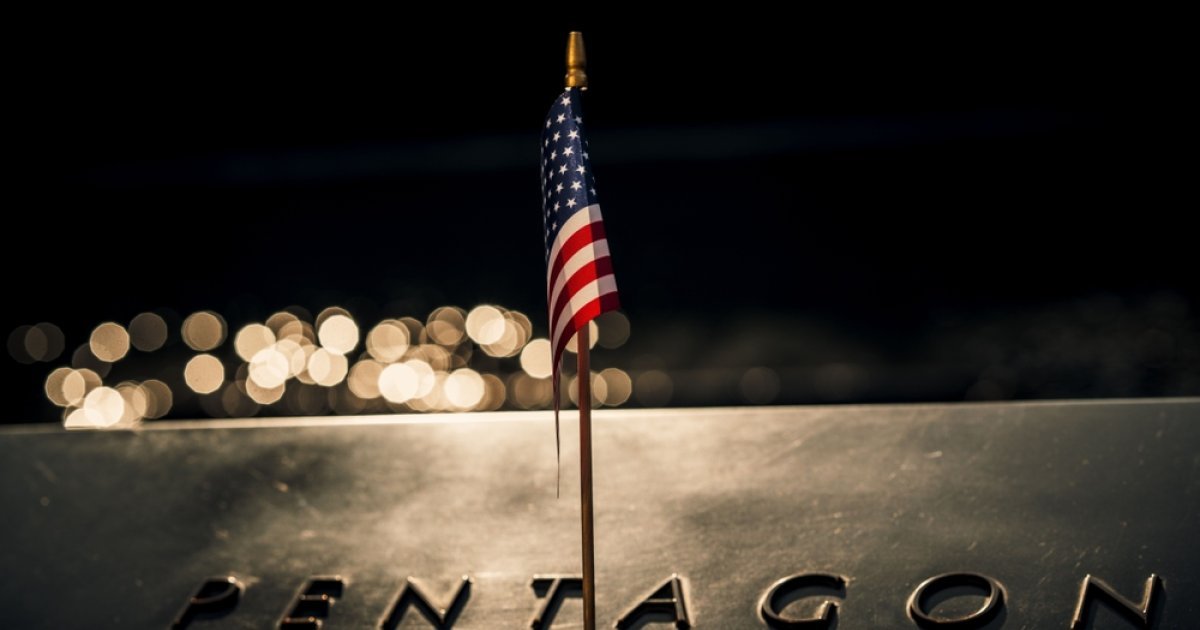
One thread that runs through the entire credentialing policy is that the government doesn’t want anyone taking pictures of the Pentagon or its environs (the “Pentagon reservation”). In most cases, people need permission and a handler before engaging in recording. When it comes to sensitive areas, this is understandable. But the policy has a particularly odd restriction at the 9/11 Memorial on Pentagon grounds:
News media visiting the National Pentagon 9/11 Memorial in their personal capacity, not as a member of the press, may take photos using their personal devices. Filming or photography in the Memorial for a news media interview or to obtain b-roll requires an exception, as described below under Filming/Photography Exception Requests.
If this were a restraint directed at order, traffic, the use of large cameras or amplification devices, that might make sense. If it were a general time, place, and manner restraint, that might make some sense. But this is a restriction on photography based on the intent to engage in the freedom of the press guaranteed by the Constitution. In other words, you can have the picture, as long as you don’t intend to show anyone. It’s hard to imagine a worse reason to restrict photography.
How would this even work in practice? Every day, we see reporters crowdsource photos from events on social media. So reporters are barred from taking a picture, but can get permission from the non-journalist next to them who published the photo on X? I understand the need for extraordinary security around the Pentagon, but singling journalists out for less favorable treatment than the general public is inherently suspect.
With these issues, it shouldn’t be surprising that nearly every media outlet has refused to sign the acknowledgement, including CNN, NPR, CBS, FOX, The Washington Times, and The New York Times. Only One America News, a pro-Trump news outlet, has agreed so far.
In recent months, the Pentagon had made revisions to improve this policy based on feedback. It’s unclear how much the outlets and the Pentagon will cooperate going forward.
(H/t to the Reporter’s Committee for Freedom of the Press, both for writing to the Department of War about the policy and actually sharing the policy with the world, which, in the most recent version, was rare indeed.)
Read the full article here
Fact Checker
Verify the accuracy of this article using AI-powered analysis and real-time sources.