

 Freedom Index
Listen to the article
In 2013, whistleblower Edward Snowden revealed that the U.S. government engaged in mass surveillance of the American people. Some of the snooping delved into the content of emails and phone calls. But much of it was of metadata—who people contact and when. While not as revealing as actual messages, it let the government build profiles on people and their affiliations. This week, lawmakers—some of whom allowed federal agencies to accumulate and exercise such power—received a lesson in how disturbing such scrutiny can be when they found out the last administration monitored their calls.
You are reading The Rattler from J.D. Tuccille and Reason. Get more of J.D.’s commentary on government overreach and threats to everyday liberty.
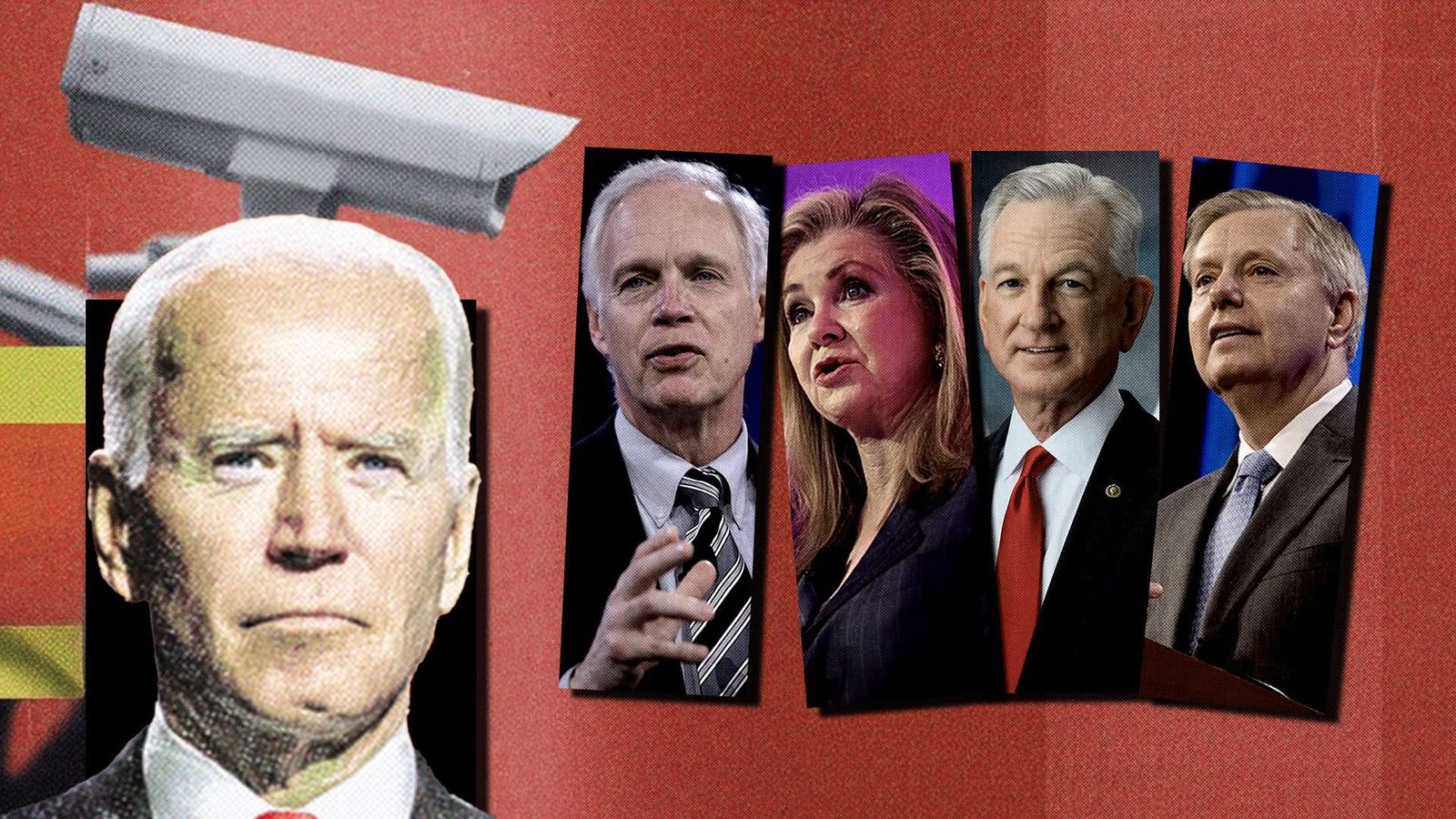
On October 6, the Senate Judiciary Committee announced that “an explosive FBI document obtained by Senate Judiciary Committee Chairman Chuck Grassley (R–Iowa) reveals the FBI targeted eight Republican senators’ personal cell phones for ‘tolling data’ as part of its Arctic Frost investigation. One Republican member of the House of Representatives was also impacted. The Arctic Frost investigation formed the basis of Jack Smith’s elector case against President Donald Trump.”
As part of Special Counsel Jack Smith’s investigation into Donald Trump’s alleged interference in the outcome of the 2020 presidential election, the FBI sought phone call information for the period from January 4 through January 7, 2021, covering the days around the January 6 Capitol riot. The investigation ended with a double whammy when Judge Aileen Cannon of the U.S. District Court of Southern Florida ruled Smith had been illegally appointed, and then the case against Trump was dismissed once the former president won reelection. As a parting shot, Smith published a final report in January in which he claimed he could have secured a conviction.
But the repercussions of that investigation linger on. A 2023 FBI document released by Grassley shows that the FBI wanted “limited tolls records associated with” Sens. Lindsey Graham (R–S.C.), Bill Hagerty (R–Tenn.), Josh Hawley (R–Mo.), Dan Sullivan (R–Alaska), Tommy Tuberville (R–Ala.), Ron Johnson (R–Wisc.), Cynthia Lummis (R–Wyo.), and Marsha Blackburn (R–Tenn.), and Rep. Mike Kelly (R–Pa.). As the Senate Judiciary Committee notes, the intercepted “data shows when and to whom a call is made, as well as the duration and general location data of the call.”
Notably, such data was at the core of much of the furor after Snowden revealed mass surveillance by the U.S. government. In a 2014 sort-of debate with a National Security Agency (NSA) flunky, Snowden, who appeared by video because he can’t safely visit the U.S. or its allies, commented:
Much of the debate in the U.S. has been about metadata. They’ve said it’s just metadata, it’s just metadata, and they’re talking about a specific legal authority called Section 215 of the Patriot Act. That allows sort of a warrantless wiretapping, mass surveillance of the entire country’s phone records, things like that—who you’re talking to, when you’re talking to them, where you traveled. These are all metadata events.
Not all the surveillance was about “just” metadata; some of it involved interception of actual message content. But metadata is revealing enough and can be used as the basis for more intrusive snooping. Importantly, the courts have recognized that it requires specific authorization.
“The U.S. Court of Appeals for the Ninth Circuit said the warrantless telephone dragnet that secretly collected millions of Americans’ telephone records violated the Foreign Intelligence Surveillance Act and may well have been unconstitutional,” Reuters reported in 2020 of a long-delayed vindication for Snowden. “Evidence that the NSA was secretly building a vast database of U.S. telephone records – the who, the how, the when, and the where of millions of mobile calls – was the first and arguably the most explosive of the Snowden revelations published by the Guardian newspaper in 2013.”
That’s the sort of scrutiny the lawmakers were subject to since the government largely carries on as before because the secret nature of such spying makes challenges almost impossible and targeted use of these techniques is permitted by the courts. The lawmakers had company. According to the Senate Judiciary Committee, “Records Grassley made public last month showed the FBI also placed 92 Republican-linked individuals and Republican groups – such as Charlie Kirk’s Turning Point USA – under Arctic Frost’s investigative scope.”
Criminal investigations often do involve surveillance, of course. But this surveillance was conducted by FBI agents giving themselves permission without a warrant and looks an awful lot like one political faction using already suspect domestic spying powers against its political rivals. Again.
I write “again” because the Obama administration was caught spying on communications between the Israeli government and members of Congress a decade ago. At the time, Sen. Rand Paul (R–Ky.) commented, “I’m appalled by it and this is exactly why we need more NSA reform.”
Paul is one of the few members of Congress who has consistently recognized the dangers of domestic surveillance and opposed it—even over the objections of colleagues from his party. In the fight for the 2016 Republican presidential nomination, he and Sen. Ted Cruz (R–Texas) called out then-Sen. Marco Rubio (R–Fla.) for defending bulk collection of metadata.
But Paul’s opposition to widespread surveillance has been a minority position in both major parties. Just last year, Congress reauthorized Section 702 of the Foreign Intelligence Surveillance Act with bipartisan support over civil libertarian protests. Then-Senate Majority Leader Chuck Schumer (D–N.Y.) and Sen. John Cornyn (R–Texas) both praised the reauthorization. Now, members of the Senate and the House find themselves on the receiving end of the sort of surveillance they’ve inflicted on the American people.
What they’re belatedly discovering is that surveillance isn’t necessarily a benign tool used only for the defense of the United States. Like every other power of government, it can be misused and turned by those in power against their enemies for personal or political reasons.
This lesson hasn’t escaped observers.
“The very senators who were spied on can ensure that this intrusion does not happen to them or their fellow Americans again,” observes Matthew Cavedon, director of the Cato Institute’s Project on Criminal Justice. “Even if the Supreme Court reads the Fourth Amendment too narrowly, Congress can pass a statute requiring the FBI to get a warrant before monitoring call information.”
Government officials can’t be trusted to exercise restraint in the exercise of their powers. Now that surveillance has been—again—directed at legislators, it’s time for them to protect themselves and the rest of us from such abuses.
Read the full article here
Fact Checker
Verify the accuracy of this article using AI-powered analysis and real-time sources.