

 Freedom Index
Listen to the article
Key Takeaways
Playback Speed
Select a Voice
In brief
- Created in response to Bitcoin’s perceived limitations, Zcash offers privacy with zk-SNARK tech.
- In 2025, Zcash undergoes its halving, a funding overhaul, and a software migration—its biggest test yet.
- A decade on, Zcash is one of the privacy coins fighting for private, and decentralized payments.
For many years, Bitcoin was used to buy drugs online because it was believed to be anonymous. Turns out, it’s surprisingly easy to track Bitcoin transactions. Zcash, on the other hand, is a cryptocurrency that promised something Bitcoin couldn’t deliver: privacy.
How Zcash works
Zcash is designed to hide key transaction details, such as the sender, recipient, and amount. By using cryptographic techniques, transfers can be made that can’t easily be traced on a public ledger while remaining verifiable by the network.
Zcash allows transactions to be either transparent, like Bitcoin, or private using zero-knowledge proofs known as zk-SNARKs. This cryptography verifies that a transaction is valid without exposing the sender, recipient, or amount. It is a fungible cryptocurrency when coins are fully shielded, meaning tokens in the private pool are not linked to transaction history. However, most Zcash coins exist in the transparent pool, which, like Bitcoin, maintains a visible history.
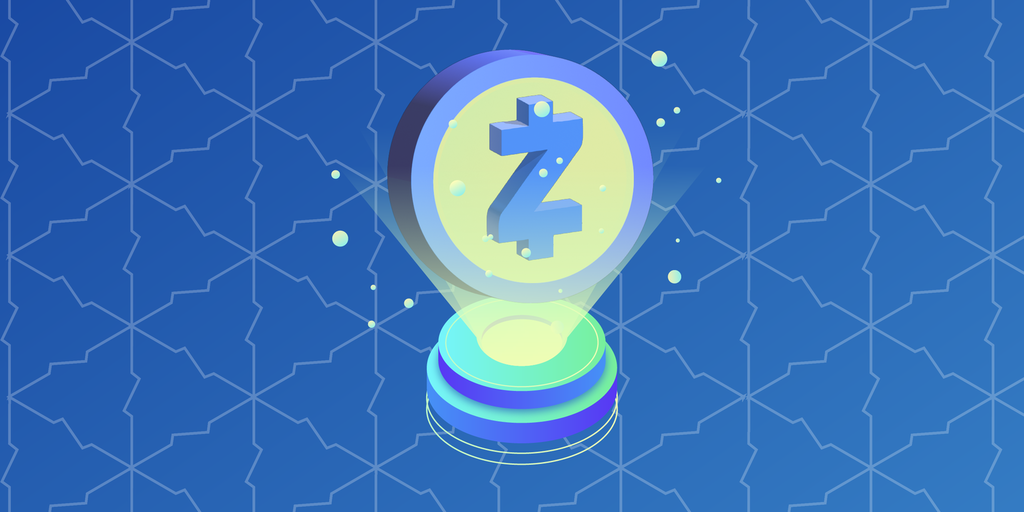
The network maintains two pools of addresses: transparent (t-addrs) and shielded (z-addrs). Wallets such as ECC’s Zashi now default to shielding funds, encouraging greater privacy.
Who invented Zcash?
Zcash launched in October 2016 as a privacy-focused cryptocurrency developed by the Electric Coin Company (ECC), led by Zooko Wilcox-O’Hearn, drawing on research from Johns Hopkins, MIT, Tel Aviv University, and other institutions. Like Bitcoin, Zcash (ZEC) has a maximum supply of 21 million coins and block reward halvings every four years.
While ECC initiated and still contributes to Zcash, it does not own or control the blockchain. All upgrades require community approval, keeping development decentralized and open rather than directed by a single entity.
Did you know?
At its launch, Zcash relied on a “trusted setup ceremony” in which six participants each generated and destroyed a portion of a private key. This prevented anyone from being able to counterfeit ZEC.
In April 2022, Edward Snowden was revealed as one of the participants in the ceremony. “He did it as a service, as a public good, and believing in privacy,” Electric Coin Company SVP Josh Swihart told Decrypt.
Key dates
- May 2013: Zerocoin proposal at Johns Hopkins marks the start of privacy-focused crypto research that leads to Zcash.
- January 2016: Zooko Wilcox formally announces the Zcash project as a privacy-oriented Bitcoin fork.
- October 2016: Zcash launches after its trusted setup ceremony, and the network goes live. Zcash reached an all‑time high of $5,941.80.
- October 2018: The Sapling upgrade activates, improving the speed and efficiency of shielded transactions.
- November 2020: Zcash goes through its first halving.
- May 2022: Network Upgrade 5, including the Orchard upgrade, rolls out, reducing reliance on earlier complex setup “ceremonies” for new shielded pools, and allowing Zcash users to make private digital cash payments on mobile phones with a new address format called unified addresses.
- April 2022: Edward Snowden is publicly revealed as “John Dobbertin,” a participant in the original launch ceremony who contributed to the trusted setup but was not an architect.
- November 2025: Zcash’s third halving will occur, reducing block rewards and coinciding with a transition to a new development funding model.
How is Zcash produced?
Zcash, like Bitcoin, uses proof-of-work (PoW) to validate transactions, but it runs on the Equihash algorithm—a memory-hard hashing function designed to make mining fairer and more resistant to ASIC hardware, and the consensus mechanism Zcash originally adopted to secure its network.
Currently, Zcash miners receive 80% of each block reward, while 20% goes to development funds that support the Electric Coin Company (ECC), the Zcash Foundation, and community grants. This development funding structure is governed by community decision and is set for renewal or revision after the upcoming halving.
Zcash is a peer-to-peer cryptocurrency designed for everyday payments. Users can choose between transparent transactions that are regulator-friendly and shielded transactions that enhance privacy. This optionality has helped Zcash remain listed on more major exchanges than some other privacy coins, such as Monero, which are avoided by certain platforms due to regulatory constraints.
Zcash is at a crossroads. With a halving, a new development funding model, and critical infrastructure upgrades all due in 2025, the project faces a decisive moment. How it manages these shifts will determine whether a cryptocurrency built on voluntary privacy can endure in a climate of heightened regulatory and market pressure.
Bitcoin has heavily influenced Zcash. Like the number one cryptocurrency, Zcash is designed to be used for everyday purchases. Its various privacy features mean it can also be used to send or receive transactions hidden from prying eyes.
Zcash, regulators and law enforcement
Around the world, regulators and law enforcement agencies have increased scrutiny of privacy coins, arguing that their anonymity features can be misused for money laundering or sanctions evasion. In the United States, the Treasury Department’s Financial Crimes Enforcement Network has proposed tighter rules for “anonymity-enhanced cryptocurrencies.”
“Several types of [anonymity-enhanced cryptocurrencies]—including Monero, Zcash, Dash, Komodo, and Beam—are growing in popularity and use technologies that make it difficult for investigators to trace blockchain transactions or connect them to individuals involved in illicit activity,” regulators wrote in 2020.
As enforcement of the cryptocurrency market ramped up, exchanges began delisting privacy coins. In November 2020, privacy-centric exchange ShapeShift delisted Monero, Dash, and Zcash to limit the company’s regulatory risk. In January 2021, Bittrex delisted Zcash, Monero, and Dash, and more recently, in 2023, OKX announced plans to delist the same privacy coins. As of 2025, Zcash was still listed on Binance, but in April, it was added to the exchanges’ list of cryptocurrencies that the community could vote on to delist.
The future of Zcash
With regulators tightening surveillance of digital assets and privacy coins facing mounting scrutiny, Zcash is entering its most pivotal period yet. A halving, a major funding overhaul, and a migration to new software are converging to test whether a privacy-focused cryptocurrency can survive under pressure.
Nearly a decade after its launch, Zcash returned to the spotlight for market reasons. In October 2025, the token surged nearly 240%, climbing to its highest level since May 30, 2022, when it reached $192.00. Its rise was fueled in part by prominent figures on social media highlighting Zcash’s community, privacy design, and technical improvements.
Zcash’s third halving is scheduled for November 2025. The current development fund ends at the same time, and the community is debating new mechanisms. ECC is deprecating the C++ full node “zcashd” in favor of the Rust-based “zebrad,” with a new wallet called Zallet also in development.
These changes will shape Zcash’s cryptography, funding model, and user experience for years ahead.
Daily Debrief Newsletter
Start every day with the top news stories right now, plus original features, a podcast, videos and more.
Read the full article here
Fact Checker
Verify the accuracy of this article using AI-powered analysis and real-time sources.
Get Your Fact Check Report
Enter your email to receive detailed fact-checking analysis
Continue with Full Access
You've used your 5 free reports. Sign up for unlimited access!
Already have an account? Sign in here