

 Freedom Index
Listen to the article
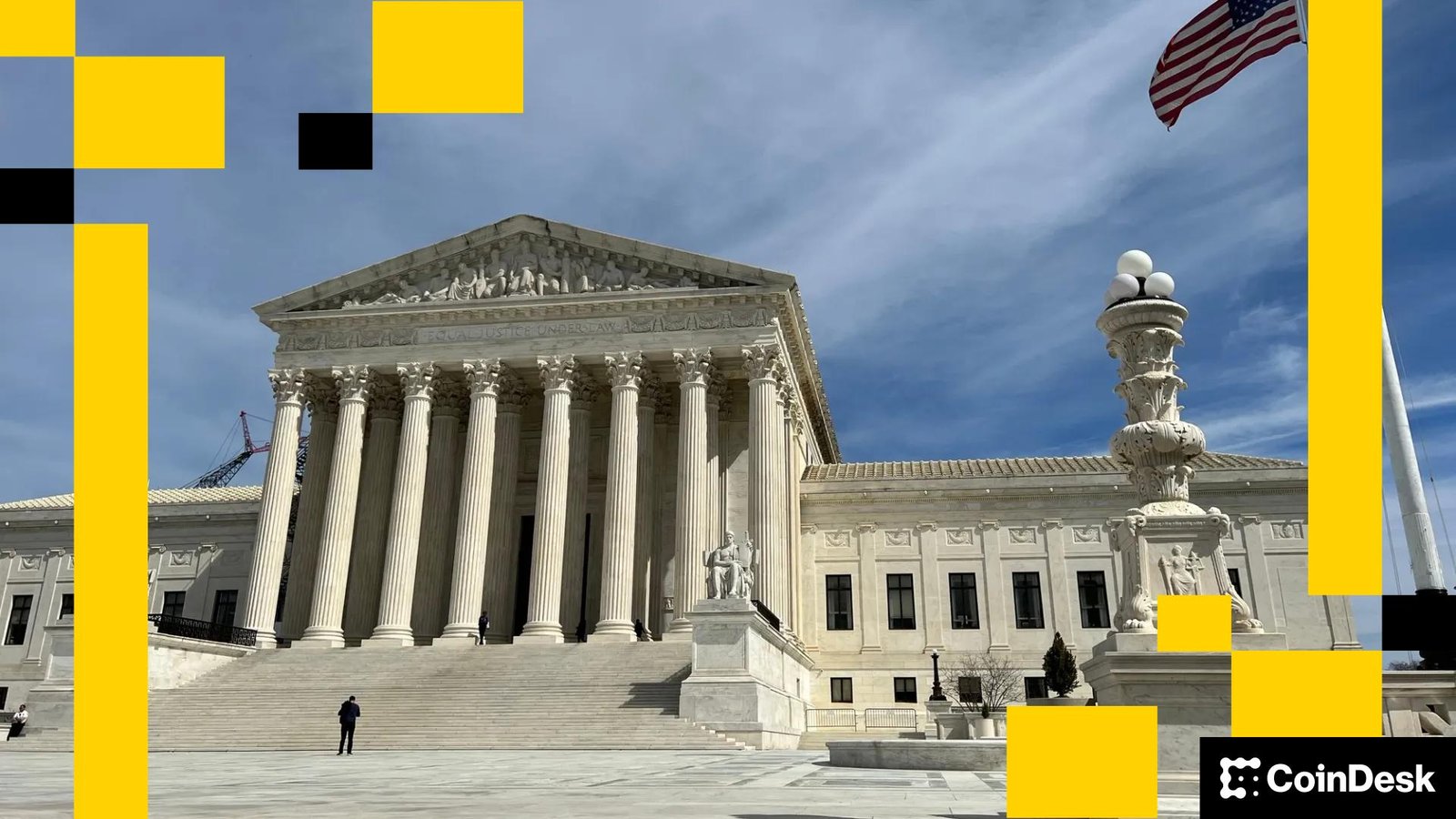
The U.S. Supreme Court has decided that President Donald Trump didn’t have the power to impose tariffs as he did. While the markets have taken the decision in stride, the impact on crypto is likely to be modest — at least for now — as there are political considerations that may influence the industry’s policy trajectory in Washington.
Though Trump’s aggressive and sometimes turbulent pursuit of tariffs under the International Emergency Economic Powers Act is halted, the president has a number of other options to replace them with tariffs available in other legal authorities governing U.S. trade. He said in a Friday press conference after the “deeply disappointing” decision that “there are methods, practices, statutes and authorities, as recognized by the entire court in this terrible decision … that are even stronger than the IEEPA tariffs available to me as president of the United States.”
“Other alternatives will now be used to replace the ones that the court incorrectly rejected,” Trump said, announcing that he’ll order a new 10% global tariff.
In the near term, anything that occupies policymakers in the coming weeks could threaten to steal some of the oxygen from the already dicey U.S. Senate timeline to get the crypto industry’s top goal accomplished: passage of the Digital Asset Market Clarity Act that would govern U.S. crypto market structure.
Senator Bernie Moreno, an Ohio Republican, staunch Trump supporter and a big crypto advocate, posted on social media site X, “SCOTUS’s outrageous ruling handcuffs our fight against unfair trade that has devastated American workers for decades.”
On the other side of the aisle, Senator Elizabeth Warren, the ranking Democrat on the Senate Banking Committee, celebrated the Supreme Court’s 6-3 ruling but suggested it left intact the harm already imposed on consumers. Earlier this month, the Tax Foundation reported an estimated per-household hit of $1,000 last year and $1,300 this year from the tariffs.
“The court has struck down these destructive tariffs, but there is no legal mechanism for consumers and many small businesses to recoup the money they have already paid,” U.S. Senator Elizabeth Warren said in a statement. “Instead, giant corporations with their armies of lawyers and lobbyists can sue for tariff refunds, then just pocket the money for themselves. It’s one more example of how the game is rigged.”
The Cato Institute, however, is holding out hope for refunds of the “tens of billions” in customs duties collected under the tariffs.
“That refund process could be easy, but it appears more likely that more litigation and paperwork will be required — a particularly unfair burden for smaller importers that lack the resources to litigate tariff refund claims yet never did anything wrong,” according to a Friday statement from economists at the libertarian think tank.
The crypto bill impact
Despite the legal resolution, the tariff dispute and its aftermath will likely be front-and-center in this year’s midterm congressional elections, and those races could have a profound effect on the crypto sector.
If Congress hasn’t yet passed a market structure bill by this summer, the industry’s policy efforts will depend on the outcome of those elections, especially if they shift the majority in the House of Representatives or in both chambers of Congress. And even if the crypto industry already has the Clarity Act in hand by then, there are a number of other legislative initiatives at play on taxation and bitcoin reserves.
The Supreme Court’s rebuke of Trump’s illegal tariff regime could provide some boost to Democratic candidates in otherwise close races.
Democrat candidates will seek to convince voters that they’ve been personally harmed by the tariffs, as Warren argued. If enough Democrats win to secure the House majority, they could make it much more difficult for the current crypto policy push to advance without heavy revisions that could impose more constraints on the sector.
Read More: Bitcoin pops then drops as Supreme Court strikes down Trump tariffs
UPDATE (February 20, 2026, 19:26 UTC): Adds Trump’s new tariff announcement.
Read the full article here
Fact Checker
Verify the accuracy of this article using AI-powered analysis and real-time sources.